Patient leaflet - Librachrom 2% w/v eye drops solution
1. What Librachrom is and what it is used for
Librachrom contains a medicine called sodium cromoglicate. This belongs to a group of medicines called anti-allergics.
It works by stopping the release of the natural substances in your eyes that can lead to an allergic reaction. Signs of an allergic reaction include itchy, watery, red or inflamed eyes and puffy eyelids. Librachrom is used for the prevention and treatment of eye allergies. These allergies can happen:
- At any time of the year and is called ‘perennial allergic conjunctivitis’.
- In different seasons of the year caused by different pollens. This is called ‘seasonal allergic conjunctivitis’ or hay fever.
Librachrom eye drops solution is a sterile solution that does not contain a preservative.
2. What you need to know before you use Librachrom
Do not use Librachrom
If you are allergic to sodium cromoglicate or any of the other ingredients of this medicine
(listed in section 6). Signs of an allergic reaction include: a rash, swallowing or breathing problems, swelling of your lips, face, throat, tongue and worsening of redness, itching or swelling of the eye or eyelid.
Do not use this medicine if the above applies to you. If you are not sure, talk to your doctor or pharmacist before using these eye drops.
Warnings and precautions
If you wear contact lenses, follow the instruction for contact lens wearers in section 3. If you have a history of contact hypersensitivity to silver, you should not use this product.
Children and adolescents
Librachrom can be used in children and adolescents. In children, caregiver supervision and/or assistance may be required.
Other medicines and Librachrom
Tell your doctor or pharmacist if you are taking, have recently taken or might take any other medicines.
Pregnancy and breast-feeding
If you are pregnant or breast-feeding, think you may be pregnant, or are planning to have a baby, ask your doctor or pharmacist for advice before taking this medicine.
Driving and using machines
You may have blurred eyesight straight after using this medicine. If this happens, do not drive or use any tools or machines until you can see clearly.
3. How to use Librachrom
Always use this medicine exactly as described in this leaflet or as your doctor or pharmacist has told you. Check with your doctor or pharmacist if you are not sure.
The recommended dose is one or two drops in each eye four times a day or as indicated by the doctor.
Instructions for use
Before instillation of the eye drops:
- Wash your hands before opening the bottle.
- Do not use this medicine if you notice that the tamper-proof seal on the bottle neck is broken before you first use it.
- At the first use, after cap removal, without positioning the eyedropper above the eye, slowly squeeze the bottle to deliver one drop in the air to get use to the pressure and time required to deliver one drop. In case of difficulties of delivering one drop at a time, this step might be repeated.
- Choose the position that you find most comfortable for the instillation of the drops (you can sit down, lie on your back, or stand in front of a mirror).
Instillation:
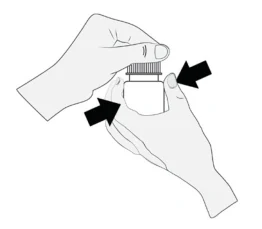
- 1. Hold the bottle directly below the cap and turn the cap to open the bottle. Do not touch anything with the tip of the bottle to avoid contamination of the solution.
- 2. Tilt your head backwards and hold the bottle above your eye.
- 3.
Pull the lower eyelid down and look up. Squeeze the bottle gently in the middle and let a drop fall into your eye. Please note that there might be a few seconds delay between squeezing and the drop coming out. Do not squeeze too hard.
If a drop misses your eye, try again.
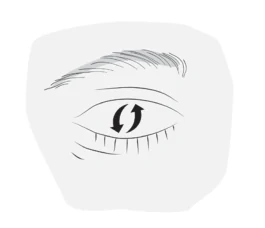
If you are not sure how to administer your medicine, ask your doctor or pharmacist.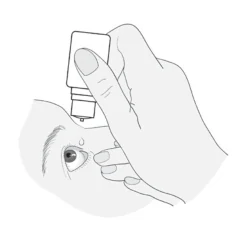 4. Blink a few times so that the drop spreads over the eye.
- 5. Repeat the instructions 2. – 4. to deliver a drop into the other eye if needed.
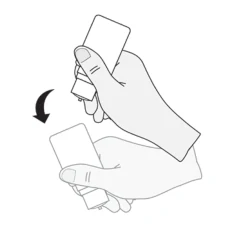
- 6. After use and prior to recapping, the bottle should be shaken once in a downwards direction, without touching the dropper tip, in order to remove any residual liquid on the tip. This is necessary in order to ensure delivery of subsequent drops.
- 7. After you have used all doses there will be some Librachrom left in the bottle. You should not be concerned since an extra amount of Librachrom has been added to account for this. Do not attempt to use the excess medicine remaining in the bottle after you have completed the course of treatment.
Do not use the eye drops for longer than 28 days after first opening the bottle.
Contact lens wearers
As with most topical eye medications, if you wear contact lenses, you should remove them before using Librachrom. After using this medicine, you should wait 15 minutes before putting your contact lenses back in.
If you use more Librachrom than you should
Contact your doctor if you use the eye drops more frequently than the recommended dose, or continuously for more than three months.
If you forget to use Librachrom
If you forget a dose, use your drops as soon as you remember.
However, if it is nearly time for your next dose, skip the missed dose. Do not use a double dose to make up for a forgotten dose.
If you stop using Librachrom
You should keep using these drops if you are still around the things that you are allergic to. If you stop using this medicine your allergy symptoms may come back.
If you have any further questions on the use of this medicine, ask your doctor or pharmacist.
4. Possible side effects
Like all medicines, this medicine can cause side effects, although not everybody gets them. Stop using this medicine and see a doctor as soon as possible if:
- The itching, redness or swelling gets worse. You may be allergic to these drops. Talk to your doctor or pharmacist if any of the side effects gets serious or lasts longer than a few days, or if you notice any side effects not listed in this leaflet:
- Stinging or burning in your eyes or blurring of eyesight. This should only last for a short time and occurs immediately after using the eye drops.
- Mild eye irritation.
Reporting of side effects
If you get any side effects, talk to your doctor, pharmacist or nurse. This includes any possible side effects not listed in this leaflet. You can also report side effects directly via the Yellow Card Scheme (Website: www.mhra.gov.uk/yellowcard or search for MHRA Yellow Card in the Google Play or Apple App Store). By reporting side effects you can help provide more information on the safety of this medicine.
5. How to store Librachrom
Keep this medicine out of the sight and reach of children.
Do not use this medicine after the expiry date which is stated on the bottle label and carton after EXP. The expiry date refers to the last day of that month.
Store below 25°C. Discard 28 days after first opening.
Do not throw away any medicines via wastewater or household waste. Ask your pharmacist how to throw away medicines you no longer use. These measures will help protect the environment.
6. Contents of the pack and other information
What Librachrom contains
- The active substance is sodium cromoglicate. Each 1ml of eye drops contains 20mg of sodium cromoglicate (2.0% w/v).
- The other ingredients are disodium edetate and water for injections.
What Librachrom looks like and contents of the pack
Librachrom eye drops are presented as a clear, colourless to pale yellow aqueous solution in a white opaque plastic bottle containing a white Novelia nozzle that is sealed with a white plastic cap.
The following pack sizes are available: 1 x 5ml, 1 x 10ml
Not all pack sizes may be marketed.
Marketing Authorisation Holder and Manufacturer:
Marketing Authorisation Holder
Aspire Pharma Limited
Unit 4, Rotherbrook Court
Bedford Road
Petersfield
Hampshire
GU32 3QG
United Kingdom
Manufacturer
Rafarm S.A.
Agiou Louka Str.
19002
Paiania
Attiki
Greece
This leaflet was last revised in 10/2018.
XXXXXXX-P1.7