

Patient leaflet - Levetiracetam 100 mg / ml concentrate for solution for infusion
1. What Levetiracetam is and what it is used for
Levetiracetam is an antiepileptic medicine (a medicine used to treat seizures in epilepsy).
Levetiracetam is used:
on its own in adults and adolescents from
16 years of age with newly diagnosed epilepsy, to treat a certain form of epilepsy. Epilepsy is a condition where the patients have repeated fits (seizures). Levetiracetam is used for the epilepsy form in which the fits initially affect only one side of the brain but could thereafter extend to larger areas on both sides of the brain (partial onset seizure with or without secondary generalisation). Levetiracetam has been given to you by your doctor to reduce the number of fits.
as an add-on to other antiepileptic medicines to
treat:
§ partial onset seizures with or without
generalisation in adults, adolescents and children from 4 years of age.
§ myoclonic seizures (short, shock-like jerks
of a muscle or group of muscles) in adults and adolescents from 12 years of age with juvenile myoclonic epilepsy.
§ primary generalised tonic-clonic seizures
(major fits, including loss of consciousness) in adults and adolescents from 12 years of age with idiopathic generalised epilepsy (the type of epilepsy that is thought to have a genetic cause).
Levetiracetam concentrate for solution for infusion is an alternative for patients when administration of the antiepileptic oral levetiracetam medicine is temporarily not feasible.
2. What you need to know before you are given Levetiracetam
Do not use Levetiracetam
If you are allergic to levetiracetam, pyrrolidone
derivatives or any of the other ingredients of this medicine (listed in Section 6).
Warnings and precautions
Talk to your doctor before you are given Levetiracetam:
If you suffer from kidney problems, follow your
doctor’s instructions. He/she may decide if your dose should be adjusted.
If you notice any slowdown in the growth or
unexpected puberty development of your child, please contact your doctor.
A small number of people being treated with
anti-epileptics such as Levetiracetam have had thoughts of harming or killing themselves. If you have any symptoms of depression and/or suicidal ideation, please contact your doctor.
If you have a family or medical history
of irregular heart rhythm (visible on an electrocardiogram), or if you have a disease and/or take a treatment that make(s) you prone to heartbeat irregularities or salt imbalances.
Tell your doctor, pharmacist or nurse if any of the following side effects gets serious or last longer than a few days:
Abnormal thoughts, feeling irritable or reacting
more aggressively than usual, or if you or your family and friends notice important changes in mood or behaviour.
Aggravation of epilepsy
Your seizures may rarely become worse or
happen more often, mainly during the first month after the start of the treatment or increase of the dose. In a very rare form of early-onset epilepsy (epilepsy associated with SCN8A mutations)
that causes multiple types of seizures and loss of skills you may notice that the seizures remain present or are becoming worse during your treatment.
If you experience any of these new symptoms while taking Levetiracetam, see a doctor as soon as possible.
Children and adolescents
Levetiracetam is not indicated in children and adolescents below 16 years on its own (monotherapy).
Other medicines and Levetiracetam
Tell your doctor or pharmacist if you are taking, have recently taken or might take any other medicines, including medicines obtained without a prescription.
Do not take macrogol (a medicine used as laxative) for one hour before and one hour after taking levetiracetam as this may result in a reduction of its effect.
Pregnancy and breast-feeding
If you are pregnant or breastfeeding, think you may be pregnant or are planning to have a baby, ask your doctor for advice before taking this medicine. Levetiracetam can be used during pregnancy, only if after careful assessment it is considered necessary by your doctor.
You should not stop your treatment without discussing this with your doctor.
A risk of birth defects for your unborn child cannot be completely excluded.
Breast-feeding is not recommended during treatment.
Driving and using machines
Levetiracetam may impair your ability to drive or operate any tools or machinery, as it may make you feel sleepy. This is more likely at the beginning of treatment or after an increase in the dose. You should not drive or use machines until it is established that your ability to perform such activities is not affected.
Levetiracetam contains sodium
This medicine contains 57 mg (2.5 mmol) sodium (main component of cooking/table salt) in each maximum single dose. This is equivalent to 2.85 % of the recommended maximum daily dietary intake of sodium for an adult. This should be taken into consideration if you are on a controlled sodium diet.
3. How Levetiracetam is given
A doctor or a nurse will administer you
Levetiracetam as an intravenous infusion. Levetiracetam must be administered twice a day, once in the morning and once in the evening, at about the same time each day.
The intravenous formulation is an alternative to your oral administration. You can switch from the film-coated tablets or from the oral solution to the intravenous formulation or reverse directly without dose adaptation. Your total daily dose and frequency of administration remain identical.
Adjunctive therapy and Monotherapy (from 16 years of age)
Adults (≥18 years) and adolescents (12 to 17 years) weighing 50 kg or more:
Recommended dose: between 1,000 mg and 3,000 mg each day.
When you will first start taking Levetiracetam, your doctor will prescribe you a lower dose during 2 weeks before giving you the lowest daily dose.
Dose in children (4 to 11 years) and adolescents (12 to 17 years) weighing less than 50 kg:
Recommended dose: between 20 mg per kg bodyweight and 60 mg per kg bodyweight each day.
Method and route of administration
Levetiracetam is for intravenous use (infusion into a vein).
The recommended dose must be diluted in at least 100 mL of a compatible diluent and infused over 15-minutes.
For doctors and nurses, more detailed directions for the proper use of Levetiracetam are provided in the section for healthcare professionals.
Duration of treatment
There is no experience with administration of intravenous levetiracetam for a longer period than 4 days.
If you stop using Levetiracetam
If stopping treatment, as with other antiepileptic medicines, Levetiracetam should be discontinued gradually to avoid an increase of seizures. Should your doctor decide to stop your Levetiracetam treatment, he/she will instruct you about the gradual withdrawal of Levetiracetam.
If you have any further questions on the use of this medicine, ask your doctor, pharmacist or nurse.
The following information is intended for healthcare professionals only:
Preparation and handling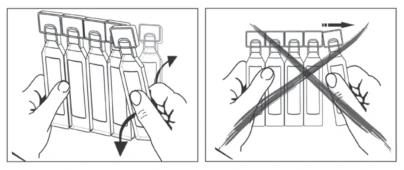
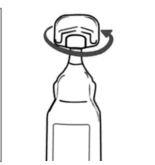
Directions for the proper use of Levetiracetam are provided in section 3.
One vial or ampoule of Levetiracetam concentrate contains 500 mg levetiracetam (5 mL concentrate of 100 mg / mL). See Table 1 for the recommended preparation and administration of Levetiracetam concentrate to achieve a total daily dose of 500 mg, 1000 mg, 2000 mg, or 3000 mg in two divided doses.
Table 1. Preparation and administration of Levetiracetam concentrate
| Dose | Withdrawal Volume | Volume of Diluent | Infusion Time | Frequency of administration | Total Daily Dose |
| 250 mg | 2.5 mL (half 5 mL vial or ampoule) | 100 mL | 15 minutes | Twice daily | 500 mg / day |
| 500 mg | 5 mL (one 5 mL vial or ampoule) | 100 mL | 15 minutes | Twice daily | 1000 mg / day |
Arial 9 pt 160 x 550 mm
4. Possible side effects
Like all medicines, this medicine can cause side effects, although not everybody gets them.
Tell your doctor immediately, or go to your nearest emergency department, if you experience:
weakness, feel light-headed or dizzy or have
difficulty breathing, as these may be signs of a serious allergic (anaphylactic) reaction
swelling of the face, lips, tongue and throat
(Quincke’s oedema)
flu-like symptoms and a rash on the face
followed by an extended rash with a high temperature, increased levels of liver enzymes seen in blood tests and an increase in a type of white blood cell (eosinophilia) and enlarged lymph nodes [Drug Reaction with Eosinophilia and Systemic Symptoms (DRESS)]
symptoms such as low urine volume, tiredness,
nausea, vomiting, confusion and swelling in the legs, ankles or feet, as this may be a sign of sudden decrease of kidney function
a skin rash which may form blisters and look like
small targets (central dark spots surrounded by a paler area, with a dark ring around the edge) (erythema multiforme)
a widespread rash with blisters and peeling skin,
particularly around the mouth, nose, eyes and genitals (Stevens-Johnson syndrome)
a more severe form of rash causing skin peeling
in more than 30% of the body surface (toxic epidermal necrolysis)
signs of serious mental changes or if someone
around you notices signs of confusion, somnolence (sleepiness), amnesia (loss of memory), memory impairment (forgetfulness), abnormal behaviour or other neurological signs including involuntary or uncontrolled movements. These could be symptoms of encephalopathy.
The most frequently reported adverse reactions were nasopharyngitis, somnolence (sleepiness), headache, fatigue and dizziness. At the beginning of the treatment or at dose increase side effects like sleepiness, tiredness and dizziness may be more common. These effects should however decrease over time.
Very common: may affect more than 1 in 10 people
- nasopharyngitis
- somnolence (sleepiness), headache.
Common: may affect up to 1 in 10 people
- anorexia (loss of appetite)
depression, hostility or aggression, anxiety,
insomnia, nervousness or irritability
convulsion, balance disorder (equilibrium
disorder), dizziness (sensation of unsteadiness), lethargy (lack of energy and enthusiasm), tremor (involuntary trembling)
- vertigo (sensation of rotation)
- cough
abdominal pain, diarrhoea, dyspepsia
(indigestion), vomiting, nausea
- rash
- asthenia/fatigue (tiredness).
Uncommon: may affect up to 1 in 100 people
decreased number of blood platelets, decreased
number of white blood cells
- weight decrease, weight increase
suicide attempt and suicidal ideation, mental
disorder, abnormal behaviour, hallucination, anger, confusion, panic attack, emotional instability/mood swings, agitation
amnesia (loss of memory), memory impairment
(forgetfulness), abnormal coordination/ ataxia (impaired coordinated movements), paraesthesia (tingling), disturbance in attention (loss of concentration)
- diplopia (double vision), vision blurred
elevated/abnormal values in a liver
function test
- hair loss, eczema, pruritus
- muscle weakness, myalgia (muscle pain)
- injury.
Rare: may affect up to 1 in 1,000 people
- infection
- decreased number of all blood cell types
severe allergic reactions [(DRESS), anaphylactic
reaction (severe and important allergic reaction), Quincke’s oedema [swelling of the face, lips, tongue and throat]
- decreased blood sodium concentration
suicide, personality disorders (behavioural
problems), thinking abnormal (slow thinking, unable to concentrate)
- delirium
encephalopathy (see sub-section “Tell your
doctor immediately” for a detailed description of symptoms)
seizures may become worse or happen more
often
uncontrollable muscle spasms affecting the
head, torso and limbs, difficulty in controlling movements, hyperkinesia (hyperactivity)
- change of the heart rhythm (Electrocardiogram)
- pancreatitis
liver failure, hepatitis
- sudden decrease in kidney function
- skin rash, which may form blisters and looks like small targets (central dark spots surrounded by a paler area, with a dark ring around the edge) (erythema multiforme), a widespread rash with blisters and peeling skin, particularly around the mouth, nose, eyes and genitals (Stevens-Johnson syndrome), and a more severe form causing skin peeling in more than 30% of the body surface (toxic epidermal necrolysis)
rhabdomyolysis (breakdown of muscle tissue)
and associated blood creatine phosphokinase increase. Prevalence is significantly higher in Japanese patients when compared to non-Japanese patients
- limp or difficulty walking
- combination of fever, muscle stiffness, unstable blood pressure and heart rate, confusion, low level of consciousness (may be signs of a disorder called neuroleptic malignant syndrome). Prevalence is significantly higher in Japanese patients when compared to non-Japanese patients.
Very rare: may affect up to 1 in 10000 people
- repeated unwanted thoughts or sensations or the urge to do something over and over again (Obsessive Compulsive Disorder).
Reporting of side effects
If you get any side effects talk to your doctor, pharmacist or nurse. This includes any possible side effects not listed in this leaflet. You can also report side effects directly via Yellow Card Scheme Website: www.mhra.gov.uk/yellowcard or search for MHRA Yellow Card in the Google Play or Apple App Store.
By reporting side effects you can help provide more information on the safety of this medicine.
5. How to store Levetiracetam
Keep this medicine out of the sight and reach of children.
Do not use this medicine after the expiry date which is stated on the vial / ampoule and carton box after “EXP”. The expiry date refers to the last day of the month.
This medicine does not require any special storage conditions.
The diluted product is physically and chemically stable for 24 hours at 15 – 25°C and at 2 – 8°C. From a microbiological point of view, the product should be used immediately after dilution. Do not throw away any medicines via wastewater or household waste. Ask your pharmacist how to throw away medicines you no longer use. These measures will help protect the environment.
6. Contents of the pack and other information
What Levetiracetam contains
- The active substance is levetiracetam. Each mL contains 100 mg of levetiracetam.
- The other ingredients are: sodium acetate trihydrate, glacial acetic acid, sodium chloride, water for injections.
What Levetiracetam looks like and contents of the pack
Levetiracetam 100 mg / mL Concentrate for solution for infusion is a clear, colourless concentrate for solution for infusion.
Levetiracetam 100 mg / mL Concentrate for solution for infusion comes in 2 presentations:
- Glass vials (containing 5 mL of concentrate for solution for infusion) with 500 mg of levetiracetam (10 or 50 vials per pack).
- Polypropylene ampoules (containing 5 mL of concentrate for solution for infusion) with 500 mg of levetiracetam (1, 10, 20 or 50 ampoules per pack).
Not all pack sizes may be marketed.
Marketing Authorization Holder and Manufacturer
Marketing Authorization Holder:
Noridem Enterprises Limited,
Evagorou and Makariou, Mitsi Building 3, Office 115, Nicosia 1065, Cyprus
Manufacturer:
DEMO S.A. PHARMACEUTICAL INDUSTRY, 21st Km National Road Athens–Lamia, 14568 Krioneri, Attiki, Greece,
T: +30 210 8161802, F: +30 2108161587
This leaflet was last revised in 07/2026.
| 1000 mg | 10 mL (two 5 mL vials or ampoules) | 100 mL | 15 minutes | Twice daily | 2000 mg / day |
| 1500 mg | 15 mL (three 5 mL vials or ampoules) | 100 mL | 15 minutes | Twice daily | 3000 mg / day |
This medicinal product is for single use only, any unused solution should be discarded.
The diluted product is physically and chemically stable for 24 hours at 15 – 25°C and at 2 – 8°C. From a microbiological point of view, the product should be used immediately after dilution. If not used immediately, in-use storage time and conditions prior to use are the responsibility of the user and would normally not be longer than 24 hours at 2 - 8°C, unless dilution has taken place in controlled and validated aseptic conditions.
Levetiracetam concentrate for solution for infusion was found to be physically compatible and chemically stable when mixed with the following diluents for 24 hours at 15 – 25°C and at 2 – 8°C, at a concentration of Levetiracetam 2.5 mg / mL and 15.0 mg / mL.
Diluents:
- Sodium chloride 9 mg / mL (0.9 %) solution for injection
- Lactated Ringer’s solution for injection
- Dextrose 50 mg / mL (5 %) solution for injection