

Patient leaflet - Latanoprost 50 micrograms/ml eye drops, solution in single-dose Container
1 What Latanoprost is and what it is used for
Latanoprost belongs to a group of medicines known as prostaglandin analogues. It works by increasing the natural outflow of fluid from inside the eye into the bloodstream. Latanoprost is used to treat conditions known as open angle glaucoma and ocular hypertension in adults. Both of these conditions are linked with an increase in the pressure within your eye, eventually affecting your eye sight.
Latanoprost is also used to treat increased eye pressure and glaucoma in all ages of children and babies.
2 What you need to know before you use
Latanoprost
Latanoprost can be used in adult men and women (including the elderly) and in children from birth to 18 years of age. Latanoprost has not been investigated in prematurely born infants (less than 36 weeks gestation).
Do not use Latanoprost:
If you are allergic (hypersensitive) to latanoprost or any of
the other ingredients of this medicine (listed in section 6) Warnings and precautions
Talk to your doctor or the doctor treating your child or pharmacist before using Latanoprost or before you give this to your child if you think any of the following apply to you or your child:
If you or your child are about to have or have had eye
surgery (including cataract surgery)
- If you or your child suffer from eye problems (such as eye
 pain, irritation or inflammation, blurred vision)
 - If you or your child suffers from dry eyes
If you or your child have severe asthma or the asthma is not
well controlled
If you or your child wear contact lenses. You can still use
Latanoprost, but follow the instruction for contact lens wearers in Section 3
If you have suffered or are currently suffering from a viral
infection of the eye caused by the herpes simplex virus (HSV) Other medicines and Latanoprost
Latanoprost may interact with other medicines. Please tell your doctor, the doctor treating your child or pharmacist if you or your child are using or have used any other medicines including those medicines (or eye drops) obtained without a prescription. 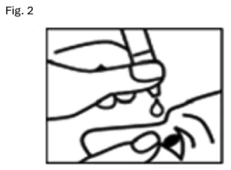 In particular, speak to your doctor or pharmacist if you know that you are using prostaglandins, prostaglandin analogues or prostaglandin derivatives.
Pregnancy and breast-feeding
You should not use Latanoprost if you are pregnant or breast-feeding unless your doctor considers it necessary. If you are pregnant or breast-feeding, think you may be pregnant, or are planning to have a baby, ask your doctor for advice before using this medicine.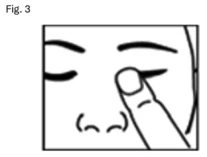 Driving and using machines
When you use Latanoprost you might have blurred vision, for a short time. If this happens to you, do not drive or use any tools or machines until your vision becomes clear again. Latanoprost contains contains boric acid and polysorbates.
Each ml contains 7.0 mg of boric acid which is equivalent to 0.21 mg of boric acid per drop.
Each ml contains 0.02 mg of Polysorbate 80.
Polysorbates can cause allergic reactions.
3 How to use Latanoprost
Always use Latanoprost exactly as your doctor or the doctor treating your child has told you. You should check with your doctor or the doctor treating your child or pharmacist if you are not sure.
The recommended dosage for adults (including the elderly) and children is one drop once a day in the affected eye(s). The best time to do this is in the evening.
The single-dose container must be used right after opening; any residual product must be discarded.
Do not use Latanoprost more than once a day, because the effectiveness of the treatment can be reduced if you administer it more often.
Use Latanoprost as instructed by your doctor or by the doctor treating your child until they tell you to stop.
Contact lens wearers
If you or your child wear contact lenses, they should be removed before using Latanoprost. After using Latanoprost you should wait 15 minutes before putting the contact lenses back into the eyes. Instructions for use
- 1. Wash your hands and sit or stand comfortably.
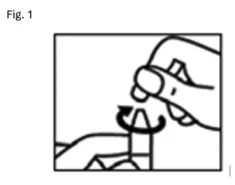
- 2. Twist off the outer cap (which can be thrown away).
- 3. Use your finger to gently pull down the lower eyelid of your affected eye.
- 4. Place the tip of the single-dose container close to, but not touching your eye.
- 5. Squeeze the single-dose container gently so that only one drop goes into your eye, then release the lower eyelid. (see fig.2)
- 6.
Press a finger against the corner of the affected eye by the nose.
Hold for 1 minute whilst keeping the eye closed. (see fig.3)
- 7. Repeat in your other eye if your doctor has told you to do this.
- 8. Discard single-dose container Continued on the next page >> If you use Latanoprost with other eye drops
Wait at least 5 minutes between using Latanoprost and taking other eye drops
If you use more Latanoprost than you should
If you put too many drops into the eye, it may lead to some minor irritation in the eye and the eyes may water and turn red. This should pass, but if you are worried contact your doctor or the doctor treating your child for advice.
Contact your doctor as soon as possible if you or your child swallows Latanoprost accidentally.
If you forget to use Latanoprost
Carry on with the usual dosage at the usual time. Do not take a double dose to make up for the dose you have forgotten. If you are unsure about anything talk to your doctor or pharmacist.
If you stop using Latanoprost
You should speak to your doctor or the doctor treating your child if you want to stop taking Latanoprost.
If you have any further questions on the use of this medicine, ask your doctor or pharmacist.
4 Possible side effects
Like all medicines, this medicine can cause side effects, although not everybody gets them. The following are known side effects of using Latanoprost:
Very common (may affect more than 1 in 10 people):
A gradual change in your eye colour by increasing the
amount of brown pigment in the coloured part of the eye known as the iris. If you have mixed-colour eyes (blue-brown, grey-brown, yellow-brown or green-brown) you are more likely to see this change than if you have eyes of one colour (blue, grey, green or brown eyes). Any changes in your eye colour may take years to develop although it is normally seen within 8 months of treatment. The colour change may be permanent and may be more noticeable if you use Latanoprost in only one eye. There appears to be no problems associated with the change in eye colour. The eye colour change does not continue after Latanoprost treatment is stopped.
- Redness of the eye.
Eye irritation (a feeling of burning, grittiness, itching,
stinging or the sensation of a foreign body in the eye). If you experience eye irritation severe enough to make your eyes water excessively, or make you consider stopping this medicine, talk to your doctor, pharmacist or nurse promptly (within a week). You may need your treatment to be reviewed to ensure you keep receiving appropriate treatment for your condition.
A gradual change to eyelashes of the treated eye and the
fine hairs around the treated eye, seen mostly in people of Japanese origin. These changes involve an increase of the colour (darkening), length, thickness and number of your eye lashes.
Common (may affect up to 1 in 10 people):
Irritation or disruption to the surface of the eye, eyelid
inflammation (blepharitis), eye pain, light sensitivity (photophobia), conjunctivitis.
Uncommon (may affect up to 1 in 100 people):
Eyelid swelling, dryness of the eye, inflammation or
irritation of the surface of the eye (keratitis), blurred vision, inflammation of the coloured part of the eye (uveitis), swelling of the retina (macular oedema).
- Skin rash.
Chest pain (angina), awareness of heart rhythm
(palpitations).
- Asthma, shortness of breath (dyspnoea).
- Chest pain.
- Headache, dizziness.
- Muscle pain, joint pain.
- Nausea, vomiting.
Rare (may affect up to 1 in 1000 people):
Inflammation of the iris (iritis), symptoms of swelling or
scratching/damage to the surface of the eye, swelling around the eye (periorbital oedema), misdirected eyelashes or an extra row of eyelashes, scarring of the surface of the eye, fluid filled area within the coloured part of the eye (iris cyst).
Skin reactions on the eyelids, darkening of the skin of the
eyelids.
- Worsening of asthma.
- Severe itching of the skin.
Developing a viral infection of the eye caused by the herpes
simplex virus (HSV).
Very rare (may affect up to 1 in 10,000 people):
Worsening of angina in patients who also have heart
disease, sunken eye appearance (eye sulcus deepening).
Side effects seen more often in children compared to adults are runny itchy nose and fever.
In very rare cases, some patients with severe damage to the clear layer at the front of the eye (the cornea) have developed cloudy patches on the cornea due to calcium build-up during treatment.
Reporting of side effects
If you get any side effects, talk to your doctor, pharmacist or nurse. This includes any possible side effects not listed in this leaflet. You can also report side effects directly via the Yellow Card Scheme website: www.mhra.gov.uk/yellowcard or search for MHRA Yellow Card in the Google Play or Apple App Store. By reporting side effects you can help provide more information on the safety of this medicine.
5 How to store Latanoprost
Keep this medicine out of the sight and reach of children. Do not use this medicine after the expiry date which is stated on the outer carton, foil pouch or single-dose container after EXP. The expiry date refers to the last day of that month. Store below 25°C.
Shelf life after opening of the pouch: 7 days
After opening of the single-dose container: use immediately and discard the single-dose container after use. Do not throw away any medicines via wastewater or household waste. Ask your pharmacist how to throw away medicines you no longer use. These measures will help protect the environment.
6 Contents of the pack and other information
What Latanoprost contains
The active substance is latanoprost. Each ml contains
50 micrograms of latanoprost. A single-dose container of 0.2 ml eye drops solution contains 10 micrograms latanoprost. One drop contains approximately 1.5 micrograms latanoprost.
- The other ingredients are polysorbate 80, boric acid, trometamol, disodium edetate, sodium chloride, water for injections.
What Latanoprost looks like and contents of the pack
Latanoprost is a clear, colourless sterile eye drop solution in single-dose containers.
LDPE single-dose containers in a PET/Alu/PE pouch. Each single-dose container contains 0.2 ml. One pouch contains 5 single-dose containers.
Pack sizes: 30 or 90 single-dose containers.
Not all pack sizes may be marketed.
Marketing Authorisation Holder
Sandoz Limited
Maxis 1 Western Road
Bracknell
United Kingdom
RG12 1RF
Manufacturer
Genetic S.p.A.
Contrada Canfora, 84084
Fisciano (SA), Italy
This leaflet was last revised in 08/2026.
| Variation: | Initial MAA Application+ RFI response | Tec | hnical Colours: |
| 001.1 | Legend: | ||
| Date prepared: | 13/08/2026 | Cutting: | |
| 9 pt | TextArea: | ||
| Helvetica | |||
| 200 x 340 mm | |||
| Technical data | : | ||
| SKUs: | 0000000 | ||
| SZ codes: | SZ00000LT000 | ||
| 0000000 | Col | ours: | |
| 0000000 |