


Patient leaflet - Lantus SoloStar 100 units/ml solution for injection in a Pre Filled pen
1. WHAT LANTUS IS AND WHAT IT IS USED FOR
Lantus contains insulin glargine. This is a modified insulin, very similar to human insulin. Lantus is used to treat diabetes mellitus in adults, adolescents and children aged 2 years and above. Diabetes mellitus is a disease where your body does not produce enough insulin to control the level of blood sugar. Insulin glargine has a long and steady blood-sugar-lowering action.
Other medicines and Lantus
Some medicines cause changes in the blood sugar level (decrease, increase or both depending on the situation). In each case, it may be necessary to adjust your insulin dose to avoid blood sugar levels that are either too low or too high. Be careful when you start or stop taking another medicine.
Tell your doctor or pharmacist if you are taking, have recently taken or might take any other medicines. Before taking a medicine ask your doctor if it can affect your blood sugar level and what action, if any, you need to take.
2. WHAT YOU NEED TO KNOW BEFORE YOU USE LANTUS
Do not use Lantus
- If you are allergic to insulin glargine or to any of the other ingredients of this medicine (listed in section 6).
Warnings and precautions
Lantus in pre‐filled pen is only suitable for injecting just under the skin (see also section 3). Speak to your doctor if you need to inject your insulin by another method.
Talk to your doctor, pharmacist or nurse before using Lantus.
Follow closely the instructions for posology, monitoring (blood and urine tests), diet and physical activity (physical work and exercise), injection technique as discussed with your doctor. If your blood sugar is too low (hypoglycaemia), follow the guidance for hypoglycaemia (see box at the end of this leaflet).
Skin changes at the injection site
The injection site should be rotated to prevent skin changes such as lumps under the skin. The insulin may not work very well if you inject into a lumpy area (see How to use Lantus). Contact your doctor if you are currently injecting into a lumpy area before you start injecting in a different area. Your doctor may tell you to check your blood sugar more closely, and to adjust your insulin or your other antidiabetic medications dose.
Travel
Before travelling consult your doctor. You may need to talk about
- the availability of your insulin in the country you are visiting,
- supplies of insulin, needles etc.,
- correct storage of your insulin while travelling,
- timing of meals and insulin administration while travelling,
- the possible effects of changing to different time zones,
- possible new health risks in the countries to be visited,
- what you should do in emergency situations when you feel unwell or become ill.
Illnesses and injuries
In the following situations, the management of your diabetes may require a lot of care (for example, adjustment to insulin dose, blood and urine tests):
Medicines that may cause your blood sugar level to fall (hypoglycaemia) include:
- all other medicines to treat diabetes,
- angiotensin converting enzyme (ACE) inhibitors (used to treat certain heart conditions or high blood pressure),
- disopyramide (used to treat certain heart conditions),
- fluoxetine (used to treat depression),
- fibrates (used to lower high levels of blood lipids),
- monoamine oxidase (MAO) inhibitors (used to treat depression),
- pentoxifylline, propoxyphene, salicylates (such as acetylsalicylic acid, used to relieve pain and lower fever),
- sulfonamide antibiotics.
Medicines that may cause your blood sugar level to rise (hyperglycaemia) include:
- corticosteroids (such as “cortisone” used to treat inflammation),
- danazol (medicine acting on ovulation),
- diazoxide (used to treat high blood pressure),
- diuretics (used to treat high blood pressure or excessive fluid retention),
- glucagon (pancreas hormone used to treat severe hypoglycaemia),
- isoniazid (used to treat tuberculosis),
- oestrogens and progestogens (such as in the contraceptive pill used for birth control),
- phenothiazine derivatives (used to treat psychiatric disorders),
- somatropin (growth hormone),
- sympathomimetic medicines (such as epinephrine [adrenaline], salbutamol, terbutaline used to treat asthma),
- thyroid hormones (used to treat thyroid gland disorders),
- atypical antipsychotic medicines (such as clozapine, olanzapine),
- protease inhibitors (used to treat HIV).
Your blood sugar level may either rise or fall if you take:
- beta-blockers (used to treat high blood pressure),
- clonidine (used to treat high blood pressure),
- lithium salts (used to treat psychiatric disorders). Pentamidine (used to treat some infections caused by parasites) may cause hypoglycaemia which may sometimes be followed by hyperglycaemia.
Beta-blockers like other sympatholytic medicines (such as clonidine, guanethidine, and reserpine) may weaken or suppress entirely the first warning symptoms which help you to recognise a hypoglycaemia.
If you are not sure whether you are taking one of those medicines ask your doctor or pharmacist.
Lantus with alcohol
Your blood sugar levels may either rise or fall if you drink alcohol.
Pregnancy and breast-feeding
Ask your doctor or pharmacist for advice before taking any medicine.
Inform your doctor if you are planning to become pregnant, or if you are already pregnant. Your insulin dose may need to be changed during pregnancy and after giving birth. Particularly careful control of your diabetes, and prevention of hypoglycaemia, is important for the health of your baby.
If you are breast-feeding consult your doctor as you may require adjustments in your insulin doses and your diet.
Driving and using machines
Your ability to concentrate or react may be reduced if:
- you have hypoglycaemia (low blood sugar levels),
- you have hyperglycaemia (high blood sugar levels),
- you have problems with your sight.
Keep this possible problem in mind in all situations where you might put yourself and others at risk (such as driving a car or using machines). You should contact your doctor for
advice on driving if:
you have frequent episodes of
hypoglycaemia,
- the first warning symptoms which help you to recognise hypoglycaemia are reduced or absent.
Important information about some of the ingredients of Lantus
This medicine contains less than 1 mmol (23 mg) sodium per dose, i.e. it is essentially ‘sodium-free’.
3. HOW TO USE LANTUS
Always use this medicine exactly as your doctor has told you. Check with your doctor or pharmacist if you are not sure.
Although Lantus contains the same active substance as Toujeo (insulin glargine 300 units/ml), these medicines are not
interchangeable. The switch from one insulin therapy to another requires medical prescription, medical supervision and blood glucose monitoring. Please, consult your doctor for further information.
Dose
Based on your life-style and the results of your blood sugar (glucose) tests and your previous insulin usage, your doctor will
- determine how much Lantus per day you will need and at what time.
- tell you when to check your blood sugar level, and whether you need to carry out urine tests,
- tell you when you may need to inject a higher or lower dose of Lantus.
Lantus is a long-acting insulin. Your doctor may tell you to use it in combination with a short-acting insulin or with tablets used to treat high blood sugar levels.
Many factors may influence your blood sugar level. You should know these factors so that you are able to react correctly to changes in your blood sugar level and to prevent it from becoming too high or too low. See the box at the end of this leaflet for further information.
Use in children and adolescents
Lantus can be used in adolescents and children aged 2 years and above. Use this medicine exactly as your doctor has told you.
Frequency of administration
You need one injection of Lantus every day, at the same time of the day.
Method of administration
Lantus is injected under the skin. Do NOT inject Lantus in a vein, since this will change its action and may cause hypoglycaemia. Your doctor will show you in which area of the skin you should inject Lantus. With each injection, change the puncture site within the particular area of skin that you are using.
How to handle SoloStar
SoloStar is a pre-filled disposable pen containing insulin glargine. Lantus in pre-filled pen is only suitable for injecting just under the skin. Speak to your doctor if you need to inject your insulin by another method.
Read carefully the “SoloStar Instructions for Use” included in this package leaflet. You must use the pen as described in these Instructions for Use.
A new needle must be attached before each use. Only use needles that are compatible for use with SoloStar (see “SoloStar Instructions for Use”).
A safety test must be performed before each injection.
Look at the cartridge before you use the pen. Do not use SoloStar if you notice particles in it. Only use SoloStar if the solution is clear, colourless and waterlike. Do not shake or mix it before use.
To prevent the possible transmission of disease, never share your pen with anyone else. This pen is only for your use.
Make sure that neither alcohol nor other disinfectants or other substances contaminate the insulin.
Always use a new pen if you notice that your blood sugar control is unexpectedly getting worse. If you think you may have a problem with SoloStar, consult your doctor, pharmacist or nurse. Empty pens must not be re-filled and must be properly discarded.
Do not use SoloStar if it is damaged or not working properly, it has to be discarded and a new SoloStar has to be used.
Insulin Mix-ups
You must always check the insulin label before each injection to avoid mix-ups between Lantus and other insulins.
If you use more Lantus than you should
- If you have injected too much Lantus, your blood sugar level may become too low (hypoglycaemia). Check your blood sugar frequently. In general, to prevent hypoglycaemia you must eat more food and monitor your blood sugar. For information on the treatment of hypoglycaemia, see box at the end of this leaflet.
If you forget to use Lantus
If you have missed a dose of Lantus or if you have not injected enough insulin, your blood sugar level may become too high
(hyperglycaemia). Check your blood sugar frequently. For information on the treatment of hyperglycaemia, see box at the end of this leaflet.
- Do not take a double dose to make up for a forgotten dose.
If you stop using Lantus
This could lead to severe hyperglycaemia (very high blood sugar) and ketoacidosis (build-up of acid in the blood because the body is breaking down fat instead of sugar). Do not stop Lantus without speaking to a doctor, who will tell you what needs to be done.
If you have any further questions on the use of this medicine, ask your doctor, pharmacist or nurse.
4. POSSIBLE SIDE EFFECTS
Like all medicines, this medicine can cause side effects, although not everybody gets them.
If you notice signs of your blood sugar being too low (hypoglycaemia), take action to increase your blood sugar level straight away (see the box at the end of this leaflet). Hypoglycaemia (low blood sugar) can be very serious and is very com-mon with insulin treatment (may affect more than 1 in 10 people). Low blood sugar means that there is not enough sugar in your blood. If your blood sugar level falls too low, you may pass out (become unconscious). Serious hypoglycaemia may cause brain damage and may be life-threatening. For more information, see the box at the end of this leaflet.
Severe allergic reactions (rare, may affect up to 1 in 1,000 people) - the signs may include large-scale skin reactions (rash and itching all over the body), severe swelling of skin or mucous membranes (angioedema), shortness of breath, a fall in blood pressure with rapid heartbeat and sweating. Severe allergic reactions to insulins may become life-threatening.
Tell a doctor straight away if you notice signs of severe allergic reaction.
Other side effects
Tell your doctor, pharmacist or nurse if you notice any of the following side effects:
- Skin changes at the injection site: If you inject insulin too often at the same place, the skin may either shrink (lipoatrophy) (may affect up to 1 in 100 people) or thicken (lipohypertrophy) (may affect up to 1 in 10 people). Lumps under the skin may also be caused by build-up of a protein called amyloid (cutaneous amyloidosis; how often this occurs is not known). The insulin may not work very well if you inject into a lumpy area. Change the injection site with each injection to help prevent these skin changes.
Common reported side effects (may affect up to 1 in 10 people)
- Skin and allergic reactions at the injection site
The signs may include reddening, unusually intense pain when injecting, itching, hives, swelling or inflammation. This can spread around the injection site. Most minor reactions to insulins usu-ally disappear in a few days to a few weeks.
Rare reported side effects (may affect up to 1 in 1,000 people)
- Eye reactions
A marked change (improvement or worsening) in your blood sugar control can disturb your vision temporarily. If you have proliferative retinopathy (an eye disease related to diabetes) severe hypoglycaemic attacks may cause temporary loss of vision.
- General disorders
In rare cases, insulin treatment may also cause temporary build-up of water in the body, with swelling in the calves and ankles.
Very rare reported side-effects (may affect up to 1 in 10,000 people)
In very rare cases, dysgeusia (taste disorders) and myalgia (muscular pain) can occur.
Use in children and adolescents
In general, the side effects in children and adolescents of 18 years of age or less are similar to those seen in adults. Complaints of injection site reactions (injection site reaction, injection site pain) and skin reactions (rash, urticaria) are reported relatively more frequently in children and adolescents of 18 years of age or less than in adults.
There is no experience in children under 2 years.
Reporting of side effects
If you get any side effects, talk to your doctor or pharmacist. This includes any possible side effects not listed in this leaflet.
You can also report side effects directly via the Yellow Card Scheme at:
www.mhra.gov.uk/yellowcard
or search for MHRA Yellow Card in the Google Play or Apple App Store.
By reporting side effects you can help provide more information on the safety of this medicine.
5. HOW TO STORE LANTUS
Keep this medicine out of the sight and reach of children.
Do not use this medicine after the expiry date which is stated on the carton and on the label of the pen after “EXP”.
Not in-use pens
Store in a refrigerator (2 °C - 8 °C). Do not freeze or place next to the freezer compartment or a freezer pack.
Keep the pre-filled pen in the outer carton in order to protect from light.
In-use pens
Pre-filled pens in use or carried as a spare may be stored for a maximum of 4 weeks not above 30 °C and away from direct heat or direct light. The pen in use must not be stored in the refrigerator. Do not use it after this time period.
If your doctor tells you to stop using this solution, return any unused solution to your pharmacist (chemist) for safe disposal. Only keep this solution if your doctor tells you to.
If the medicine becomes discoloured or shows any other signs of deterioration, you should seek the advice of your pharmacist who will tell you what to do.
Do not throw away any medicines via wastewater or household waste. Ask your pharmacist how to throw away medicines you no longer use. These measures will help protect the environment.
6. CONTENTS OF THE PACK AND OTHER INFORMATION
What Lantus contains
- The active substance is insulin glargine. Each ml of the solution contains 100 units of insulin glargine (equivalent to 3.64 mg).
- The other ingredients are: zinc chloride, metacresol, glycerol, sodium hydroxide (see section 2 “Important information about some of the ingredients of Lantus”) and hydrochloric acid (for pH adjustment) and water for injections.
What Lantus looks like and contents of the pack
Lantus SoloStar 100 units/ml solution for injection in a pre-filled pen is a clear and colourless solution.
Each pen contains 3 ml of solution for injection (equivalent to 300 units).
Pack size of 5 pre-filled pens.
Manufacturer and Licence Holder
This medicine is manufactured by Sanofi-Aventis Deutschland GmbH, D-65926 Frankfurt am Main, Germany and is procured from within the EU and repackaged by the Product Licence Holder: Lexon (UK) Limited, Unit 18, Oxleasow Road, East Moons Moat, Redditch, Worcestershire, B98 0RE.
This leaflet does not contain all the information about your medicine. If you have any questions or are not sure about anything, ask your doctor or pharmacist. They will have additional information about this medicine and will be able to advise you.
POM
PL 15184/2622 Lantus Solostar 100 units/ml solution for injection in a pre-filled pen
Lantus & SoloStar are registered trademarks of Sanofi-Aventis Deutschland GmbH.
Leaflet revision date: 18/08/2026
Blind or partially sighted? Is this leaflet hard to see or read? Phone Lexon (UK) Limited, Tel: 01527 505414 to obtain the leaflet in a format suitable for you
Ref: 2622/180826/1/B
INSTRUCTIONS FOR USE ® ® Ref:LANSOL/180826/1/F
Lantus SoloStar solution for injection in a pre filled-pen
SoloStar is a pre-filled pen for the injection of insulin. Your doctor has decided that SoloStar is appropriate for you based on your ability to handle SoloStar. Talk with your doctor, pharmacist or nurse about proper injection technique before using SoloStar.
Pen cap Pen needle (not included)
button Pen body
Keep Discard Step 3. Perform a safety test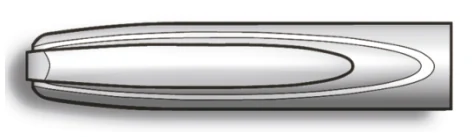
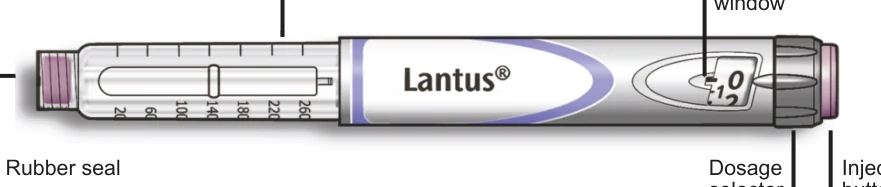
Read these instructions carefully before using your SoloStar. If you are not able to use SoloStar or follow all the instructions completely on your own, you must use SoloStar only if you have help from a person who is able to follow the instructions completely. Hold the pen as shown in this leaflet. To ensure that you read the dose correctly, hold the pen horizontally, with the needle on the left and the dosage selector to the right as shown in the illustrations below.
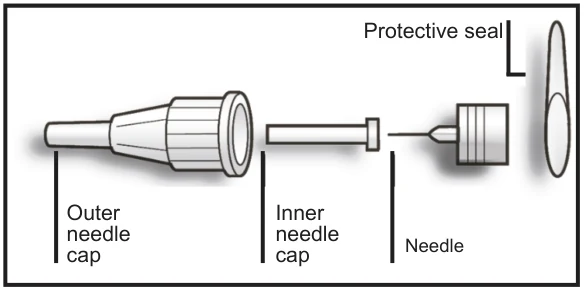
Protective seal
Insulin reservoir
Dose
window
You can set doses from 1 to 80 units in steps of 1 unit. Each pen contains multiple doses.
Outer
Inner
needle
needle
cap Needle
cap
Keep this leaflet for future reference.
Rubber seal
Dosage selector Injection
If you have any questions about SoloStar or about diabetes, ask your doctor, pharmacist or nurse or call the local Sanofi number on the front of this leaflet.
Schematic diagram of the pen
Always have a spare SoloStar in case your SoloStar is lost or damaged. Important information for use of SoloStar:
Step 4. Select the dose
Step 6. Remove and discard the needle
Always attach a new needle before each use. Only use needles that are compatible for use with SoloStar.
You can set the dose in steps of 1 unit, from a minimum of 1 unit to a maximum of 80 units. If you need a dose greater than 80 units, you should give it as two or more injections.
Always perform the safety test before each injection. This ensures that you get an accurate dose by:
Always remove the needle after each injection and store SoloStar without a needle attached.
Do not select a dose and/or press the injection button without a needle attached.
ensuring that pen and needle work properly
This helps prevent:
removing air bubbles
- Contamination and/or infection,
Always perform the safety test before each injection (see Step 3).
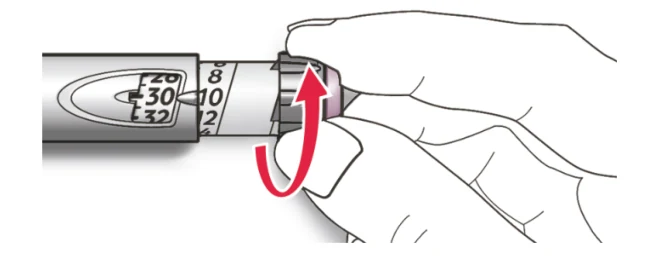
A. Check that the dose window shows “0” following the safety test.. B. Select your required dose (in the example below, the selected dose is 30 units). If you turn past your dose, you can turn back down.
- Entry of air into the insulin reservoir and leakage of insulin, which can cause inaccurate dosing.
This pen is only for your use. Do not share it with anyone else.
A. Select a dose of 2 units by turning the dosage selector.
- If your injection is given by another person, special caution must be taken by this person to avoid accidental needle injury and transmission of infection.
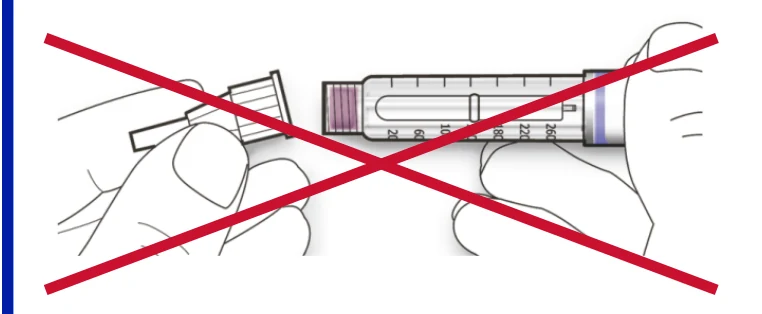
If the needle is not kept straight while you attach it, it can damage the rubber seal and cause leakage, or break the needle.
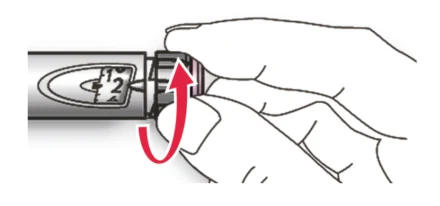
A. Put the outer needle cap back on the needle, and use it to unscrew the needle from the pen. To reduce the risk of accidental needle injury, never replace the inner needle cap.
Never use SoloStar if it is damaged or if you are not sure that it is working properly.
- If your injection is given by another person, or if you are giving an injection to another person, special caution must be taken by this person when removing and disposing of the needle. Follow recommended safety measures for removal and disposal of needles (contact your doctor, pharmacist or nurse) in order to reduce the risk of accidental needle injury and transmission of infectious diseases.
C. Check the appearance of your insulin. Lantus is a clear insulin. Do not use this SoloStar if the insulin is cloudy, coloured or has particles. Step 1. Check the insulin
A. Check the label on your SoloStar to make sure you have the correct insulin. The Lantus Solostar is grey with a purple injection button. B. Take off the pen cap.
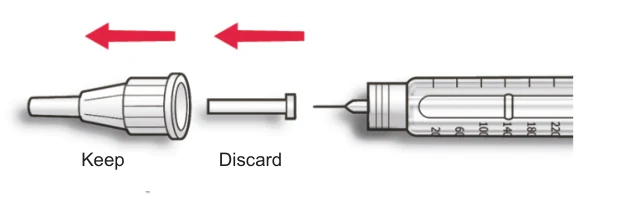
B. Take off the outer needle cap and keep it to remove the used needle after injection. Take off the inner needle cap and discard it.
- Do not push the injection button while turning, as insulin will come out.
You cannot turn the dosage selector past the number of units left in the pen. Do not force the dosage selector to turn. In this case, either you can inject what is remaining in the pen and complete your dose with a new SoloStar or use a new SoloStar for your full dose.
B. Dispose of the needle safely, as instructed by your doctor, pharmacist or nurse.
C. Always put the pen cap back on the pen, then store the pen until your next injection.
Step 2. Attach the needle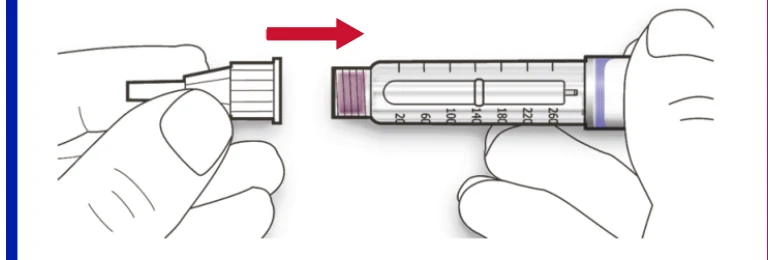
Step 5. Inject the dose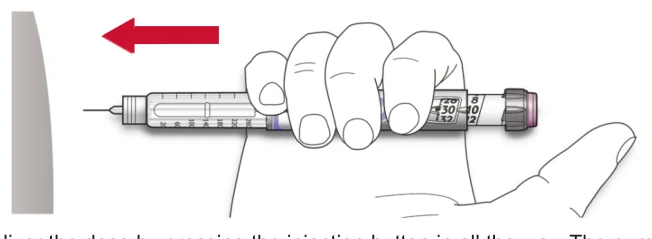
Always use a new sterile needle for each injection. This helps prevent contamination, and potential needle blocks.
Storage instructions
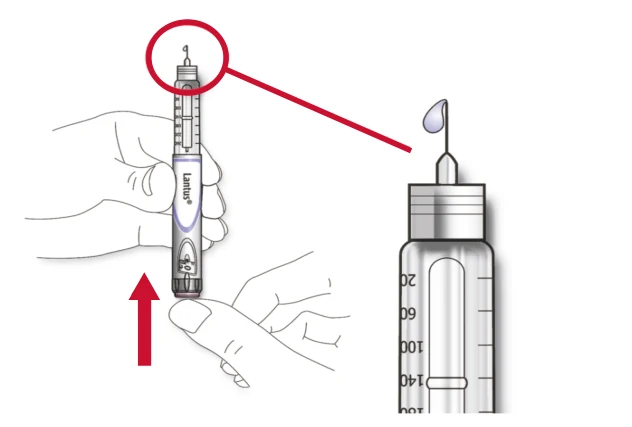
C. Hold the pen with the needle pointing upwards.
A. Use the injection method as instructed by your doctor, pharmacist or nurse. B. Insert the needle into the skin.
A. Remove the protective seal from a new needle.
D. Tap the insulin reservoir so that any air bubbles rise up towards the needle. E. Press the injection button all the way in. Check if insulin comes out of the needle tip.
B. Line up the needle with the pen, and keep it straight as you attach it (screw or push on, depending on the needle type).
See the reverse (insulin) side of this leaflet for instructions on how to store SoloStar.
If your SoloStar is in cool storage, take it out 1 to 2 hours before you inject to allow it to warm up. Cold insulin is more painful to inject.
Discard your used SoloStar as required by your local authorities.
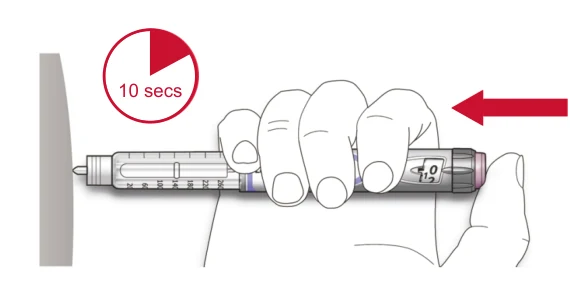
C. Deliver the dose by pressing the injection button in all the way. The number in the dose window will return to “0” as you inject.
Maintenance
10 secs
Protect your SoloStar from dust and dirt.
You can clean the outside of your SoloStar by wiping it with a damp cloth.
You may have to perform the safety test several times before insulin is seen.
Do not soak, wash or lubricate the pen as this may damage it.
If no insulin comes out, check for air bubbles and repeat the safety test two more times to remove them.
It should be handled with care. Avoid situations where SoloStar might be damaged. If you are concerned that your SoloStar may be damaged, use a new one.
If still no insulin comes out, the needle may be blocked. Change the needle and try again.
D. Keep the injection button pressed all the way in. Slowly count to 10 before you withdraw the needle from the skin. This ensures that the full dose will be delivered.
If no insulin comes out after changing the needle, your SoloStar may be damaged. Do not use this SoloStar.
The pen plunger moves with each dose. The plunger will reach the end of the cartridge when the total of 300 units of insulin has been used.