


Summary of Product Characteristics (SmPC) - Kostaive powder for Dispersion for injection, COVID-19 SA-mrna vaccine
1 NAME OF THE MEDICINAL PRODUCT
Kostaive powder for dispersion for injection
COVID-19 sa-mRNA Vaccine
2 QUALITATIVE AND QUANTITATIVE COMPOSITION
This is a multidose vial and must be reconstituted before use.
One vial contains 16 doses of 0.5 mL after reconstitution with 10 mL of sterile sodium chloride 9 mg/mL (0.9%) solution for injection; see sections 4.2 and 6.6.
One dose (0.5 mL) contains 5 micrograms of zapomeran, a COVID-19 self-amplifying messenger RNA (sa-mRNA) (encapsulated in lipid nanoparticles).
Zapomeran is a single-stranded, 5'-capped sa-mRNA replicon, produced using a cell-free in vitro transcription from the corresponding DNA templates encoding a replicase and the spike glycoprotein of the ancestral strain of SARS-CoV-2 with D614G mutation.
For the full list of excipients, see section 6.1.
3 PHARMACEUTICAL FORM
Powder for dispersion for injection
White to off-white lyophilised cake or powder.
4 CLINICAL PARTICULARS
4.1 Therapeutic indications
Kostaive is indicated for active immunisation to prevent COVID-19 caused by SARS-CoV-2 in individuals 18 years of age and older.
The use of this vaccine should be in accordance with official recommendations.
4.2 Posology and method of administration
Posology
A single dose of 0.5 mL.
For individuals who have previously been vaccinated with a COVID-19 vaccine, Kostaive should be administered at least 5 months after the most recent dose.
Severely immunocompromised adults
Additional doses may be administered to individuals who are severely immunocompromised in accordance with official recommendations (see section 4.4).
Paediatric population
The safety and efficacy of Kostaive in children and adolescents less than 18 years of age have not been established. No data are available.
Elderly
No dose adjustment is required in elderly individuals ≥ 60 years of age.
Method of administration
Kostaive must be administered intramuscularly after reconstitution (see section 6.6).
Preferred site for the intramuscular injection is the deltoid muscle of the upper arm.
Use of a needle length appropriate for intramuscular injection is recommended.
The vaccine should not be injected intravascularly, subcutaneously, or intradermally.
The vaccine should not be mixed with any other vaccines or medicinal products in the same syringe.
For precautions to be taken before and after administering the vaccine, see section 4.4.
For instructions on reconstitution of the vaccine before administration, see section 6.6.
4.3 Contraindications
Hypersensitivity to the active substance or to any of the excipients listed in section 6.1.
4.4 Special warnings and precautions for use
Traceability
In order to improve the traceability of biological medicinal products, the name and the batch number of the administered product should be clearly recorded.
Hypersensitivity and anaphylaxis
Cases of hypersensitivity, including anaphylaxis, have been reported with Kostaive (see section 4.8). Appropriate medical treatment and supervision should always be readily available in case of an anaphylactic reaction following the administration of the vaccine.
Close observation for at least 15 minutes is recommended following vaccination. No further dose of the vaccine should be given to those who have experienced anaphylaxis after a prior dose of Kostaive.
Myocarditis and pericarditis
An increased risk of myocarditis and pericarditis has been observed following vaccination with some other COVID-19 vaccines. These conditions can develop within a few days and primarily occur within 14 days. They have been observed more often in younger males.
Healthcare professionals should be alert to the signs and symptoms of myocarditis and pericarditis. Vaccine recipients (including parents or caregivers) should be instructed to seek immediate medical attention if they develop symptoms indicative of myocarditis or pericarditis.
Anxiety-related reactions
Anxiety-related reactions, including vasovagal reactions (syncope), hyperventilation or stress-related reactions, may occur in association with vaccination as a psychogenic response to the needle injection. Procedures should be in place to avoid injury from fainting.
Concurrent illness
Vaccination should be postponed in individuals suffering from acute severe febrile illness or acute infection. The presence of a minor infection and/or low-grade fever should not delay vaccination.
Thrombocytopenia and coagulation disorders
As with other intramuscular injections, the vaccine should be given with caution in individuals receiving anticoagulant therapy or those with thrombocytopenia or any coagulation disorder (such as haemophilia) because bleeding or bruising may occur following an intramuscular administration in these individuals.
Immunocompromised individuals
The efficacy and safety of the vaccine have not been assessed in immunocompromised individuals, including those with a known diagnosis of the human immunodeficiency virus (HIV) or those receiving immunosuppressant therapy (see section 5.1). The efficacy of Kostaive may be lower in immunocompromised individuals.
Limitations of vaccine effectiveness
As with any vaccine, vaccination with Kostaive may not protect all vaccine recipients. Individuals may not be fully protected until 7 days after their vaccination.
Excipients with known effect
Potassium
This vaccine contains less than 1 mmol potassium (39 mg) per dose, that is to say essentially “potassium-free”.
Sodium
This vaccine contains less than 1 mmol sodium (23 mg) per dose, that is to say essentially “sodium-free”.
4.5 Interaction with other medicinal products and other forms of interaction
Kostaive may be administered concomitantly with seasonal influenza vaccine.
Different injectable vaccines should be given at different injection sites.
Concomitant administration of Kostaive with other vaccines has not been studied.
4.6 Fertility, pregnancy and lactation
Pregnancy
There are limited data from the use of Kostaive in pregnant women.
Animal studies do not indicate direct or indirect harmful effects with respect to reproductive toxicity (see section 5.3).
Administration of Kostaive in pregnancy should only be considered when the potential benefits outweigh any potential risks for the mother and foetus.
Breast-feeding
No effects on the breast-fed newborn/infant are anticipated since the systemic exposure of the breast-feeding woman to Kostaive is negligible. Kostaive can be used during breast-feeding.
Fertility
Animal studies do not indicate direct or indirect harmful effects with respect to reproductive toxicity (see section 5.3).
4.7 Effects on ability to drive and use machines
Kostaive has no or negligible influence on the ability to drive and use machines. However, some of the adverse reactions mentioned under section 4.8 may temporarily affect the ability to drive or use machines.
4.8 Undesirable effects
Summary of the safety profile
Primary vaccination series
The most frequent adverse reactions (≥ 10%) after dose 1 or dose 2 are pain at the injection site (49.1%), tenderness at the injection site (49.0%), fatigue (42.3%), headache (35.4%), myalgia (30.1%), chills (28.5%), arthralgia (27.2%), dizziness (20.1%), and pyrexia (10.8%). The majority of adverse reactions were mild in intensity and resolved within a few days of vaccination. One case of anaphylaxis was reported as related to Kostaive (see section 4.4).
Booster dose
The overall safety profile for participants who received a booster dose of Kostaive was similar to that seen after 2 doses (primary vaccination series).
Tabulated list of adverse reactions
The safety profile presented below is based on data from 2 clinical studies:
- Study ARCT-154-01, conducted to evaluate the safety, immunogenicity, and efficacy of a 2-dose regimen of Kostaive, involving participants 18 years of age and older who received at least one dose of Kostaive (N=8 807).
- Study ARCT-154-J01, conducted to evaluate the safety and immunogenicity for booster immunisation. In this study, a single dose of Kostaive was administered to participants aged 18 years or older (N=420) who had previously received 3 doses of authorised COVID-19 mRNA vaccines at least 3 months prior to enrollment.
Adverse reactions observed during clinical studies are listed according to the following frequency categories:
Very common (≥ 1/10)
Common (≥ 1/100 to < 1/10)
Uncommon (≥ 1/1 000 to < 1/100)
Rare (≥ 1/10 000 to < 1/1 000)
Very rare (< 1/10 000)
Not known (cannot be estimated from the available data)
Table 1 Adverse reactions
| MedDRA System Organ Class | Adverse reactions | Frequency |
| Immune system disorders | Immediate and delayed hypersensitivity reactions | Uncommon |
| (e.g., rash, urticaria, allergic dermatitis) Anaphylaxis | Very rare | |
| Nervous system disorders | Headache Dizziness | Very common Very common |
| Gastrointestinal disorders | Diarrhoea Nausea Vomiting | Common Common Common |
| Musculoskeletal and connective tissue disorders | Arthralgia Myalgia | Very common Very common |
| General disorders and administration site conditions | Injection site pain Injection site tenderness Fatigue/malaise Chills Pyrexia Injection site swelling Injection site induration Injection site erythema Injection site pruritus | Very common Very common Very common Very common Very common Common Common Common Common |
| Investigations | Neutrophil count decreaseda | Not known |
a Neutrophil count decreases observed in clinical trial participants were transient and clinically asymptomatic.
Concomitant administration with seasonal influenza vaccine
Study ARCT-2303-01 was conducted to evaluate the safety and immunogenicity of a single booster dose of Kostaive co-administered with seasonal influenza vaccine in participants 18 to < 65 years of age (N=403), and 65 years of age and older (N=99). Reactogenicity events were reported at a similar frequency by participants who received Kostaive co-administered with influenza vaccine or Kostaive alone, with no increase in intensity of local or systemic adverse reactions.
Reporting of suspected adverse reactions
Reporting suspected adverse reactions after authorisation of the medicinal product is important. It allows continued monitoring of the benefit/risk balance of the medicinal product. Healthcare professionals are asked to report any suspected adverse reactions via the Yellow Card Scheme Website: https://coronavirus-yellowcard.mhra.gov.uk/or search for MHRA Yellow Card in the Google Play or Apple App Store.
4.9 Overdose
In the event of an overdose, monitoring of vital functions and possible symptomatic treatment is recommended.
5 PHARMACOLOGICAL PROPERTIES
5.1 Pharmacodynamic properties
Pharmacotherapeutic group: Vaccines, COVID-19 vaccines, RNA-based vaccine, ATC code: J07BN01
Mechanism of action
Kostaive is composed of a self-amplifying mRNA encoding the spike protein of SARS-CoV-2, encapsulated in lipid nanoparticles. The self-amplifying mRNA is designed to produce extra copies of mRNA within the host cells after intramuscular injection, to achieve enhanced expression of the spike protein antigen. This gives rise to neutralising antibody and cellular immune responses to the spike antigen, which contributes to protection against COVID-19. The mRNA self-amplification process is transient and does not generate infectious particles.
Clinical efficacy
Study ARCT-154-01 was a randomised, controlled, observer-blind, multicentre clinical study conducted in participants 18 years of age and older in Vietnam at a time when the dominant variant was delta.
The efficacy was evaluated in the mITT analysis set, including 15 458 participants, 7 762 in Kostaive (zapomeran) group and 7 696 in placebo group.
Randomisation was stratified by age (< 60 or ≥ 60 years of age) and, for participants < 60 years of age, by risk of severe COVID-19 (those with asthma, cancer, cerebrovascular disease, chronic kidney/liver/lung disease, cystic fibrosis, diabetes mellitus Type 1 or 2, cardiovascular conditions, mental health conditions, smoking, pulmonary fibrosis, Down syndrome, obesity, sickle cell disease, or substance abuse disorder). All participants ≥ 60 years of age were deemed to be at high risk for severe COVID-19. Among participants who received Kostaive, 5.5% (n=485) had significant underlying medical conditions, including cardiovascular diseases, diabetes, obesity, liver disorders, chronic obstructive pulmonary disease (COPD), and asthma. The study excluded participants who were immunocompromised, including those with a known diagnosis of the human immunodeficiency virus (HIV) or taking immunosuppressive medication, and those who had a previous clinical or microbiological diagnosis of COVID-19.
Participants with pre-existing acute or chronic medical conditions, including participants with known infection with hepatitis C virus (HCV) or hepatitis B virus (HBV) disease, were eligible for inclusion.
Demographic and baseline characteristics were similar between groups for individuals in the 2 age cohorts and by risk groups. Among the total participants who received Kostaive, 49% were male and 51% were female, 99.6% were Asian, and 0.4% were described as “other” for race, respectively. At the time of vaccination, the mean age of the population was 46.4 years (age range 18-89 years).
The overall primary efficacy endpoint was vaccine efficacy (VE), defined as the first occurrence of virologically confirmed, protocol-defined COVID-19 with onset between day 36 (7 days after dose 2) and day 92, inclusive.
For participants without evidence of SARS-CoV-2 infection prior to 7 days after dose 2, vaccine efficacy against confirmed COVID-19 occurring at least 7 days after dose 2 was 56.7% (95% confidence interval: 48.8% to 63.4%). The number of COVID-19 cases was 200 and 440 in the Kostaive and placebo groups, respectively. At the time of the primary efficacy analysis, participants had been followed for symptomatic COVID-19 for in total 1 146 person-years for Kostaive and in total 1 120 person-years in the placebo group.
The information relating to the evaluation of overall vaccine efficacy is presented in Table 2.
Table 2 Vaccine efficacy against virologically confirmed, protocol-defined COVID-19 between day 36 and day 92 – modified intent-to-treat (mITT) population
| Subgroup | Kostaive | Placebo | VE % (95% CI)a |
| All participants | |||
| N | 7 762 | 7 696 | 56.7 (48.8 – 63.4) |
| Number of confirmed COVID-19 cases, n (%) | 200 (2.6) | 440 (5.7) | |
| Surveillance timeb (person-years) | 1 146.2 | 1 120.2 | |
| Healthy ≥ 18 to < 60 years | |||
| N | 3 882 | 3 896 | 49.8 (37.8 – 59.5) |
| Number of confirmed COVID-19 cases, n (%) | 126 (3.2) | 246 (6.3) | |
| Surveillance timeb (person-years) | 572.1 | 566.1 | |
| At risk ≥ 18 to < 60 years | |||
| N | 2 519 | 2 471 | 69.7 (57.6 – 78.3) |
| Number of confirmed COVID-19 cases, n (%) | 46 (1.8) | 138 (5.6) | |
| Surveillance timeb (person-years) | 372.9 | 359.5 | |
| ≥ 60 years | |||
| N | 1 361 | 1 329 | 53.5 (26.8 – 70.5) |
| Number of confirmed COVID-19 cases, n (%) | 28 (2.1) | 56 (4.2) | |
| Surveillance timeb (person-years) | 201.2 | 194.5 | |
Abbreviations: CI, confidence interval; COVID-19, coronavirus disease 2019; HR, hazard ratio; N, number of participants at risk; n, number of participants with case reported; RR, relative risk; SARS-CoV-2, severe acute respiratory syndrome coronavirus 2; VE, vaccine efficacy.
mITT, modified intent-to-treat (includes all participants who received all protocol-required doses of study vaccine (Kostaive or placebo) up to the evaluation timepoint, and who have no evidence of SARS-CoV-2 infection on day 1 or up to 7 days after the 2nd vaccination in the study).
‘At-risk’ was defined as individuals that are considered to have higher risk of developing severe COVID-19.
a VE is calculated by 1-HR from cox regression adjusting for risk group and region of study site.
b The surveillance time refers to the total person-time at risk in years for the given endpoint.
Efficacy against severe COVID-19
The efficacy of Kostaive for the prevention of virologically confirmed severe COVID-19, including death, was evaluated (Table 3). Severe COVID-19 comprised any of the following: respiratory rate ≥ 30 per minute, heart rate ≥ 125 per minute, oxygen saturation level (SpO2) ≤ 93% on room air at sea level or arterial oxygen partial pressure (PO2)/fractional inspired oxygen (FiO2) < 300 mm Hg, respiratory failure (defined as needing high flow oxygen, noninvasive ventilation, mechanical ventilation or extracorporeal membrane oxygenation (ECMO)), shock (defined as systolic blood pressure < 90 mm Hg, diastolic blood pressure < 60 mm Hg, or requirement for vasopressors), significant acute renal, hepatic, or neurologic dysfunction, admission to an intensive care unit, death. The endpoint was the first occurrence of confirmed, protocol-defined severe COVID-19 with onset between days 36 and 92, inclusive.
Table 3 Vaccine efficacy against virologically confirmed, protocol-defined severe COVID-19 between day 36 and day 92 – modified intent-to-treat (mITT) population
| Subgroup | Kostaive | Placebo | VE % (95% CI)a |
| All participants | |||
| N | 7 762 | 7 696 | 95.3 (80.5-98.9) |
| Number of confirmed COVID-19 cases, n (%) | 2 (0.0) | 41 (0.5) | |
| Surveillance timeb (person-years) | 1 162.9 | 1 154.7 | |
| Healthy ≥ 18 to < 60 years | |||
| N | 3 882 | 3 896 | 100.0 (NE) |
| Number of confirmed COVID-19 cases, n (%) | 0 (0.0) | 15 (0.4) | |
| Surveillance timeb (person-years) | 582.7 | 585.8 | |
| At risk ≥ 18 to < 60 years | |||
| N | 2 519 | 2 471 | 89.5 (16.8-98.7) |
| Number of confirmed COVID-19 cases, n (%) | 1 (0.0) | 9 (0.4) | |
| Surveillance timeb (person-years) | 376.9 | 370.9 | |
| ≥ 60 years | |||
| N | 1 361 | 1 329 | 94.4 (58.2-99.3) |
| Number of confirmed COVID-19 cases, n (%) | 1 (0.1) | 17 (1.3) | |
| Surveillance timeb (person-years) | 203.4 | 197.9 | |
Abbreviations: CI, confidence interval; COVID-19, coronavirus disease 2019; HR, hazard ratio; N, number of participants at risk; n, number of participants with case reported; NE, not estimable; RR, relative risk; SARS-CoV-2, severe acute respiratory syndrome coronavirus 2; VE, vaccine efficacy.
mITT, modified intent-to-treat (includes all participants who received all protocol required doses of study vaccine (Kostaive or placebo) up to the evaluation timepoint, and who have no evidence of SARS-CoV-2 infection on day 1 or up to 7 days after the 2nd vaccination in the study)
a VE is calculated by 1-HR from cox regression adjusting for risk group and region of study site, or 1-RR when number of confirmed cases is 0 in the Kostaive group.
b The surveillance time refers to the total person-time at risk in years for the given endpoint.
Immunogenicity in participants 18 years of age and older after booster dose
The evaluation of immunogenicity of a booster dose is based on the results of Study ARCT-154-J01, conducted in Japan, which compared the immune response that followed a booster dose of Kostaive (zapomeran) with that of the comparator (tozinameran, BNT162b2) in adult individuals who previously received the primary vaccination series and 1 booster dose with authorised COVID-19 mRNA vaccines. In this study, immunogenicity was assessed using a virus neutralisation assay against ancestral SARS-CoV-2 strain and Omicron BA.4/5 variant.
The primary objective of Study ARCT-154-J01 was to demonstrate the noninferiority of Kostaive compared to the comparator vaccine in terms of ratio of geometric mean antibody titres (GMTs) and difference in seroresponse rates (SRR) against ancestral SARS-CoV-2 strain on day 29 after vaccination. In case the noninferiority is demonstrated for ancestral strain, similar testing was to be performed for Omicron BA.4/5 variant. When the second noninferiority is demonstrated, the superiority of Kostaive versus the comparator for Omicron BA.4/5 variant was tested. Additional testing of GMTs up to 12 months was conducted to assess the duration of the antibody response.
A total of 828 participants were enrolled in the study and randomised (1:1) to Kostaive and comparator vaccine group. At the time of vaccination, the mean age was 45.7 years (age range 18-77 years). Of 828 participants, who were randomised and received a study vaccine, 759 participants were included in Per Protocol Set 1 (PPS-1), the analysis set for the primary immunogenicity endpoint.
The results of Study ARCT-154-J01 are presented in Table 4. One month after vaccination, Kostaive demonstrated noninferiority versus the comparator vaccine against ancestral SARS-CoV-2 strain and superiority against Omicron BA.4/5 variant. Longer term immunogenicity data showed that neutralising antibodies persisted, with approximately 2-fold higher GMTs detected for Kostaive compared to the comparator vaccine at 3, 6 and 12 months after vaccination, for both strains.
Table 4 Summary of immune response against SARS-CoV-2 ancestral strain and
Omicron BA.4/5 variant up to 12 months following administration of booster dose
| Strain | Time Point Endpoint | GMT / SRR (95% CI) | GMT ratio / SRR difference (95% CI) | |||
| Na | Kostaive | Na | Comparator* | |||
| Ancestral strain (Wuhan-Hu-1) | Pre-vaccination GMT | 385 | 813 (716, 924) | 374 | 866 (755, 993) | 0.94 (0.78, 1.13) |
| 1 month GMT | 385 | 5 641 (4 321, 7 363) | 374 | 3 934 (2 993, 5 169) | 1.43b (1.26, 1.63) | |
| 1 month SRR | 385 | 65.2 (60.2, 69.9) | 374 | 51.6 (46.4, 56.8) | 13.6b (6.8, 20.5) | |
| 3 months GMT | 369 | 5 928 (5 414, 6 491) | 356 | 2 899 (2 648, 3 175) | 2.04c (1.80, 2.32) | |
| 6 months GMT | 332 | 4 119 (3 723, 4 557) | 313 | 1 861 (1 667, 2 078) | 2.21c (1.91, 2.57) | |
| 12 months GMT | 272 | 3 396 (3 019, 3 821) | 266 | 1 771 (1 532, 2 047) | 1.92 (1.59, 2.31) | |
| Omicron BA.4/5 | Pre-vaccination GMT | 385 | 275 (227, 335) | 374 | 292 (236, 360) | 0.94 (0.71, 1.26) |
| 1 month GMT | 385 | 2 551 (1 687, 3 859) | 374 | 1 958 (1 281, 2 993) | 1.30d (1.07, 1.58) | |
| 1 month SRR | 385 | 69.9 (65.0, 74.4) | 374 | 58.0 (52.8, 63.1) | 11.6d (4.9, 18.3) | |
| 3 months GMT | 369 | 1 892 (1 646, 2 175) | 356 | 888 (764, 1 031) | 2.13c (1.74, 2.61) | |
| 6 months GMT | 332 | 1 119 (960, 1 305) | 313 | 495 (413, 595) | 2.26c (1.78, 2.86) | |
| 12 months GMT | 272 | 881 (735, 1 057) | 266 | 467 (376, 580) | 1.89 (1.42, 2.50) | |
Abbreviations: CI, confidence interval; GMT, geometric mean titre; SARS-CoV-2, severe acute respiratory syndrome coronavirus; SRR, seroresponse rate.
Log-transformed neutralising antibody titre value for day 29 (1 month) was analysed using Analysis of Covariance (ANCOVA) model. Gender and period from last (3rd) vaccination (< 5 months, ≥ 5 months) were used as factors as prespecified in the protocol. GMTs at baseline, 3, 6 and 12 months are unadjusted.
If a measured antibody titre is below the lower limit of quantitation, the value was imputed as 1/2 of the quantitation limit.
Seroresponse is defined as at least 4-fold increase of post-booster neutralising antibody titres from the baseline titre or from half of the lower limit of quantitation if undetectable at baseline. a N = number of participants with valid assay results for the specific assay at the given sampling time point.
b Pre-specified criteria were met for noninferiority: the lower limit (LL) of 95% confidence interval (CI) for ratio of GMTs (Kostaive/comparator) exceeds 0.67, and the LL of 95% CI for the difference in SRRs (Kostaive minus comparator) exceeds -10%. Superiority test for ancestral strain was not pre-specified. Analysis was conducted in the PPS-1.
c Analysis was conducted in the PPS-1-ic, a modified version from PPS-1 in which participants with a positive nucleocapsid antibody test were excluded from all subsequent immunogenicity analyses.
d Pre-specified criteria were met for both noninferiority and superiority. Superiority criteria: the LL of 95% CI for GMT ratio exceeds 1.0, and the LL of 95% CI for SRR difference exceeds 0%. Analysis was conducted in the PPS-1.
* Comparator: tozinameran (BNT162b2)
Paediatric population
The licensing authority has deferred the obligation to submit the results of studies with Kostaive in one or more subsets of the paediatric population in prevention of COVID-19 (see section 4.2 for information on paediatric use).
5.2 Pharmacokinetic properties
Not applicable.
5.3 Preclinical safety data
Non-clinical data reveal no special hazard for humans based on conventional studies of repeat-dose toxicity and reproductive and developmental toxicity.
General toxicity
A general toxicity study was conducted with Kostaive in rabbits (intramuscularly receiving a total of 3 doses, each exceeding the human dose, once every 2 weeks).
Transient increases in mean body temperature (increases of up to ~1.7 °C), changes in laboratory tests (erythroid changes consistent with decreased erythropoiesis secondary to inflammation, minimally or mildly decreased platelet counts, minimally increased neutrophil and/or monocyte counts, mildly or moderately increased fibrinogen, and minimally increased globulin and/or minimally decreased serum albumin and increases in serum cytokines), as well as inflammatory findings in the spleen, lymph nodes (increased lymphocyte cellularity), consistent with an inflammatory response were observed.
Genotoxicity/carcinogenicity
Neither genotoxicity nor carcinogenicity studies were performed. The components of the vaccine (lipids and mRNA) are not expected to have genotoxic potential.
Reproductive toxicity
Reproductive and developmental toxicity was investigated in rabbits in a combined fertility, embryo-foetal, and postnatal development study where female rabbits were intramuscularly vaccinated prior to mating, and during gestation (receiving 5 doses of vaccine each exceeding the human dose spanning between premating day 28 and gestation day 28). SARS-CoV-2 antibody responses were present in maternal animals post-vaccination from prior to mating to the end of the study as well as in the foetus and offspring, indicating placental transfer of maternal antibodies.
There were no vaccine-related effects noted on female fertility, development of the embryo and foetus or postnatal growth and development. No Kostaive data for excretion into milk are available.
6 PHARMACEUTICAL PARTICULARS
6.1 List of excipients
Di(pentadecan-8-yl)-4,4'-((((3-
(dimethylamino)propyl)thio)carbonyl)azanediyl)dibutyrate (ATX-126)
Cholesterol
1,2-Distearoyl-sn-glycero-3-phosphocholine (DSPC)
1,2-Dimyristoyl-rac-glycero-3-methoxypolyethylene glycol-2000 (PEG2000-DMG)
Sucrose
Potassium sorbate
Sodium chloride
Trometamol
Poloxamer 188 (contains the antioxidant butylated hydroxytoluene)
6.2 Incompatibilities
In the absence of compatibility studies, this vaccine must not be mixed with other medicinal products.
6.3 Shelf life
Unopened vial
2 years at -15 °C to -25 °C.
Vials can be stored at room temperature (up to 25 °C) for up to 4 hours before reconstitution.
Reconstituted medicinal product
After preparation, the reconstituted vaccine vial must be stored under refrigerated conditions or at room temperature (2 °C to 25 °C) prior to administration and must be administered within 6 hours of initial puncture of the vial stopper.
Once thawed or reconstituted, the vaccine should not be refrozen.
Chemical and physical in-use stability has been demonstrated for 6 hours at 2 °C to 25 °C and includes transportation during this time. From a microbiological point of view, once the vial stopper has been punctured for reconstitution of the vaccine, the product may be stored for a maximum of 6 hours under refrigerated conditions or at room temperature (2 °C to 25 °C). Other in-use storage times and conditions are the responsibility of the user.
The reconstituted vaccine should be disposed of after 6 hours.
6.4 Special precautions for storage
Store in a freezer at -15 °C to -25 °C. Store in the original carton in order to protect from light.
For storage conditions after thawing and reconstitution of the medicinal product, see section 6.3.
6.5 Nature and contents of container
Powder contained in a vial (type I glass) with a stopper (FluroTec-coated bromobutyl rubber) and a plastic (polypropylene) flip-off cap with seal (aluminium crimp).
Each multidose vial contains 16 doses of 0.5 mL; see section 6.6.
Pack size: 20 multidose vials.
6.6 Special precautions for disposal
Handling instructions
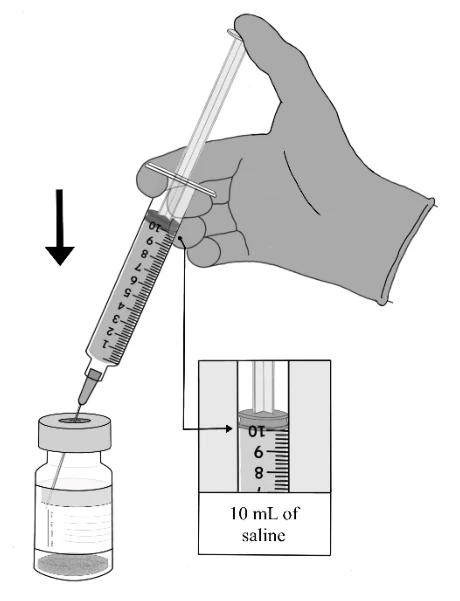
ONLY use 10 mL of sterile sodium chloride 9 mg/mL (0.9%) solution for injection or equivalent for reconstitution.
Upon reconstitution, the vaccine is a white to off-white opalescent suspension (pH: 7.5-8.5); osmolality: 300-400 mOsm/kg.
After reconstitution, each vial contains 16 doses of 0.5 mL.
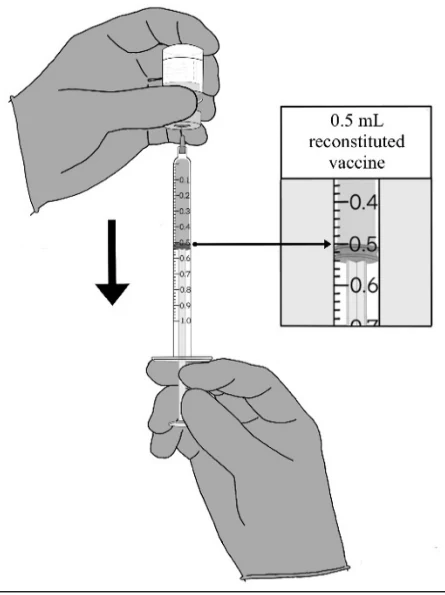
Extract 0.5 mL of vaccine into individual use syringes.
- Each dose must contain 0.5 mL of reconstituted dispersion for injection.
- If the amount of vaccine remaining in the vial cannot provide a full dose of 0.5 mL, do not administer the remainder. Instead, discard the vial and any remaining volume.
- Excess vaccine from multiple vials should not be pooled.
- After preparation, the filled syringes must be stored under refrigerated conditions or at room temperature (2 °C to 25 °C) prior to administration (including transportation during this time) and must be administered within 6 hours of initial puncture of the vial stopper.
- The reconstituted vaccine should be disposed of after 6 hours.
| Preparation of individual doses of Kostaive powder for dispersion for injection | |
STEP A. Visual inspection and temperature equilibration of vials
DO NOT USE if there is damage to the container or other defects. DO NOT USE if unpunctured vial is at room temperature longer than 4 hours. | |
STEP B. Addition of saline to vaccine
To ensure that 10 mL of sodium chloride 9 mg/mL (0.9%) solution for injection is added, the syringe should not be removed from the vial during steps 5-8.
| |
| Preparation of individual doses of Kostaive powder for dispersion for injection | |
| |
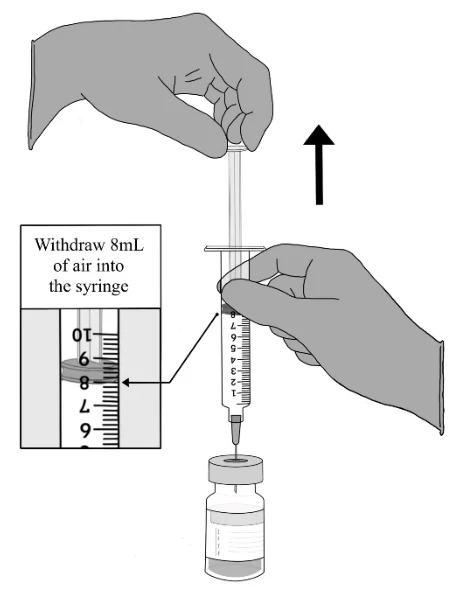
STEP C. Equalise vial pressure
| |
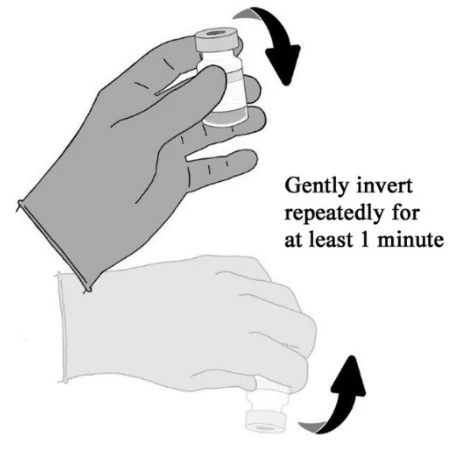
STEP D. Mix and visually inspect the reconstituted vaccine
| . |
| Preparation of individual doses of Kostaive powder for dispersion for injection | |
| room temperature (2 °C to 25 °C) prior to administration and must be used within 6 hours of initial stopper puncture. | |
STEP E. Preparation of syringe
| |
Disposal
Any unused medicinal product or waste material should be disposed of in accordance with local requirements.
7 MARKETING AUTHORISATION HOLDER
Arcturus Therapeutics Europe B.V.
Claude Debussylaan 10
1082 MD Amsterdam
The Netherlands
8 MARKETING AUTHORISATION NUMBER(S)
PL 55022/0001
9 DATE OF FIRST AUTHORISATION/RENEWAL OF THE
AUTHORISATION
02/01/2026
10 DATE OF REVISION OF THE TEXT
17/09/2026