

Patient leaflet - Ikervis 1 mg / ml eye drops emulsion
1. What Ikervis is and what it is used for
Ikervis contains the active substance, ciclosporin. Ciclosporin belongs to a group of medicines known as immunosuppressive agents that are used to reduce inflammation.
Ikervis is used to treat adults with severe keratitis (inflammation of the cornea, the transparent layer in the front part of the eye). It is used in those patients who have dry eye disease, which has not improved despite treatment with tear substitutes (artificial tears).
Talk to a doctor if you do not feel better or if you feel worse.
You should visit your doctor at least every 6 months to assess the effect of Ikervis.
2. What you need to know before you use Ikervis
Do NOT use Ikervis
- if you are allergic to ciclosporin or any of the other ingredients of this medicine (listed in section 6).
- if you have had or have a cancer in or around your eye.
- if you have an eye infection.
Warnings and precautions
Only use Ikervis for dropping in your eye(s).
Talk to your doctor or pharmacist before using Ikervis
- if you have previously had an eye infection by the herpes virus that might have damaged the transparent front part of the eye (cornea).
- if you are taking any medicines containing steroids.
- if you are taking any medicines to treat glaucoma.
Contact lenses can further damage the transparent front part of the eye (cornea). Therefore, you should remove your contact lenses at bedtime before using Ikervis; you can reinsert them when you wake up.
Children and adolescents
Ikervis should not be used in children and adolescents below 18 years old.
Other medicines and Ikervis
Tell your doctor or pharmacist if you are using, have recently used or might use any other medicines.
Talk to your doctor if you are using eye drops containing steroids with Ikervis as these might increase the risk of side effects.
Ikervis eye drops should be used at least 15 minutes after any other eye drops are used.
Pregnancy and breast-feeding
If you are pregnant or breast-feeding, think you may be pregnant or are planning to have a baby, ask your doctor or pharmacist for advice before using this medicine.
Ikervis should not be used if you are pregnant.
If you could become pregnant you must use contraception while using this medicine.
Ikervis is likely to be present in breast milk in very small amounts. If you are breast feeding talk to your doctor before using this medicine.
Driving and using machines
Your vision may be blurred immediately after using Ikervis eye drops. If this happens, wait until your vision clears before you drive or use machines.
Ikervis contains cetalkonium chloride
This medicine contains 0.05 mg cetalkonium chloride in 1 mL. You should remove contact lenses before using this medicine and you can reinsert them when you wake up. Cetalkonium chloride may cause eye irritation. If you feel abnormal eye sensation, stinging or pain in the eye after using this medicine, talk to your doctor.
3. How to use Ikervis
Always use this medicine exactly as your doctor or pharmacist has told you. Check with your doctor or pharmacist if you are not sure.
The recommended dose is one drop in each affected eye, once daily at bedtime.
Instructions for use
Follow these instructions carefully and ask your doctor or pharmacist if there is anything you do not understand.
 1 | ||
|---|---|---|
 2 | 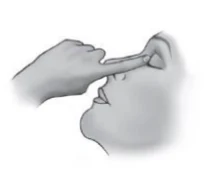 3 | |
- Wash your hands.
- If you wear contact lenses, take them out at bedtime before using the drops; you can reinsert them when you wake up.
- Open the aluminium pouch, which contains 5 single-dose containers.
- Take one single-dose container from the aluminium pouch.
- Gently shake the single-dose container prior to use.
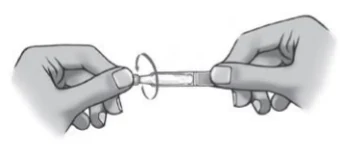
- Twist off the cap (picture 1).
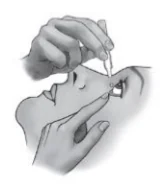
- Pull down your lower eyelid (picture 2).
- Tilt your head back and look up at the ceiling.
- Gently squeeze one drop of the medicine onto your eye. Make sure you do not touch your eye with the tip of the single-dose container.
- Blink a few times so that the medicine covers your eye.
- After using Ikervis, press a finger into the corner of your eye by the nose and gently close the eyelids for 2 minutes (picture 3). This helps to stop Ikervis getting into the rest of the body.
- If you use drops in both eyes, repeat the steps for your other eye.
- Discard the single dose container as soon as you have used it, even if there is still some medicine left in it.
- The remaining single-dose containers should be kept in the aluminium pouch.
If a drop misses your eye, try again.
MPT1550L1
If you use more Ikervis than you should, rinse your eye with water.
Do not put in any more drops until it is time for your next regular dose.
If you forget to use Ikervis, continue with the next dose as planned.
Do not use a double dose to make up for the forgotten dose. Do not use more than one drop each day in the affected eye(s).
If you stop using Ikervis without speaking to your doctor, the inflammation of the transparent front part of your eye (known as keratitis) will not be controlled and could lead to impaired vision.
If you have any further questions on the use of this medicine, ask your doctor or pharmacist.
4. Possible side effects
Like all medicines, this medicine can cause side effects, although not everybody gets them.
The following side effects have been reported:
The most common side effects are in and around the eyes.
Very common (may affect more than 1 in 10 people)
- Eye pain,
- Eye irritation
Common (may affect up to 1 in 10 people)
- Redness of the eyelid,
- Watery eyes,
- Eye redness,
- Blurred vision,
- Swelling of the eyelid,
- Redness of the conjunctiva (thin membrane covering the front part of the eye),
- Itching in the eye
Uncommon (may affect up to 1 in 100 people)
- Discomfort in or around the eye when the drops are put into the eye, including feeling that there is something in the eye,
- Irritation or swelling of the conjunctiva (thin membrane covering the front part of the eye),
- Tear disorder,
- Eye discharge,
- Irritation or inflammation of the conjunctiva (thin membrane covering the front part of the eye),
- Inflammation of the iris (coloured part of the eye) or eyelid,
- Deposits in the eye,
- Abrasion to the outer layer of the cornea,
- Red or swollen eyelids,
- Cyst in the eyelid,
- Immune response or scarring in the cornea,
- Itching in the eyelid,
- Bacterial infection or inflammation of the cornea (transparent front part of the eye),
- Painful rash around the eye caused by the herpes zoster virus,
- Headache
Reporting of side effects
If you get any side effects, talk to your doctor or pharmacist. This includes any possible side effects not listed in this leaflet. You can also report side effects directly via the Yellow Card Scheme at: www.mhra.gov.uk/yellowcard or search for MHRA Yellow Card in the Google Play or Apple App Store.
By reporting side effects you can help provide more information on the safety of this medicine.
5. How to store Ikervis
- Keep out of the sight and reach of children.
- Do not use this medicine after the expiry date which is stated on the outer carton and the pouch label after EXP. The expiry date refers to the last day of that month.
- Do not freeze.
- Do not store above 25oC.
- After opening of the aluminium pouches, the single-dose containers should be kept in the pouches in order to protect from light and avoid evaporation. Discard any opened individual single-dose container with any remaining emulsion immediately after use.
- If your medicine shows any sign of deterioration, return it to your pharmacist.
- Medicines should not be disposed of via wastewater or household waste. Ask your pharmacist how to dispose of medicines no longer required. These measures will help to protect the environment.
6. Contents of the pack and other information
What Ikervis contains
The active substance is ciclosporin. One millilitre of emulsion contains 1 mg of ciclosporin.
The other ingredients are medium-chain triglycerides, cetalkonium chloride, glycerol, tyloxapol, poloxamer 188, sodium hydroxide (for pH adjustment) and water for injections.
What Ikervis looks like and contents of the pack
Ikervis is a milky white eye drops emulsion.
It is supplied in single-dose containers made of a low-density polyethylene (LDPE).
Each single-dose container contains 0.3 mL eye drops, emulsion.
The single-dose containers are wrapped in a sealed aluminium pouch.
A pack contains 30 single-dose containers packed in 6 pouches.
Manufactured by SANTEN Oy, Kelloportinkatu 1, 33100 Tampere, Finland.
Procured from within the EU. Repackaged by the Product Licence holder:
MPT Pharma Ltd, Westgate Business Park, Unit 5-7 Tintagel Way, Aldridge, Walsall, WS9 8ER.
For any information about this medicine, please contact:
MPT Pharma Ltd.
Tel: 01922 745645
Email: qa@cstpharma.co.uk
PL 33532/1550
Leaflet dated 25th March 2024
Leaflet coded MPT1550L1
Ikervis® is a registered trademark of SANTEN SAS.
To request a copy of this leaflet in Braille, large print or audio please call 01922 745645 and ask for the Regulatory Department.
POM