

Summary of medicine characteristics - Havrix Monodose vaccine
1 NAME OF THE MEDICINAL PRODUCT
Havrix Monodose Vaccine
Suspension for injection in a pre-filled syringe
Hepatitis A (inactivated) vaccine (adsorbed)
Havrix Monodose Vaccine
Suspension for injection in a vial
Hepatitis A (inactivated) vaccine (adsorbed)
2 QUALITATIVE AND QUANTITATIVE COMPOSITION
One dose (1.0 mL) contains:
Hepatitis A virus (inactivated)1,2 1440 ELISA Units
1 Produced on human diploid (MRC-5) cells
2Adsorbed on aluminium hydroxide, hydrated Total: 0.50 milligrams Al3+
Havrix Monodose Vaccine may contain traces of neomycin B sulfate, which is used during the manufacturing process (see section 4.3).
Excipient(s) with known effect:
This vaccine contains phenylalanine 166 micrograms per dose (see section 4.4).
For the full list of excipients, see section 6.1.
3 PHARMACEUTICAL FORM
Suspension for injection.
Turbid liquid suspension.
4 CLINICAL PARTICULARS
4.1 Therapeutic indications
Active immunisation against infections caused by hepatitis A virus. The vaccine is particularly indicated for those at increased risk of infection or transmission. For example immunisation should be considered for the following risk groups:
Travellers visiting areas of medium or high endemicity, i.e. anywhere outside northern or western Europe, Australia, North America and New Zealand.
Military and diplomatic personnel.
Persons for whom Hepatitis A is an occupational hazard or for whom there is an increased risk of transmission. These include employees in day care centres, nursing, medical and paramedical personnel in hospitals and institutions, especially gastroenterology and paediatric units, sewage workers and food packagers or handlers.
Haemophiliacs.
Intravenouse drug abusers.
Homosexual men.
Patients with chronic liver disease (including alcoholic cirrhosis, chronic hepatitis B, chronic hepatitis C, autoimmune hepatitis, primary biliary cirrhosis).
Since virus shedding from infected persons may occur for a prolonged period, active immunisation of close contacts may be considered.
In addition there may be other groups at risk or specific circumstances such as an outbreak of hepatitis A infection when immunisation should be given.
4.2 Posology and method of administration
Posology
Adults (16 years and over)
Primary immunisation consists of a single dose given intramuscularly. This provides anti-HAV antibodies for at least one year.
This vaccine confers protection against hepatitis A within 2-4 weeks.
In order to obtain more persistent immunity, a booster dose is recommended between 6 and 12 months after primary immunisation.
Although a booster should be given within 6 – 12 months of the initial vaccination, it has been shown that immunocompetent subjects given a booster up to 3 years after the initial vaccination can develop similar antibody levels to subjects given a booster within the recommended time period. Subjects given a booster up to 5 years after initial vaccination can also show a satisfactory antibody response but approximately 30% of individuals receiving a delayed booster have no detectable anti-HAV antibodies prior to booster dosing.
It is unnecessary to restart the primary vaccination schedule if the booster is administered within 5 years of the primary vaccination.
Current recommendations do not support the need for further booster vaccination among immunocompetent subjects after a 2-dose vaccination course (see section 5.1).
The results described above should be considered to apply only to immunocompetent adults.
Havrix Monodose can be used as a booster in subjects previously immunised with any inactivated hepatitis A vaccine.
In the event of a subject being exposed to a high risk of contracting hepatitis A within 2 weeks of the primary immunisation dose human normal immunoglobulin may be given simultaneously with this vaccine at different injection sites.
Children/adolescents (1-15 years)
Havrix Monodose is not recommended (Havrix Junior Monodose should be used).
Method of administration
The vaccine should be injected intramuscularly in the deltoid region. The vaccine should not be administered in the gluteal region.
The vaccine should never be administered intravascularly.
The vaccine should not be administered subcutaneously/intradermally since administration by these routes may result in a less than optimal anti-HAV antibody response. In subjects with a bleeding disorder who are at risk of haemorrhage following intramuscular injection (e.g. haemophiliacs), this vaccine may be administered by deep subcutaneous injection as per local guidance. Firm pressure should be applied to the injection site (without rubbing) for at least two minutes.
4.3 Contraindications
Hypersensitivity to the active substance, to any of the excipients listed in section 6.1, or to neomycin (present at traces).
4.4 Special warnings and precautions for use
Immunisation should be postponed in subjects suffering from an acute severe febrile illness. The presence of a minor infection, such as a cold, should not result in the deferral of vaccination.
As for all vaccinations, appropriate medication e.g. epinephrine (adrenaline) should be readily available for immediate use in case of anaphylaxis. It is possible that subjects may be in the incubation period of a hepatitis A infection at the time of immunisation. It is not known whether Havrix Monodose will prevent hepatitis A in such cases.
In haemodialysis patients and in subjects with an impaired immune system, adequate anti-HAV antibody titres may not be obtained after the primary immunisation and such patients may therefore require administration of additional doses of vaccine.
Syncope (fainting) can occur following, or even before, any vaccination especially in adolescents as a psychogenic response to the needle injection. This can be accompanied by several neurological signs such as transient visual disturbance, paraesthesia and tonic-clonic limb movements during recovery. It is important that procedures are in place to avoid injury from faints.
Excipients
This vaccine contains 166 micrograms phenylalanine in each dose. Phenylalanine may be harmful to patients that have phenylketonuria (PKU).
This medicine contains potassium, less than 1 mmol (39 mg) per 1 mL dose, i.e. essentially ‘potassium- free’.
This medicinal product contains less than 1 mmol sodium (23 mg) per 1 mL dose, that is to say essentially ‘sodium- free’.
4.5 Interaction with other medicinal products and other forms of interaction
Simultaneous administration of Havrix at a dose of 720 ELISA units/mL with normal immunoglobulin does not influence the seroconversion rate to Havrix, however, it may result in a lower antibody titre. A similar effect could be observed with Havrix Monodose.
Preliminary data on the concomitant administration of Havrix at a dose of 720 ELISA units/mL, with recombinant hepatitis B virus vaccine suggest that there is no interference in the immune response to either antigen. Havrix can be given concomitantly with monovalent and combination vaccines comprised
of measles, mumps, rubella and varicella. When concomitant administration is considered necessary the vaccines must be given at different injection sites.
Havrix Monodose must not be mixed with other vaccines in the same syringe.
4.6 Fertility, pregnancy and lactation
Pregnancy
There are limited amount of data from the use of this vaccine in pregnant women. Animal studies are insufficient with respect to reproductive toxicity. However, as with all inactivated viral vaccines, the risks to the foetus are considered negligible. The use of this vaccine may be considered during pregnancy, if necessary.
Breast-feeding
It is unknown whether this vaccine is excreted in human milk.
A decision must be made whether to discontinue breast-feeding or to abstain from vaccination taking into account the benefit of breast feeding for the child and the benefit of vaccination for the woman.
Fertility
No fertility data are available.
4.7 Effects on ability to drive and use machines
No studies on the effects of Havrix Monodose on the ability to drive and use machines have been performed. However, some of the effects mentioned under section 4.8 “Undesirable effects” may temporarily affect the ability to drive or use machines.
4.8 Undesirable effects
The safety profile presented below is based on data from more than 5300 subjects that participated in clinical trials, plus reactions observed through post-marketing surveillance. It should be noted that it was not possible to calculate the frequency of reactions from the post-marketing data, therefore the frequency is noted as “Not known”.
The most frequently reported reactions are pain and redness at site of injection (Havrix Monodose reports in over 50% of doses, Havrix Junior Monodose reports in 18.2% of doses overall). Swelling at the site of injection was the next most frequently reported reactions.
Frequencies per dose are defined as follows:
Very common: ≥ 1/10
Common: ≥ 1/100 to < 1/10
Uncommon: ≥ 1/1,000 to < 1/100
Rare: ≥ 1/10,000 to < 1/1,000
Very rare: < 1/10,000
Not Known: Cannot be estimated from the data available
Within each frequency grouping, undesirable effects are presented in order of decreasing seriousness
* refers to adverse reaction reported only for Havrix Monodose (1ml adult dose) ** refers to adverse reactions reported only for Havrix Junior Monodose (0.5ml children’s dose)
# this adverse reaction was identified through post-marketing surveillance but was not observed in randomised controlled clinical trials. The frequency category of rare was estimated from a statistical calculation based on the total number of paediatric patients exposed to Havrix in randomised controlled clinical trials (n=4574).
| System Organ Classes | Frequency | Adverse reaction |
| Infections and infestations | Uncommon | Upper respiratory tract infection* Rhinitis* |
| Immune system disorders | Not known | Anaphylaxis Allergic reactions including anaphylactoid reactions and mimicking serum sickness |
| Metabolism and nutrition disorders | Common | Appetite lost |
| Psychiatric disorders | Very common | Irritability** |
Nervous system disorders
Very common | Headache (common with Havrix Junior Monodose formulation) |
| Common | Drowsiness** |
| Uncommon | Dizziness* |
| Rare | Hypoaesthesia Paraesthesia | |
| Not known | Convulsions Guillain Barre Syndrome Transverse myelitis Neuralgic amyotrophy | |
| Vascular disorders | Not known | Vasculitis |
| Gastrointestinal disorders | Common | Gastrointestinal symptoms* (rare with Havrix Junior Monodose formulation#) Nausea Diarrhoea (uncommon with Havrix Junior Monodose formulation) |
| Uncommon | Vomiting | |
| Hepatobiliary disorders | Not known | Transient increase in liver function tests |
| Skin and subcutaneous tissue disorders | Uncommon | Rash** |
| Rare | Pruritus | |
| Not known | Angioneurotic oedema Erythema multiforme Urticaria | |
| Musculoskeletal and connective tissue disorders | Uncommon | Myalgia* Musculoskeletal stiffness* |
| Not known | Arthralgia | |
| General disorders and administration site conditions | Very common | Pain and redness at the injection site Fatigue* (rare with Havrix Junior Monodose formulation#) |
| Common | Fever (≥ 37.5 °C) Injection site reaction, such as swelling or induration (uncommon with Havrix Junior Monodose formulation) Malaise | |
| Uncommon | Influenza like illness* | |
| Rare | Chills |
Reporting of suspected adverse reactions
Reporting suspected adverse reactions after authorisation of the medicinal product is important. It allows continued monitoring of the benefit/risk balance of the medicinal product. Healthcare professionals are asked to report any suspected adverse reactions via the Yellow Card Scheme at: www.mhra.gov.uk/yellowcard or search for MHRA Yellow Card in the Google Play or Apple App Store.
4.9 Overdose
Cases of overdose have been reported during post-marketing surveillance. Adverse events reported following overdosage were similar to those reported with normal vaccine administration.
5 PHARMACOLOGICAL PROPERTIES
5.1 Pharmacodynamic properties
Pharmacotherapeutic group: Hepatitis A vaccine, ATC code J07BC02.
Havrix confers immunisation against HAV by stimulating specific immune responses evidenced by the induction of antibodies against HAV.
Immune response
In clinical studies, 99% of vaccinees seroconverted 30 days after the first dose. In a subset of clinical studies where the kinetics of the immune response was studied, early and rapid seroconversion was demonstrated following administration of a single dose of Havrix in 79% of vaccinees at day 13, 86.3% at day 15, 95.2% at day 17 and 100% at day 19, which is shorter than the average incubation period of hepatitis A (4 weeks).
Persistence of the immune response
In order to ensure long term protection, a booster dose should be given between 6 and 12 months after the primary dose. In clinical trials, virtually all vaccinees were seropositive one month after the booster dose.
Long term persistence of hepatitis A antibody titres has been evaluated following 2 doses of Havrix given 6 to 12 months apart to healthy immunocompetent subjects aged 17 to 40 years. Data available after 17 years allow prediction that at least 95% and 90% of subjects will remain seropositive (>15 mIU/mL) 30 and 40 years after vaccination, respectively.
Current data do not support the need for further booster vaccination among immunocompetent subjects after a 2-dose vaccination course.
Efficacy of Havrix for outbreak control
The efficacy of Havrix was evaluated in different community outbreaks. These studies indicated that administration of a single dose of Havrix contributed to termination of the outbreaks. In one study, vaccine coverage in excess of 80% was followed by termination of the outbreak within 4 to 8 weeks.
Impact of mass vaccination on disease incidence
A reduction in the incidence of hepatitis A was observed in countries where a two-dose Havrix immunization programme was implemented for children in their second year of life:
In Israel, a retrospective database study showed up to 95 % reduction in hepatitis
A incidence in the general population 8 years after the implementation of the vaccination program. Data from the National Surveillance also showed a 95% reduction in hepatitis A incidence as compared to the pre-vaccination era.
- In Panama, a retrospective database study showed a 90% reduction in reported hepatitis A incidence in the vaccinated population, and 87% in the general population, 3 years after implementation of the vaccination programme.
The observed reduction in hepatitis A incidence in the general population (vaccinated and non-vaccinated) in both countries are consistent with herd immunity.
5.2 Pharmacokinetic properties
Not applicable to vaccine products.
5.3 Preclinical safety data
Not applicable to vaccine products.
6 PHARMACEUTICAL PARTICULARS
6.1 List of excipients
Polysorbate 20
Amino acids for injection (containing phenylalanine)
Disodium phosphate
Monopotassium phosphate
Sodium chloride
Potassium chloride
Water for injections
For adsorbent, see section 2
6.2 Incompatibilities
In the absence of compatibility studies, this medicinal product must not be mixed with other medicinal products.
6.3 Shelf life
36 months.
6.4 Special precautions for storage
Store at 2 °C – 8 °C in a refrigerator.
Store in the original package in order to protect from light. Do not freeze.
Stability data indicate that Havrix is stable at temperatures up to 25°C for 3 days. These data are intended to guide healthcare professionals in case of temporary temperature excursion only.
6.5 Nature and contents of container
1 mL of suspension in a pre-filled syringe (type I glass) with a plunger stopper (butyl rubber) and with a rubber tip cap or 1 mL of suspension in a vial (type I glass) with stopper (butyl rubber) with or without needles - pack size of 1 or 10.
The tip cap and rubber plunger stopper of the pre-filled syringe and the stopper of the vial are made with synthetic rubber.
Not all pack sizes may be marketed.
6.6 Special precautions for disposal and other handling
The vaccine should be inspected visually for any foreign particulate matter and/or variation of physical aspect prior to administration. Before use, the vaccine should be well shaken to obtain a slightly opaque white suspension. Discard the vaccine if the content appears otherwise.
Instructions for the pre-filled syringe
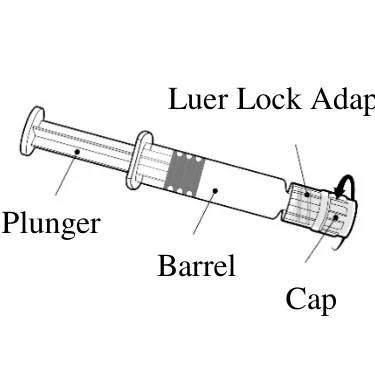
Hold the syringe by the barrel, not by the plunger.
Unscrew the syringe cap by twisting it anticlockwise. 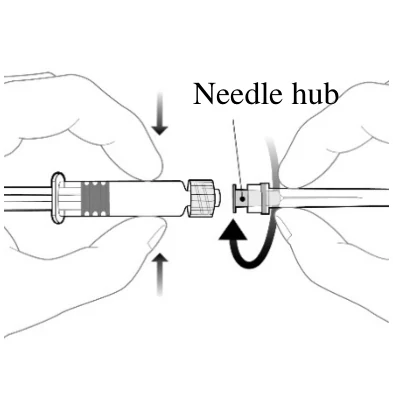
To attach the needle, connect the hub to the Luer Lock Adaptor and rotate a quarter turn clockwise until you feel it lock.
Do not pull the syringe plunger out of the barrel. If it happens, do not administer the vaccine.
Disposal
Any unused medicinal product or waste material should be disposed of in accordance with local requirements.
Plunger
Barrel
Cap
Luer Lock Adaptor
Needle hub
7 MARKETING AUTHORISATION HOLDER
SmithKline Beecham Ltd
79 New Oxford Street
London
WC1A 1DG
United Kingdom
Trading as: GlaxoSmithKline UK
8 MARKETING AUTHORISATION NUMBER(S)
PL 10592/0037
9 DATE OF FIRST AUTHORISATION/RENEWAL OF THE
AUTHORISATION
Date of first authorisation: 18 May 1994
Date of latest renewal: 21 October 2005
10 DATE OF REVISION OF THE TEXT
22/01/2025