


Patient leaflet - Fondaparinux Sodium DR Reddys 2.5 mg / 0.5 ml solution for injection in Pre-filled syringe
1. What Fondaparinux sodium is and what it is used for
Fondaparinux sodium is a medicine that helps prevent blood clots from forming in the blood vessels (an antithrombotic agent).
Fondaparinux sodium solution contains a synthetic substance called fondaparinux sodium. This stops a clotting factor Xa (“ten-A”) from
working in the blood, and so prevents unwanted blood clots (thromboses) from forming in the blood vessels.
Fondaparinux sodium is used to:
prevent the formation of blood clots in the blood vessels of the
legs or lungs after orthopaedic surgery (such as hip or knee surgery) or abdominal surgery
prevent the formation of blood clots during and shortly after a
period of restricted mobility due to acute illness
- treat some types of heart attack and severe angina (pain caused
by narrowing of the arteries in the heart)
treat blood clots in blood vessels that are near the surface of the
skin of the legs (superficial vein thrombosis).
2. What you need to know before you use Fondaparinux sodium
Do not use Fondaparinux sodium:
if you are allergic to fondaparinux sodium or to any of the other
ingredients of this medicine listed in section 6
- if you are bleeding excessively
- if you have a bacterial heart infection
- if you have very severe kidney disease.
Tell your doctor if you think any of these apply to you. If they do, you must not use Fondaparinux.
Warnings and precautions
Talk to your doctor, pharmacist or nurse before using Fondaparinux sodium:
if you have previously had complications during treatment with
heparin or heparin-like medicines causing a fall in the number of blood platelets (heparin-induced thrombocytopenia)
if you have a risk of uncontrolled bleeding (haemorrhage)
including:
- stomach ulcer
- bleeding disorders
- recent bleeding into the brain (intracranial bleeding)
- recent surgery on the brain, spine or eye
- if you have severe liver disease
- if you have kidney disease
- if you are 75 years old or older
- if you weigh less than 50 kg.
Tell your doctor if any of these apply to you.
Children and adolescents
Fondaparinux has not been tested in children and adolescents under the age of 17 years.
Other medicines and Fondaparinux sodium
Tell your doctor or pharmacist if you are using, have recently used or might use any other medicines. This includes medicines you bought
without a prescription. Some other medicines may affect the way that Fondaparinux sodium works or be affected by Fondaparinux sodium.
Pregnancy and breastfeeding
Fondaparinux sodium should not be prescribed to pregnant women unless clearly necessary. Breastfeeding is not recommended during treatment with Fondaparinux sodium. If you are pregnant, or breastfeeding, think you may be pregnant, or are planning to have a baby, ask your doctor or pharmacist for advice before taking this medicine.
Fondaparinux contains sodium
This medicine contains less than 1 mmol sodium (23 mg) per dose, that is to say essentially ‘sodium-free’.
3. How to use Fondaparinux sodium
Always use this medicine exactly as your doctor has told you. Check with your doctor or pharmacist if you are not sure.
The recommended dose is 2.5 mg once a day, injected at about the same time each day.
If you stop using Fondaparinux sodium
If you stop the treatment before your doctor told you to, you are at risk of developing a blood clot in a vein of your leg or lung. Contact your doctor or pharmacist before stopping.
If you have any further questions on the use of this medicine, ask your doctor, pharmacist or nurse.
4. Possible side effects
Like all medicines, this medicine can cause side effects, although not everybody gets them.
Conditions you need to look out for
Severe allergic reactions (anaphylaxis): These are very rare in people (up to 1 in 10,000) taking Fondaparinux sodium. Signs include:
- swelling, sometimes of the face or mouth (angioedema), causing difficulty in swallowing or breathing
- collapse
Contact a doctor immediately if you get these symptoms. Stop taking Fondaparinux sodium.
Common side effects
These may affect more than 1 in 100 people treated with Fondaparinux sodium.
- bleeding (for example from an operation site, an existing stomach ulcer, nosebleed, gums, blood in urine, coughing up blood, bleeding from eyes, bleeding in joint spaces, internal bleeding in uterus)
- localised collection of blood (in any organ/body tissue)
- anaemia (a reduction in the number of red blood cells)
- bruising
Uncommon side effects
These may affect up to 1 in 100 people treated with Fondaparinux sodium.
- swelling (oedema)
- feeling sick or being sick (nausea or vomiting)
- headache
- pain
- chest pain
- breathlessness
- rash or itchy skin
- oozing from operation wound site
- fever
- reduction or increase in the number of platelets (blood cells necessary for blood clotting)
- increase in some chemicals (enzymes) produced by the liver
Rare side effects
These may affect up to 1 in every 1000 people treated with Fondaparinux sodium.
- allergic reaction (including itching, swelling, rash)
- internal bleeding in the brain or abdomen
- anxiety or confusion
- headache
- fainting or dizziness, low blood pressure
- drowsiness or tiredness
- flushing
- coughing
- leg pain or stomach pain
- diarrhoea or constipation
- indigestion
- pain and swelling at injection site
- wound infection
- increase in bilirubin (a substance produced by the liver) in the blood
- reduction in potassium in your blood
- pain around the upper part of the stomach or heartburn.
Reporting of side effects
If you get any side effects, talk to your doctor, pharmacist or nurse. This includes any possible side effects not listed in this leaflet. You can also report side effects directly via the Yellow Card Scheme website www.mhra.gov.uk/yellowcard or search for MHRA Yellow Card in the Google Play or Apple App Store. By reporting side effects you can help provide more information on the safety of this medicine.
5. How to store Fondaparinux sodium
- Keep this medicine out of the sight and reach of children.
- This medicinal product does not require any special storage conditions.
Do not use this medicine:
after the expiry date which is stated on the label and carton after
“EXP”. The expiry date refers to the last day of that month
- if you notice any particles in the solution, or if the solution is discoloured
- if you notice that the syringe is damaged
- if you have opened a syringe and you do not use it straightaway.
If you have kidney disease, the dose may be reduced to 1.5 mg once a day.
How Fondaparinux sodium is given
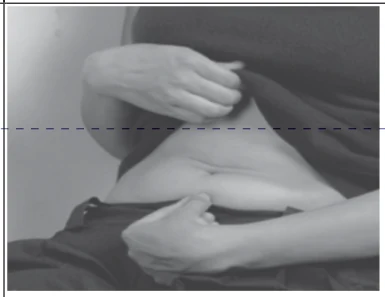
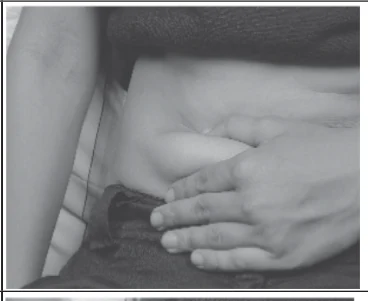
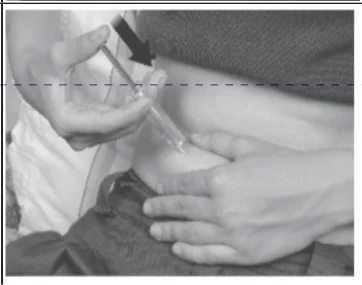
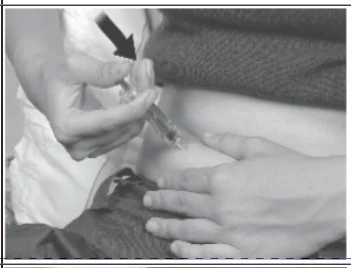
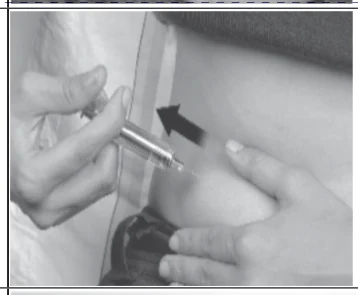
Fondaparinux sodium is given by injection under the skin
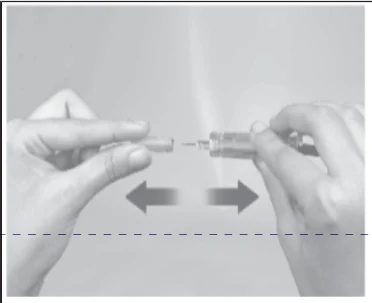
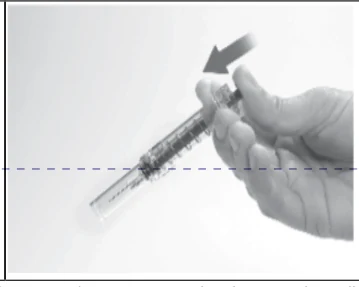
(subcutaneously) into a skin fold of the lower abdominal area. The syringes are pre-filled with the exact dose you need. There are different syringes for the 2.5 mg and 1.5 mg doses. For step -by-step instructions please see over the page.
To treat some types of heart attack, a health professionals may
give the first dose into a vein (intravenously).
Do not inject Fondaparinux sodium into muscle.
Disposal of syringes:
Do not throw away any medicines or syringes via wastewater or household waste. Ask your pharmacist how to throw away medicines you no longer use. These measures will help protect the environment.
6. Contents of the pack and other information
What Fondaparinux sodium contains
- The active substance is 2.5 mg fondaparinux sodium in 0.5 ml solution for injection.
- The other ingredients are sodium chloride, water for injections, and hydrochloric acid and/or sodium hydroxide to adjust the pH.
How long should Fondaparinux sodium be taken for
You should continue Fondaparinux sodium treatment for as long as your doctor has told you, since Fondaparinux sodium prevents development of a serious condition.
If you use more Fondaparinux sodium than you should
Contact your doctor or pharmacist for advice as soon as possible, because of the increased risk of bleeding.
What Fondaparinux sodium looks like and contents of the pack
Fondaparinux sodium is a clear and colourless to slightly yellow solution for injection in pre-filled syringes (single-use). Syringe has a blue plunger rod and an automatic safety system.
It is available in packs of 2, 7, 10, 20 and 30 pre-filled syringes (not all pack sizes may be marketed).
If you forget to use Fondaparinux sodium
Take the dose as soon as you remember. Do not inject a double
dose to make up for a forgotten dose.
If you are not sure what to do, ask your doctor or pharmacist.
Marketing Authorisation Holder and Manufacturer
Dr. Reddy’s Laboratories (UK) Ltd., 410 Cambridge Science Park, Milton Road, Cambridge, CB4 0PE, United Kingdom
This leaflet was last revised in 08/2025
Instructions for self-administration The different parts of Fondaparinux sodium safety syringe are:
| ||||||
| Syringe BEFORE USE | Syringe AFTER USE | |||||
| ||||||
| between using the left and right side of the lower abdomen for each injection. If you have any questions talk to your nurse or doctor. | Figure A. | |||||
| ||||||
| Figure B. | ||||||
| Figure C. | |||||
| ||||||
| Figure D. | ||||||
| Figure E. | |||||
| Figure F. | |||||
| ||||||
Figure G. Follow the instructions given to you by your nurse or doctor about the right way to throw away used syringes and needles. There may be state laws about the right way to dispose of used syringes, needles, and disposal containers. NOTE:
| ||||||