

Patient leaflet - Exelon 2 mg / ml oral solution
1. What Exelon is and what it is used for
The active substance of Exelon is rivastigmine.
Rivastigmine belongs to a class of substances called cholinesterase inhibitors. In patients with Alzheimer’s dementia or dementia due to Parkinson’s disease, certain nerve cells die in the brain, resulting in low levels of the neurotransmitter acetylcholine (a substance that allows nerve cells to communicate with each other). Rivastigmine works by blocking the enzymes that break down acetylcholine: acetylcholinesterase and butyrylcholinesterase. By blocking these enzymes, Exelon allows levels of acetylcholine to be increased in the brain, helping to reduce the symptoms of Alzheimer’s disease and dementia associated with Parkinson’s disease.
Exelon is used for the treatment of adult patients with mild to moderately severe Alzheimer’s dementia, a progressive brain disorder that gradually affects memory, intellectual ability and behaviour. The capsules and oral solution can also be used for the treatment of dementia in adult patients with Parkinson’s disease.
2. What you need to know before you take Exelon
Do not take Exelon
- if you are allergic to rivastigmine (the active substance in Exelon) or any of the other ingredients of this medicine (listed in section 6).
- if you have a skin reaction spreading beyond the patch size, if there is a more intense local reaction (such as blisters, increasing skin inflammation, swelling) and if it does not improve within 48 hours after removal of the transdermal patch.
If this applies to you, tell your doctor and do not take Exelon.
Warnings and precautions
Talk to your doctor before taking Exelon:
- if you have, or have ever had, a heart condition such as an irregular or slow heartbeat, QTc prolongation, a family history of QTc prolongation, torsade de pointes, or have a low blood level of potassium or magnesium.
- if you have, or have ever had, an active stomach ulcer.
- if you have, or have ever had, difficulties in passing urine.
- if you have, or have ever had, seizures.
- if you have, or have ever had, asthma or severe respiratory disease.
- if you have, or have ever had impaired kidney function.
- if you have, or have ever had, impaired liver function.
- if you suffer from trembling.
- if you have a low body weight.
- if you have gastrointestinal reactions such as feeling sick (nausea), being sick (vomiting) and diarrhoea. You may become dehydrated (losing too much fluid) if vomiting or diarrhoea are prolonged.
If any of these apply to you, your doctor may need to monitor you more closely while you are on this medicine.
If you have not taken Exelon for more than three days, do not take the next dose until you have talked to your doctor.
Children and adolescents
There is no relevant use of Exelon in the paediatric population in the treatment of Alzheimer’s disease.
Other medicines and Exelon
Tell your doctor or pharmacist if you are taking, have recently taken or might take any other medicines.
Exelon should not be given at the same time as other medicines with similar effects to Exelon. Exelon might interfere with anticholinergic medicines (medicines used to relieve stomach cramps or spasms, to treat Parkinson’s disease or to prevent travel sickness).
Exelon should not be given at the same time as metoclopramide (a medicine used to relieve or prevent nausea and vomiting). Taking the two medicines together could cause problems such as such as stiff limbs and trembling hands.
If you have to undergo surgery whilst taking Exelon, tell your doctor before you are given any anaesthetics, because Exelon may exaggerate the effects of some muscle relaxants during anaesthesia.
Caution when Exelon is taken together with beta-blockers (medicines such as atenolol used to treat hypertension, angina, and other heart conditions). Taking the two medicines together could cause problems such as slowing of the heartbeat (bradycardia) leading to fainting or loss of consciousness.
Caution when Exelon is taken together with other medicines that can affect your heart rhythm or the electrical system of your heart (QT prolongation).
Pregnancy, breast-feeding and fertility
If you are pregnant or breast-feeding, think you may be pregnant or are planning to have a baby, ask your doctor or pharmacist for advice before taking this medicine.
If you are pregnant, the benefits of using Exelon must be assessed against the possible effects on your unborn child. Exelon should not be used during pregnancy unless clearly necessary.
You should not breast-feed during treatment with Exelon.
Driving and using machines
Your doctor will tell you whether your illness allows you to drive vehicles and use machines safely. Exelon may cause dizziness and somnolence, mainly at the start of treatment or when increasing the dose. If you feel dizzy or sleepy, do not drive, use machines or perform any tasks that require your attention.
Exelon contains sodium benzoate (E211) and sodium
One of the inactive ingredients in Exelon oral solution is sodium benzoate (E211). Benzoic acid is a mild irritant to the skin, eyes and mucous membranes. This medicine contains 3 mg of sodium benzoate (E211) in each 3 ml of oral solution.
This medicine contains less than 1 mmol sodium (23 mg) per ml, that is to say essentially 'sodium-free'.
3. How to take Exelon
Always take this medicine exactly as your doctor has told you. Check with your doctor, pharmacist or nurse if you are not sure.
How to start treatment
Your doctor will tell you what dose of Exelon to take.
- Treatment usually starts with a low dose.
- Your doctor will slowly increase your dose depending on how you respond to the treatment.
- The highest dose that should be taken is 6.0 mg twice a day.
Your doctor will regularly check if the medicine is working for you. Your doctor will also monitor your weight whilst you are taking this medicine.
If you have not taken Exelon for more than three days, do not take the next dose until you have talked to your doctor.
Taking this medicine
- Tell your caregiver that you are taking Exelon.
- To benefit from your medicine, take it every day.
Take Exelon twice a day, in the morning and evening, with food.
How to use this medicine
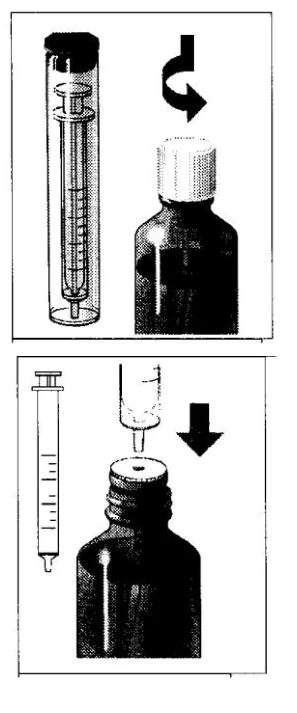
- 1.
Preparing the bottle and syringe
- Take the syringe out of its protective case.
- Push down and turn the child resistant cap to open bottle.
- 2.
Attaching the syringe to the bottle
- Push the nozzle of the syringe into the hole in the white stopper.
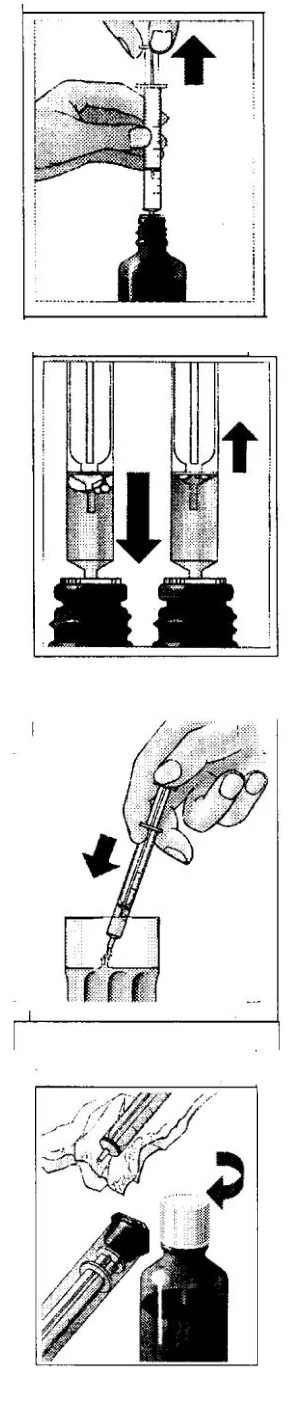
- 3.
Filling the syringe
- Pull the plunger upwards until it reaches the right mark for the dose that your doctor has prescribed.
- 4.
Removing bubbles
- Push down and pull up the plunger a few times to get rid of any large bubbles.
- A few tiny bubbles are not important and will not affect your dose in any way.
- Check the dose is still correct.
- Then, remove the syringe from the bottle.
- 5.
Taking your medicine
- Swallow your medicine straight from the syringe.
- You can also mix your medicine with water in a small glass. Stir and drink all of the mixture.
- 6.
After using the syringe
- Wipe the outside of the syringe with a clean tissue.
- Then, put the syringe back in its protective case.
- Put the child resistant cap back on the bottle to close it.
If you take more Exelon than you should
If you accidentally take more Exelon than you should, inform your doctor. You may require medical attention. Some people who have accidentally taken too much Exelon have experienced feeling sick (nausea), being sick (vomiting), diarrhoea, high blood pressure and hallucinations. Slow heartbeat and fainting may also occur.
If you forget to take Exelon
If you find you have forgotten to take your dose of Exelon, wait and take the next dose at the usual time. Do not take a double dose to make up for a forgotten dose.
If you have any further questions on the use of this medicine, ask your doctor or pharmacist.
4. Possible side effects
Like all medicines, this medicine can cause side effects, although not everybody gets them.
You may have side effects more often when you start your medicine or when your dose is increased. Usually, the side effects will slowly go away as your body gets used to the medicine.
Very common (may affect more than 1 in 10 people)
- Feeling dizzy
- Loss of appetite
- Stomach problems such as feeling sick (nausea) or being sick (vomiting), diarrhoea
Common (may affect up to 1 in 10 people)
- Anxiety
- Sweating
- Headache
- Heartburn
- Weight loss
- Stomach pain
- Feeling agitated
- Feeling tired or weak
- Generally feeling unwell
- Trembling or feeling confused
- Decreased appetite
- Nightmares
- Sleepiness
Uncommon (may affect up to 1 in 100 people)
- Depression
- Difficulty in sleeping
- Fainting or accidentally falling
- Changes in how well your liver is working
Rare (may affect up to 1 in 1,000 people)
- Chest pain
- Rash, itching
- Fits (seizures)
- Ulcers in your stomach or intestine
Very rare (may affect up to 1 in 10,000 people)
- High blood pressure
- Urinary tract infection
- Seeing things that are not there (hallucinations)
- Problems with your heartbeat such as fast or slow heartbeat
- Bleeding in the gut – shows as blood in stools or when being sick
- Inflammation of the pancreas – the signs include serious upper stomach pain, often with feeling sick (nausea) or being sick (vomiting)
- The signs of Parkinson’s disease get worse or getting similar signs – such as stiff muscles, difficulty in carrying out movements
Not known (frequency cannot be estimated from the available data)
- Being violently sick (vomiting) that can cause tearing of the tube that connects your mouth with your stomach (oesophagus)
- Dehydration (losing too much fluid)
- Liver disorders (yellow skin, yellowing of the whites of the eyes, abnormal darkening of the urine or unexplained nausea, vomiting, tiredness and loss of appetite)
- Aggression, feeling restless
- Uneven heartbeat
- Pisa syndrome (a condition involving involuntary muscle contraction with abnormal bending of the body and head to one side)
Patients with dementia and Parkinson’s disease
These patients have some side effects more often. They also have some additional side effects:
Very common (may affect more than 1 in 10 people)
- Trembling
- Accidentally falling
Common (may affect up to 1 in 10 people)
- Anxiety
- Feeling restless
- Slow and fast heartbeat
- Difficulty in sleeping
- Too much saliva and dehydration
- Unusually slow movements or movements you cannot control
- The signs of Parkinson’s disease get worse or getting similar signs – such as stiff muscles, difficulty in carrying out movements and muscle weakness
- Seeing things that are not there (hallucinations)
- Depression
- High blood pressure
Uncommon (may affect up to 1 in 100 people)
- Uneven heartbeat and poor control of movements
- Low blood pressure
Not Known (frequency cannot be estimated from the available data)
- Pisa syndrome (a condition involving involuntary muscle contraction with abnormal bending of the body and head to one side)
- Skin rash
Other side effects seen with Exelon transdermal patches and which may occur with the oral solution:
Common (may affect up to 1 in 10 people)
- Fever
- Severe confusion
- Urinary incontinence (inability to retain adequate urine)
Uncommon (may affect up to 1 in 100 people)
- Hyperactivity (high level of activity, restlessness)
Not known (frequency cannot be estimated from the available data)
- Allergic reaction where the patch was used, such as blisters or skin inflammation If you get any of these side effects, contact your doctor as you may need medical assistance.
Reporting of side effects
If you get any side effects, talk to your doctor, pharmacist or nurse. This includes any possible side effects not listed in this leaflet. You can also report side effects directly via Yellow Card Scheme at: www.mhra.gov.uk / yellowcard or search for MHRA Yellow Card in the Google Play or Apple App Store. By reporting side effects you can help provide more information on the safety of this medicine.
5. How to store Exelon
- Keep this medicine out of the sight and reach of children.
- Do not use this medicine after the expiry date which is stated on the carton after EXP. The expiry date refers to the last day of that month.
- Do not store above 30°C. Do not refrigerate or freeze.
- Store in an upright position.
- Use Exelon oral solution within 1 month of opening the bottle.
- Do not throw away any medicines via wastewater or household waste. Ask your pharmacist how to throw away medicines you no longer use. These measures will help protect the environment.
6. Contents of the pack and other information
What Exelon contains
The active substance is rivastigmine hydrogen tartrate. Each ml contains rivastigmine hydrogen tartrate corresponding to rivastigmine base 2.0 mg.
- The other ingredients are sodium benzoate (E211), citric acid, sodium citrate, quinoline yellow WS dye (E104) and purified water.
What Exelon looks like and contents of the pack
Exelon oral solution is supplied as 50 ml or 120 ml of a clear, yellow solution (2.0 mg/ml base) in an amber glass bottle with a child-resistant cap, foam liner, dip tube and self aligning plug. The oral solution is packaged with an oral dosing syringe in a plastic tube container.
Marketing Authorisation Holder and Manufacturer
Novartis Pharmaceuticals UK Limited.
2nd Floor, The WestWorks Building,
White City Place
195 Wood Lane
London
W12 7FQ
United Kingdom
For any information about this medicine, please contact the local representative of the Marketing Authorisation Holder:
United Kingdom
Novartis Pharmaceuticals UK Ltd.
Tel: +44 1276 698370