

Summary of Product Characteristics (SmPC) - Everolimus Teva 7.5 mg tablets
1 NAME OF THE MEDICINAL PRODUCT
Everolimus Teva 7.5 mg Tablets
2 QUALITATIVE AND QUANTITATIVE COMPOSITION
Each tablet contains 7.5 mg everolimus.
Excipient with known effect
Each tablet contains 223 mg lactose.
For the full list of excipients, see section 6.1.
3 PHARMACEUTICAL FORM
Tablet
White, oblong, flat, bevelled edge tablets, approximately 14 mm long and 5.5 mm wide, marked with “EV” on one side and “7.5” on the other.
4 CLINICAL PARTICULARS
4.1 Therapeutic indications
Hormone receptor-positive advanced breast cancer
Everolimus Teva is indicated for the treatment of hormone receptor-positive, HER2/neu negative advanced breast cancer, in combination with exemestane, in postmenopausal women without symptomatic visceral disease after recurrence or progression following a non-steroidal aromatase inhibitor.
Neuroendocrine tumours of pancreatic origin
Everolimus Teva is indicated for the treatment of unresectable or metastatic, well- or moderately-differentiated neuroendocrine tumours of pancreatic origin in adults with progressive disease.
Neuroendocrine tumours of gastrointestinal or lung origin
Everolimus Teva is indicated for the treatment of unresectable or metastatic, well-differentiated (Grade 1 or Grade 2) non-functional neuroendocrine tumours of gastrointestinal or lung origin in adults with progressive disease (see sections 4.4 and 5.1).
Renal cell carcinoma
Everolimus Teva is indicated for the treatment of patients with advanced renal cell carcinoma, whose disease has progressed on or after treatment with VEGF-targeted therapy.
Renal angiomyolipoma associated with tuberous sclerosis complex (TSC) Everolimus Teva is indicated for the treatment of adult patients with renal angiomyolipoma associated with TSC who are at risk of complications (based on factors such as tumour size or presence of aneurysm, or presence of multiple or bilateral tumours) but who do not require immediate surgery.
The evidence is based on analysis of change in sum of angiomyolipoma volume.
Subependymal giant cell astrocytoma (SEGA) associated with TSC Everolimus Teva is indicated for the treatment of adult and paediatric patients with SEGA associated with TSC who require therapeutic intervention but are not amenable to surgery.
The evidence is based on analysis of change in SEGA volume. Further clinical benefit, such as improvement in disease-related symptoms, has not been demonstrated.
4.2 Posology and method of administration
Breast cancer/Neuroendocrine tumours/Renal cell carcinoma
Treatment with Everolimus Teva should be initiated and supervised by a physician experienced in the use of anticancer therapies.
Posology
For the different dose regimens, Everolimus Teva is available as 2.5 mg, 5 mg, 7.5 mg and 10 mg tablets.
The recommended dose is 10 mg everolimus once daily. Treatment should continue as long as clinical benefit is observed or until unacceptable toxicity occurs.
If a dose is missed, the patient should not take an additional dose, but take the next prescribed dose as usual.
Dose adjustment due to adverse reactions
Management of severe and/or intolerable suspected adverse reactions may require dose reduction and/or temporary interruption of everolimus therapy. For adverse reactions of Grade 1, dose adjustment is usually not required. If dose reduction is required, the recommended dose is 5 mg daily and must not be lower than 5 mg daily.
Table 1 summarises the dose adjustment recommendations for specific adverse reactions (see also section 4.4).
Table 1 Everolimus dose adjustment recommendations
| Adverse reaction | Severity1 | Everolimus dose adjustment |
| Non-infectious pneumonitis | Grade 2 | Consider interruption of therapy until symptoms improve to Grade ≤1. Re-initiate treatment at 5 mg daily. Discontinue treatment if failure to recover within 4 weeks. |
| Grade 3 | Interrupt treatment until symptoms resolve to Grade ≤1. Consider re-initiating treatment at 5 mg daily. If toxicity recurs at Grade 3, consider discontinuation. | |
| Grade 4 | Discontinue treatment. | |
| Stomatitis | Grade 2 | Temporary dose interruption until recovery to Grade ≤1. Re-initiate treatment at same dose. If stomatitis recurs at Grade 2, interrupt dose until recovery to Grade ≤1. Re-initiate treatment at 5 mg daily. |
| Grade 3 | Temporary dose interruption until recovery to Grade ≤1. Re-initiate treatment at 5 mg daily. | |
| Grade 4 | Discontinue treatment. | |
Other non- haematological toxicities (excluding metabolic events) | Grade 2 | If toxicity is tolerable, no dose adjustment required. If toxicity becomes intolerable, temporary dose interruption until recovery to Grade ≤1. Re-initiate treatment at same dose. If toxicity recurs at Grade 2, interrupt treatment until recovery to Grade ≤1. Re-initiate treatment at 5 mg daily. |
| Grade 3 | Temporary dose interruption until recovery to Grade ≤1. Consider re-initiating treatment at 5 mg daily. If toxicity recurs at Grade 3, consider discontinuation. | |
| Grade 4 | Discontinue treatment. | |
Metabolic events (e.g. hyperglycaemia, dyslipidaemia) | Grade 2 | No dose adjustment required. |
| Grade 3 | Temporary dose interruption. Re-initiate treatment at 5 mg daily. | |
| Grade 4 | Discontinue treatment. | |
| Thrombocytopeni a | Grade 2 (<75, ≥50x109/l) | Temporary dose interruption until recovery to Grade ≤1 (≥75x109/l). Re-initiate treatment at same dose. |
| Grade 3 & 4 (<50x109/l) | Temporary dose interruption until recovery to Grade ≤1 (≥75x109/l). Re-initiate treatment at 5 mg daily. |
Neutropenia
| Grade 2 (≥1x10⁹/l) | No dose adjustment required. |
Grade 3 (<1, ≥0.5x10⁹/l) | Temporary dose interruption until recovery to Grade ≤2 (≥1x10⁹/l). Re-initiate treatment at same dose. | |
| Grade 4 (<0.5x10⁹/l) | Temporary dose interruption until recovery to Grade ≤2 (≥1x10⁹/l). Re-initiate treatment at 5 mg daily. | |
Febrile neutropenia | Grade 3 | Temporary dose interruption until recovery to Grade ≤2 (≥1.25x10⁹/l) and no fever. Re-initiate treatment at 5 mg daily. |
| Grade 4 | Discontinue treatment. | |
1 Grading based on National Cancer Institute (NCI) Common Terminology Criteria for Adverse Events (CTCAE) v3.0 | ||
Special populations
Elderly patients (≥65 years)
No dose adjustment is required (see section 5.2).
Renal impairment
No dose adjustment is required (see section 5.2).
Hepatic impairment
- Mild hepatic impairment (Child-Pugh A) – the recommended dose is 7.5 mg daily.
- Moderate hepatic impairment (Child-Pugh B) – the recommended dose is 5 mg daily.
- Severe hepatic impairment (Child-Pugh C) – everolimus is only recommended if the desired benefit outweighs the risk. In this case, a dose of 2.5 mg daily must not be exceeded.
Dose adjustments should be made if a patient’s hepatic (Child-Pugh) status changes during treatment (see also sections 4.4 and 5.2).
Paediatric population
The safety and efficacy of everolimus in children aged 0 to 18 years have not been established. No data are available.
Renal angiomyolipoma/SEGA
Treatment with Everolimus Teva should be initiated by a physician experienced in the treatment of patients with TSC and therapeutic drug monitoring.
Posology
Renal angiomyolipoma associated with TSC
The recommended dose is 10 mg of everolimus once daily. Treatment should continue as long as clinical benefit is observed or until unacceptable toxicity occurs.
If a dose is missed, the patient should not take an additional dose, but take the usual prescribed next dose.
SEGA associated with TSC
Careful titration may be required to obtain the optimal therapeutic effect. Doses that will be tolerated and effective vary between patients. Concomitant antiepileptic therapy may affect the metabolism of everolimus and may contribute to this variance (see section 4.5).
Dosing is individualised based on Body Surface Area (BSA) using the Dubois formula, where weight (W) is in kilograms and height (H) is in centimetres:
BSA = (W0.425 x H0.725) x 0.007184
The recommended starting dose for everolimus for the treatment of patients with SEGA is 4.5 mg/m2. A higher starting dose of 7 mg/m2 is recommended for patients 1 to less than 3 years of age based on pharmacokinetic simulations (see section 5.2). Different strengths of Everolimus Teva can be combined to attain the desired dose.
Everolimus whole blood trough concentrations should be assessed at least 1 week after commencing treatment. Dosing should be titrated to attain trough concentrations of 5 to 15 ng/ml. The dose may be increased to attain a higher trough concentration within the target range to obtain optimal efficacy, subject to tolerability.
Individualised dosing should be titrated by increasing the dose by increments of 2.5 mg to attain the target trough concentration for optimal clinical response. Efficacy, safety, concomitant therapy, and the current trough concentration should be considered when planning for dose titration. Individualised dose titration can be based on simple proportion:
New everolimus dose = current dose x (target concentration / current concentration)
For example, a patient’s current dose based on BSA is 2.5 mg with a steady-state concentration of 4 ng/ml. In order to achieve a target concentration above the lower Cmin limit of 5 ng/ml, e.g. 8 ng/ml, the new everolimus dose would be 5 mg (an increase of 2.5 mg from the current daily dose). In cases where the revised dose is not a multiple of 2.5 mg, it should be rounded to the next available tablet strength.
Dosing recommendations for paediatric patients with SEGA are consistent with those for the adult SEGA population, except for patients in the range from 1 year to less than 3 years of age, and those with hepatic impairment (see section “Hepatic impairment” below and section 5.2).
SEGA volume should be evaluated approximately 3 months after commencing everolimus therapy, with subsequent dose adjustments taking changes in SEGA volume, corresponding trough concentration, and tolerability into consideration.
Once a stable dose is attained, trough concentrations should be monitored every 3 to 6 months in patients with changing BSA, or every 6 to 12 months in patients with stable BSA, for the duration of treatment.
Treatment should continue as long as clinical benefit is observed or until unacceptable toxicity occurs.
If a dose is missed, the patient should not take an additional dose, but take the usual prescribed next dose.
Dose adjustments due to adverse reactions
Management of severe and/or intolerable suspected adverse reactions may require dose reduction and/or temporary interruption of everolimus therapy. For adverse reactions of Grade 1, dose adjustment is usually not required. If dose reduction is required, the recommended dose is approximately 50% lower than the daily dose previously administered. For dose reductions below the lowest available strength, alternate day dosing should be considered.
Table 2 summarises dose adjustment recommendations for specific adverse reactions (see also section 4.4).
Table 2 Everolimus dose adjustment recommendations
| Adverse reaction | Severity1 | Everolimus dose adjustment |
| Non-infectious pneumonitis | Grade 2 | Consider interruption of therapy until symptoms improve to Grade ≤1. Re-initiate everolimus at approximately 50% lower than the daily dose previously administered. Discontinue treatment if failure to recover within 4 weeks. |
| Grade 3 | Interrupt everolimus until symptoms resolve to Grade ≤1. Consider re-initiating everolimus at approximately 50% lower than the daily dose previously administered. If toxicity recurs at Grade 3, consider discontinuation. | |
| Grade 4 | Discontinue everolimus. | |
| Stomatitis | Grade 2 | Temporary dose interruption until recovery to Grade ≤1. Re-initiate everolimus at same dose. If stomatitis recurs at Grade 2, interrupt dose |
| until recovery to Grade |
≤
| ||
| Grade 3 | Temporary dose interruption until recovery to Grade ≤1. Re-initiate everolimus at approximately 50% lower than the daily dose previously administered. | |
| Grade 4 | Discontinue everolimus. | |
Other non- haematological toxicities (excluding metabolic events) | Grade 2 | If toxicity is tolerable, no dose adjustment required. If toxicity becomes intolerable, temporary dose interruption until recovery to Grade ≤1. Re-initiate everolimus at same dose. If toxicity recurs at Grade 2, interrupt everolimus until recovery to Grade ≤1. Re-initiate everolimus at approximately 50% lower than the daily dose previously administered. |
| Grade 3 | Temporary dose interruption until recovery to Grade ≤1. Consider re-initiating everolimus at approximately 50% lower than the daily dose previously administered. If toxicity recurs at Grade 3, consider discontinuation. | |
| Grade 4 | Discontinue everolimus. | |
| Metabolic events (e.g. hyperglycaemia, dyslipidaemia) | Grade 2 | No dose adjustment required. |
| Grade 3 | Temporary dose interruption. Re-initiate everolimus at approximately 50% lower than the daily dose previously administered. | |
| Grade 4 | Discontinue everolimus. | |
| Thrombocytopenia | Grade 2 (<75, ≥50x109/l) | Temporary dose interruption until recovery to Grade ≤1 (≥75x109/l). Re-initiate everolimus at same dose. |
Grade 3 & 4 (<50x109/l) | Temporary dose interruption until recovery to Grade ≤1 (≥75x109/l). Re-initiate everolimus at approximately 50% lower than the daily dose previously administered. | |
| Neutropenia | Grade 2 (≥1x10⁹/l) | No dose adjustment required. |
Grade 3 (<1, ≥0.5x10⁹/l) | Temporary dose interruption until recovery to Grade ≤2 (≥1x10⁹/l). Re-initiate everolimus at same dose. | |
| Grade 4 | Temporary dose interruption until recovery to Grade ≤2 (≥1x10⁹/l). Re-initiate |
| (<0.5x10⁹/l) | everolimus at approximately 50% lower than the daily dose previously administered. | |
| Febrile neutropenia | Grade 3 | Temporary dose interruption until recovery to Grade ≤2 (≥1.25x10⁹/l) and no fever. Re-initiate everolimus at approximately 50% lower than the daily dose previously administered. |
| Grade 4 | Discontinue everolimus. | |
1 Grading based on National Cancer Institute (NCI) Common Terminology Criteria for Adverse Events (CTCAE) v3.0 | ||
Therapeutic drug monitoring
Therapeutic drug monitoring of everolimus blood concentrations, using a validated assay, is required for patients treated for SEGA. Trough concentrations should be assessed at least 1 week after the initial dose, after any change in dose or pharmaceutical form, after initiation of or change in co-administration of CYP3A4 inhibitors (see sections 4.4 and 4.5) or after any change in hepatic status (Child-Pugh) (see “Hepatic impairment” below and section 5.2). Trough concentrations should be assessed 2 to 4 weeks after initiation of or change in co-administration of CYP3A4 inducers (see sections 4.4 and 4.5) since the natural degradation time of the induced enzymes has to be taken into account.
Therapeutic drug monitoring of everolimus blood concentrations, using a validated assay, is an option to be considered for patients treated for renal angiomyolipoma associated with TSC (see section 5.1) after initiation of or change in co-administration of CYP3A4 inducers or inhibitors (see sections 4.4 and 4.5) or after any change in hepatic status (Child-Pugh) (see section “Hepatic impairment” below and section 5.2).
When possible, the same assay and laboratory for therapeutic drug monitoring should be used throughout the treatment.
Special populations
Elderly
No dose adjustment is required (see section 5.2).
Renal impairment
No dose adjustment is required (see section 5.2).
Hepatic impairment
Patients with renal angiomyolipoma associated with TSC:
- Mild hepatic impairment (Child-Pugh A): The recommended dose is 7.5 mg daily.
- Moderate hepatic impairment (Child-Pugh B): The recommended dose is 5 mg daily.
Severe hepatic impairment (Child-Pugh C): Everolimus is only recommended if the desired benefit outweighs the risk. In this case, a dose of 2.5 mg daily must not be exceeded (see sections 4.4 and 5.2).
Dose adjustments should be made if a patient’s hepatic (Child-Pugh) status changes during treatment.
Patients with SEGA associated with TSC:
Patients <18 years of age:
Everolimus is not recommended for patients <18 years of age with SEGA and hepatic impairment.
Patients ≥18 years of age:
- Mild hepatic impairment (Child-Pugh A): 75% of the recommended starting dose calculated based on BSA (rounded to the nearest strength)
- Moderate hepatic impairment (Child-Pugh B): 50% of the recommended starting dose calculated based on BSA (rounded to the nearest strength)
Severe hepatic impairment (Child-Pugh C): Everolimus is only recommended if the desired benefit outweighs the risk. In this case, 25% of the dose calculated based on BSA (rounded to the nearest strength) must not be exceeded.
Everolimus whole blood trough concentrations should be assessed at least 1 week after any change in hepatic status (Child-Pugh).
Paediatric population
- The safety and efficacy of everolimus in children aged 0 to 18 years with renal angiomyolipoma associated with TSC in the absence of SEGA have not been established. No data are available.
The safety, efficacy and pharmacokinetic profile of everolimus in children below the age of 1 year with TSC who have SEGA have not been established. No data are available (see sections 5.1 and 5.2).
Clinical study results did not show an impact of everolimus on growth and pubertal development.
Method of administration
Everolimus Teva should be administered orally once daily at the same time every day, consistently either with or without food (see section 5.2). The tablets should be swallowed whole with a glass of water. The tablets should not be chewed or crushed.
Renal angiomyolipoma/SEGA
For patients with TSC who have SEGA and are unable to swallow tablets, the tablet(s) can be dispersed completely in a glass with approximately 30 ml of water by gently stirring until the tablet(s) is(are) fully disintegrated (approximately 8.5 minutes), immediately prior to drinking. After the dispersion has been swallowed, any residue must be re-dispersed in the same volume of water and swallowed.
4.3 Contraindications
Hypersensitivity to the active substance, to other rapamycin derivatives or to any of the excipients listed in section 6.1.
4.4 Special warnings and precautions for use
Non-infectious pneumonitis
Non-infectious pneumonitis is a class effect of rapamycin derivatives, including everolimus.
Breast cancer/Neuroendocrine tumours/Renal cell carcinoma
Non-infectious pneumonitis (including interstitial lung disease) has been frequently reported in patients taking everolimus (see section 4.8).
Renal angiomyolipoma/SEGA
Non-infectious pneumonitis (including interstitial lung disease) was described very commonly in patients taking everolimus in the advanced renal cell carcinoma (RCC) setting (see section 4.8).
Some cases were severe and on rare occasions, a fatal outcome was observed. A diagnosis of non-infectious pneumonitis should be considered in patients presenting with non-specific respiratory signs and symptoms such as hypoxia, pleural effusion, cough or dyspnoea, and in whom infectious, neoplastic and other non-medicinal causes have been excluded by means of appropriate investigations. Opportunistic infections such as pneumocystis jirovecii (carinii) pneumonia (PJP/PCP) should be ruled out in the differential diagnosis of non-infectious pneumonitis (see “Infections” below). Patients should be advised to report promptly any new or worsening respiratory symptoms.
Patients who develop radiological changes suggestive of non-infectious pneumonitis and have few or no symptoms may continue everolimus therapy without dose adjustments.
Breast cancer/Neuroendocrine tumours/Renal cell carcinoma
If symptoms are moderate (Grade 2) or severe (Grade 3) the use of corticosteroids may be indicated until clinical symptoms resolve.
Renal angiomyolipoma/SEGA
If symptoms are moderate, consideration should be given to interruption of therapy until symptoms improve. The use of corticosteroids may be indicated. Everolimus may be reinitiated at a daily dose approximately 50% lower than the dose previously administered.
For cases where symptoms of non-infectious pneumonitis are severe, everolimus therapy should be discontinued and the use of corticosteroids may be indicated until clinical symptoms resolve. Everolimus may be reinitiated at a daily dose approximately 50% lower than the dose previously administered depending on the individual clinical circumstances.
For patients who require use of corticosteroids for treatment of non-infectious pneumonitis, prophylaxis for PJP/PCP may be considered.
Infections
Everolimus has immunosuppressive properties and may predispose patients to bacterial, fungal, viral or protozoan infections, including infections with opportunistic pathogens (see section 4.8). Localised and systemic infections, including pneumonia, other bacterial infections, invasive fungal infections such as aspergillosis, candidiasis or PJP/PCP and viral infections including reactivation of hepatitis B virus, have been described in patients taking everolimus.
Breast cancer/Neuroendocrine tumours/Renal cell carcinoma
Some of these infections have been severe (e.g. leading to sepsis, respiratory or hepatic failure) and occasionally fatal.
Renal angiomyolipoma/SEGA
Some of these infections have been severe (e.g. leading to sepsis [including septic shock], respiratory or hepatic failure) and occasionally fatal in adult and paediatric patients (see section 4.8).
Physicians and patients should be aware of the increased risk of infection with everolimus. Pre-existing infections should be treated appropriately and should have resolved fully before starting treatment with everolimus. While taking everolimus, be vigilant for symptoms and signs of infection; if a diagnosis of infection is made, institute appropriate treatment promptly and consider interruption or discontinuation of everolimus.
If a diagnosis of invasive systemic fungal infection is made, the everolimus treatment should be promptly and permanently discontinued and the patient treated with appropriate antifungal therapy.
Cases of PJP/PCP, some with fatal outcome, have been reported in patients who received everolimus. PJP/PCP may be associated with concomitant use of corticosteroids or other immunosuppressive agents. Prophylaxis for PJP/PCP should be considered when concomitant use of corticosteroids or other immunosuppressive agents are required.
Hypersensitivity reactions
Hypersensitivity reactions manifested by symptoms including, but not limited to, anaphylaxis, dyspnoea, flushing, chest pain or angioedema (e.g. swelling of the airways or tongue, with or without respiratory impairment) have been observed with everolimus (see section 4.3).
Concomitant use of angiotensin-converting enzyme (ACE) inhibitors
Patients taking concomitant ACE inhibitor (e.g. ramipril) therapy may be at increased risk for angioedema (e.g. swelling of the airways or tongue, with or without respiratory impairment) (see section 4.5).
Stomatitis
Stomatitis, including mouth ulcerations and oral mucositis is the most commonly reported adverse reaction in patients treated with everolimus (see section 4.8). Stomatitis mostly occurs within the first 8 weeks of treatment. A single-arm study in postmenopausal breast cancer patients treated with everolimus plus exemestane suggested that an alcohol-free corticosteroid oral solution, administered as a mouthwash during the initial 8 weeks of treatment, may decrease the incidence and severity of stomatitis (see section 5.1). Management of stomatitis may therefore include prophylactic (in adults) and/or therapeutic use of topical treatments, such as an alcohol-free corticosteroid oral solution as a mouthwash. However products containing alcohol, hydrogen peroxide, iodine and thyme derivatives should be avoided as they may exacerbate the condition. Monitoring for and treatment of fungal infection is recommended, especially in patients being treated with steroid-based medicinal products. Antifungal agents should not be used unless fungal infection has been diagnosed (see section 4.5).
Renal angiomyolipoma/SEGA
Haemorrhage
Serious cases of haemorrhage, some with a fatal outcome, have been reported in patients treated with everolimus in the oncology setting. No serious cases of renal haemorrhage were reported in the TSC setting.
Caution is advised in patients taking everolimus, particularly during concomitant use with active substances known to affect platelet function or that can increase the risk of haemorrhage as well as in patients with a history of bleeding disorders. Healthcare professionals and patients should be vigilant for signs and symptoms of bleeding throughout the treatment period, especially if risk factors for haemorrhage are combined.
Renal failure events
Cases of renal failure (including acute renal failure), some with a fatal outcome, have been observed in patients treated with everolimus (see section 4.8). Renal function should be monitored particularly where patients have additional risk factors that may further impair renal function.
Laboratory tests and monitoring
Renal function
Elevations of serum creatinine, usually mild, and proteinuria have been reported (see section 4.8). Monitoring of renal function, including measurement of blood urea nitrogen (BUN), urinary protein or serum creatinine, is recommended prior to the start of everolimus therapy and periodically thereafter.
Blood glucose
Hyperglycaemia has been reported (see section 4.8). Monitoring of fasting serum glucose is recommended prior to the start of everolimus therapy and periodically thereafter. More frequent monitoring is recommended when everolimus is co-administered with other medicinal products that may induce hyperglycaemia. When possible optimal glycaemic control should be achieved before starting a patient on everolimus.
Blood lipids
Dyslipidaemia (including hypercholesterolaemia and hypertriglyceridaemia) has been reported. Monitoring of blood cholesterol and triglycerides prior to the start of everolimus therapy and periodically thereafter, as well as management with appropriate medical therapy, is recommended.
Haematological parameters
Decreased haemoglobin, lymphocytes, neutrophils and platelets have been reported (see section 4.8). Monitoring of complete blood count is recommended prior to the start of everolimus therapy and periodically thereafter.
Breast cancer/Neuroendocrine tumours/Renal cell carcinoma
Functional carcinoid tumours
In a randomised, double-blind, multi-centre trial in patients with functional carcinoid tumours, everolimus plus depot octreotide was compared to placebo plus depot octreotide. The study did not meet the primary efficacy endpoint (progression-free-survival [PFS]) and the overall survival (OS) interim analysis numerically favoured the placebo plus depot octreotide arm. Therefore, the safety and efficacy of everolimus in patients with functional carcinoid tumours have not been established.
Prognostic factors in neuroendocrine tumours of gastrointestinal or lung origin
In patients with non-functional gastrointestinal or lung neuroendocrine tumours and good prognostic baseline factors, e.g. ileum as primary tumour origin and normal chromogranin A values or without bone involvement, an individual benefit-risk assessment should be performed prior to the start of everolimus therapy. A limited evidence of PFS benefit was reported in the subgroup of patients with ileum as primary tumour origin (see section 5.1).
Interactions
Co-administration with inhibitors and inducers of CYP3A4 and/or the multidrug efflux pump P-glycoprotein (PgP) should be avoided. If co-administration of a moderate CYP3A4 and/or PgP inhibitor or inducer cannot be avoided, the clinical condition of the patient should be monitored closely.
Breast cancer/Neuroendocrine tumours/Renal cell carcinoma
Dose adjustments of everolimus can be taken into consideration based on predicted AUC (see section 4.5).
Renal angiomyolipoma/SEGA
Monitoring of everolimus through concentrations and dose adjustments of everolimus may be required (see section 4.5).
Concomitant treatment with potent CYP3A4/PgP inhibitors result in dramatically increased plasma concentrations of everolimus (see section 4.5). There are currently not sufficient data to allow dosing recommendations in this situation. Hence, concomitant treatment of everolimus and potent inhibitors is not recommended.
Caution should be exercised when everolimus is taken in combination with orally administered CYP3A4 substrates with a narrow therapeutic index due to the potential for drug interactions.
Breast cancer/Neuroendocrine tumours/Renal cell carcinoma
If everolimus is taken with orally administered CYP3A4 substrates with a narrow therapeutic index (e.g. pimozide, terfenadine, astemizole, cisapride, quinidine or ergot alkaloid derivatives), the patient should be monitored for undesirable effects described in the product information of the orally administered CYP3A4 substrate (see section 4.5).
Renal angiomyolipoma/SEGA
If everolimus is taken with orally administered CYP3A4 substrates with a narrow therapeutic index (e.g. pimozide, terfenadine, astemizole, cisapride, quinidine, ergot alkaloid derivatives or carbamazepine), the patient should be monitored for undesirable effects described in the product information of the orally administered CYP3A4 substrate (see section 4.5).
Hepatic impairment
Breast cancer/Neuroendocrine tumours/Renal cell carcinoma
Exposure to everolimus was increased in patients with mild (Child-Pugh A), moderate (Child-Pugh B) and severe (Child-Pugh C) hepatic impairment (see section 5.2).
Everolimus is only recommended for use in patients with severe hepatic impairment (Child-Pugh C) if the potential benefit outweighs the risk (see sections 4.2 and 5.2).
No clinical safety or efficacy data are currently available to support dose adjustment recommendations for the management of adverse reactions in patients with hepatic impairment.
Renal angiomyolipoma/SEGA
Everolimus is not recommended for use in patients:
- ≥18 years of age and concomitant severe hepatic impairment (Child-Pugh C) unless the potential benefit outweighs the risk (see sections 4.2 and 5.2).
<18 years of age with SEGA and concomitant hepatic impairment (Child-Pugh A, B and C) (see sections 4.2 and 5.2).
Vaccinations
The use of live vaccines should be avoided during treatment with everolimus (see section 4.5).
Renal angiomyolipoma/SEGA
For paediatric patients with SEGA who do not require immediate treatment, completion of the recommended childhood series of live virus vaccinations is advised prior to the start of therapy according to local treatment guidelines.
Wound healing complications
Impaired wound healing is a class effect of rapamycin derivatives, including everolimus. Caution should therefore be exercised with the use of everolimus in the peri-surgical period.
Radiation therapy complications
Serious and severe radiation reactions (such as radiation oesophagitis, radiation pneumonitis and radiation skin injury), including fatal cases, have been reported when everolimus was taken during, or shortly after, radiation therapy. Caution should therefore be exercised for the potentiation of radiotherapy toxicity in patients taking everolimus in close temporal relationship with radiation therapy.
Additionally, radiation recall syndrome (RRS) has been reported in patients taking everolimus who had received radiation therapy in the past. In the event of RRS, interrupting or stopping everolimus treatment should be considered.
Excipient
Lactose
Patients with rare hereditary problems of galactose intolerance, total lactase deficiency or glucose galactose malabsorption should not take this medicine.
4.5 Interaction with other medicinal products and other forms of interaction
Everolimus is a substrate of CYP3A4, and also a substrate and moderate inhibitor of PgP. Therefore, absorption and subsequent elimination of everolimus may be influenced by products that affect CYP3A4 and/or PgP. In vitro, everolimus is a competitive inhibitor of CYP3A4 and a mixed inhibitor of CYP2D6.
Known and theoretical interactions with selected inhibitors and inducers of CYP3A4 and PgP are listed in Table 3 below.
CYP3A4 and PgP inhibitors increasing everolimus concentrations
Substances that are inhibitors of CYP3A4 or PgP may increase everolimus blood concentrations by decreasing metabolism or the efflux of everolimus from intestinal cells.
CYP3A4 and PgP inducers decreasing everolimus concentrations Substances that are inducers of CYP3A4 or PgP may decrease everolimus blood concentrations by increasing metabolism or the efflux of everolimus from intestinal cells.
Table 3 Effects of other active substances on everolimus
| Active substance by interaction | Interaction – Change in Everolimus AUC/Cmax Geometric mean ratio (observed range) | Recommendations concerning co-administration |
Potent CYP3A4/PgP inhibitors ↑ | ||
| Ketoconazole | AUC 15.3-fold (range 11.2-22.5) Cmax ↑4.1-fold (range 2.6-7.0) | Concomitant treatment of everolimus and potent inhibitors is not recommended. |
| Itraconazole, posaconazole, voriconazole | Not studied. Large increase in everolimus concentration is expected. | |
| Telithromycin, clarithromycin | ||
| Nefazodone | ||
| Ritonavir, atazanavir, saquinavir, darunavir, indinavir, nelfinavir | ||
Moderate CYP3A4/PgP inhibitors ↑ | ||
| Erythromycin | AUC 4.4-fold (range 2.0-12.6) Cmax ↑2.0-fold (range 0.9-3.5) ↑ | Use caution when co-administration of moderate CYP3A4 inhibitors or PgP inhibitors cannot be avoided. Breast cancer/Neuroendocrine tumours/Renal cell carcinoma/Renal angiomyolipoma If patients require co-administration of a moderate CYP3A4 or PgP inhibitor, dose reduction to 5 mg daily |
| Imatinib | AUC 3.7-fold Cmax ↑ 2.2-fold ↑ | |
| Verapamil | AUC 3.5-fold (range 2.2-6.3) Cmax ↑2.3-fold (range1.3-3.8) | |
| Ciclosporin oral | AUC |
↑
2.7-fold (range 1.5-4.7) Cmax ↑1.8-fold (range 1.3-2.6) ↑ | or 2.5 mg daily may be considered. However, there are no clinical data with this dose adjustment. Due to between subject variability the recommended dose adjustments may not be optimal in all individuals, therefore close monitoring of side effects is recommended (see sections 4.2 and 4.4). If the moderate inhibitor is discontinued, consider a washout period of at least 2 to 3 days (average elimination time for most commonly used moderate inhibitors) before the everolimus dose is returned to the dose used prior to initiation of the co-administration. For patients with renal angiomyolipoma associated with TSC See also “Therapeutic drug monitoring” in section 4.2. Renal angiomyolipoma/SEGA For patients with SEGA associated with TSC If patients require co-administration of a moderate CYP3A4 or PgP inhibitor, reduce the daily dose by approximately 50%. Further dose reduction may be required to manage adverse reactions (see sections 4.2 and 4.4). Everolimus trough concentrations should be assessed at least 1 week after the addition of a moderate CYP3A4 or PgP inhibitor. If the moderate inhibitor is discontinued, consider a washout period of at least 2 to 3 days (average elimination time for most commonly used moderate inhibitors) before the | |
| Cannabidiol (PgP inhibitor) | AUC 2.5-fold Cmax ↑ 2.5-fold | |
| Fluconazole | Not studied. Increased exposure expected. | |
| Diltiazem | ||
| Dronedarone | Not studied. Increased exposure expected. | |
| Amprenavir, fosamprenavir | Not studied. Increased exposure expected. |
| everolimus dose is returned to the dose used prior to initiation of the co-administration. The everolimus trough concentration should be assessed at least 1 week later (see sections 4.2 and 4.4). | ||
Grapefruit juice or other food affecting CYP3A4/PgP | Not studied. Increased exposure expected (the effect varies widely). | Combination should be avoided. |
Potent and moderate CYP3A4 inducers ↓ | ||
| Rifampicin | AUC 63% (range 0-80%) Cmax ↓58% (range 10-70%) | Avoid the use of concomitant potent CYP3A4 inducers. Breast cancer/Neuroendocrine tumours/Renal cell carcinoma/Renal angiomyolipoma If patients require co-administration of a potent CYP3A4 inducer, an everolimus dose increase from 10 mg daily up to 20 mg daily should be considered using 5 mg increments or less applied on Day 4 and 8 following start of the inducer. This dose of everolimus is predicted to adjust the AUC to the range observed without inducers. However, there are no clinical data with this dose adjustment. If treatment with the inducer is discontinued, consider a washout period of at least 3 to 5 days (reasonable time for significant enzyme de-induction), before the everolimus dose is returned to the dose used prior to initiation of the co-administration. For patients with renal angiomyolipoma associated with TSC See also “Therapeutic drug |
| Dexamethasone | Not studied. Decreased exposure expected. | |
| Antiepileptics (e.g. carbamazepine, phenobarbital, phenytoin) | Not studied. Decreased exposure expected. | |
| Efavirenz, nevirapine | Not studied. Decreased exposure expected. | |
monitoring” in section 4.2. Renal angiomyolipoma/SEGA For patients with SEGA associated with TSC Patients receiving concomitant potent CYP3A4 inducers may require an increased everolimus dose to achieve the same exposure as patients not taking potent inducers. Dosing should be titrated to attain trough concentrations of 5 to 15 ng/ml. If concentrations are below 5 ng/ml, the daily dose may be increased by 2.5 mg every 2 weeks, checking the trough level and assessing tolerability before increasing the dose. The addition of another concomitant strong CYP3A4 inducer may not require additional dose adjustment. Assess the everolimus trough level 2 weeks after initiating the additional inducer. Adjust the dose by increments of 2.5 mg as necessary to maintain the target trough concentration. Discontinuation of one of multiple strong CYP3A4 inducers may not require additional dose adjustment. Assess the everolimus trough level 2 weeks after discontinuation of one of multiple strong CYP3A4 inducers. If all potent inducers are discontinued, consider a washout period of at least 3 to 5 days (reasonable time for significant enzyme de-induction) before the everolimus dose is returned to the dose used prior to initiation of the co-administration. The |
| everolimus trough concentrations should be assessed 2 to 4 weeks later since the natural degradation time of the induced enzymes has to be taken into account (see sections 4.2 and 4.4). | ||
| St John’s Wort (Hypericum perforatum) | Not studied. Large decrease in exposure expected. | Preparations containing St John’s Wort should not be used during treatment with everolimus |
Active substances whose plasma concentration may be altered by everolimus
Based on in vitro results, the systemic concentrations obtained after oral daily doses of 10 mg make inhibition of PgP, CYP3A4 and CYP2D6 unlikely. However, inhibition of CYP3A4 and PgP in the gut cannot be excluded. An interaction study in healthy subjects demonstrated that co-administration of an oral dose of midazolam, a sensitive CYP3A substrate probe, with everolimus resulted in a 25% increase in midazolam Cmax and a 30% increase in midazolam AUC(0-inf). The effect is likely to be due to inhibition of intestinal CYP3A4 by everolimus. Hence everolimus may affect the bioavailability of orally co-administered CYP3A4 substrates. However, a clinically relevant effect on the exposure of systemically administered CYP3A4 substrates is not expected (see section 4.4).
Breast cancer/Neuroendocrine tumours/Renal cell carcinoma
Co-administration of everolimus and depot octreotide increased octreotide Cmin with a geometric mean ratio (everolimus/placebo) of 1.47. A clinically significant effect on the efficacy response to everolimus in patients with advanced neuroendocrine tumours could not be established.
Co-administration of everolimus and exemestane increased exemestane Cmin and C2h by 45% and 64%, respectively. However, the corresponding oestradiol levels at steady state (4 weeks) were not different between the two treatment arms. No increase in adverse reactions related to exemestane was observed in patients with hormone receptor-positive advanced breast cancer receiving the combination. The increase in exemestane levels is unlikely to have an impact on efficacy or safety.
Renal angiomyolipoma/SEGA
In EXIST-3 (Study CRAD001M2304), everolimus increased pre-dose concentrations of the antiepileptics carbamazepine, clobazam, and the clobazam metabolite N-desmethylclobazam by about 10%. The increase in the pre-dose concentrations of these antiepileptics may not be clinically significant but dose adjustments for antiepileptics with a narrow therapeutic index, e.g. carbamazepine, may be considered. Everolimus had no impact on pre-dose concentrations of antiepileptics that are substrates of CYP3A4 (clonazepam, diazepam, felbamate and zonisamide).
Concomitant use of ACE inhibitors
Patients taking concomitant ACE inhibitor (e.g. ramipril) therapy may be at increased risk for angioedema (see section 4.4).
Vaccinations
The immune response to vaccination may be affected and, therefore, vaccination may be less effective during treatment with everolimus. The use of live vaccines should be avoided during treatment with everolimus (see section 4.4). Examples of live vaccines are: intranasal influenza, measles, mumps, rubella, oral polio, BCG (Bacillus Calmette-Guérin), yellow fever, varicella, and TY21a typhoid vaccines.
Radiation treatment
Potentiation of radiation treatment toxicity has been reported in patients receiving everolimus (see sections 4.4 and 4.8).
4.6 Fertility, pregnancy and lactation
Women of childbearing potential/Contraception in males and females
Women of childbearing potential must use a highly effective method of contraception (e.g. oral, injected, or implanted non-oestrogen-containing hormonal method of birth control, progesterone-based contraceptives, hysterectomy, tubal ligation, complete abstinence, barrier methods, intrauterine device [IUD], and/or female/male sterilisation) while receiving everolimus, and for up to 8 weeks after ending treatment. Male patients should not be prohibited from attempting to father children.
Pregnancy
There are no adequate data from the use of everolimus in pregnant women. Studies in animals have shown reproductive toxicity effects including embryotoxicity and foetotoxicity (see section 5.3). The potential risk for humans is unknown.
Everolimus is not recommended during pregnancy and in women of childbearing potential not using contraception.
Breast-feeding
It is not known whether everolimus is excreted in human breast milk. However, in rats, everolimus and/or its metabolites readily pass into the milk (see section 5.3). Therefore, women taking everolimus should not breast-feed during treatment and for 2 weeks after the last dose.
Breast cancer/Neuroendocrine tumours/Renal cell carcinoma
Fertility
The potential for everolimus to cause infertility in male and female patients is unknown, however amenorrhoea (secondary amenorrhoea and other menstrual irregularities) and associated luteinising hormone (LH)/follicle stimulating hormone (FSH) imbalance has been observed in female patients. Based on non-clinical findings, male and female fertility may be compromised by treatment with everolimus (see section 5.3).
Renal angiomyolipoma/SEGA
Fertility
The potential for everolimus to cause infertility in male and female patients is unknown, however secondary amenorrhoea and associated luteinising hormone (LH)/follicle stimulating hormone (FSH) imbalance has been observed in female patients (see also section 5.3 for preclinical observations on the male and female reproductive systems). Based on non-clinical findings, male and female fertility may be compromised by treatment with everolimus (see section 5.3).
4.7 Effects on ability to drive and use machines
Everolimus has minor or moderate influence on the ability to drive and use machines. Patients should be advised to be cautious when driving or using machines if they experience fatigue during treatment with Everolimus Teva.
4.8 Undesirable effects
Breast cancer/Neuroendocrine tumours/Renal cell carcinoma
Summary of the safety profile
The safety profile is based on pooled data from 2,879 patients treated with everolimus in eleven clinical studies, consisting of five randomised, double-blind, placebo controlled phase III studies and six open-label phase I and phase II studies, related to the approved indications.
The most common adverse reactions (incidence ≥1/10) from the pooled safety data were (in decreasing order): stomatitis, rash, fatigue, diarrhoea, infections, nausea, decreased appetite, anaemia, dysgeusia, pneumonitis, oedema peripheral, hyperglycaemia, asthenia, pruritus, weight decreased, hypercholesterolaemia, epistaxis, cough and headache.
The most frequent Grade 3-4 adverse reactions (incidence ≥1/100 to <1/10) were stomatitis, anaemia, hyperglycaemia, infections, fatigue, diarrhoea, pneumonitis, asthenia, thrombocytopenia, neutropenia, dyspnoea, proteinuria, lymphopenia, haemorrhage, hypophosphataemia, rash, hypertension, pneumonia, alanine aminotransferase (ALT) increased, aspartate aminotransferase (AST) increased and diabetes mellitus. The grades follow CTCAE Version 3.0 and 4.03.
Tabulated list of adverse reactions
Table 4 presents the frequency category of adverse reactions reported in the pooled analysis considered for the safety pooling. Adverse reactions are listed according to MedDRA system organ class and frequency category. Frequency categories are defined using the following convention: very common (≥1/10); common (≥1/100 to <1/10); uncommon (≥1/1,000 to <1/100); rare (≥1/10,000 to <1/1,000); very rare (<1/10,000); not known (cannot be estimated from the available data). Within each frequency grouping, adverse reactions are presented in order of decreasing seriousness.
Table 4 Adverse reactions reported in clinical studies
| Infections and infestations | |
| Very common | Infections a, * |
| Blood and lymphatic system disorders | |
| Very common | Anaemia |
| Common | Thrombocytopenia, neutropenia, leukopenia, lymphopenia |
| Uncommon | Pancytopenia |
| Rare | Pure red cell aplasia |
| Immune system disorders | |
| Uncommon | Hypersensitivity |
| Metabolism and nutrition disorders | |
| Very common | Decreased appetite, hyperglycaemia, hypercholesterolaemia |
| Common | Hypertriglyceridaemia, hypophosphataemia, diabetes mellitus, hyperlipidaemia, hypokalaemia, dehydration, hypocalcaemia |
| Psychiatric disorders | |
| Common | Insomnia |
| Nervous system disorders | |
| Very common | Dysgeusia, headache |
| Uncommon | Ageusia |
| Eye disorders | |
| Common | Eyelid oedema |
| Uncommon | Conjunctivitis |
| Cardiac disorders | |
| Uncommon | Congestive cardiac failure |
| Vascular disorders | |
| Common | Haemorrhage b, hypertension, lymphoedema g |
| Uncommon | Flushing, deep vein thrombosis |
| Respiratory, thoracic and mediastinal disorders | |
| Very common | Pneumonitis c, epistaxis, cough |
| Common | Dyspnoea |
| Uncommon | Haemoptysis, pulmonary embolism |
| Rare | Acute respiratory distress syndrome |
| Gastrointestinal disorders | |
| Very common | Stomatitis d, diarrhoea, nausea |
| Common | Vomiting, dry mouth, abdominal pain, mucosal inflammation, oral pain, dyspepsia, dysphagia |
| Hepatobiliary disorders | |
| Common | Aspartate aminotransferase increased, alanine aminotransferase increased |
| Skin and subcutaneous tissue disorders | |
| Very common | Rash, pruritus |
| Common | Dry skin, nail disorders, mild alopecia, acne, erythema, |
| onychoclasis, palmar-plantar erythrodysaesthesia syndrome, skin exfoliation, skin lesion | |
| Rare | Angioedema* |
| Musculoskeletal and connective tissue disorders | |
| Common | Arthralgia |
| Renal and urinary disorders | |
| Common | Proteinuria*, blood creatinine increased, renal failure* |
| Uncommon | Increased daytime urination, acute renal failure* |
| Reproductive system and breast disorders | |
| Common | Menstruation irregular e |
| Uncommon | Amenorrhoea e * |
| General disorders and administration site conditions | |
| Very common | Fatigue, asthenia, oedema peripheral |
| Common | Pyrexia |
| Uncommon | Non-cardiac chest pain, impaired wound healing |
| Investigations | |
| Very common | Weight decreased |
| Injury, poisoning and procedural complications | |
| Not known | Radiation recall syndrome, potentiation of radiation reaction f |
* See also subsection “Description of selected adverse reactions” a Includes all reactions within the ‘infections and infestations’ system organ class including (common) pneumonia, urinary tract infection; (uncommon) bronchitis, herpes zoster, sepsis, abscess and isolated cases of opportunistic infections [e.g. aspergillosis, candidiasis, PJP/PCP and hepatitis B (see also section 4.4)] and (rare) viral myocarditis b Includes different bleeding events from different sites not listed individually c Includes (very common) pneumonitis, (common) interstitial lung disease, lung infiltration and (rare) pulmonary alveolar haemorrhage, pulmonary toxicity, and alveolitis d Includes (very common) stomatitis, (common) aphthous stomatitis, mouth and tongue ulceration and (uncommon) glossodynia, glossitis e Frequency based upon number of women from 10 to 55 years of age in the pooled data f Adverse reaction identified in the post-marketing setting g Adverse reaction was determined based on post-marketing reports. Frequency was determined based on oncology studies safety pool. | |
Description of selected adverse reactions
In clinical studies and post-marketing spontaneous reports, everolimus has been associated with serious cases of hepatitis B reactivation, including fatal outcome. Reactivation of infection is an expected event during periods of immunosuppression.
In clinical studies and post-marketing spontaneous reports, everolimus has been associated with renal failure events (including fatal outcome) and proteinuria. Monitoring of renal function is recommended (see section 4.4).
In clinical studies and post-marketing spontaneous reports, everolimus has been associated with cases of amenorrhoea (secondary amenorrhoea and other menstrual irregularities).
In clinical studies and post-marketing spontaneous reports, everolimus has been associated with cases of PJP/PCP, some with fatal outcome (see section 4.4).
In clinical studies and post-marketing spontaneous reports, angioedema has been reported with and without concomitant use of ACE inhibitors (see section 4.4).
Elderly patients
In the safety pooling, 37% of the everolimus-treated patients were ≥65 years of age. The number of patients with an adverse reaction leading to discontinuation of the medicinal product was higher in patients ≥65 years of age (20% vs. 13%). The most common adverse reactions leading to discontinuation were pneumonitis (including interstitial lung disease), stomatitis, fatigue and dyspnoea.
Renal angiomyolipoma/SEGA
Summary of the safety profile
Three randomised, double-blind, placebo-controlled pivotal phase III studies, including double-blind and open label treatment periods, and a non-randomised, open-label, single-arm phase II study contribute to the safety profile of everolimus (n=612, including 409 patients <18 years of age; median duration of exposure 36.8 months [range 0.5 to 83.2]).
- EXIST-3 (CRAD001M2304): This was a randomised, double-blind, controlled, phase III trial comparing adjunctive treatment of low and high everolimus exposure (low trough [LT] range of 3-7 ng/ml [n=117] and high trough [HT] range of 9-15 ng/ml [n=130]) versus placebo (n=119), in patients with TSC and refractory partial-onset seizures receiving 1 to 3 antiepileptics. The median duration of the double-blind period was 18 weeks. The cumulative median duration exposure to everolimus (361 patients who took at least one dose of everolimus) was 30.4 months (range 0.5 to 48.8).
- EXIST-2 (CRAD001M2302): This was a randomised, double-blind, controlled, phase III trial of everolimus (n=79) versus placebo (n=39) in patients with either TSC plus renal angiomyolipoma (n=113) or sporadic lymphangioleiomyomatosis (LAM) plus renal angiomyolipoma (n=5). The median duration of blinded study treatment was 48.1 weeks (range 2 to 115) for patients receiving everolimus and 45.0 weeks (range 9 to 115) for those receiving placebo. The cumulative median duration of exposure to everolimus (112 patients who took at least one dose of everolimus) was 46.9 months (range 0.5 to 63.9).
- EXIST-1 (CRAD001M2301): This was a randomised, double-blind, controlled, phase III trial of everolimus (n=78) versus placebo (n=39) in patients with TSC who have SEGA, irrespective of age. The median duration of blinded study treatment was 52.2 weeks (range 24 to 89) for patients receiving everolimus and 46.6 weeks (range 14 to 88) for those receiving placebo. The cumulative median duration of exposure to everolimus (111 patients who took at least one dose of everolimus) was 47.1 months (range 1.9 to 58.3).
- CRAD001C2485: This was a prospective, open-label, single-arm phase II study of everolimus in patients with SEGA (n=28). The median duration of exposure was 67.8 months (range 4.7 to 83.2).
The adverse events considered to be associated with the use of everolimus (adverse reactions), based upon the review and medical assessment of all adverse events reported in the above studies, are described below.
The most frequent adverse reactions (incidence ≥1/10) from the pooled safety data are (in decreasing order): stomatitis, pyrexia, nasopharyngitis, diarrhoea, upper respiratory tract infection, vomiting, cough, rash, headache, amenorrhoea, acne, pneumonia, urinary tract infection, sinusitis, menstruation irregular, pharyngitis, decreased appetite, fatigue, hypercholesterolaemia, and hypertension.
The most frequent grade 3-4 adverse reactions (incidence ≥1%) were pneumonia, stomatitis, amenorrhoea, neutropenia, pyrexia, menstruation irregular, hypophosphataemia, diarrhoea, and cellulitis. The grades follow CTCAE Version 3.0 and 4.03.
Tabulated list of adverse reactions
Table 5 shows the incidence of adverse reactions based on pooled data of patients receiving everolimus in the three TSC studies (including both the double-blind and open-label extension phase, where applicable). Adverse reactions are listed according to MedDRA system organ class. Frequency categories are defined using the following convention: very common (≥1/10); common (≥1/100 to <1/10); uncommon (≥1/1,000 to <1/100); rare (≥1/10,000 to <1/1,000); very rare (<1/10,000); not known (cannot be estimated from the available data). Within each frequency grouping, adverse reactions are presented in order of decreasing seriousness.
Table 5 Adverse reactions reported in TSC studies
| Infections and infestations | |
| Very common | Nasopharyngitis, upper respiratory tract infection, pneumonia a, urinary tract infection, sinusitis, pharyngitis |
| Common | Otitis media, cellulitis, pharyngitis streptococcal, gastroenteritis viral, gingivitis |
| Uncommon | Herpes zoster, sepsis, bronchitis viral |
| Blood and lymphatic system disorders | |
| Common | Anaemia, neutropenia, leucopenia, thrombocytopenia, lymphopenia |
| Immune system disorders | |
| Common | Hypersensitivity |
| Metabolism and nutrition disorders | |
| Very common | Decreased appetite, hypercholesterolaemia |
| Common | Hypertriglyceridaemia, hyperlipidaemia, hypophosphataemia, hyperglycaemia |
| Psychiatric disorders | |
| Common | Insomnia, aggression, irritability |
| Nervous system disorders | |
| Very common | Headache |
| Uncommon | Dysgeusia |
| Vascular disorders | |
| Very common | Hypertension |
| Common | Lymphoedema |
| Respiratory, thoracic and mediastinal disorders | |
| Very common | Cough |
| Common | Epistaxis, pneumonitis |
| Gastrointestinal disorders | |
| Very common | Stomatitis b, diarrhoea, vomiting |
| Common | Constipation, nausea, abdominal pain, flatulence, oral pain, gastritis |
| Skin and subcutaneous tissue disorders | |
| Very common | Rash c, acne |
| Common | Dry skin, acneiform dermatitis, pruritus, alopecia |
| Uncommon | Angioedema |
| Musculoskeletal and connective tissue disorders | |
| Uncommon | Rhabdomyolysis |
| Renal and urinary disorders | |
| Common | Proteinuria |
| Reproductive system and breast disorders | |
| Very common | Amenorrhoea d, menstruation irregular d |
| Common | Menorrhagia, ovarian cyst, vaginal haemorrhage |
| Uncommon | Menstruation delayed d |
| General disorders and administration site conditions | |
| Very common | Pyrexia, fatigue |
| Investigations | |
| Common | Blood lactate dehydrogenase increased, blood luteinising hormone increased, weight decreased |
| Uncommon | Blood follicle stimulating hormone increased |
| Injury, poisoning and procedural complications | |
| Not known e | Radiation recall syndrome, potentation of radiation reaction |
a Includes PJP/PCP
b Includes (very common) stomatitis, mouth ulceration, aphthous ulcer;
(common) tongue ulceration, lip ulceration and (uncommon) gingival pain, glossitis
c Includes (very common) rash; (common) rash erythematous, erythema, and
(uncommon) rash generalised, rash maculo-papular, rash macular d Frequency based upon number of women from 10 to 55 years of age while on treatment in the pooled data
e Adverse reaction identified in the post-marketing setting.
Description of selected adverse reactions
In clinical studies, everolimus has been associated with serious cases of hepatitis B reactivation, including fatal outcome. Reactivation of infection is an expected reaction during periods of immunosuppression.
In clinical studies and post-marketing spontaneous reports, everolimus has been associated with renal failure events (including fatal outcome), proteinuria and increased serum creatinine. Monitoring of renal function is recommended (see section 4.4).
In clinical studies, everolimus has been associated with haemorrhage events. On rare occasions, fatal outcomes were observed in the oncology setting (see section 4.4). No serious cases of renal haemorrhage were reported in the TSC setting.
In clinical studies and post-marketing spontaneous reports, everolimus has been associated with cases of PJP/PCP, some with fatal outcome (see section 4.4).
Additional adverse reactions of relevance observed in oncology clinical studies and post-marketing spontaneous reports, were cardiac failure, pulmonary embolism, deep vein thrombosis, impaired wound healing and hyperglycaemia.
In clinical studies and post-marketing spontaneous reports, angioedema has been reported with and without concomitant use of ACE inhibitors (see section 4.4).
Paediatric population
In the pivotal phase II study, 22 of the 28 SEGA patients studied were below the age of 18 years and in the pivotal phase III study, 101 of the 117 SEGA patients studied were below the age of 18 years. In the pivotal phase III study in patients with TSC and refractory seizures, 299 of the 366 patients studied were below the age of 18 years. The overall type, frequency and severity of adverse reactions observed in children and adolescents have been generally consistent with those observed in adults, with the exception of infections which were reported at a higher frequency and severity in children below the age of 6 years. A total of 49 out of 137 patients (36%) aged <6 years had Grade 3/4 infections, compared to 53 out of 272 patients (19%) aged 6 to <18 years and 27 out of 203 patients (13%) aged ≥18 years. Two fatal cases due to infection were reported in 409 patients aged <18 years receiving everolimus.
Elderly
In the oncology safety pooling, 37% of the patients treated with everolimus were ≥65 years of age. The number of oncology patients with an adverse reaction leading to discontinuation of everolimus was higher in patients ≥65 years of age (20% versus 13%). The most common adverse reactions leading to discontinuation were pneumonitis (including interstitial lung disease), fatigue, dyspnoea, and stomatitis.
Reporting of suspected adverse reactions
Reporting suspected adverse reactions after authorisation of the medicinal product is important. It allows continued monitoring of the benefit/risk balance of the medicinal product. Healthcare professionals are asked to report any suspected adverse reactions via the Yellow Card Scheme Website at: www.mhra.gov.uk/yellowcard or search for MHRA Yellow Card in the Google Play or Apple App Store.
4.9 Overdose
Breast cancer/Neuroendocrine tumours/Renal cell carcinoma
Reported experience with overdose in humans is very limited. Single doses of up to 70 mg have been given with acceptable acute tolerability. General supportive measures should be initiated in all cases of overdose.
Renal angiomyolipoma/SEGA
Reported experience with overdose in humans is very limited. Single doses of up to 70 mg have been given with acceptable acute tolerability in the adult population.
It is essential to assess everolimus blood levels in cases of suspected overdose. General supportive measures should be initiated in all cases of overdose. Everolimus is not considered dialysable to any relevant degree (less than 10% was removed within 6 hours of haemodialysis).
Paediatric population
A limited number of paediatric patients have been exposed to doses higher than 10 mg/m2/day. No signs of acute toxicity have been reported in these cases.
5 PHARMACOLOGICAL PROPERTIES
5.1 Pharmacodynamic properties
Pharmacotherapeutic group: Antineoplastic agents, protein kinase inhibitors, ATC code: L01EG02
Breast cancer/Neuroendocrine tumours/Renal cell carcinoma
Mechanism of action
Everolimus is a selective mTOR (mammalian target of rapamycin) inhibitor. mTOR is a key serine-threonine kinase, the activity of which is known to be upregulated in a number of human cancers. Everolimus binds to the intracellular protein FKBP-12, forming a complex that inhibits mTOR complex-1 (mTORC1) activity. Inhibition of the mTORC1 signalling pathway interferes with the translation and synthesis of proteins by reducing the activity of S6 ribosomal protein kinase (S6K1) and eukaryotic elongation factor 4E-binding protein (4EBP-1) that regulate proteins involved in the cell cycle, angiogenesis and glycolysis. S6K1is thought to phosphorylate the activation function domain 1 of the oestrogen receptor, which is responsible for ligand-independent receptor activation. Everolimus reduces levels of vascular endothelial growth factor (VEGF), which potentiates tumour angiogenic processes. Everolimus is a potent inhibitor of the growth and proliferation of tumour cells, endothelial cells, fibroblasts and blood-vessel-associated smooth muscle cells and has been shown to reduce glycolysis in solid tumours in vitro and in vivo.
Clinical efficacy and safety
Hormone receptor-positive advanced breast cancer
BOLERO-2 (study CRAD001Y2301), a randomised, double-blind, multicentre phase III study of everolimus + exemestane versus placebo + exemestane, was conducted in postmenopausal women with oestrogen receptor-positive, HER2/neu negative advanced breast cancer with recurrence or progression following prior therapy with letrozole or anastrozole. Randomisation was stratified by documented sensitivity to prior hormonal therapy and by the presence of visceral metastasis. Sensitivity to prior hormonal therapy was defined as either (1) documented clinical benefit (complete response [CR], partial response [PR], stable disease ≥24 weeks) from at least one prior hormonal therapy in the advanced setting or (2) at least 24 months of adjuvant hormonal therapy prior to recurrence.
The primary endpoint for the study was progression-free survival (PFS) evaluated by RECIST (Response Evaluation Criteria in Solid Tumors), based on the investigator’s assessment (local radiology). Supportive PFS analyses were based on an independent central radiology review.
Secondary endpoints included overall survival (OS), objective response rate, clinical benefit rate, safety, change in quality of life (QoL) and time to ECOG PS (Eastern Cooperative Oncology Group performance status) deterioration.
A total of 724 patients were randomised in a 2:1 ratio to the combination everolimus (10 mg daily) + exemestane (25 mg daily) (n=485) or to the placebo + exemestane arm (25 mg daily) (n=239). At the time of the final OS analysis, the median duration of everolimus treatment was 24.0 weeks (range 1.0-199.1 weeks). The median duration of exemestane treatment was longer in the everolimus + exemestane group at 29.5 weeks (1.0-199.1) compared to 14.1 weeks (1.0-156.0) in the placebo + exemestane group.
The efficacy results for the primary endpoint were obtained from the final PFS analysis (see Table 6 and Figure 1). Patients in the placebo + exemestane arm did not cross over to everolimus at the time of progression.
Table 6 BOLERO-2 efficacy results
| Analysis | Everolimusa n=485 | Placeboa n=239 | Hazard ratio | p value |
| Median progression-free survival (months) (95% CI) | ||||
| Investigator radiological review | 7.8 (6.9 to 8.5) | 3.2 (2.8 to 4.1) | 0.45 (0.38 to 0.54) | <0.0001 |
| Independent radiological review | 11.0 (9.7 to 15.0) | 4.1 (2.9 to 5.6) | 0.38 (0.31 to 0.48) | <0.0001 |
| Median overall survival (months) (95% CI) | ||||
| Median overall survival | 31.0 (28.0 – 34.6) | 26.6 (22.6 – 33.1) | 0.89 (0.73 – 1.10) | 0.1426 |
| Best overall response (%) (95% CI) | ||||
| Objective response rateb | 12.6% (9.8 to 15.9) | 1.7% (0.5 to 4.2) | n/ad | <0.0001e |
| Clinical benefit ratec | 51.3% (46.8 to 55.9) | 26.4% (20.9 to 32.4) | n/ad | <0.0001e |
a Plus exemestane b Objective response rate = proportion of patients with complete or partial response c Clinical benefit rate = proportion of patients with complete or partial response or stable disease ≥24 weeks d Not applicable e p value is obtained from the exact Cochran-Mantel-Haenszel test using a stratified version of the Cochran-Armitage permutation test. | ||||
Figure 1 BOLERO-2 Kaplan-Meier progression-free survival curves (investigator radiological review)
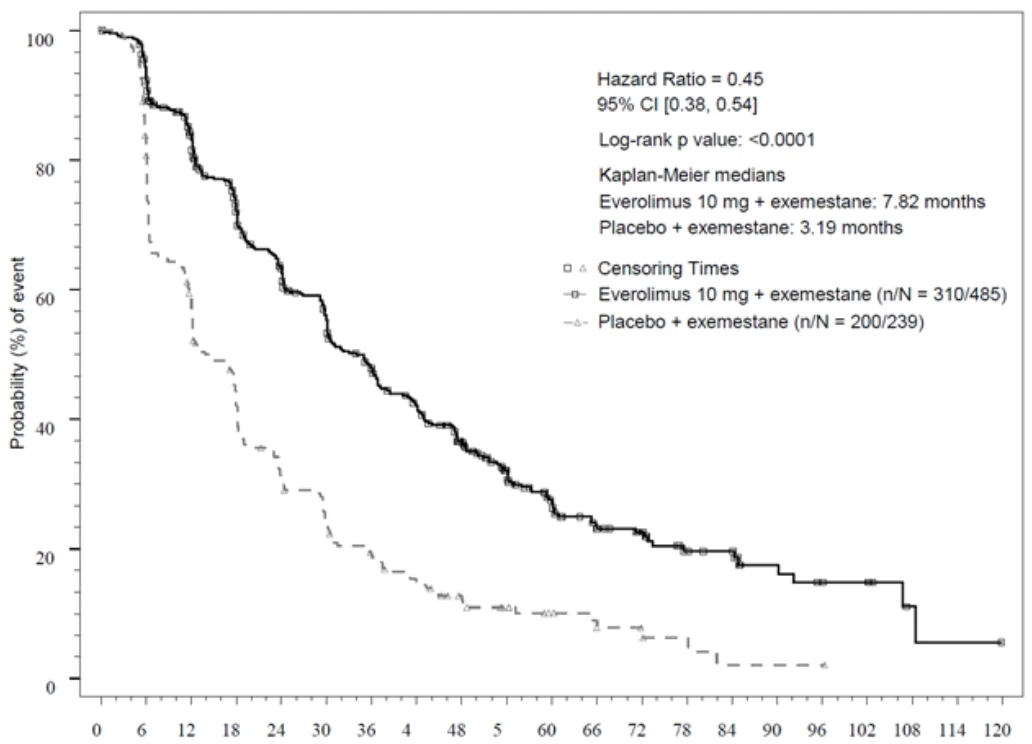 Number of Patients still at Risk Time (weeks)
Time
(weeks) 0 6 12 18 24 30 36 42 48 54 60 66 72 78 84 90 96 102 108 114 120
Everolimus 485 436 366 304 257 221 185 158 124 91 66 50 35 24 22 13 10 8 2 1 0 Placebo 239 190 132 96 67 50 39 30 21 15 10 8 5 3 1 1 1 0 0 0 0
The estimated PFS treatment effect was supported by planned subgroup analysis of PFS per investigator assessment. For all analysed subgroups (age, sensitivity to prior hormonal therapy, number of organs involved, status of bone-only lesions at baseline and presence of visceral metastasis, and across major demographic and prognostic subgroups) a positive treatment effect was seen with everolimus + exemestane with an estimated hazard ratio (HR) versus placebo + exemestane ranging from 0.25 to 0.60.
No differences in the time to ≥5% deterioration in the global and functional domain scores of QLQ-C30 were observed in the two arms.
BOLERO-6 (Study CRAD001Y2201), a three-arm, randomised, open-label, phase II study of everolimus in combination with exemestane versus everolimus alone versus capecitabine in the treatment of postmenopausal women with oestrogen receptor-positive, HER2/neu negative, locally advanced, recurrent, or metastatic breast cancer after recurrence or progression on prior letrozole or anastrozole.
The primary objective of the study was to estimate the HR of PFS for everolimus + exemestane versus everolimus alone. The key secondary objective was to estimate the HR of PFS for everolimus + exemestane versus capecitabine.
Other secondary objectives included the evaluation of OS, objective response rate, clinical benefit rate, safety, time to ECOG performance deterioration, time to QoL deterioration, and treatment satisfaction (TSQM). No formal statistical comparisons were planned.
A total of 309 patients were randomised in a 1:1:1 ratio to the combination of everolimus (10 mg daily) + exemestane (25 mg daily) (n=104), everolimus alone (10 mg daily) (n=103), or capecitabine (1250 mg/m2 dose twice daily for 2 weeks followed by one week rest, 3-week cycle) (n=102). At the time of data cut-off, the median duration of treatment was 27.5 weeks (range 2.0-165.7) in the everolimus + exemestane arm, 20 weeks (1.3-145.0) in the everolimus arm, and 26.7 weeks (1.4-177.1) in the capecitabine arm.
The result of the final PFS analysis with 154 PFS events observed based on local investigator assessment showed an estimated HR of 0.74 (90% CI: 0.57, 0.97) in favour of the everolimus + exemestane arm relative to everolimus arm. The median PFS was 8.4 months (90% CI: 6.6, 9.7) and 6.8 months (90% CI: 5.5, 7.2), respectively.
Figure 2 BOLERO-6 Kaplan-Meier progression-free survival curves (investigator radiological review) 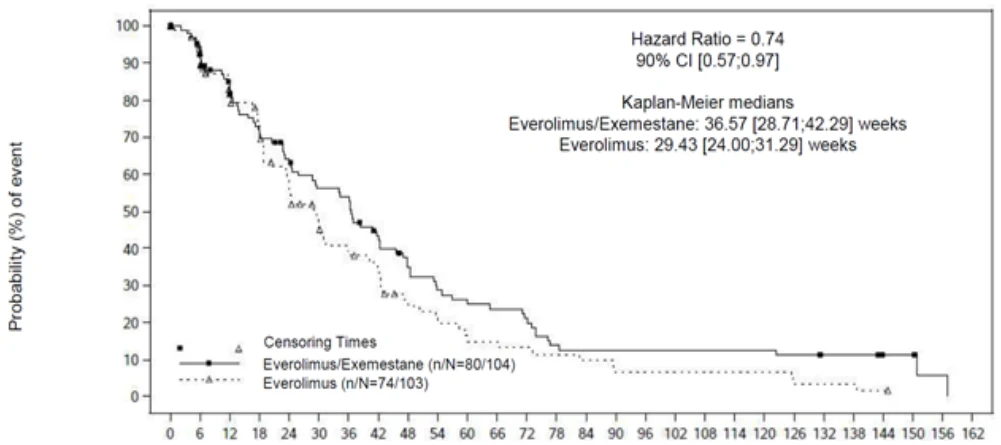
Number of Patients still at Risk Time (Weeks)
Time (weeks) 0 6 12 18 24 30 36 42 48 54 60 66 72 78 84 90 96 102108114120126132138144150156162
Everolimus/Exemestane10491 80 66 57 49 47 35 28 23 21 19 17 11 10 10 10 10 10 10 10 9 7 7 4 4 1 0
Everolimus10387 69 60 46 33 27 23 15 13 10 9 8 7 6 4 4 4 4 4 4 2 2 2 1 0 0 0
For the key secondary endpoint PFS the estimated HR was 1.26 (90% CI: 0.96, 1.66) in favour of capecitabine over the everolimus + exemestane combination arm based on a total of 148 PFS events observed.
Results of the secondary endpoint OS were not consistent with the primary endpoint PFS, with a trend observed favouring the everolimus alone arm. The estimated HR was 1.27 (90% CI: 0.95, 1.70) for the comparison of OS in the everolimus alone arm relative to the everolimus + exemestane arm. The estimated HR for the comparison of OS in the everolimus + exemestane combination arm relative to capecitabine arm was 1.33 (90% CI: 0.99, 1.79).
Advanced neuroendocrine tumours of pancreatic origin (pNET) RADIANT-3 (study CRAD001C2324), a phase III, multicentre, randomised, double-blind study of everolimus plus best supportive care (BSC) versus placebo plus BSC in patients with advanced pNET, demonstrated a statistically significant clinical benefit of everolimus over placebo by a 2.4-fold prolongation of median progression-free-survival (PFS) (11.04 months versus 4.6 months), (HR 0.35; 95% CI: 0.27, 0.45; p<0.0001) (see Table 7 and Figure 3).
RADIANT-3 involved patients with well- and moderately-differentiated advanced pNET whose disease had progressed within the prior 12 months. Treatment with somatostatin analogues was allowed as part of BSC.
The primary endpoint for the study was PFS evaluated by RECIST (Response Evaluation Criteria in Solid Tumors). Following documented radiological progression, patients could be unblinded by the investigator. Those randomised to placebo were then able to receive open-label everolimus.
Secondary endpoints included safety, objective response rate, response duration and overall survival (OS).
In total, 410 patients were randomised 1:1 to receive either everolimus 10 mg/day (n=207) or placebo (n=203). Demographics were well balanced (median age 58 years, 55% male, 78.5% Caucasian). Fifty-eight percent of the patients in both arms received prior systemic therapy. The median duration of blinded study treatment was 37.8 weeks (range 1.1-129.9 weeks) for patients receiving everolimus and 16.1 weeks (range 0.4-147.0 weeks) for those receiving placebo.
Following disease progression or after study unblinding, 172 of the 203 patients (84.7%) initially randomised to placebo crossed over to open-label everolimus. The median duration of open-label treatment was 47.7 weeks among all patients; 67.1 weeks in the 53 patients randomised to everolimus who switched to open-label everolimus and 44.1 weeks in the 172 patients randomised to placebo who switched to open-label everolimus.
Table 7 RADIANT-3 – efficacy results
| Population | Everolimus n=207 | Placebo n=203 | Hazard ratio (95% CI) | p-value |
| Median progression-free survival (months) (95% CI) | ||||
| Investigator radiological review | 11.04 (8.41, 13.86) | 4.60 (3.06, 5.39) | 0.35 (0.27, 0.45) | <0.0001 |
| Independent radiological review | 13.67 (11.17, 18.79) | 5.68 (5.39, 8.31) | 0.38 (0.28, 0.51) | <0.0001 |
| Median overall survival (months) (95% CI) | ||||
| Median overall survival | 44.02 (35.61, 51.75) | 37.68 (29.14, 45.77) | 0.94 (0.73, 1.20) | 0.300 |
Figure 3 RADIANT-3 – Kaplan-Meier progression-free survival curves
(investigator radiological review)
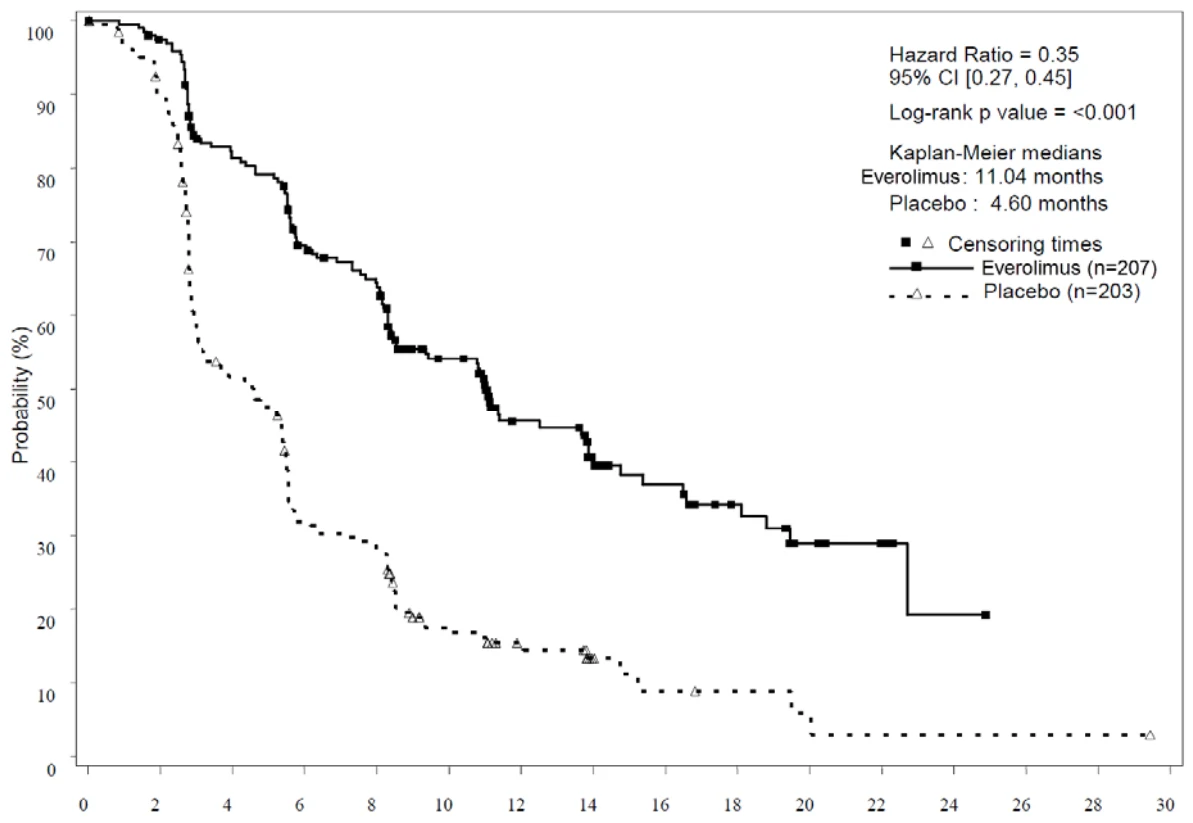
No. of patients still at risk Time (months)
Everolimus 207 189 153 126 114 80 49 36 28 21 10 6 2 0 0 0
Placebo 203 117 98 59 52 24 16 7 4 3 2 1 1 1 1 0
Advanced neuroendocrine tumours of gastrointestinal or lung origin
RADIANT-4 (study CRAD001T2302), a randomised, double-blind, multicentre, phase III study of everolimus plus best supportive care (BSC) versus placebo plus BSC was conducted in patients with advanced, well-differentiated (Grade 1 or Grade
- 2) non-functional neuroendocrine tumours of gastrointestinal or lung origin without a history of and no active symptoms related to carcinoid syndrome. The primary endpoint for the study was progression-free survival (PFS) evaluated by Response Evaluation Criteria in Solid Tumors (RECIST), based on independent radiology assessment. Supportive PFS analysis was based on local investigator review. Secondary endpoints included overall survival (OS), overall response rate, disease control rate, safety, change in quality of life (FACT-G) and time to World Health Organisation performance status (WHO PS) deterioration.
A total of 302 patients were randomised in a 2:1 ratio to receive either everolimus (10 mg daily) (n=205) or placebo (n=97). Demographics and disease characteristics were generally balanced (median age 63 years [range 22 to 86], 76% Caucasian, history of prior somatostatin analogue [SSA] use). The median duration of blinded treatment was 40.4 weeks for patients receiving everolimus and 19.6 weeks for those receiving placebo. After primary PFS analysis, 6 patients from the placebo arm crossed over to open-label everolimus.
The efficacy results for the primary endpoint PFS (independent radiological review) were obtained from the final PFS analysis (see Table 8 and Figure 4). The efficacy results for PFS (investigator radiological review) were obtained from the final OS analysis (see Table 8).
Table 8 RADIANT-4 – Progression-free survival results
| Population | Everolimus n=205 | Placebo n=97 | Hazard ratio (95% CI) | p-valuea |
| Median progression-free survival (months) (95% CI) | ||||
Independent radiological review | 11.01 (9.2, 13.3) | 3.91 (3.6, 7.4) | 0.48 (0.35, 0.67) | <0.001 |
Investigator radiological review | 14.39 (11.24, 17.97) | 5.45 (3.71, 7.39) | 0.40 (0.29, 0.55) | <0.001 |
| a One-sided p-value from a stratified log-rank test | ||||
Figure 4 RADIANT-4 – Kaplan-Meier progression-free survival curves
(independent radiological review) 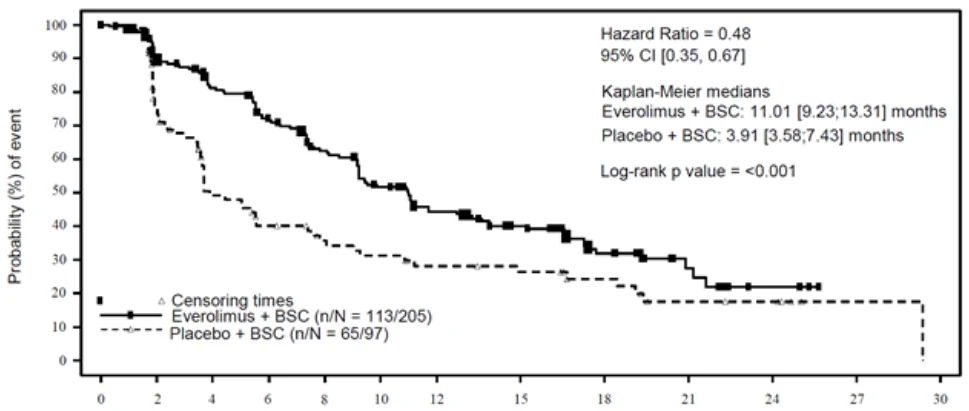
Number of Patients still at Risk Time (months)
Time
(months) 0 2 4 6 8 10 12 15 18 21 24 27 30
Everolimus 205 168 145 124 101 81 65 52 26 10 3 0 0 Placebo 97 65 39 30 24 21 17 15 11 6 5 1 0
In supportive analyses, positive treatment effect has been observed in all subgroups with the exception of the subgroup of patients with ileum as primary site of tumour origin (Ileum: HR=1.22 [95% CI: 0.56 to 2.65]; Non-ileum: HR=0.34 [95% CI: 0.22 to 0.54]; Lung: HR=0.43 [95% CI: 0.24 to 0.79]) (see Figure 5).
Figure 5 RADIANT-4 – Progression free survival results by pre-specified patient subgroup (independent radiological review)
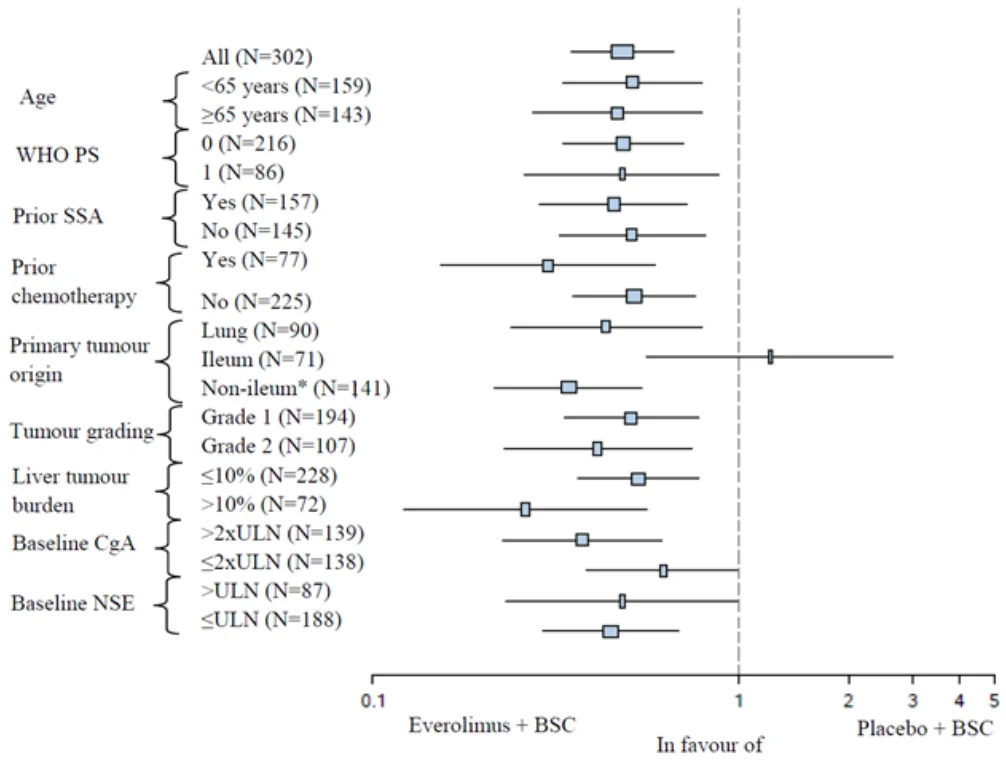 *Non-ileum: stomach, colon, rectum, appendix, caecum, duodenum, jejunum, carcinoma of unknown primary origin and other gastrointestinal origin
ULN: Upper limit of normal
CgA: Chromogranin A
NSE: Neuron specific enolase
Hazard ratio (95% CI) from stratified Cox model
The final overall survival (OS) analysis did not show a statistically significant difference between those patients who received everolimus or placebo during the blinded treatment period of the study (HR= 0.90 [95% CI: 0.66 to 1.22]).
No difference in the time to definitive deterioration of WHO PS (HR=1.02; [95% CI: 0.65, 1.61]) and time to definitive deterioration in quality of life (FACT-G total score HR=0.74; [95% CI: 0.50, 1.10]) was observed between the two arms.
Advanced renal cell carcinoma
RECORD-1 (study CRAD001C2240), a phase III, international, multicentre, randomised, double-blind study comparing everolimus 10 mg/day and placebo, both in conjunction with best supportive care, was conducted in patients with metastatic renal cell carcinoma whose disease had progressed on or after treatment with VEGFR-TKI (vascular endothelial growth factor receptor tyrosine kinase inhibitor) therapy (sunitinib, sorafenib, or both sunitinib and sorafenib). Prior therapy with bevacizumab and interferon-α was also permitted. Patients were stratified according to Memorial Sloan-Kettering Cancer Center (MSKCC) prognostic score (favourable- vs. intermediate- vs. poor-risk groups) and prior anticancer therapy (1 vs. 2 prior VEGFR-TKIs).
Progression-free survival, documented using RECIST (Response Evaluation Criteria in Solid Tumours) and assessed via a blinded, independent central review, was the primary endpoint. Secondary endpoints included safety, objective tumour response rate, overall survival, disease-related symptoms, and quality of life. After documented radiological progression, patients could be unblinded by the investigator: those randomised to placebo were then able to receive open-label everolimus 10 mg/day. The Independent Data Monitoring Committee recommended termination of this trial at the time of the second interim analysis as the primary endpoint had been met.
In total, 416 patients were randomised 2:1 to receive everolimus (n=277) or placebo (n=139). Demographics were well balanced (pooled median age [61 years; range 27-85], 78% male, 88% Caucasian, number of prior VEGFR-TKI therapies [1-74%, 2-26%]). The median duration of blinded study treatment was 141 days (range 19-451 days) for patients receiving everolimus and 60 days (range 21-295 days) for those receiving placebo.
Everolimus was superior to placebo for the primary endpoint of progression-free survival, with a statistically significant 67% reduction in the risk of progression or death (see Table 9 and Figure 6).
Table 9 RECORD-1 – Progression-free survival results
| Population | n | Everolimus n=277 | Placebo n=139 | Hazard ratio (95%CI) | p-value |
| Median progression-free survival (months) (95% CI) | |||||
| Primary analysis | |||||
| All (blinded independent central review) | 416 | 4.9 (4.0-5.5) | 1.9 (1.8-1.9) | 0.33 (0.25-0.43) | <0.0001a |
| Supportive/sensitivity analyses | |||||
| All (local review by investigator) | 416 | 5.5 (4.6-5.8) | 1.9 (1.8-2.2) | 0.32 (0.25-0.41) | <0.0001a |
| MSKCC prognostic score (blinded independent central review) | |||||
| Favourable risk | 120 | 5.8 (4.0-7.4) | 1.9 (1.9-2.8) | 0.31 (0.19-0.50) | <0.0001 |
| Intermediate risk | 235 | 4.5 (3.8-5.5) | 1.8 (1.8-1.9) | 0.32 (0.22-0.44) | <0.0001 |
| Poor risk | 61 | 3.6 (1.9-4.6) | 1.8 (1.8-3.6) | 0.44 (0.22-0.85) | 0.007 |
| a Stratified log-rank test | |||||
Figure 6 RECORD-1 – Kaplan-Meier progression-free survival curves (independent central review)
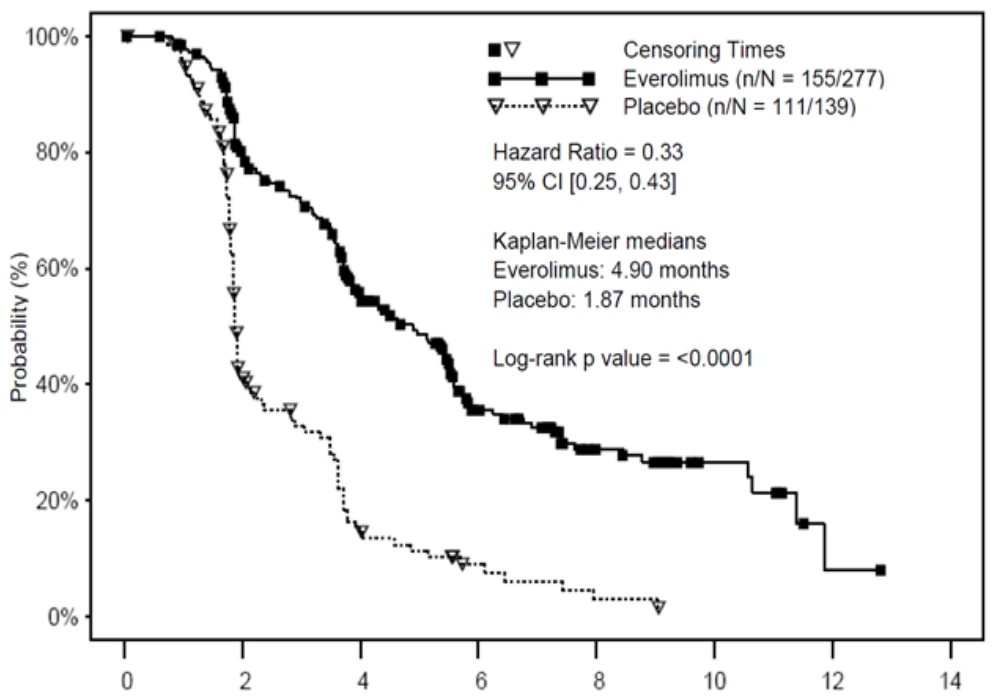 No. of patients still at risk Time (months)
Time
(months)
0 2 4 6 8 10 12 14
Everolimus 277 192 115 51 26 10 1 0 Placebo 139 47 15 6 2 0 0 0
Six-month PFS rates were 36% for everolimus therapy compared with 9% for placebo.
Confirmed objective tumour responses were observed in 5 patients (2%) receiving everolimus while none were observed in patients receiving placebo. Therefore, the progression-free survival advantage primarily reflects the population with disease stabilisation (corresponding to 67% of the everolimus treatment group).
No statistically significant treatment-related difference in overall survival was noted (hazard ratio 0.87; confidence interval: 0.65-1.17; p=0.177). Crossover to open-label everolimus following disease progression for patients allocated to placebo confounded the detection of any treatment-related difference in overall survival.
Renal angiomyolipoma/SEGA
Mechanism of action
Everolimus is a selective mTOR (mammalian target of rapamycin) inhibitor. mTOR is a key serine-threonine kinase, the activity of which is known to be upregulated in a number of human cancers. Everolimus binds to the intracellular protein FKBP-12, forming a complex that inhibits mTOR complex-1 (mTORC1) activity. Inhibition of the mTORC1 signalling pathway interferes with the translation and synthesis of proteins by reducing the activity of S6 ribosomal protein kinase (S6K1) and eukaryotic elongation factor 4E-binding protein (4EBP-1) that regulate proteins involved in the cell cycle, angiogenesis and glycolysis. Everolimus can reduce levels of vascular endothelial growth factor (VEGF). In patients with TSC, treatment with everolimus increases VEGF-A and decreases VEGF-D levels. Everolimus is a potent inhibitor of the growth and proliferation of tumour cells, endothelial cells, fibroblasts and blood-vessel-associated smooth muscle cells and has been shown to reduce glycolysis in solid tumours in vitro and in vivo.
Two primary regulators of mTORC1 signalling are the oncogene suppressors tuberin-sclerosis complexes 1 & 2 (TSC1, TSC2). Loss of either TSC1 or TSC2 leads to elevated rheb-GTP levels, a ras family GTPase, which interacts with the mTORC1 complex to cause its activation. mTORC1 activation leads to a downstream kinase signalling cascade, including activation of the S6 kinases. In TSC syndrome, inactivating mutations in the TSC1 or the TSC2 gene lead to hamartoma formation throughout the body.
Clinical efficacy and safety
Renal angiomyolipoma associated with TSC
EXIST-2 (study CRAD001M2302), a randomised, controlled phase III study was conducted to evaluate the efficacy and safety of everolimus in patients with TSC plus renal angiomyolipoma. Presence of at least one angiomyolipoma ≥3 cm in longest diameter using CT/MRI (based on local radiology assessment) was required for entry.
The primary efficacy endpoint was angiomyolipoma response rate based on independent central radiology review. The analysis was stratified by use of enzyme-inducing antiepileptics at randomisation (yes/no).
Key secondary endpoints included time to angiomyolipoma progression and skin lesion response rate.
A total of 118 patients were randomised, 79 to everolimus 10 mg daily and 39 to placebo. Median age was 31 years (range: 18 to 61 years; 46.6% were <30 years at enrolment), 33.9% were male, and 89.0% were Caucasian. Of the enrolled patients, 83.1% had angiomyolipomas ≥4 cm (28.8% ≥8 cm), 78.0% had bilateral angiomyolipomas, and 39.0% had undergone prior renal embolisation/nephrectomy; 96.6% had skin lesions at baseline and 44.1% had target SEGAs (at least one SEGA ≥1 cm in longest diameter).
Results showed that the primary objective related to best overall angiomyolipoma response was met with best overall response rates of 41.8% (95% CI: 30.8, 53.4) for the everolimus arm compared with 0% (95% CI: 0.0, 9.0) for the placebo arm (p<0.0001) (Table 10).
Patients initially treated with placebo were allowed to cross over to everolimus at the time of angiomyolipoma progression and upon recognition that treatment with everolimus was superior to treatment with placebo. At the time of the final analysis (4 years following the last patient randomisation), the median duration of exposure to everolimus was 204.1 weeks (range 2 to 278). The angiomyolipoma best overall response rate had increased to 58.0% (95% CI: 48.3, 67.3), with a rate of stable disease of 30.4% (Table 10).
Among patients treated with everolimus during the study, no cases of angiomyolipoma-related nephrectomy and only one case of renal embolisation were reported.
Table 10 EXIST-2 - Angiomyolipoma response
Primary analysis3 Final analysis4
Everolimus
n=79
Placebo n=39
p-value Everolimus n=112 Primary analysis
Angiomyolipoma response rate1,2 - % 41.8 0 <0.0001 58.0 95% CI 30.8, 53.4 0.0, 9.0 48.3, 67.3 Best overall angiomyolipoma response -
%
Response 41.8 0 58.0 Stable disease 40.5 79.5 30.4 Progression 1.3 5.1 0.9 Not evaluable 16.5 15.4 10.7 1 According to independent central radiology review
2 Angiomyolipoma responses were confirmed with a repeat scan. Response was defined as:
≥50% reduction in the sum of angiomyolipoma volume relative to baseline, plus absence of new angiomyolipoma ≥1.0 cm in longest diameter, plus no increase in renal volume >20% from nadir, plus absence of grade ≥2 angiomyolipoma-related bleeding. 3 Primary analysis for double blind period
4 Final analysis includes patients who crossed over from the placebo group; median duration of exposure to everolimus of 204.1 weeks
Consistent treatment effects on angiomyolipoma response rate were observed across all subgroups evaluated (i.e. enzyme-inducing antiepileptic use versus enzyme-inducing antiepileptic non-use, sex, age and race) at the primary efficacy analysis.
In the final analysis, reduction in angiomyolipoma volume improved with longer term treatment with everolimus. At weeks 12, 96 and 192, ≥ 30% reductions in volume were observed in 75.0%, 80.6%, and 85.2% of the treated patients, respectively. Similarly, at the same timepoints, ≥50% reductions in volume were observed in 44.2%, 63.3%, and 68.9% of the treated patients, respectively.
Median time to angiomyolipoma progression was 11.4 months in the placebo arm and was not reached in the everolimus arm (HR 0.08; 95% CI: 0.02, 0.37; p<0.0001). Progressions were observed in 3.8% of patients in the everolimus arm compared with 20.5% in the placebo arm. Estimated progression-free rates at 6 months were 98.4% for the everolimus arm and 83.4% for the placebo arm. At the final analysis, median time to angiomyolipoma progression was not reached. Angiomyolipoma progressions were observed in 14.3% of the patients. The estimated angiomyolipoma progression-free rates at 24 months and 48 months were 91.6% and 83.1%, respectively.
At the primary analysis, skin lesion response rates of 26.0% (95% CI: 16.6, 37.2) for the everolimus arm and 0% (95% CI: 0.0, 9.5) for the placebo arm were observed (p=0.0002). At the final analysis, the skin lesion response rate had increased to 68.2% (95% CI: 58.5, 76.9), with one patient reporting a confirmed complete clinical skin lesion response and no patients experiencing progressive disease as their best response.
In an exploratory analysis of patients with TSC with angiomyolipoma who also had SEGA, the SEGA response rate (proportion of patients with ≥50% reduction from baseline in target lesion volumes in the absence of progression) was 10.3% in the everolimus arm in the primary analysis (versus no responses reported in the 13 patients randomised to placebo with a SEGA lesion at baseline) and increased to 48.0% in the final analysis.
Post-hoc sub-group analysis of EXIST-2 (study CRAD001M2302) carried out at time of primary analysis demonstrated that angiomyolipoma response rate is reduced below the threshold of 5 ng/ml (Table 11).
Table 11 EXIST-2 - Angiomyolipoma response rates by time-averaged Cmin category, at primary analysis
Time-averaged Cmin
category
Number of patients Response rate 95% confidence interval
≤5 ng/ml 20 0.300 0.099, 0.501 >5 ng/ml 42 0.524 0.373, 0.675 Difference1 -0.224 -0.475, 0.027 1 Difference is “≤5 ng/ml” minus “>5 ng/ml”
SEGA associated with TSC
Phase III study in SEGA patients
EXIST-1 (Study CRAD001M2301), a randomised, double-blind, multicentre phase III study of everolimus versus placebo, was conducted in patients with SEGA, irrespective of age. Patients were randomised in a 2:1 ratio to receive either everolimus or matching placebo. Presence of at least one SEGA lesion ≥1.0 cm in longest diameter using MRI (based on local radiology assessment) was required for entry. In addition, serial radiological evidence of SEGA growth, presence of a new SEGA lesion ≥1 cm in longest diameter, or new or worsening hydrocephalus was required for entry.
The primary efficacy endpoint was SEGA response rate based on independent central radiology review. The analysis was stratified by use of enzyme-inducing antiepileptics at randomisation (yes/no).
Key secondary endpoints in hierarchal order of testing included the absolute change in frequency of total seizure events per 24-hour EEG from baseline to week 24, time to SEGA progression, and skin lesion response rate.
A total of 117 patients were randomised, 78 to everolimus and 39 to placebo. The two treatment arms were generally well balanced with respect to demographic and baseline disease characteristics and history of prior anti-SEGA therapies. In the total population, 57.3% of patients were male and 93.2% were Caucasian. The median age for the total population was 9.5 years (age range for the everolimus arm: 1.0 to 23.9; age range for the placebo arm: 0.8 to 26.6), 69.2% of the patients were aged 3 to <18 years and 17.1% were <3 years at enrolment.
Of the enrolled patients, 79.5% had bilateral SEGAs, 42.7% had ≥2 target SEGA lesions, 25.6% had inferior growth, 9.4% had evidence of deep parenchymal invasion, 6.8% had radiographic evidence of hydrocephalus, and 6.8% had undergone prior SEGA-related surgery. 94.0% had skin lesions at baseline and 37.6% had target renal angiomyolipoma lesions (at least one angiomyolipoma ≥1 cm in longest diameter).
The median duration of blinded study treatment was 9.6 months (range: 5.5 to 18.1) for patients receiving everolimus and 8.3 months (range: 3.2 to 18.3) for those receiving placebo.
Results showed that everolimus was superior to placebo for the primary endpoint of best overall SEGA response (p<0.0001). Response rates were 34.6% (95% CI: 24.2, 46.2) for the everolimus arm compared with 0% (95% CI: 0.0, 9.0) for the placebo arm (Table 12). In addition, all 8 patients on the everolimus arm who had radiographic evidence of hydrocephalus at baseline had a decrease in ventricular volume.
Patients initially treated with placebo were allowed to cross over to everolimus at the time of SEGA progression and upon recognition that treatment with everolimus was superior to treatment with placebo. All patients receiving at least one dose of everolimus were followed until medicinal product discontinuation or study completion. At the time of the final analysis, the median duration of exposure among all such patients was 204.9 weeks (range: 8.1 to 253.7). The best overall SEGA response rate had increased to 57.7% (95% CI: 47.9, 67.0) at the final analysis.
No patient required surgical intervention for SEGA during the entire course of the study.
Table 12 EXIST-1 – SEGA response
Primary analysis3 Final analysis4
Everolimus Placebo p-value Everolimus
N=78 N=39 N=111
SEGA response rate1,2 - (%) 34.6 0 <0.0001 57.7 95% CI 24.2, 46.2 0.0, 9.0 47.9, 67.0 Best overall SEGA response -
(%)
Response 34.6 0 57.7 Stable disease 62.8 92.3 39.6 Progression 0 7.7 0 Not evaluable 2.6 0 2.7 1 According to independent central radiology review
2 SEGA responses were confirmed with a repeat scan. Response was defined as:
≥50% reduction in the sum of SEGA volume relative to baseline, plus no unequivocal worsening of non-target SEGA lesions, plus absence of new SEGA ≥1 cm in longest diameter, plus no new or worsening hydrocephalus 3 Primary analysis for double blind period
4 Final analysis includes patients who crossed over from the placebo group; median duration of exposure to everolimus of 204.9 weeks
Consistent treatment effects were observed across all subgroups evaluated (i.e. enzyme-inducing antiepileptic use versus enzyme-inducing antiepileptic non-use, sex and age) at the primary analysis.
During the double-blind period, reduction of SEGA volume was evident within the initial 12 weeks of everolimus treatment: 29.7% (22/74) of patients had ≥50% reductions in volume and 73.0% (54/74) had ≥30% reductions in volume. Sustained reductions were evident at week 24, 41.9% (31/74) of patients had ≥50% reductions and 78.4% (58/74) of patients had ≥30% reductions in SEGA volume.
In the everolimus treated population (N=111) of the study, including patients who crossed over from the placebo group, tumour response, starting as early as after 12 weeks on everolimus, was sustained at later time points. The proportion of patients achieving at least 50% reductions in SEGA volume was 45.9% (45/98) and 62.1% (41/66) at weeks 96 and 192 after start of everolimus treatment. Similarly, the proportion of patients achieving at least 30% reductions in SEGA volume was 71.4% (70/98) and 77.3% (51/66) at weeks 96 and 192 after start of everolimus treatment.
Analysis of the first key secondary endpoint, change in seizure frequency, was inconclusive; thus, despite the fact that positive results were observed for the two subsequent secondary endpoints (time to SEGA progression and skin lesion response rate), they could not be declared formally statistically significant.
Median time to SEGA progression based on central radiology review was not reached in either treatment arm. Progressions were only observed in the placebo arm (15.4%; p=0.0002). Estimated progression-free rates at 6 months were 100% for the everolimus arm and 85.7% for the placebo arm. The long-term follow-up of patients randomised to everolimus and patients randomised to placebo who thereafter crossed over to everolimus demonstrated durable responses.
At the time of the primary analysis, everolimus demonstrated clinically meaningful improvements in skin lesion response (p=0.0004), with response rates of 41.7% (95% CI: 30.2, 53.9) for the everolimus arm and 10.5% (95% CI: 2.9, 24.8) for the placebo arm. At the final analysis, the skin lesion response rate increased to 58.1% (95% CI: 48.1, 67.7).
Phase II study in patients with SEGA
A prospective, open-label, single-arm phase II study (Study CRAD001C2485) was conducted to evaluate the safety and efficacy of everolimus in patients with SEGA. Radiological evidence of serial SEGA growth was required for entry.
Change in SEGA volume during the core 6-month treatment phase, as assessed via an independent central radiology review, was the primary efficacy endpoint. After the core treatment phase, patients could be enrolled into an extension phase where SEGA volume was assessed every 6 months.
In total, 28 patients received treatment with everolimus; median age was 11 years (range 3 to 34), 61% male, 86% Caucasian. Thirteen patients (46%) had a secondary smaller SEGA, including 12 in the contralateral ventricle.
Primary SEGA volume was reduced at month 6 compared to baseline (p<0.001 [see Table 13]). No patient developed new lesions, worsening hydrocephalus or increased intracranial pressure, and none required surgical resection or other therapy for SEGA.
Table 13 Change in primary SEGA volume over time
SEGA
volume
(cm3)
Independent central review
Baseline
n=28
Month 6
n=27
Month 12
n=26
Month 24
n=24
Month 36
n=23
Month 48 n=24
Month 60 n=23 Primary tumour volume
Mean
(standard
deviation
)
2.45
(2.813)
1.33
(1.497)
1.26
(1.526)
1.19
(1.042)
1.26
(1.298)
1.16 (0.961)
1.24 (0.959)
Median 1.74 0.93 0.84 0.94 1.12 1.02 1.17 Range 0.49 - 14.
23
0.31 - 7.9
8
0.29 - 8.1
8
0.20 - 4.6
3
0.22 - 6.5
2
0.18 - 4.1
9
0.21 - 4.3
9 Reduction from baseline
Mean
(standard
deviation
)
1.19
(1.433)
1.07
(1.276)
1.25
(1.994)
1.41
(1.814)
1.43 (2.267)
1.44 (2.230) Median 0.83 0.85 0.71 0.71 0.83 0.50 Range 0.06 - 6.2
5
0.02 - 6.0
5
-0.55 - 9.6
0
0.15 - 7.7
1
0.00 - 10.
96
-0.74 - 9.8
4 Percentage reduction from baseline, n (%)
≥50% 9 (33.3) 9 (34.6) 12 (50.0) 10 (43.5) 14 (58.3) 12 (52.2) ≥30% 21 (77.8) 20 (76.9) 19 (79.2) 18 (78.3) 19 (79.2) 14 (60.9) >0% 27
(100.0)
26
(100.0)
23
(95.8)
23
(100.0)
23
(95.8)
21 (91.3) No
change
0 0 0 0 1 (4.2) 0
Increase 0 0 1 (4.2) 0 0 2 (8.7)
The robustness and consistency of the primary analysis were supported by the:
- change in primary SEGA volume as per local investigator assessment (p<0.001), with 75.0% and 39.3% of patients experiencing reductions of ≥30% and ≥50%, respectively
- change in total SEGA volume as per independent central review (p<0.001) or local investigator assessment (p<0.001).
One patient met the pre-specified criteria for treatment success (>75% reduction in SEGA volume) and was temporarily taken off trial therapy; however, SEGA re-growth was evident at the next assessment at 4.5 months and treatment was restarted.
Long-term follow-up to a median duration of 67.8 months (range: 4.7 to 83.2) demonstrated sustained efficacy.
Other studies
Stomatitis is the most commonly reported adverse reaction in patients treated with everolimus (see sections 4.4 and 4.8). In a post-marketing single-arm study in postmenopausal women with advanced breast cancer (N=92), topical treatment with dexamethasone 0.5 mg/5 ml alcohol-free oral solution was administered as a mouthwash (4 times daily for the initial 8 weeks of treatment) to patients at the time of initiating treatment with everolimus (10 mg/day) plus exemestane (25 mg/day) to reduce the incidence and severity of stomatitis. The incidence of Grade ≥2 stomatitis at 8 weeks was 2.4% (n=2/85 evaluable patients) which was lower than historically reported. The incidence of Grade 1 stomatitis was 18.8% (n=16/85) and no cases of Grade 3 or 4 stomatitis were reported. The overall safety profile in this study was consistent with that established for everolimus in the oncology and TSC settings, with the exception of a slightly increased frequency of oral candidiasis which was reported in 2.2% (n=2/92) of patients.
Breast cancer/Neuroendocrine tumours/Renal cell carcinoma
Paediatric population
The European Medicines Agency has waived the obligation to submit the results of studies with the reference medicinal product (RefMP) in all subsets of the paediatric population in neuroendocrine tumours of pancreatic origin, thoracic neuroendocrine tumours and in renal cell carcinoma (see section 4.2 for information on paediatric use).
Renal angiomyolipoma/SEGA
Paediatric population
The European Medicines Agency has waived the obligation to submit the results of studies with the RefMP in all subsets of the paediatric population in angiomyolipoma (see section 4.2 for information on paediatric use).
5.2 Pharmacokinetic properties
Absorption
In patients with advanced solid tumours, peak everolimus concentrations (Cmax) are reached at a median time of 1 hour after daily administration of 5 and 10 mg everolimus under fasting conditions or with a light fat-free snack. Cmax is dose-proportional between 5 and 10 mg. Everolimus is a substrate and moderate inhibitor of PgP.
Food effect
Breast cancer/Neuroendocrine tumours/Renal cell carcinoma
In healthy subjects, high fat meals reduced systemic exposure to everolimus 10 mg (as measured by AUC) by 22% and the peak plasma concentration Cmax by 54%. Light fat meals reduced AUC by 32% and Cmax by 42%. Food, however, had no apparent effect on the post absorption phase concentration-time profile.
Renal angiomyolipoma/SEGA
In healthy subjects, high fat meals reduced systemic exposure to everolimus 10 mg tablets (as measured by AUC) by 22% and the peak blood concentration Cmax by 54%. Light fat meals reduced AUC by 32% and Cmax by 42%.
In healthy subjects taking a single 9 mg dose (3 x 3 mg) of everolimus dispersible tablets in suspension, high fat meals reduced AUC by 11.7% and the peak blood concentration Cmax by 59.8%. Light fat meals reduced AUC by 29.5% and Cmax by 50.2%.
Food, however, had no apparent effect on the post absorption phase concentration-time profile 24 hours post-dose of either dosage form.
Distribution
The blood-to-plasma ratio of everolimus, which is concentration-dependent over the range of 5 to 5,000 ng/ml, is 17% to 73%. Approximately 20% of the everolimus concentration in whole blood is confined to plasma in cancer patients given everolimus 10 mg/day. Plasma protein binding is approximately 74% both in healthy subjects and in patients with moderate hepatic impairment. In patients with advanced solid tumours, Vd was 191 l for the apparent central compartment and 517 l for the apparent peripheral compartment.
Renal angiomyolipoma/SEGA
Nonclinical studies in rats indicate:
- A rapid uptake of everolimus in the brain followed by a slow efflux.
- The radioactive metabolites of [3H]everolimus do not significantly cross the blood-brain barrier.
- A dose-dependent brain penetration of everolimus, which is consistent with the hypothesis of saturation of an efflux pump present in the brain capillary endothelial cells.
- The co-administration of the PgP inhibitor, cyclosporine, enhances the exposure of everolimus in the brain cortex, which is consistent with the inhibition of PgP at the blood-brain barrier.
There are no clinical data on the distribution of everolimus in the human brain. Non-clinical studies in rats demonstrated distribution into the brain following administration by both the intravenous and oral routes.
Biotransformation
Everolimus is a substrate of CYP3A4 and PgP. Following oral administration, everolimus is the main circulating component in human blood. Six main metabolites of everolimus have been detected in human blood, including three monohydroxylated metabolites, two hydrolytic ring-opened products, and a phosphatidylcholine conjugate of everolimus. These metabolites were also identified in animal species used in toxicity studies, and showed approximately 100 times less activity than everolimus itself. Hence, everolimus is considered to contribute the majority of the overall pharmacological activity.
Elimination
Mean oral clearance (CL/F) of everolimus after 10 mg daily dose in patients with advanced solid tumours was 24.5 l/h. The mean elimination half-life of everolimus is approximately 30 hours.
No specific excretion studies have been undertaken in cancer patients; however, data are available from the studies in transplant patients. Following the administration of a single dose of radiolabelled everolimus in conjunction with ciclosporin, 80% of the radioactivity was recovered from the faeces, while 5% was excreted in the urine. The parent substance was not detected in urine or faeces.
Steady-state pharmacokinetics
After administration of everolimus in patients with advanced solid tumours, steady-state AUC0-τ was dose-proportional over the range of 5 to 10 mg daily dose. Steady-state was achieved within two weeks. Cmax is dose-proportional between 5 and 10 mg. tmax occurs at 1 to 2 hours post-dose. There was a significant correlation between AUC0-τ and pre-dose trough concentration at steady-state.
Special populations
Hepatic impairment
The safety, tolerability and pharmacokinetics of everolimus were evaluated in two single oral dose studies of everolimus tablets in 8 and 34 adult subjects with impaired hepatic function relative to subjects with normal hepatic function.
In the first study, the average AUC of everolimus in 8 subjects with moderate hepatic impairment (Child-Pugh B) was twice that found in 8 subjects with normal hepatic function.
In the second study of 34 subjects with different impaired hepatic function compared to normal subjects, there was a 1.6-fold, 3.3-fold and 3.6-fold increase in exposure (i.e. AUC0-inf) for subjects with mild (Child-Pugh A), moderate (Child-Pugh B) and severe (Child-Pugh C) hepatic impairment, respectively.
Simulations of multiple dose pharmacokinetics support the dosing recommendations in subjects with hepatic impairment based on their Child-Pugh status.
Based on the results of the two studies, dose adjustment is recommended for patients with hepatic impairment (see sections 4.2 and 4.4).
Renal impairment
In a population pharmacokinetic analysis of 170 patients with advanced solid tumours, no significant influence of creatinine clearance (25-178 ml/min) was detected on CL/F of everolimus.
Post-transplant renal impairment (creatinine clearance range 11-107 ml/min) did not affect the pharmacokinetics of everolimus in transplant patients.
Renal angiomyolipoma/SEGA
Paediatric population
In patients with SEGA, everolimus Cmin was approximately dose-proportional within the dose range from 1.35 mg/m2 to 14.4 mg/m2.
In patients with SEGA, the geometric mean Cmin values normalised to mg/m2 dose in patients aged <10 years and 10-18 years were lower by 54% and 40%, respectively, than those observed in adults (>18 years of age), suggesting that everolimus clearance was higher in younger patients. Limited data in patients <3 years of age (n=13) indicate that BSA-normalised clearance is about two-fold higher in patients with low BSA (BSA of 0.556 m2) than in adults. Therefore it is assumed that steady-state could be reached earlier in patients <3 years of age (see section 4.2 for dosing recommendations).
The pharmacokinetics of everolimus have not been studied in patients younger than 1 year of age. It is reported, however, that CYP3A4 activity is reduced at birth and increases during the first year of life, which could affect the clearance in this patient population.
A population pharmacokinetic analysis including 111 patients with SEGA who ranged from 1.0 to 27.4 years (including 18 patients 1 to less than 3 years of age with BSA 0.42 m2 to 0.74 m2) showed that BSA-normalised clearance is in general higher in younger patients. Population pharmacokinetic model simulations showed that a starting dose of 7 mg/m2 would be necessary to attain Cmin within the 5 to 15 ng/ml range in patients younger than 3 years of age. A higher starting dose of 7 mg/m2 is therefore recommended for patients 1 to less than 3 years of age with SEGA (see section 4.2).
Elderly
In a population pharmacokinetic evaluation in cancer patients, no significant influence of age (27-85 years) on oral clearance of everolimus was detected.
Ethnicity
Oral clearance (CL/F) is similar in Japanese and Caucasian cancer patients with similar liver functions. Based on analysis of population pharmacokinetics, CL/F is on average 20% higher in black transplant patients.
5.3 Preclinical safety data
The preclinical safety profile of everolimus was assessed in mice, rats, minipigs, monkeys and rabbits. The major target organs were male and female reproductive systems (testicular tubular degeneration, reduced sperm content in epididymides and uterine atrophy) in several species; lungs (increased alveolar macrophages) in rats and mice; pancreas (degranulation and vacuolation of exocrine cells in monkeys and minipigs, respectively, and degeneration of islet cells in monkeys), and eyes (lenticular anterior suture line opacities) in rats only. Minor kidney changes were seen in the rat (exacerbation of age-related lipofuscin in tubular epithelium, increases in hydronephrosis) and mouse (exacerbation of background lesions). There was no indication of kidney toxicity in monkeys or minipigs.
Everolimus appeared to spontaneously exacerbate background diseases (chronic myocarditis in rats, coxsackie virus infection of plasma and heart in monkeys, coccidian infestation of the gastrointestinal tract in minipigs, skin lesions in mice and monkeys). These findings were generally observed at systemic exposure levels within the range of therapeutic exposure or above, with the exception of the findings in rats, which occurred below therapeutic exposure due to a high tissue distribution.
Breast cancer/Neuroendocrine tumours/Renal cell carcinoma
In a male fertility study in rats, testicular morphology was affected at 0.5 mg/kg and above, and sperm motility, sperm head count, and plasma testosterone levels were diminished at 5 mg/kg which caused a reduction in male fertility. There was evidence of reversibility.
Renal angiomyolipoma/SEGA
In a male fertility study in rats, testicular morphology was affected at 0.5 mg/kg and above, and sperm motility, sperm head count, and plasma testosterone levels were diminished at 5 mg/kg, which is within the range of therapeutic exposure and which caused a reduction in male fertility. There was evidence of reversibility.
In animal reproductive studies female fertility was not affected. However, oral doses of everolimus in female rats at ≥0.1 mg/kg (approximately 4% of the AUC0-24h in patients receiving the 10 mg daily dose) resulted in increases in pre-implantation loss.
Everolimus crossed the placenta and was toxic to the foetus. In rats, everolimus caused embryo/foetotoxicity at systemic exposure below the therapeutic level. This was manifested as mortality and reduced foetal weight. The incidence of skeletal variations and malformations (e.g. sternal cleft) was increased at 0.3 and 0.9 mg/kg. In rabbits, embryotoxicity was evident in an increase in late resorptions.
Renal angiomyolipoma/SEGA
In juvenile rat toxicity studies, systemic toxicity included decreased body weight gain, food consumption, and delayed attainment of some developmental landmarks, with full or partial recovery after cessation of dosing. With the possible exception of the rat-specific lens finding (where young animals appeared to be more susceptible), it appears that there is no significant difference in the sensitivity of juvenile animals to the adverse reactions of everolimus as compared to adult animals. Toxicity study with juvenile monkeys did not show any relevant toxicity.
Genotoxicity studies covering relevant genotoxicity endpoints showed no evidence of clastogenic or mutagenic activity. Administration of everolimus for up to 2 years did not indicate any oncogenic potential in mice and rats up to the highest doses, corresponding respectively to 3.9 and 0.2 times the estimated clinical exposure.
6 PHARMACEUTICAL PARTICULARS
6.1 List of excipients
Butylhydroxytoluene (E321)
Hypromellose
Lactose monohydrate
Lactose
Crospovidone
Magnesium stearate
6.2 Incompatibilities
Not applicable.
6.3 Shelf life
30 months
6.4 Special precautions for storage
Store in the original package in order to protect from light.
This medicinal product does not require any special temperature storage conditions.
6.5 Nature and contents of container
OPA/Alu/PVC – Aluminium blisters containing 10, 30, 30x1, 50x1, 60 or 90 tablets.
Not all pack sizes may be marketed.
6.6 Special precautions for disposal
Any unused medicinal product or waste material should be disposed of in accordance with local requirements.
7 MARKETING AUTHORISATION HOLDER
TEVA UK Limited,
Ridings Point,
Whistler Drive,
Castleford,
WF10 5HX,
United Kingdom
8 MARKETING AUTHORISATION NUMBER(S)
PL 00289/2074
9 DATE OF FIRST AUTHORISATION/RENEWAL OF THE
AUTHORISATION
28/08/2024
10 DATE OF REVISION OF THE TEXT
28/08/2024