

Summary of Product Characteristics (SmPC) - Ethinylestradiol/levonorgestrel Laboratorios Leon Farma 30 UG/150 UG, film-coated tablets
1 NAME OF THE MEDICINAL PRODUCT
Ethinylestradiol/Levonorgestrel Laboratorios Leon Farma 30 ug/150 ug Film-coated tablets
2 QUALITATIVE AND QUANTITATIVE COMPOSITION
Ethinylestradiol/Levonorgestrel Laboratorios Leon Farma 30 ug/150 ug Film-coated tablets contains:
30 ug ethinylestradiol and 150 ug levonorgestrel
Excipient with known effect: Each tablet contains 84.32 mg of lactose monohydrate.
For the full list of excipients, see section 6.1.
3 PHARMACEUTICAL FORM
Film-coated tablets.
Yellow, round tablet, with a diameter of 6 mm and thickness less than 4 mm approximately.
4 CLINICAL PARTICULARS
4.1 Therapeutic indications
Oral Contraception and the recognised gynaecological indications for such oestrogen-progesterone combinations.
The decision to prescribe Ethinylestradiol/Levonorgestrel Laboratorios Leon Farma 30 ug/150 ug Film-coated tablets should take into consideration the individual woman's current risk factors, particularly those for venous thromboembolism (VTE), and how the risk of VTE with
Ethinylestradiol/Levonorgestrel Laboratorios Leon Farma 30 ug/150 ug Film-coated tablets compares with other combined hormonal contraceptives (CHCs) (see sections 4.3 and 4.4).
4.2 Posology and method of administration
Route of administration: oral use Posology
Film-coated
First treatment cycle: One tablet is to be taken daily for 21 consecutive days. Tablets must be taken at approximately the same time each day, with some liquid if needed, in the order shown on the blister pack.
Subsequent cycles: Each subsequent pack is started after a 7-day tablet free interval, during which time a withdrawal bleed usually occurs.
Changing from 21-day combined oral contraceptives:
The first tablet of Ethinylestradiol/Levonorgestrel Laboratorios Leon Farma 30 ug/150 ug Film-coated tablets should be taken on the first day immediately after the end of the previous oral contraceptive course. Additional contraceptive precautions are not required.
Changing from a combined Every Day pill (28 -day tablets):
Ethinylestradiol/Levonorgestrel Laboratorios Leon Farma 30 ug/150 ug Film-coated tablets should be started after taking the last active tablet from the Every Day Pill pack. The first Ethinylestradiol/Levonorgestrel Laboratorios Leon Farma 30 ug/150 ug Film-coated tablets is taken the next day. Additional contraceptive precautions are not then required.
Changing from a progestogen-only pill (POP):
The first tablet of Ethinylestradiol/Levonorgestrel Laboratorios Leon Farma 30 ug/150 ug Film-coated tablets should be taken on the first day of bleeding, even if a POP has already been taken on that day. Additional contraceptive precautions are not then required. The remaining progestogen-only pills should be discarded.
Post-partum and post-abortum use:
After pregnancy, oral contraception can be started 21 days after a vaginal delivery, provided that the patient is fully ambulant and there are no puerperal complications. Additional contraceptive precautions will be required for the first 7 days of tablet taking. Since the first post-partum ovulation may precede the first bleeding, another method of contraception should be used in the interval between childbirth and the first course of tablets. After a first-trimester abortion, oral contraception may be started immediately in which case no additional contraceptive precautions are required.
Special circumstances requiring additional contraception
Incorrect administration: A single delayed tablet should be taken as soon as possible, and if this can be done within 12 hours of the correct time, contraceptive protection is maintained. With longer delays, additional contraception is needed. Only the most recently delayed tablet should be taken, earlier missed tablets being omitted, and additional non-hormonal methods of contraception (except the rhythm or temperature methods) should be used for the next 7 days, while the next 7 tablets are being taken.
Additionally, therefore, if tablet(s) have been missed during the last 7 days of a pack, there should be no break before the next pack is started. In this situation, a withdrawal bleed should not be expected until the end of the second pack. Some breakthrough bleeding may occur on tablet taking days but this is not clinically significant. If the patient does not have a withdrawal bleed during the tablet-free interval following the end of the second pack, the possibility of pregnancy must be ruled out before starting the next pack.
Gastro-intestinal upset: Vomiting or diarrhoea may reduce the efficacy of oral contraceptives by preventing full absorption. If vomiting or diarrhoea occurs within 4 hours of taking Ethinylestradiol/Levonorgestrel Laboratorios Leon Farma 30 ug/150 ug Film-coated tablets taking from the current pack should be continued. Additional non-hormonal methods of contraception (except the rhythm or temperature methods) should be used during the gastro-intestinal upset and for 7 days following the upset. If these 7 days overrun the end of a pack, the next pack should be started without a break. In this situation, a withdrawal bleed should not be expected until the end of the second pack. If the patient does not have a withdrawal bleed during the tablet-free interval following the end of the second pack, the possibility of pregnancy must be ruled out before starting the next pack. Other methods of contraception should be considered if the gastro-intestinal disorder is likely to be prolonged.
Children: Not applicable.
Elderly: Not applicable.
4.3 Contraindications
Combined hormonal contraceptives (CHCs) should not be used in the following conditions. If any of the conditions appear for the first time during CHC use, the product should be stopped immediately.
Presence or risk of venous thromboembolism (VTE)
o Venous thromboembolism – current VTE (on anticoagulants) or history of (e.g. deep venous thrombosis [DVT] or pulmonary embolism [PE])
o Known hereditary or acquired predisposition for venous thromboembolism, such as APC-resistance, (including Factor V Leiden), antithrombin-III-deficiency, protein C deficiency, protein S deficiency
o Major surgery with prolonged immobilisation (see section 4.4 and 4.5)
o A high risk of venous thromboembolism due to the presence of multiple risk factors (see section 4.4)
Presence or risk of arterial thromboembolism (ATE)
o Arterial thromboembolism – current arterial thromboembolism, history of arterial thromboembolism (e.g. myocardial infarction) or prodromal condition (e.g. angina pectoris)
o Cerebrovascular disease – current stroke, history of stroke or prodromal condition (e.g. transient ischaemic attack, TIA)
o Known hereditary or acquired predisposition for arterial thromboembolism, such as hyperhomocysteinaemia and anti-phospholipid antibodies (anticardiolipin-antibodies, lupus anticoagulant)
o History of migraine with focal neurological symptoms
o A high risk of arterial thromboembolism due to multiple risk factors (see section 4.4 and 4.5) or to the presence of one serious risk factor such as:
- diabetes mellitus with vascular symptoms
- severe hypertension
- severe dyslipoproteinaemia
- presence or history of severe hepatic disease, as long as liver function values have not returned to normal,
- presence or history of liver tumors (benign or malignant),
- Current or history of breast cancer.
- hypersensitivity to the active substances or to any of the excipients listed in section 6.1.
Ethinylestradiol/Levonorgestrel Laboratorios Leon Farma 30 ug/150 ug Film-coated tablets is contraindicated for concomitant use with medicinal products containing ombitasvir/paritaprevir/ritonavir, dasabuvir,
glecaprevir/pibrentasvir or sofosbuvir/velpatasvir/voxilaprevir (see section 4.5).
Relevant UK clinical guidance should also be consulted.
4.4 Special warnings and precautions for use
Warnings
If any of the conditions or risk factors mentioned below is present, the suitability of
Ethinylestradiol/Levonorgestrel Laboratorios Leon Farma 30 ug/150 ug Film-coated tablets should be discussed with the woman.
- In the event of aggravation, or first appearance of any of these conditions or risk factors, the woman should be advised to contact her doctor to determine whether the use of Ethinylestradiol/Levonorgestrel Laboratorios Leon Farma 30 ug/150 ug Film-coated tablets should be discontinued.
Risk of venous thromboembolism (VTE)
The use of any combined hormonal contraceptive (CHC) increases the risk of venous thromboembolism (VTE) compared with no use. Products that contain levonorgestrel, such as Ethinylestradiol/Levonorgestrel Laboratorios Leon Farma 30 ug/150 ug Film-coated tablets, norgestimate or norethisterone are associated with the lowest risk of VTE. The decision to use Ethinylestradiol/Levonorgestrel Laboratorios Leon Farma 30 ug/150 ug Film-coated tablets should be taken after a discussion with the woman to ensure she understands the risk of VTE with Ethinylestradiol/Levonorgestrel Laboratorios Leon Farma 30 ug/150 ug -coated tablets, how her current risk factors influence this risk, and that her VTE risk is highest in the first ever year of use. There is also some evidence that the risk is increased when a CHC is re-started after a break in use of 4 weeks or more.
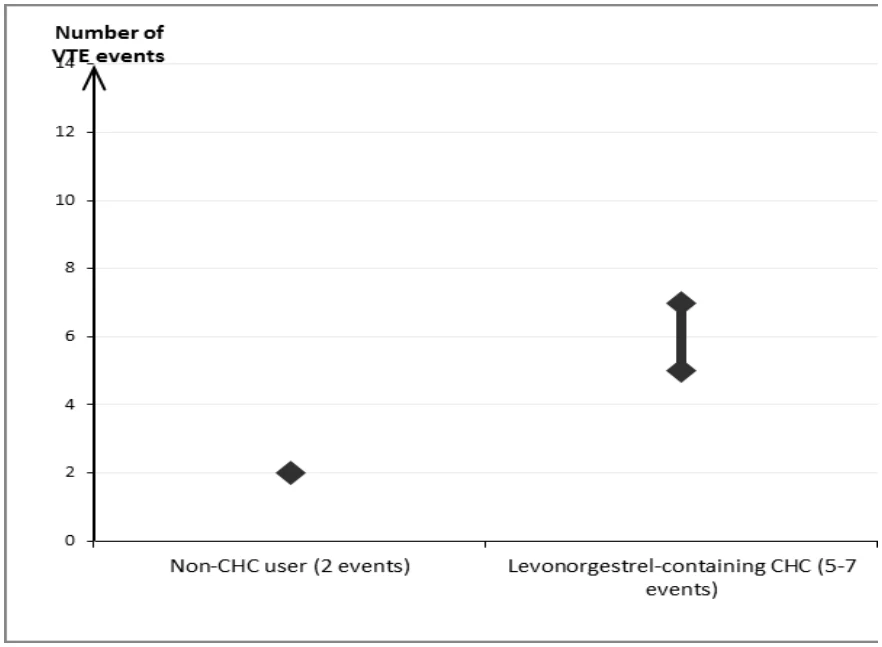
In women who do not use a CHC and are not pregnant, about 2 out of 10,000 will develop a VTE over the period of one year. However, in any individual woman the risk may be far higher, depending on her underlying risk factors (see below).
It is estimated that out of 10,000 women who use a CHC that contains levonorgestrel, about 61 will develop a VTE in a year.
This number of VTEs per year is fewer than the number expected in women during pregnancy or in the postpartum period.
VTE may be fatal in 1-2% of cases.
Number of VTE events per 10,000 women in one year
Extremely rarely, thrombosis has been reported to occur in CHC users in other blood vessels, e.g. hepatic, mesenteric, renal, cerebral or retinal veins and arteries.
Risk factors for VTE
The risk for venous thromboembolic complications in CHC users may increase substantially in a woman with additional risk factors, particularly if there are multiple risk factors (see table).
Ethinylestradiol/Levonorgestrel Laboratorios Leon Farma 30 ug/150 ug Film-coated tablets is contraindicated if a woman has multiple risk factors that put her at high risk of venous thrombosis (see section 4.3). If a woman has more than one risk factor, it is possible that the increase in risk is greater than the sum of the individual factors – in this case her total risk of VTE should be considered. If the balance of benefits and risks is considered to be negative a CHC should not be prescribed (see section 4.3).
Table: Risk factors for VTE
| Risk factor | Comment |
| Obesity (body mass index over 30 kg/m2) | Risk increases substantially as BMI rises. Particularly important to consider if other risk factors also present. |
1 Mid-point of range of 5-7 per 10,000 WY, based on a relative risk for CHCs containing levonorgestrel versus non-use of approximately 2.3 to 3.6
Prolonged immobilisation, major surgery, any surgery to the legs or pelvis, neurosurgery, or major trauma Note: temporary immobilisation including air travel >4 hours can also be a risk factor for VTE, particularly in women with other risk factors. | In these situations, it is advisable to discontinue use of the pill (in the case of elective surgery at least four weeks in advance) and not resume until two weeks after complete remobilisation. Another method of contraception should be used to avoid unintentional pregnancy. Antithrombotic treatment should be considered if Ethinylestradiol/Levonorgestrel Laboratorios Leon Farma 30 ug/150 ug Film-coated tablets has not been discontinued in advance. |
Positive family history (venous thromboembolism ever in a sibling or parent especially at a relatively early age e.g. before 50). | If a hereditary predisposition is suspected, the woman should be referred to a specialist for advice before deciding about any CHC use. |
| Other medical conditions associated with VTE | Cancer, systemic lupus erythematosus, haemolytic uraemic syndrome, chronic inflammatory bowel disease (Crohn's disease or ulcerative colitis) and sickle cell disease. |
| Increasing age | Particularly above 35 years. |
There is no consensus about the possible role of varicose veins and superficial thrombophlebitis in the onset or progression of venous thrombosis.
The increased risk of thromboembolism in pregnancy, and particularly the 6 week period of the puerperium, must be considered (for information on “Fertility, pregnancy and lactation” see Section 4.6).
Symptoms of VTE (deep vein thrombosis and pulmonary embolism)
In the event of symptoms women should be advised to seek urgent medical attention and to inform the healthcare professional that she is taking a CHC.
Symptoms of deep vein thrombosis (DVT) can include:
- unilateral swelling of the leg and/or foot or along a vein in the leg;
- pain or tenderness in the leg which may be felt only when standing or walking,
- increased warmth in the affected leg; red or discoloured skin on the leg.
Symptoms of pulmonary embolism (PE) can include:
- sudden onset of unexplained shortness of breath or rapid breathing;
- sudden coughing which may be associated with haemoptysis;
- sharp chest pain;
- severe light headedness or dizziness;
- rapid or irregular heartbeat
Some of these symptoms (e.g. “shortness of breath”, “coughing”) are non-specific and might be misinterpreted as more common or less severe events (e.g. respiratory tract infections).
Other signs of vascular occlusion can include: sudden pain, swelling and slight blue discoloration of an extremity.
If the occlusion occurs in the eye symptoms can range from painless blurring of vision which can progress to loss of vision. Sometimes loss of vision can occur almost immediately.
Risk of arterial thromboembolism (ATE)
Epidemiological studies have associated the use of CHCs with an increased risk for arterial thromboembolism (myocardial infarction) or for cerebrovascular accident (e.g. transient ischaemic attack, stroke). Arterial thromboembolic events may be fatal.
Risk factors for ATE
The risk of arterial thromboembolic complications or of a cerebrovascular accident in CHC users increases in women with risk factors (see table). Ethinylestradiol/Levonorgestrel Laboratorios Leon Farma 30 ug/150 ug Film-coated tablets is contraindicated if a woman has one serious or multiple risk factors for ATE that puts her at high risk of arterial thrombosis (see section 4.3). If a woman has more than one risk factor, it is possible that the increase in risk is greater than the sum of the individual factors - in this case her total risk should be
considered. If the balance of benefits and risks is considered to be negative a CHC should not be prescribed (see section 4.3).
Table: Risk factors for ATE
| Risk factor | Comment |
| Increasing age | Particularly above 35 years |
| Smoking | Women should be advised not to smoke if they wish to use a CHC. Women over 35 who continue to smoke should be strongly advised to use a different method of contraception. |
| Hypertension | |
| Obesity (body mass index over 30 kg/m2) | Risk increases substantially as BMI increases. Particularly important in women with additional risk factors |
Positive family history (arterial thromboembolism ever in a sibling or parent especially at relatively early age e.g. below 50). | If a hereditary predisposition is suspected, the woman should be referred to a specialist for advice before deciding about any CHC use |
| Migraine | An increase in frequency or severity of migraine during CHC use (which may be prodromal of a cerebrovascular event) may be a reason for immediate discontinuation |
| Other medical conditions associated with adverse vascular events | Diabetes mellitus, hyperhomocysteinaemia, valvular heart disease and atrial fibrillation, dyslipoproteinaemia and systemic lupus erythematosus. |
Symptoms of ATE
In the event of symptoms women should be advised to seek urgent medical attention and to inform the healthcare professional that she is taking a CHC.
Symptoms of a cerebrovascular accident can include:
- sudden numbness or weakness of the face, arm or leg, especially on one side of the body;
- sudden trouble walking, dizziness, loss of balance or coordination;
- sudden confusion, trouble speaking or understanding;
- sudden trouble seeing in one or both eyes;
- sudden, severe or prolonged headache with no known cause;
- loss of consciousness or fainting with or without seizure.
Temporary symptoms suggest the event is a
transient ischaemic attack (TIA). Symptoms of
myocardial infarction (MI) can include:
- pain, discomfort, pressure, heaviness, sensation of squeezing or fullness in the chest, arm, or below the breastbone;
- discomfort radiating to the back, jaw, throat, arm, stomach;
- feeling of being full, having indigestion or choking;
- sweating, nausea, vomiting or dizziness;
- extreme weakness, anxiety, or shortness of breath;
- rapid or irregular heartbeats.
Medical examination/consultation
Prior to the initiation or reinstitution of Ethinylestradiol/Levonorgestrel Laboratorios Leon Farma 30 ug/150 ug Film-coated tablets a complete medical history (including family history) should be taken and pregnancy must be ruled out. Blood pressure should be measured and a physical examination should be performed, guided by the contraindications (see section 4.3) and warnings (see section 4.4.). It is important to draw a woman's attention to the information on venous and arterial thrombosis, including the risk of Ethinylestradiol/Levonorgestrel Laboratorios Leon Farma 30 ug/150 ug Film-coated tablets compared with other CHCs, the symptoms of VTE and ATE, the known risk factors and what to do in the event of a suspected thrombosis.
The woman should also be instructed to carefully read the user leaflet and to adhere to the advice given. The frequency and nature of examinations should be based on established practice guidelines and be adapted to the individual woman. Women should be informed that hormonal contraceptives do not protect against HIV infection (AIDS) and other sexually transmissible diseases.
Undiagnosed vaginal bleeding that is suspicious for underlying conditions should be investigated.
Conditions which require strict medical supervision
The decision to prescribe the COC must be made using clinical judgement and in consultation with the woman. Exacerbation or first appearance of any of these conditions or risk factors may indicate that use of the oral contraceptive should be discontinued. The woman should contact her physician, who should then decide on whether COC use should be discontinued:
- Diabetes mellitus with mild vascular disease or mild nephropathy, retinopathy or neuropathy
- Hypertension that is adequately controlled, i.e. systolic >140 to159 mm Hg or diastolic > 90 to 94 mm Hg (see also Section 4.4 ‘Reasons for stopping oral contraception immediately’)
- porphyria
- obesity
- migraine
- cardiovascular diseases
Reasons for stopping oral contraception immediately:
When stopping oral contraception non-hormonal contraception should be used to ensure contraceptive protection is maintained.
- 1. Occurrence for the first time, or exacerbation, of migrainous headaches or unusually frequent or unusually severe headaches
- 2. Sudden disturbances of vision, of hearing or other perceptual disorders
- 3. First signs of thrombosis or blood clots (e.g. unusual pains in or swelling of the leg(s), stabbing pains on breathing or coughing for no apparent reason). Feeling of pain and tightness in the chest
- 4. At least four weeks before an elective major operation (e.g. abdominal, orthopaedic), any surgery to the legs, medical treatment for varicose veins or prolonged immobilisation, e.g. after accidents or surgery. Do not restart until 2 weeks after full ambulation. In case of emergency surgery, thrombotic prophylaxis is usually indicated e.g. subcutaneous heparin
- 5. Onset of jaundice, hepatitis, itching of the whole body
- 6. Significant rise in blood pressure
- 7. Severe upper abdominal pain or liver enlargement
- 8. Clear exacerbation of conditions known to be capable of deteriorating during oral contraception or pregnancy (see section 4.4 ‘Conditions which deteriorate in pregnancy or during previous COC use’ under 'Other conditions')
Tumors
Numerous epidemiological studies have been reported on the risks of ovarian, endometrial, cervical and breast cancer in women using combined oral contraceptives. The evidence is clear that high dose combined oral contraceptives offer substantial protection against both ovarian and endometrial cancer. However, it is not clear whether low dose COCs confer protective effects to the same level.
- Breast cancer
A meta-analysis from 54 epidemiological studies reported that there is a slightly increased relative risk (RR = 1.24) of having breast cancer diagnosed in women who are currently using combined oral contraceptives (COCs). The observed pattern of increased risk may be due to an earlier diagnosis of breast cancer in COC users, the biological effects of COCs or a combination of both. The additional breast cancers diagnosed in current users of COCs or in women who have used COCs in the last ten years are more likely to be localised to the breast than those in women who never used COCs.
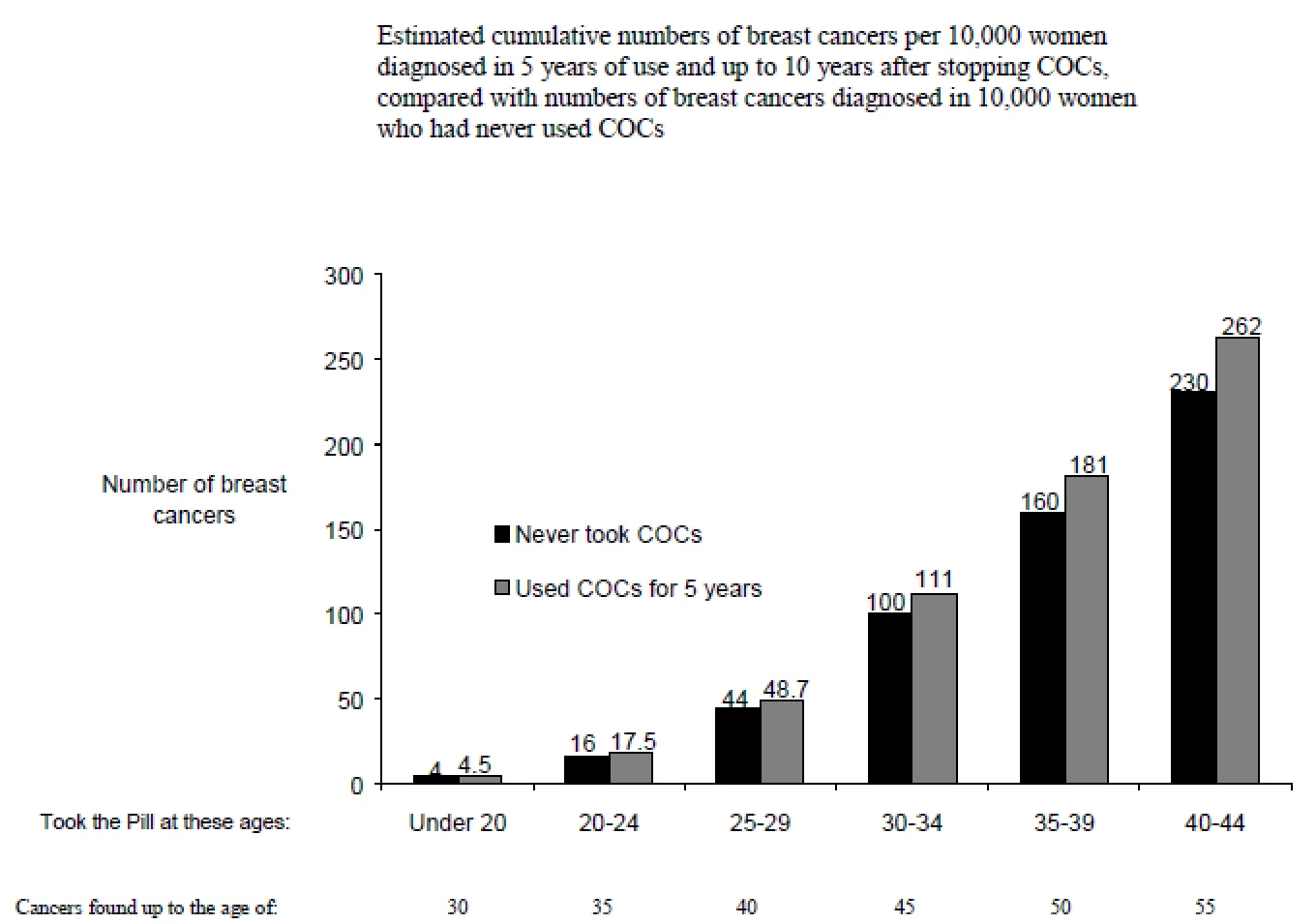
Breast cancer is rare among women under 40 years of age whether or not they take COCs. Whilst this background risk increases with age, the excess number of breast cancer diagnoses in current and recent COC users is small in relation to the overall risk of breast cancer (see bar chart).
The most important risk factor for breast cancer in COC users is the age women discontinue the COC; the older the age at stopping, the more breast cancers are diagnosed. Duration of use is less important and the excess risk gradually disappears during the course of the 10 years after stopping COC use such that by 10 years there appears to be no excess.
The possible increase in risk of breast cancer should be discussed with the user and weighed against the benefits of COCs taking into account the evidence that they offer substantial protection against the risk of developing certain other cancers (e.g. ovarian and endometrial cancer).
- Cervical Cancer
The most important risk factor for cervical cancer is persistent HPV infection. Some epidemiological studies have indicated that long-term use of COCs may further contribute to this increased risk but there continues to be controversy about the extent to which this finding is attributable to confounding effects, e.g., cervical screening
and sexual behaviour including use of barrier contraceptives.
- Liver Cancer
In rare cases benign and, in even rarer cases, malignant liver tumours leading in isolated cases to life-threatening intra-abdominal haemorrhage have been observed after the use of hormonal substances such as those contained in Ethinylestradiol/Levonorgestrel Laboratorios Leon Farma 30 ug/150 ug Film-coated tablets. If
severe upper abdominal complaints, liver enlargement or signs of intra-abdominal haemorrhage occur, the possibility of a liver tumour should be included in the differential diagnosis.
Other conditions
The possibility cannot be ruled out that certain chronic diseases may occasionally deteriorate during the use of combined oral contraceptives.
- Known hyperlipidaemias
Women with hypertriglyceridemia, or a family history thereof, may be at an increased risk of pancreatitis when using COCs.
Women with hyperlipidaemias are at an increased risk of arterial disease (see section 4.4 ‘Risk of arterial thromboembolism (ATE)’). However routine screening of women on COCs is not appropriate.
Blood pressure
Hypertension is a risk factor for stroke and myocardial infarction (see section 4.4 ‘Risk of arterial thromboembolism (ATE)’). Although small increases in blood pressure have been reported in many women taking COCs, clinically relevant increases are rare. However, if sustained hypertension develops during the use of a COC, antihypertensive treatment should normally be instigated at a level of 160/100 mm Hg in uncomplicated patients or at 140/90 mm Hg in those with target organ damage, established cardiovascular disease, diabetes or with increased cardiovascular
risk factors. Decisions about the continued use of the COC should be made at lower BP levels, and alternative contraception may be advised.
- Conditions which deteriorate in pregnancy or during previous COC use
The following conditions have been reported to occur or deteriorate with both pregnancy and COC use. Consideration should be given to stopping
Ethinylestradiol/Levonorgestrel Laboratorios Leon Farma 30 ug/150 ug Film-coated tablets if any of the following occur during use.
- jaundice and/or pruritus related to cholestasis
- COCs may increase the risk of gallstone formation and may worsen existing disease.
- systemic lupus erythematosus
- herpes gestationis
- otosclerosis-related hearing loss
- sickle cell anaemia
- renal dysfunction
- hereditary angioedema
- any other condition an individual woman has experienced worsening of during pregnancy or previous use of COCs.
- Angioedema
Exogenous oestrogens may induce or exacerbate symptoms of hereditary and acquired angioedema.
- Disturbances of liver function
Acute or chronic liver function disorders require discontinuation of COC use until liver function markers return to normal. Recurrence of cholestatic jaundice and/or cholestasis-related pruritus that first occurred during pregnancy or during previous sex hormone use requires discontinuation of COCs.
- Diabetes (without vascular involvement)
Insulin-dependent diabetics without vascular disease can use COCs. However, it should be remembered that all diabetics are at an increased risk of arterial disease and this should be considered when prescribing COCs. Diabetics with existing vascular disease are contraindicated from using COCs (see section 4.3 Contraindications).
Although COCs may have an effect on peripheral insulin resistance and glucose tolerance there is no evidence for a need to alter the therapeutic regimen in diabetics using low-dose COCs (containing < 0.05 mg ethinylestradiol).
However, diabetic women should be carefully monitored, particularly in the early stage of COC use.
Chloasma
Chloasma may particularly occur, especially in women with a history of chloasma gravidarum. If there is a tendency to chloasma, sunlight and ultraviolet radiation should be avoided when using combined oral contraceptive.
Psychiatric disorders
Depressed mood and depression are well-known undesirable effects of hormonal contraceptive use (see section 4.8). Depression can be serious and is a well-known risk factor for suicidal behaviour and suicide. Women should be advised to contact their physician in case of mood changes and depressive symptoms, including shortly after initiating the treatment.
- Menstrual Changes
Reduction of menstrual flow: This is not abnormal, and it is to be expected in some patients. Indeed, it may be beneficial where heavy periods were previously experienced.
Missed menstruation: Occasionally, withdrawal bleeding may not occur at all. If the tablets have been taken correctly, pregnancy is very unlikely. If withdrawal bleeding fails to occur at the end of a second pack, the possibility of pregnancy must be ruled out before resuming with the next pack.
Intermenstrual bleeding: Irregular bleeding (spotting or breakthrough bleeding) may occur especially during the first months of use. Therefore, the evaluation of any irregular bleeding is only meaningful after an adaptation interval of about three cycles. If bleeding irregularities persist or occur after previously regular cycles, then
non-hormonal causes should be considered and adequate diagnostic measures are indicated to exclude malignancy or pregnancy. This may include curettage.
Some women may experience amenorrhoea or oligomenorrhoea after discontinuation of oral contraceptives, especially when these conditions existed prior to use. Women should be informed of this possibility.
- Lactose and Sucrose Intolerance
This medicinal product contains lactose. Each tablet of this medicinal product contains 84.32 mg lactose per tablet. Patients with rare hereditary problems of galactose intolerance, the total lactase deficiency or glucose-galactose malabsorption should not take this medicine.
Reduced efficacy
- The contraceptive efficacy of Ethinylestradiol/Levonorgestrel Laboratorios Leon Farma 30 ug/150 ug Film-coated tablets combined oral contraceptive may be reduced if tablets are missed (see section 4.2.),
- in the event of gastrointestinal disorders (see section 4.2.),
- if certain other drugs are being taken concomitantly (see section 4.5).
4.5 Interaction with other medicinal products and other forms of interaction
Note: The prescribing information of concomitant
medications should be consulted to identify potential
interactions.
Effects of other medicinal products on Ethinylestradiol/Levonorgestrel Laboratorios Leon Farma 30 ug/150 ug Film-coated tablets
Interactions
Enzyme inducers
Interactions can occur with drugs that induce microsomal enzymes (especially cytochrome P450 3A4) which can result in increased clearance of sex hormones and which may lead to breakthrough bleeding and/or contraceptive failure. Enzyme induction can already be observed after a few days of treatment. Maximal enzyme induction is generally seen within a few weeks. After the cessation of drug therapy enzyme induction may be sustained for about 4 weeks.
Short-term treatment
Women on treatment with enzyme inducing drugs should temporarily use a barrier method or another method of contraception in addition to the COC. The barrier method must be used during the whole time of the concomitant drug therapy and for 28 days after its discontinuation.
If the drug therapy runs beyond the end of the tablets in the COC pack, the next COC pack should be started right after the previous one without the usual tablet-free interval. In this situation, a withdrawal bleed should not be expected until the end of the second pack. If the patient does not have a withdrawal bleed during the tablet-free interval following the end of the second pack, the possibility of pregnancy must be ruled out before resuming with the next pack.
Long-term treatment
In women on long-term treatment with enzyme-inducing active substances, another reliable, non-hormonal, method of contraception is recommended.
The following clinically important interactions have been reported in the literature.
Anticonvulsants: barbiturates (including phenobarbitone), primidone, phenytoin, carbamazepine, oxcarbazepine, topiramate.
Antibiotics/antifungals: griseofulvin, rifampacin.
Herbal remedies: St John’s wort (Hypericum perforatum)
Antiretroviral agents: ritonavir, nelfinavir, nevirapine.
Note: There are other antiretroviral agents that may increase plasma concentration of sex hormones.
Substances decreasing the clearance of COCs (enzyme inhibitors) Strong and moderate CYP3A4 inhibitors such as azole antifungals (e.g. itraconazole, voriconazole, fluconazole) and macrolides (e.g. erythromycin) can increase plasma concentrations of the oestrogen or the progestin or both.
Etoricoxib doses of 60 to 120 mg/day have been shown to increase plasma concentrations of ethinylestradiol 1.4 to 1.6-fold, respectively when taken concomitantly with a combined hormonal contraceptive containing 0.035 mg ethinylestradiol.
Effects of Ethinylestradiol/Levonorgestrel Laboratorios Leon Farma 30 ug/150 ug Film-coated tablets on other medicinal products
Oral contraceptives may affect the metabolism of certain other active substances. Accordingly, plasma and tissue concentrations may either increase (e.g. cyclosporine, tizanidine, theophylline) or decrease (e.g. lamotrigine)
Pharmacodynamic interactions
During clinical trials with patients treated for hepatitis C virus infections (HCV) with the medicinal products containing ombitasvir/paritaprevir/ritonavir and dasabuvir with or without ribavirin, transaminase (ALT) elevations higher than 5 times the upper limit of normal (ULN) occurred significantly more frequent in women using ethinylestradiol-containing medications such as combined hormonal contraceptives (CHCs). Additionally, also in patients treated with glecaprevir/pibrentasvir or sofosbuvir/velpatasvir/voxilaprevir, ALT elevations were observed in women using ethinylestradiol-containing medications such as CHCs (see section 4.3).
Therefore, Ethinylestradiol/Levonorgestrel Laboratorios Leon Farma 30 ug/150 ug Film-coated tablets-users must switch to an alternative method of contraception (e.g., progestogen-only contraception or non-hormonal methods) prior to starting therapy with these drug regimens. Ethinylestradiol/Levonorgestrel Laboratorios Leon Farma 30 ug/150 ug Film-coated tablets can be restarted 2 weeks following completion of treatment with these drug regimens.
- Laboratory tests
The use of contraceptive steroids may influence the results of certain laboratory tests, including biochemical parameters of liver, thyroid, adrenal and renal function, plasma levels of (carrier) proteins (e.g. corticosteroid binding globulin and lipid/lipoprotein fractions), parameters of carbohydrate metabolism, and parameters of blood coagulation and fibrinolysis. Laboratory staff should therefore be informed about oral contraceptive use when laboratory tests are requested.
4.6 Fertility, pregnancy and lactation
Pregnancy
Ethinylestradiol/Levonorgestrel Laboratorios Leon Farma 30 ug/150 ug Film-coated tablets is not indicated in pregnancy.
If the woman becomes pregnant while using Ethinylestradiol/Levonorgestrel Laboratorios Leon Farma 30 ug/150 ug Film-coated tablets, further intake must be stopped immediately. However, most epidemiological studies have revealed neither an increased risk for birth defects in children born to women who used COCs before pregnancy, nor any teratogenic effects at unintentional intake of contraceptive pills in early pregnancy.
The increased risk of VTE during the postpartum period should be considered when re-starting Ethinylestradiol/Levonorgestrel Laboratorios Leon Farma 30 ug/150 ug Film-coated tablets (see section 4.2 and 4.4).
Lactation
The use of Ethinylestradiol/Levonorgestrel Laboratorios Leon Farma 30 ug/150 ug Film-coated tablets during lactation may lead to a reduction in the volume of milk produced and to a change in its composition. Minute amounts of the active substances are excreted with the milk. These amounts may affect the child particularly in the first 6 weeks post-partum. Mothers who are breast-feeding may be advised instead to use another method of contraception.
4.7 Effects on ability to drive and use machines
Ethinylestradiol/Levonorgestrel Laboratorios Leon Farma 30 ug/150 ug Film-coated tablets has no or negligible influence on the ability to drive and use machines.
4.8 Undesirable effects
Summary of the safety profile
The most commonly reported adverse reactions with
Ethinylestradiol/Levonorgestrel Laboratorios Leon Farma 0,03 mg/0,15 mg 30 ug/150 ug Film-coated tablets are nausea, abdominal pain, increased weight, headache, depressed mood, altered mood, breast pain, breast tenderness. They occur in ≥1% of users. Serious adverse reactions are arterial and venous thromboembolism.
The following undesirable effects have been observed with use of combined oral contraceptives containing ethinylestradiol/levonorgestrel:
| Organ system | Common (≥ 1/100 to < 1/10) | Uncommon (≥1/1,000 to <1/100) | Rare (≥1/10,000 to < 1/1,000) | Adverse events reported post marketing |
| Eye disorders | Contact lens intolerance | |||
| Gastrointestinal disorders | Nausea. Abdominal pain | Vomiting Diarrhoea | Crohn’s disease, ulcerative colitis | |
| Immune system disorders | Hypersensitivity | Exacerbation of symptoms of hereditary and acquired angioedema. | ||
| Investigations | Weight increased | Weight decreased |
Metabolism and nutrition disorders | Fluid retention | Hypertriglyce ridemia | ||
| Nervous system disorders | Headache | Migraine | exacerbation of chorea | |
| Psychiatric disorders | Depressed mood. Mood altered | Libido decreased | Libido increased | |
Reproductive system and breast disorders | Breast tenderness. Breast pain | Breast hypertrophy | Breast discharge. Vaginal discharge | reduced menstrual flow, spotting, breakthrough bleeding and missed withdrawal bleeding, post pill amenorrhoea |
Skin and subcutaneous tissue disorders | Rash Urticaria | Erythema nodosum Erythema multiforme | Chloasma | |
| Vascular disorders | Venous thromboemboli sm (VTE), Arterial thromboemboli sm (ATE) | |||
| Hepatobiliary disorders | liver function disturbances |
*Listed is the MedDRA term (version 7.0) which best describes the specific adverse reaction. Synonyms and related terms are not listed but should nonetheless be taken into consideration.
Description of selected adverse reactions
An increased risk of arterial and venous thrombotic and thrombo-embolic events, including myocardial infarction, stroke, transient ischemic attacks, venous thrombosis and pulmonary embolism has been observed in women using CHCs, which are discussed in more detail in section 4.4.
The following serious adverse reactions have been reported in women using COCs and are described in section 4.4:
- Venous thromboembolic disorders
- Arterial thromboembolic disorders
- Strokes (e.g. transient ischemic attack, ischemic stroke, haemorrhagic stroke)
- Hypertension
- Liver tumours (benign and malignant)
- Exogenous oestrogens may induce or exacerbate symptoms of hereditary and acquired angioedema
Tumors
The frequency of diagnosis of breast cancer is very slightly increased among OC users. As breast cancer is rare in women under 40 years of age the excess number is small in relation to the overall risk of breast cancer. Causation with COC use is unknown. For further information, see sections 4.3 and 4.4.
Conditions reported to deteriorate with pregnancy or previous COC use
Jaundice and/or pruritus related to cholestasis; gallstone formation; systemic lupus erythematosus; herpes gestation is; otosclerosis-related hearing loss; sickle cell anaemia; renal dysfunction; hereditary angioedema; porphyria; cervical cancer.
Changes in glucose tolerance or effect on peripheral insulin resistance have been reported in women using COCs (see section 4.4).
Conditions reported to deteriorate with pregnancy or previous COC use
Jaundice and/or pruritus related to cholestasis; gallstone formation; systemic lupus erythematosus; herpes gestationis; otosclerosis-related hearing loss; sickle cell anaemia; renal dysfunction; hereditary angioedema; porphyria; cervical cancer.
Changes in glucose tolerance or effect on peripheral insulin resistance have been reported in women using COCs (see section 4.4).
Reporting of suspected adverse reactions
Reporting suspected adverse reactions after authorization of the medicinal product is important. It allows continued monitoring of the benefit/risk balance of the medicinal product. Healthcare professionals are asked to report any suspected via Yellow Card Scheme at:
www.mhra.gov.uk/yellowcard or search for MHRA Yellow Card in the Google Play or Apple App Store.
4.9 Overdose
There have been no reports of serious effects from overdose. Overdosage may cause nausea, vomiting and, in females, withdrawal bleeding. Withdrawal bleeding may even occur in girls before their menarche, if they accidentally take the medicinal product. There is no specific antidote. Treatment should be symptomatic.
5 PHARMACOLOGICAL PROPERTIES
5.1 Pharmacodynamic properties
Pharmacotherapeutic group: Hormonal contraceptives for systemic use, progestogens and oestrogens, fixed combinations, ATC code: G03AA07
Ethinylestradiol/Levonorgestrel Laboratorios Leon Farma 30 ug/150 ug Film-coated tablets is an oestrogen-progestogen combination which acts by inhibiting ovulation by suppression of the mid-cycle surge of luteinising hormone, the inspissation of cervical mucus producing a barrier to sperm, and the rendering of the endometrium unreceptive to implantation.
5.2 Pharmacokinetic properties
Ethinylestradiol
Orally administered ethinylestradiol is absorbed quickly and completely. Ingestion of Ethinylestradiol/Levonorgestrel Laboratorios Leon Farma 30 ug/150 ug Film-coated tablets leads to maximum plasma levels of approx. 100 pg/ml after 1 – 2 hours. The substance concentration then falls in 2 phases for which half-lives of around 1 - 2 hours and about 20 hours have been determined. For technical reasons, these data can only be calculated at higher dosages.
An imaginary distribution volume of around 5 l/kg and a metabolic clearance rate from plasma of approx. 5 ml/min/kg have been determined for ethinylestradiol. Ethinylestradiol is bound non-specifically to serum albumin to the extent of 98%.
Ethinylestradiol is metabolised even during its absorption phase and during its first liver transit, leading to reduced and individually varying oral bioavailability. Ethinylestradiol is eliminated not in unchanged form, but in the form of metabolites with a half-life of around one day. The excretion ratio is 40 (urine) : 60 (bile).
Because of the half-life of the terminal elimination phase from plasma, a steady state characterised by a 30 - 40% higher plasma substance level becomes established after approx. 5 - 6 daily administrations.
The absolute bioavailability of ethinylestradiol is subject to considerable interindividual variations. After oral ingestion, it amounts to around 40 - 60% of the dose. In women with fully established lactation, around 0.02% of the maternal dose can be passed on to the baby with the breast milk.
Other drugs can have a negative or positive effect on the systemic availability of ethinylestradiol. No interaction with vitamin C takes place. On continuous use, ethinylestradiol induces the hepatic synthesis of CBG and SHBG, the extent of SHBG induction being dependent on the type and dose of the simultaneously administered progestogen.
Levonorgestrel
Levonorgestrel is quickly and completely absorbed following oral administration. Maximum serum levels of levonorgestrel of approximately.3 ng/ml are reached around 1 hour after the tablet is taken.
The serum concentrations subsequently fell in 2 phases with halflives of around 0.5 hours and 20 hours.. The metabolic clearance rate from plasma is approx. 1.5 ml/min/kg.
Levonorgestrel is eliminated not in unchanged form, but in the form of metabolites with a half-life of around one day and in almost equal proportions via the kidney and bile. Levonorgestrel is extensively metabolised. The major metabolites in plasma are the unconjugated and conjugated forms of 3α, 5β-tetrahydrolevonorgestrel. Based on in vitro and in vivo studies, CYP3A4 is the main enzyme involved in the metabolism of levonorgestrel. Levonorgestrel is bound to serum albumin and SHBG. Only around 1.5% of the respective total concentration is present in unbound form, while approx. 65% is bound to SHBG. The relative proportions (free, albumin-bound, SHBG-bound) depend on the concentration of SHBG. After induction of the binding protein, the portion bound to SHBG increases, while the free portion and that bound to albumin decreases.
After daily repeated ingestion, levonorgestrel accumulates by about the factor
- 2. A steady state is reached during the second half of the treatment cycle. The pharmacokinetics of levonorgestrel are dependent on the concentration of SHBG in plasma. Under treatment with Ethinylestradiol/Levonorgestrel Laboratorios Leon Farma 30 ug/150 ug Film-coated tablets, an increase in the levels of SHBG effect a concomitant increase in the specific binding capacity and therefore also an increase in levonorgestrel serum levels. The levonorgestrel serum levels do not change any further after 1 - 3 cycles of use owing to the fact that SHBG induction is concluded. Compared to a single administration, 3 - 4 fold higher levonorgestrel serum levels are reached in the steady state.
The absolute bioavailability of levonorgestrel amounts to almost 100%. Approx. 0.1% of the maternal dose can be passed on to a baby with the breast milk.
5.3 Preclinical safety data
None stated
6 PHARMACEUTICAL PARTICULARS
6.1 List of excipients
Tablet core:
Lactose monohydrate
Povidone K30
Crospovidone Type A
Magnesium stearate
Coating:
Polyvinyl alcohol, partial hydrolysed
Titanium dioxide (E171)
Macrogol 3350
Talc (E553b)
Iron oxide yellow (E172)
6.2 Incompatibilities
Not applicable.
6.3 Shelf life
2 years
6.4 Special precautions for storage
Do not store above 30ºC.
6.5 Nature and contents of container
Blisters of aluminium push-thru foil and PVC/PVDC film. The blisters are packed into cardboard box with a patient information leaflet and storage bag.
It is available in boxes of 1, 3, 6 and 13 packs (blisters), each one containing 21 tablets. Not all pack sizes may be marketed.
6.6 Special precautions for disposal
No special requirements
7. MARKETING AUTHORISATION HOLDER
Laboratorios León Farma, S.A.
Polígono Industrial Navatejera
La Vallina S/N 24193 Villaquilambre (Leon)
Spain
8 MARKETING AUTHORISATION NUMBER(S)
PL 34518/0037
9 DATE OF FIRST AUTHORISATION/RENEWAL OF THE
AUTHORISATION
20/06/2022
10 DATE OF REVISION OF THE TEXT
19/02/2024