

Summary of Product Characteristics (SmPC) - Ephedrine Hydrochloride 30 mg/ml concentrate for solution for injection
1 NAME OF THE MEDICINAL PRODUCT
Ephedrine Hydrochloride 30 mg/ml Concentrate for solution for injection
2 QUALITATIVE AND QUANTITATIVE COMPOSITION
Each ml of concentrate for solution for injection contains 30 mg ephedrine hydrochloride.
Each 1 mL glass ampoule contains 30 mg ephedrine hydrochloride.
For the full list of excipients, see section 6.1.
3 PHARMACEUTICAL FORM
Concentrate for solution for injection.
Clear, colourless solution
pH = 5.5 to 7.0
Osmolality: between 275 – 320 mOsm/kg.
4 CLINICAL PARTICULARS
4.1 Therapeutic indications
Treatment of hypotension from spinal, epidural and general anaesthesia in adults and adolescents above 12 years.
4.2 Posology and method of administration
Posology
Adults
Slow intravenous injection of 3 to 6 mg (maximum 9 mg), repeated as needed every 3-4 min to a maximum of 30 mg. A lack of efficacy after 30 mg should lead to reconsideration of the choice of the therapeutic agent.
The dose administered for 24 hours must not exceed 150 mg.
Patients with renal or hepatic impairment
There is no dose adjustment recommended for patients with renal or hepatic impairment.
Elderly
As for adults.
Paediatric population
This medicinal product is generally not recommended for use in children under 12 years due to insufficient data on efficacy, safety and dosage recommendations.
- Children under 12 years
The safety and efficacy of ephedrine in paediatric patients under 12 years have not been established. No data are available.
- Children over 12 years
The posology and method of administration is the same as for adults.
Method of administration
This medicinal product must be used solely by or under the supervision of the anaesthetist as an injection via intravenous route.
The medicinal product should be diluted before use. For instructions on dilution of the product before administration, see section 6.6.
For intravenous use.
4.3 Contraindications
This medicinal product should not be used in case of:
- Hypersensitivity to the active substance or to any of the excipients listed in section 6.1.
- In combination with other indirect sympathomimetic agents such as phenylpropanolamine, phenylephrine, pseudoephedrine and methylphenidate.
- In combination with alpha sympathomimetic agents.
- In combination with non-selective MAO inhibitors or within 14 days of their withdrawal.
4.4 Special warnings and precautions for use
Warnings
Ephedrine should be used with caution in patients who may be particularly susceptible to their effects, particularly those with hyperthyroidism. Great care is also needed in patients with cardiovascular disease such as ischaemic heart disease, arrhythmia or tachycardia, occlusive vascular disorders including arteriosclerosis, hypertension, or aneurysms. Anginal pain may be precipitated in patients with angina pectoris.
Care is also required when ephedrine is given to patients with diabetes mellitus, closed-angle glaucoma or prostatic hypertrophy.
Ephedrine should be avoided or used with caution in patients undergoing anaesthesia with cyclopropane, halothane, or other halogenated anaesthetics, as they may induce ventricular fibrillation. An increased risk of arrhythmia may also occur if ephedrine is given to patients receiving cardiac glycosides, quinidine, or tricyclic antidepressants.
Many sympathomimetics interact with monoamine oxidase inhibitors, and should not be given to patients receiving such treatment or within 14 days of its termination. It is advisable to avoid sympathomimetics when taking selective MAO inhibitors.
Ephedrine increases blood pressure and therefore special care is advisable in patients receiving antihypertensive therapy. Interactions of ephedrine with alpha- and beta-blocking drugs may be complex. Propranolol and other beta-adrenoceptor blocking agents antagonise the effects of beta2 adrenoceptor stimulants (beta2 agonists) such as salbutamol.
Adverse metabolic effects of high doses of beta2 agonists may be exacerbated by concomitant administration of high doses of corticosteroids; patients should therefore be monitored carefully when the 2 forms of therapy are used together although this precaution is not so applicable to inhaled corticotherapy. Hypokalaemia associated with high doses of beta2 agonists may result in increased susceptibility to digitalis-induced cardiac arrhythmia. Hypokalaemia may be enhanced by concomitant administration of aminophylline or other xanthines, corticosteroids, or by diuretic therapy.
Precautions for use
Ephedrine should be used with caution in patients with a history of cardiac disease.
Athletes should be informed that this preparation contains an active substance which might give a positive reaction in anti-doping tests.
Check that the solution is clear and contains no visible particles before infusion.
4.5 Interaction with other medicinal products and other forms of interaction
Contraindicated combinations:
Indirect sympathomimetic agents (phenylpropanolamine, pseudoephedrine, phenylephrine, methylphenidate)
Risk of vasoconstriction and/or of acute episodes of hypertension.
Alpha sympathomimetics (oral and/or nasal route of administration)
Risk of vasoconstriction and/or episodes of hypertension.
Non-selective MAO inhibitors
Paroxysmal hypertension, hyperthermia possibly fatal.
Combinations not recommended:
Ergot alkaloids (dopaminergic action)
Risk of vasoconstriction and/or episodes of hypertension.
Ergot alkaloids (vasoconstrictors)
Risk of vasoconstriction and/or episodes of hypertension.
Selective MAO-A inhibitors (administered concomitantly or within the last 2 weeks):
Risk of vasoconstriction and/or episodes of hypertension.
Linezolid
Risk of vasoconstriction and/or episodes of hypertension
Tricyclic antidepressants (e.g. imipramine)
Paroxysmal hypertension with possibility of arrhythmia (inhibition of adrenaline or noradrenaline entry in sympathetic fibres).
Noradrenergic-serotoninergic antidepressants (minalcipran, venlafaxine)
Paroxysmal hypertension with possibility of arrhythmia (inhibition of adrenaline or noradrenaline entry in sympathetic fibres).
Guanethidine and related products
Substantial increase in blood pressure (hyperreactivity linked to the reduction in sympathetic tone and/or to the inhibition of adrenaline or noradrenaline entry in sympathetic fibres).
If the combination cannot be avoided, use with caution lower doses of sympathomimetic agents.
Sibutramine
Paroxysmal hypertension with possibility of arrhythmia (inhibition of adrenaline or noradrenaline entry in sympathetic fibres).
Halogenated volatile anaesthetics
Risk of perioperative hypertensive crisis and serious ventricular arrhythmias.
Combinations requiring precautions for use:
Theophylline
Concomitant administration of ephedrine and theophylline may result in insomnia, nervousness and gastrointestinal complaints.
Corticosteroids
Ephedrine has been shown to increase the clearance of dexamethasone.
Antiepileptics
Increased plasma concentration of phenytoin and possibly of phenobarbitone and primidone.
Doxapram
Risk of hypertension.
Oxytocin
Hypertension with vasoconstrictor sympathomimetics.
Hypotensive agents
Reserpine and methyldopa may reduce the vasopressor action of ephedrine.
4.6 Fertility, pregnancy and lactation
Pregnancy
Studies in animals have shown a teratogenic effect.
Clinical data from epidemiological studies on a limited number of women appear to indicate no particular effects of ephedrine with respect to malformation.
Isolated cases of maternal hypertension have been described after abuse or prolonged use of vasoconstrictor amines.
Ephedrine crosses the placenta and this has been associated with an increase in foetal heart rate and beat-to-beat variability.
Therefore, ephedrine should be avoided or used with caution, and only if necessary, during pregnancy.
Breast-feeding
Ephedrine is excreted in breast milk. Irritability and disturbed sleep patterns have been reported in breast-fed infants. There is evidence that ephedrine is eliminated within 21 to 42 hours after administration, therefore a decision needs to be made on whether to avoid ephedrine therapy or lactation should be suspended for 2 days following its administration taking into account the benefit of breastfeeding for the child and the benefit of therapy for the woman.
Fertility
No data available.
4.7 Effects on ability to drive and use machines
Not relevant.
4.8 Undesirable effects
Very common: ≥1/10; Common: ≥1/100, <1/10; Uncommon: ≥1/1,000, <1/100; Rare: ≥1/10,000, <1/1,000; Very rare: <1/10,000; Not known: cannot be estimated from the available data.
| System Organ Class | Frequency | Adverse Reactions | ||
| (SOC) | ||||
| Blood and lymphatic system disorders | Not known | primary haemostasis modifications | ||
| Immune system disorders | Not known | hypersensitivity | ||
| Psychiatric disorders | Common | confusion, anxiety, depression | ||
| Not known | psychotic states, fear | |||
| Nervous system disorders | Common | nervousness, irritability, restlessness, weakness, insomnia, headache, sweating | ||
| Not known | tremor, hypersalivation | |||
| Eye disorders | Not known | episodes of angle-closure glaucoma | ||
| Cardiac disorders | Common | palpitations, hypertension, tachycardia | ||
| Rare | cardiac arrhythmia | |||
| Not known | anginal pain, reflex bradycardia, cardiac arrest, hypotension | |||
| Vascular disorders | Not known | cerebral haemorrhage | ||
| Respiratory, thoracic and mediastinal disorders | Common | dyspnoea | ||
| Not known | pulmonary oedema | |||
| Gastrointestinal disorders | Common | nausea, vomiting | ||
| Not known | reduced appetite | |||
| Renal and urinary disorders | Rare | acute urinary retention | ||
| Investigations | Not known | hypokalaemia, changes in blood glucose levels | ||
Reporting of suspected adverse reactions
Reporting suspected adverse reactions after authorisation of the medicinal product is important. It allows continued monitoring of the benefit/risk balance of the medicinal product. Healthcare professionals are asked to report any suspected adverse reactions via the Yellow Card Scheme: Website: www.mhra.gov.uk/yellowcard or search for MHRA Yellow Card in the Google Play or Apple App Store.
4.9 Overdose
In the event of overdose, the occurrence of nausea, vomiting, fever, paranoid psychosis, ventricular and supraventricular arrhythmia, hypertension, respiratory depression, convulsions and coma is observed.
The lethal dose in humans is approximately 2 g corresponding to blood concentrations of approximately 3.5 to 20 mg/l.
Management
The management of ephedrine overdose with this product may require intensive supportive treatment. Slow intravenous injection of labetalol 50-200mg may be given with electrocardiograph monitoring for the treatment of supraventricular tachycardia. Marked hypokalaemia (<2.8mmol.l-1) due to compartmental shift of potassium predisposes to cardiac arrhythmia and may be corrected by infusing potassium chloride in addition to propranolol and correcting respiratory alkalosis, when present.
A benzodiazepine and/or a neuroleptic agent may be required to control CNS stimulant effects.
For severe hypertension, parenteral antihypertensive options include intravenous nitrates, calcium channel blockers, sodium nitroprusside, labetalol or phentolamine. The choice of antihypertensive drug is dependent on availability, concomitant conditions and the clinical status of the patient.
5 PHARMACOLOGICAL PROPERTIES
5.1 Pharmacodynamic properties
Pharmacotherapeutic group: Adrenergic and Dopaminergic Agent.
ATC Code: C01CA26
Ephedrine is a sympathomimetic amine acting directly on the alpha and beta receptors and indirectly by increasing the release of noradrenaline by the sympathetic nerve endings. As with any sympathomimetic agent, ephedrine stimulates the central nervous system, the cardiovascular system, the respiratory system, and the sphincters of the digestive and urinary systems. Ephedrine is also a monoamine oxidase (MAO) inhibitor.
5.2 Pharmacokinetic properties
After intravenous administration, ephedrine is completely biologically available, and after oral administration, the bioavailability of ephedrine has been reported to be above 90%.
Excretion depends on urine pH:
From 73 to 99% (mean: 88%) in acidic urine,
From 22 to 35% (mean: 27%) in alkaline urine.
After oral or parenteral administration, 77% of ephedrine is excreted in unchanged form in the urine.
The half-life depends on urine pH. When the urine is acidified at pH = 5, the half-life is 3 hours; when the urine is rendered alkaline at pH = 6.3, the half-life is approximately 6 hours.
5.3 Preclinical safety data
There is no pre-clinical data of relevance to the prescriber which is additional to that already included in other sections of the SPC.
6 PHARMACEUTICAL PARTICULARS
6.1 List of excipients
Water for injections.
6.2 Incompatibilities
This medicinal product must not be mixed with other medicinal products except those mentioned in section 6.6.
6.3 Shelf life
Unopened:
3 years.
Diluted solution:
Chemical and physical in-use stability has been demonstrated for 72 hours at 30°C and 2-8°C.
From a microbiological point of view, the product should be used immediately. If not used immediately, in-use storage times and conditions prior to use are the responsibility of the user and would normally not be longer than 24 hours at 2 - 8°C, unless dilution has taken place in controlled and validated aseptic conditions.
6.4 Special precautions for storage
Store below 30°C.
For storage conditions after dilution of the medicinal product, see section 6.3.
6.5 Nature and contents of container
Clear and colourless one point cut glass (type I) ampoule containing 1 ml of concentrate for solution for injection.
Pack size: 10 ampoules.
6.6 Special precautions for disposal
Instructions for use:
Visually inspect the solution in the ampoules for particles and coloration prior to administration. Do not use if the solution is coloured or if contains particles.
For single use only.
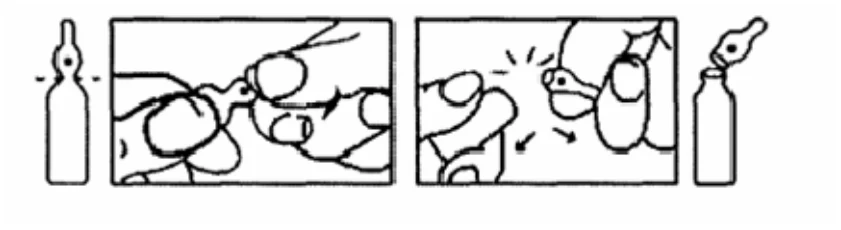
How to open the one point cut ampoules:
The ampoule is already filed down into a valve point. The coloured mark makes it possible to position it. Grasp the ampoule with the coloured mark towards you.
The ampoule will open easily by placing your thumb on the coloured mark and by bending from the top towards the bottom as shown in the diagram.
Instructions for dilution:
Dilute the concentrate for solution for injection to final concentration of 3 mg/ml or 5 mg/ml, as appropriate (see section 4.2).
This medicinal product is compatible with 0.9% w/v sodium chloride solution, Ringer's lactate solution and 5% w/v glucose solution.
No special requirements for disposal.
Any unused medicinal product or waste material should be disposed of in accordance with local requirements.
7 MARKETING AUTHORISATION HOLDER
Laboratoire Aguettant
1, rue Alexander Fleming
69007 Lyon
France
8 MARKETING AUTHORISATION NUMBER(S)
PL 14434/0063
9 DATE OF FIRST AUTHORISATION/RENEWAL OF THE
AUTHORISATION
05/08/2026
10 DATE OF REVISION OF THE TEXT
05/08/2026