

Patient leaflet - Entresto 15 mg/16 mg granules in capsules for Opening
1. What Entresto is and what it is used for
Entresto is a heart medicine containing an angiotensin receptor neprilysin inhibitor. It delivers two active substances, sacubitril and valsartan.
Entresto is used to treat a type of long-term heart failure in children and adolescents (one year and older).
This type of heart failure occurs when the heart is weak and cannot pump enough blood to the lungs and the rest of the body. The most common symptoms of heart failure are breathlessness, fatigue, tiredness and ankle swelling.
2. What you need to know before you (or your child) take Entresto
Do not take Entresto
if you (or your child) are allergic to sacubitril,
valsartan or any of the other ingredients of this medicine (listed in section 6).
if you (or your child) are taking another type of
medicine called an angiotensin converting enzyme (ACE) inhibitor (for example enalapril, lisinopril or ramipril), which is used to treat high blood pressure or heart failure. If you have been taking an ACE inhibitor, wait for 36 hours after taking the last dose before you start to take Entresto (see “Other medicines and Entresto”).
if you (or your child) have ever had a reaction
called angioedema (rapid swelling under the skin in areas such as the face, throat, arms and legs which can be life threatening if throat swelling blocks the airway) when taking an ACE inhibitor or an angiotensin receptor blocker (ARB) (such as valsartan, telmisartan or irbesartan).
if you (or your child) have a history of
angioedema which is hereditary or for which the cause is unknown (idiopathic).
if you (or your child) have diabetes or impaired
kidney function and you are being treated with a blood pressure lowering medicine containing aliskiren (see “Other medicines and Entresto”).
- if you (or your child) have severe liver disease.
if you (or your child) are more than 3 months
pregnant (see “Pregnancy and breast-feeding”). If any of the above applies to you, do not take Entresto and talk to your doctor.
Warnings and precautions
Talk to your doctor, pharmacist or nurse before or when taking Entresto:
if you (or your child) are being treated with an
angiotensin receptor blocker (ARB) or aliskiren (see “Do not take Entresto”).
if you (or your child) have ever had
angioedema (see “Do not take Entresto” and section 4 “Possible side effects”).
if you experience abdominal pain, nausea,
vomiting or diarrhoea after taking Entresto. Your doctor will decide on further treatment. Do not stop taking Entresto on your own.
if you (or your child) have low blood pressure
or are taking any other medicines that reduce your blood pressure (for example, a medicine that increases urine production (diuretic)) or are suffering from vomiting or diarrhoea, especially if you are aged 65 years or more, or if you have kidney disease and low blood pressure.
- if you (or your child) have kidney disease.
if you (or your child) are suffering
from dehydration.
if your (or your child’s) kidney artery
has narrowed.
if you (or your child) have liver disease.
if you (or your child) experience hallucinations,
paranoia or changes in sleeping pattern while taking Entresto.
if you (or your child) have hyperkalaemia (high
levels of potassium in the blood).
if you (or your child) suffer from heart failure
classified as NYHA class IV (unable to carry on any physical activity without discomfort and may have symptoms even when resting).
If any of the above applies to you, tell your doctor, pharmacist or nurse before you take Entresto.
Your doctor may check the amount of potassium and sodium in your blood at regular intervals during Entresto treatment. In addition, your doctor may check your blood pressure at start of treatment and when the doses are increased.
Children (below one year of age)
Use in children below one year of age is not recommended. There is limited experience on use in children in this age group. Entresto film-coated tablets are available for children who weigh more than 40 kg.
Other medicines and Entresto
Tell your doctor, pharmacist or nurse if you (or your child) are taking, have recently taken or might take any other medicines. It may be necessary to change the dose, to take other precautions, or even to stop taking one of the medicines. This is particularly important for the following medicines:
ACE inhibitors. Do not take Entresto with ACE
inhibitors. If you have been taking an ACE inhibitor, wait 36 hours after taking the last dose of the ACE inhibitor before starting to take Entresto (see “Do not take Entresto”). If you stop taking Entresto, wait 36 hours after taking your last dose of Entresto before starting an ACE inhibitor.
other medicines used to treat heart failure
or lower blood pressure, such as angiotensin receptor blockers or aliskiren (see “Do not take Entresto”).
some medicines known as statins that are
used to lower high cholesterol levels (for example atorvastatin).
sildenafil, tadalafil, vardenafil or avanafil, which
are medicines used to treat erectile dysfunction or lung hypertension.
medicines that increase the amount of
potassium in the blood. These include potassium supplements, salt substitutes containing potassium, potassium-sparing medicines and heparin.
painkillers of the type called non-steroidal
anti-inflammatory medicines (NSAIDs) or selective cyclooxygenase-2 (Cox-2) inhibitors. If you are taking one of these, your doctor may want to check your kidney function when starting or adjusting treatment (see “Warnings and precautions”).
lithium, a medicine used to treat some types of
psychiatric illness.
furosemide, a medicine belonging to the type
known as diuretics, which are used to increase the amount of urine you produce.
nitroglycerine, a medicine used to treat
angina pectoris.
some types of antibiotics (rifamycin group),
ciclosporin (used to prevent rejection of transplanted organs) or antivirals such as ritonavir (used to treat HIV/AIDS).
metformin, a medicine used to treat diabetes. If any of the above applies to you, tell your doctor or pharmacist before you take Entresto.
Pregnancy and breast‑feeding
If you are pregnant or breast‑feeding, think you may be pregnant or are planning to have a baby, ask your doctor or pharmacist for advice before taking this medicine.
Pregnancy
You must tell your doctor if you think that you (or your child) are (or might become) pregnant. Your doctor will normally advise you to stop taking this medicine before you become pregnant or as soon as you know you are pregnant, and will advise you to take another medicine instead of Entresto.
This medicine is not recommended in early pregnancy, and must not be taken when more than 3 months pregnant, as it may cause serious harm to your baby if it is used after the third month of pregnancy.
Breast-feeding
Entresto is not recommended for mothers who are breast-feeding. Tell your doctor if you are breast-feeding or about to start breast-feeding.
Driving and using machines
Before you drive a vehicle, use tools or operate machines, or carry out other activities that require concentration, make sure you know how Entresto affects you. If you feel dizzy or very tired while taking this medicine, do not drive a vehicle, cycle or use any tools or machines.
Entresto contains sodium
This medicine contains less than 1 mmol sodium (23 mg) per 97 mg/103 mg dose, that is to say essentially ‘sodium free’.
3. How to take Entresto
Always take this medicine exactly as your doctor or pharmacist has told you. Check with your doctor or pharmacist if you are not sure.
Your (or your child’s) doctor will decide the starting dose based on body weight and other factors including previously taken medicines. The doctor will adjust the dose every 2-4 weeks until the best dose is found.
Entresto should be given twice a day (once in the morning and once in the evening).
See the instructions for use for how to prepare and take Entresto granules.
Patients taking Entresto can develop low blood pressure (dizziness, light-headedness), a high level of potassium in the blood (which would be detected when your doctor performed a blood test) or decreased kidney function. If this happens, your doctor may reduce the dose of any other medicine you (or your child) are taking, temporarily reduce the Entresto dose, or stop Entresto treatment completely.
If you take more Entresto than you should
If you (or your child) have accidentally taken too many Entresto granules, or if someone else has taken your granules, contact your doctor immediately. If you (or your child) experience severe dizziness and/or fainting, tell your doctor as quickly as possible and lie down.
If you (or your child) forget to take Entresto
It is advisable to take your medicine at the same time each day. However, if you (or your child) forget to take a dose, you should simply take the next one at the scheduled time. Do not take a double dose to make up for a forgotten dose.
If you (or your child) stop taking Entresto
Stopping your treatment with Entresto may cause your condition to get worse. Do not stop taking your medicine unless your doctor tells you to.
If you have any further questions on the use of this medicine, ask your doctor or pharmacist.
4. Possible side effects
Like all medicines, this medicine can cause side effects, although not everybody gets them.
Some side effects may be serious.
- Stop taking Entresto and seek immediate medical attention if you (or your child) notice any swelling of the face, lips, tongue and/or throat, which may cause difficulties in breathing or swallowing. These may be signs of angioedema (an uncommon side effect which may affect up to 1 in 100 people).
Other possible side effects:
If any of the side effects listed below becomes severe, tell your doctor or pharmacist.
Very common (may affect more than 1 in 10 people)
- low blood pressure, which can cause symptoms of dizziness and light-headedness (hypotension)
- high level of potassium in the blood, shown in a blood test (hyperkalaemia)
- decreased kidney function (renal impairment)
- Intestinal angioedema: a swelling in the gut presenting with symptoms like abdominal pain, nausea, vomiting and diarrhoea (a very rare side effect which may affect up to 1 in 10 000 people).
Common (may affect up to 1 in 10 people)
- cough
- dizziness
- diarrhoea
low level of red blood cells, shown in a blood test
(anaemia)
- tiredness (fatigue)
(acute) inability of the kidney to work properly
(renal failure) 300146168 GB
| B-612 Graphic Studio ul. Wólczańska 143 90-525 Łódź, Poland +48 42 633 612 7 email: biuro@b612.pl | Creation date: | ||||||||||
| Alevtyna Bankina | 18-Jun-2025 | 1 | |||||||||
| AW identifier No. New: | AW identifier No. Old: | ||||||||||
| 300146168 | 300146168-GB | N/A | |||||||||
| NV ENTRESTO HNGC GB | |||||||||||
| Packaging site: P | S, SI, LJUBLJANA (SOLIDS), NTO | ||||||||||
| Dimension: 1 | 65 x 620 mm | Black Cutting Print enhancements: N/A | |||||||||
Tech. Drawing No.: E S | ntresto_HNGC_EU_ROW_ I41_v3 | ||||||||||
| Live text: | Yes | No | Both | ||||||||
| No | |||||||||||
| ews Gothic | |||||||||||
| 9 pt | |||||||||||
| N/A | |||||||||||
| Braille: N/A | |||||||||||
| ! P L E A S E T U R N O V E R P R I N T I N G O N ! | |||||||||||
low level of potassium in the blood, shown in
a blood test (hypokalaemia)
- headache
- fainting (syncope)
- weakness (asthenia)
- feeling sick (nausea)
low blood pressure (dizziness, light-headedness)
when switching from sitting or lying to standing position
- gastritis (stomach pain, nausea)
- spinning sensation (vertigo)
low level of sugar in the blood, shown in a blood
test (hypoglycaemia)
Uncommon (may affect up to 1 in 100 people)
allergic reaction with rash and itching
(hypersensitivity)
dizziness when switching from sitting to standing
position (dizziness postural)
low level of sodium in the blood, shown in
a blood test (hyponatraemia)
Rare (may affect up to 1 in 1 000 people)
seeing, hearing or feeling things that are not there
(hallucinations)
- changes in sleeping pattern (sleep disorder)
Very rare (may affect up to 1 in 10 000 people)
- paranoia
Not known (frequency cannot be estimated from the available data)
- sudden involuntary muscle twitching (myoclonus)
Reporting of side effects
If you (or your child) get any side effects, talk to your doctor, pharmacist or nurse. This includes any possible side effects not listed in this leaflet. You can also report side effects directly via the Yellow Card Scheme at: www.mhra.gov.uk/yellowcard or search for MHRA
Yellow Card in the Google Play or Apple App Store. By reporting side effects you can help provide more information on the safety of this medicine.
5. How to store Entresto
Keep this medicine out of the sight and reach of children.
Do not use this medicine after the expiry date which is stated on the carton and blister after EXP. The expiry date refers to the last day of that month. This medicine does not require any special temperature storage conditions.
Store in the original package in order to protect from moisture.
Do not use this medicine if you notice that the pack is damaged or shows signs of tampering. Do not throw away any medicines via wastewater. Ask your pharmacist how to throw away medicines you no longer use. These measures will help protect the environment.
6. Contents of the pack and other information
What Entresto contains
The active substances are sacubitril
and valsartan.
° Each Entresto 6 mg/6 mg granules in capsule
for opening (granules in capsule) contains four granules equivalent to 6.1 mg sacubitril and 6.4 mg valsartan (as sacubitril valsartan sodium salt complex).
° Each Entresto 15 mg/16 mg granules in
capsule for opening (granules in capsule) contains ten granules equivalent to 15.18 mg sacubitril and 16.07 mg valsartan (as sacubitril valsartan sodium salt complex).
The other ingredients of the granules are
microcrystalline cellulose, hydroxypropylcellulose,
magnesium stearate, silica colloidal anhydrous and talc.
The ingredients of the film coat are basic
butylated methacrylate copolymer, talc, stearic acid and sodium laurilsulfate (see end of section 2 under ‘Entresto contains sodium’).
The ingredients of the capsule shell are
hypromellose, titanium dioxide (E171), iron oxide (yellow) (E172) (Entresto 15 mg/16 mg only) and printing ink.
° The ingredients of the printing ink are
shellac, propylene glycol, iron oxide (red) (E172), ammonia solution (concentrated) and potassium hydroxide.
What Entresto looks like and contents of the pack
Entresto 6 mg/6 mg granules are white to slightly yellow in colour, round in shape, approximately 2 mm in diameter and provided in a capsule. The capsule consists of a white cap, marked “04” in red and a transparent body, marked “NVR” in red. An arrow is printed on both the body and the cap. Entresto 15 mg/16 mg granules are white to slightly yellow in colour, round in shape, approximately 2 mm in diameter and provided in a capsule. The capsule consists of a yellow cap, marked “10” in red and a transparent body, marked “NVR” in red. An arrow is printed on both the body and the cap.
Entresto 6 mg/6 mg granules in capsules for opening and Entresto 15 mg/16 mg granules in capsules for opening are supplied in packs containing 60 capsules.
Marketing Authorisation Holder and Manufacturer
Novartis Pharmaceuticals UK Limited
2nd Floor, The WestWorks Building, White City Place 195 Wood Lane
London
W12 7FQ
United Kingdom
For any information about this medicine, please contact the local representative of the Marketing Authorisation Holder:
United Kingdom
Novartis Pharmaceuticals UK Ltd.
Tel: +44 1276 698370
This leaflet was last revised in June 2025.
| Step 1 |
| |
| Step 2 |
| |
| Step 3 |
|
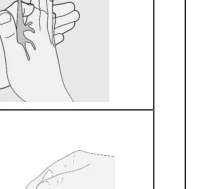
| Step 4 | To open the capsule:
| |
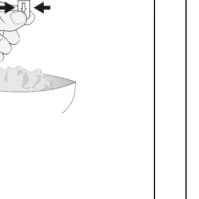
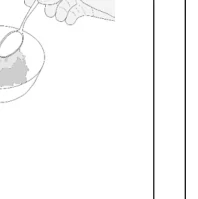
| Step 5 |
|
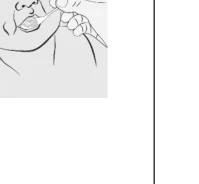
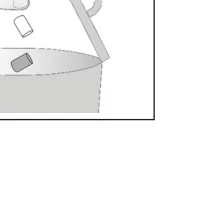
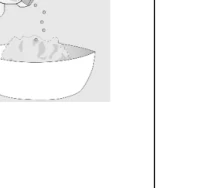
| Step 6 | Feed the food with the granules to the child immediately, making sure your child eats all of it. Make sure your child does not chew the granules to avoid change of taste. | |
| Step 7 | Throw away the empty shells of the capsule. |
Instructions for use for Entresto 6 mg/6 mg granules in capsules for opening and Entresto 15 mg/16 mg granules in capsules for opening
To ensure that you use Entresto granules correctly for your child, it is important that you follow these instructions. Your doctor, pharmacist or nurse will show you how to do this. Ask one of them if you have any questions.
Entresto granules are contained within capsules and are available in two strengths: 6 mg/6 mg granules and 15 mg/16 mg granules. The capsules are packaged in blister cards. You may receive one or both strengths depending on the dose your child needs.
You can see the difference between the two strengths by the colour of the capsule cap and the imprint on it.
- The capsule containing the 6 mg/6 mg granules has a white cap with number 04 printed on it.
- The capsule containing the 15 mg/16 mg granules has a yellow cap with number 10 printed on it.
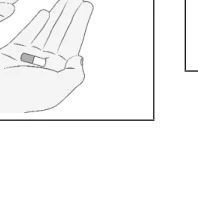
The capsules containing Entresto granules must be opened before use.
Do NOT swallow the whole capsule. Do NOT swallow the empty capsule shells.
If you use both strengths of Entresto granules, make sure you use the correct number of capsules of each strength as instructed by your doctor, pharmacist or nurse.
300146168 GB