


Patient leaflet - Enoxaparin Sodium 2 000 IU (20 mg)/0.2 ml syringes, Clexane 2 000 IU (20 mg)/ 0.2 ml syringes
1. WHAT CLEXANE IS AND WHAT IT IS USED FOR
Clexane contain the active substance called enoxaparin sodium. This belongs to a group of medicines called ‘low molecular weight heparin’ or LMWH.
Tests and checks
You may have a blood test before you start using this medicine and at intervals while you are using it; this is to check the level of the clotting cells (platelets) and potassium in your blood.
How Clexane works
Clexane works in two ways:
- 1)
Stopping existing blood clots from getting any
bigger. This helps your body to break them down and stops them from causing you harm.
Use in children and adolescents
The safety and efficacy of Clexane has not been evaluated in children or adolescents.
- 2) Stopping new blood clots from forming in your
blood. 
What Clexane is used for
Other medicines and Clexane
Clexane can be used to:
Tell your doctor or pharmacist if you are taking or might take any other medicines.
- Treat blood clots that are in your blood
Stop blood clots from forming in your blood in the
- warfarin - used for thinning the blood
following situations:
- aspirin (also known as acetylsalicylic acid or ASA),
before and after an operation
clopidogrel or other medicines used to stop blood clots from forming (see section 3, ‘Changing anticoagulant medicine’)
when you have a short-term illness and will not
be able to move around for some time.
- if you have experienced a blood clot due to
- dextran injection - used as a blood replacer
cancer to prevent further clots from forming.
- ibuprofen, diclofenac, ketorolac or other medicines
Stop blood clots from forming when you have
known as non-steroidal anti-inflammatory medicines which are used to treat pain and swelling in arthritis and other conditions
unstable angina (where not enough blood gets to your heart) or after a heart attack
- Stop blood clots from forming in the tubes of your
- prednisolone, dexamethasone or other medicines
dialysis machine (used for people with severe kidney problems).
used to treat asthma, rheumatoid arthritis and other conditions
2. WHAT YOU NEED TO KNOW BEFORE YOU USE CLEXANE
medicines which increase potassium levels in your
blood such as potassium salts, water pills, and some medicines for heart problems.

Do not use Clexane if:
Operations and anaesthetics
you are allergic to:
If you are going to have a spinal or lumbar puncture, or an operation where an epidural or spinal anaesthetic is used, tell your doctor that you are using Clexane.
enoxaparin sodium or any of the other
ingredients of this medicine (listed in section 6)
heparin or other low molecular weight heparins
such as nadroparin, tinzaparin or dalteparin. Signs of an allergic reaction include: rash, difficulty breathing or swallowing, swelling of the face, lips, tongue, oral cavity, throat or eyes.
Pregnancy and breast-feeding
If you are pregnant, think you may be pregnant or are planning to have a baby, ask your doctor or pharmacist for advice before taking this medicine.
you have had a reaction to heparin that caused a
severe drop in the number of your clotting cells (platelets) within the last 100 days
If you are pregnant and have a mechanical heart valve, you may be at an increased risk of developing blood clots. Your doctor should discuss this with you.
you have antibodies against enoxaparin in your
blood
If you are breast-feeding or plan to breast-feed, you should ask your doctor for advice before taking this medicine.
you are bleeding heavily or have a condition with a
high risk of bleeding, such as:
stomach ulcer, recent surgery of the brain or
Driving and using machines
eyes, or recent bleeding stroke.
Clexane do not affect the ability to drive and operate machinery.
you are using Clexane to treat blood clots and are
going to have within 24 hours:
a spinal or lumbar puncture
It is advised that the trade name and batch number of the product you are using are recorded by your healthcare professional.
an operation with epidural or spinal
anaesthesia.
Do not use Clexane if any of the above apply to you. If you are not sure, talk to your doctor or pharmacist before using Clexane.
3. HOW TO USE CLEXANE
Always use this medicine exactly as your doctor or pharmacist has told you. Check with your doctor or pharmacist if you are not sure.

Warnings and precautions
Clexane should not be interchanged with other ‘low molecular weight heparins’ such as nadroparin, tinzaparin or dalteparin. This is because they are not exactly the same and do not have the same activity and instructions for use.
Having this medicine
Your doctor or nurse will normally give you
Clexane. This is because it needs to be given as an injection.
Clexane
Clexane is usually given by injection underneath the skin (subcutaneous).
the skin (subcutaneous).
Clexane
Clexane can be given by injection into your vein (intravenous) after certain types of heart attack or operations.
(intravenous) after certain types of heart attack or operation
Clexane
Clexane can be added to the tube leaving the body (arterial line) at the start of a dialysis session. Do not inject Clexane into a muscle.
(arterial line) at the start of
- Do not inject
How much
How much will be given to you
Your doctor will decide how much
Your doctor will decide how much Clexane to give you. The amount will depend on the reason it is being used.
you. The amount
being used
If you
If you have problems with your kidneys you may be given a smaller amount of Clexane.
given a smaller amount of
- 1)
Treating blood clots that are in your
Treating blood clots that are in your blood
- •
The usual dose is
The usual dose is 150IU (1.5mg) for every kilogram of your bodyweight once a day or 100IU (1mg) for every kilogram of your bodyweight twice a day.
kilogram of your
100IU (
body
- •
Your doctor will decide how long you should
Your doctor will decide how long you should receive Clexane.
receive
- 2)
Stopp blood mobility due to an illness
Stopping blood clots from forming in your blood during operations or periods of limited mobility due to an illness
- •
The dose will depend on how likely you are to
The dose will depend on how likely you are to develop a clot. You will be given 2,000IU (20mg) or 4,000IU (40mg) of Clexane each day. If you are going to have an operation your first injection will be usually given 2 hours or 12 hours before your operation.
develop a clot. You will be given 2,000IU (20mg) or 4,000IU (40mg) of
- •
If you are going to have an op
injection will be usually given 2 hours or 12 hours before your
- •
If you have restricted mobility due to illness, you
If you have restricted mobility due to illness, you will normally be given 4,000IU (40mg) of Clexane each day.
will normally be
Clexane
- •
Your doctor will decide how long you
Your doctor will decide how long you should receive Clexane.
receive
- 3)
Stopping unstable angina or heart
Stopping blood clots when you have unstable angina or after you have had a heart attack
- •
Clexane
Clexane can be used for two different types of heart attack.
heart attack
- •
The amount of Clexane
The amount of Clexane given to you will depend on your age and the kind of heart attack you have had.
on your age and
have had.
- 1)
NSTEMI
NSTEMI (Non-ST segment Elevation Myocardial Infarction) type of heart attack:
Infarction)
The usual dose is 100
The usual dose is 100IU (1mg) for every kilogram of your bodyweight every 12 hours. Your doctor will normally ask you to take aspirin (acetylsalicylic acid) as well.
kilogram of
Your doctor will normally ask you to take aspirin
(acetylsalicylic acid)
Your doctor will decide how long you should
Your doctor will decide how long you should receive Clexane.
receive
STEMI
STEMI (ST segment Elevation Myocardial Infarction) type of heart attack if you are under
Infarction
75 years old
years old:
An initial dose of 3,00
An initial dose of 3,000IU (30mg) of Clexane will be given as an injection into your vein. At the same time you will also be given Clexane as an injection underneath your skin (subcutaneous injection). The usual dose is 100IU (1mg) for every kilogram of your bodyweight, every 12 hours.
be given as
At the same time you will also be given as an injection underneath your skin (subcutaneous injectio
100
body
Your doctor will normally ask you to take
Your doctor will normally ask you to take aspirin (acetylsalicylic acid) as well.
(acetylsalicylic acid) as well.
Your doctor will decide how long you should
Your doctor will decide how long you should receive Clexane.
receive
STEMI type of heart attack if you are 75 years old or older:
STEMI type of heart attack if you are 75 years old or older:
The usual dose is 75IU (0.75mg) for every
The usual dose is 75IU (0.75mg) for every kilogram of your bodyweight, every 12 hours. The maximum amount of Clexane given for the first two injections is 7,500IU (75mg). Your doctor will decide how long you should receive Clexane.
kilogram of your
The maximum amount of
first two injections is 7,500IU (75mg).
- Your doctor will decide how long you should receive
For patients
For patients that have an operation called percutaneous coronary intervention (PCI):
percutaneous coronary intervention
Depending on when you were last given
Depending on when you were last given Clexane, your doctor may decide to give an additional dose of Clexane before a PCI operation. This is by injection into your vein. Stopping blood clots from forming in the tubes of your dialysis machine
Clexane
additional dose of
operation. This is by injection into your vein
- Stopping blood clots tubes of your dialysis machine
The usual dose is
The usual dose is 100IU (1mg) for every kilogram of your bodyweight.
kilogram of your
Clexane
Clexane is added to the tube leaving the body (arterial line) at the start of a dialysis session. This amount is usually enough for a 4-hour session. However, your doctor may give you a urther dose of 50IU to 100IU (0.5 to 1mg) for every kilogram of your bodyweight, if necessary. Giving yourself an injection of Clexane
(arterial line) at the start of
This amount is usually enough for a 4 session. However, your doctor may give you a further dose of 50
every kilogram of
Giving yourself an injection of
If you are able to give
If you are able to give Clexane to yourself, your doctor or nurse will show you how to do this. Do not try to inject yourself if you have not been trained how to do so. If you are not sure what to do, talk to your doctor or nurse immediately.
or nurse will show you how to do this. Do not try to inject yourself if you have not been trained how to do so. If you are not sure what to do, talk to your doctor or nurse immediately.
Performing the injection properly under the skin (called ‘subcutaneous injection’) will help reduce pain and bruising at the injection site.
Before injecting yourself with Clexane
Collect together the items that you need: syringe,
alcohol swab or soap and water, and sharps container
Check the expiry date on the medicine. Do not use
if the date has passed
Check the syringe is not damaged and the
medicine in it is a clear solution. If not, use another syringe
Make sure you know how much you are going to
inject
Check your stomach to see if the last injection
caused any redness, change in skin colour, swelling, oozing or is still painful. If so talk to your doctor or nurse
Instructions on injecting yourself with Clexane:
Preparing the injection site
- 1)
Choose an area on the right or left side of your
stomach. This should be at least 5 centimetres away from your belly button and out towards your sides.
- Do not inject yourself within 5cm of your belly
button or around existing scars or 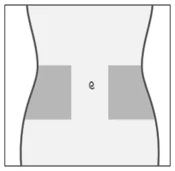
bruises.
Change the place where you
inject between the left and right
sides of your stomach, depending
on the area you last injected.
Wash your hands. Cleanse (do not rub) the area
that you will inject with an alcohol swab or soap and water.
Sit or lie in a comfortable position so you are
relaxed. Make sure you can see the place you are going to inject. A lounge chair, recliner, or bed propped up with pillows is ideal.
Selecting your dose
- 1) Carefully pull off the needle cap from the syringe.
Throw away the cap. 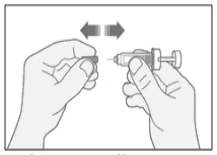
Do not press on the plunger
before injecting yourself to get
rid of air bubbles. This can
lead to a loss of the medicine.
Once you have removed the cap, do not allow
the needle to touch anything. This is to make sure the needle stays clean (sterile).
When the amount of medication in the syringe
already matches your prescribed dose, there is no need to adjust the dose. You are now ready to inject.
When the dose depends on your body weight, you
may need to adjust the dose in the syringe to match the prescribed dose. In that case, you can get rid of any extra medicine by holding the syringe pointing down (to keep the air bubble in the syringe) and ejecting the extra amount into a container.
A drop may appear at the tip of the needle. If this
occurs, remove the drop before injecting by tapping on the syringe with the needle pointing down. You are now ready to inject.
Injecting
- 1)
Hold the syringe in the hand you write with (like a
pencil). With your other hand, gently pinch the cleaned area of your stomach between your forefinger and thumb to make a fold in the skin.
- Make sure you hold the skin fold throughout the
injection. 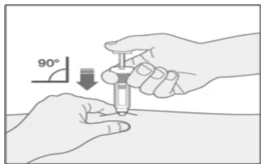
- 2)
Hold the syringe so that the
needle is pointing straight
down (vertically at a 90°
angle). Insert the full length of
the needle into the skin fold.
- 3) Press down on the plunger with your thumb. This
will send the medication into the fatty tissue of the stomach. Complete the 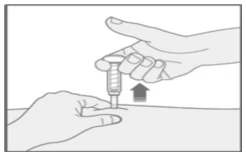
injection using all of the
medicine in the syringe.
- 4)
Remove the needle from the
injection site by pulling it
straight out. You can now let
go of the skin fold.
When you have finished
- 1)
To avoid bruising, do not rub the injection site after
you have injected yourself.
- 2)
Drop the used syringe into a sharps container.
Close the container lid tightly and place the container out of reach of children. When the container is full, dispose of it as your doctor or pharmacist has instructed.
Any unused medicine or waste material should be disposed of in accordance with local requirements.
Changing anticoagulant medicine
Changing from Clexane to blood thinners called vitamin-K antagonists (such as warfarin)
Your doctor will ask you to have blood tests called
INR and tell you when to stop Clexane.
Changing from blood thinners called vitamin-K antagonists (such as warfarin) to Clexane
Stop taking the vitamin-K antagonist. Your doctor
will ask you to have blood tests called INR and tell you when to start Clexane.
Changing from Clexane to treatment with direct oral anticoagulants
Stop taking Clexane. Start taking the direct oral
anticoagulant 0 to 2 hours before the time you would have had the next injection, then continue as normal.
Changing from treatment with direct oral anticoagulant to Clexane
Stop taking the direct oral anticoagulant. Do not
start treatment with Clexane until 12 hours after the final dose of the direct oral anticoagulant.
If you use more Clexane than you should
If you think that you have used too much or too little Clexane, tell your doctor or pharmacist or nurse immediately, even if you have no signs of a problem. If a child accidentally injects or swallows Clexane, take them to a hospital causualty department straight away.
If you forget to use Clexane
If you forget to give yourself a dose, have it as soon as you remember. Do not give yourself a double dose on the same day to make up for a forgotten dose. Keeping a diary will help to make sure you do not miss a dose.
If you stop using Clexane
It is important for you to keep having Clexane injections until your doctor decides to stop them. If you stop, you could get a blood clot which can be very dangerous.
If you have any further questions on the use of this medicine, ask your doctor or pharmacist or nurse.
4. POSSIBLE SIDE EFFECTS
Like all medicines, this medicine can cause side effects, although not everybody gets them.
Serious side effects
Stop using Clexane and talk to a doctor or nurse straight away if you get any signs of a severe allergic reaction (such as rash, difficulty breathing or swallowing, swelling of the face, lips, tongue, oral cavity, throat or eyes).
Like other similar medicines to reduce blood clotting, Clexane may cause bleeding. This may be life-threatening. In some cases the bleeding may not be obvious.
Talk to your doctor straight away if:
- you have any bleeding that does not stop by itself
you have signs of too much bleeding such as being
very weak, tired, pale, or dizzy with headache or unexplained swelling.
Your doctor may decide to keep you under closer observation or change your medicine.
You should tell your doctor straight away:
if you have any sign of blockage of a blood vessel
by a blood clot such as:
cramping pain, redness, warmth, or swelling in
one of your legs – these are symptoms of deep vein thrombosis
breathlessness, chest pain, fainting or coughing
up blood – these are symptoms of a pulmonary embolism
if you have a painful rash of dark red spots under
the skin which do not go away when you put pressure on them.
Your doctor may request you perform a blood test to check your platelet count.
Other side effects
Very common (may affect more than 1 in 10 people):
- Bleeding.
- Increases in liver enzymes.
Common (may affect up to 1 in 10 people):
you bruise more easily than usual - this could be
because of a blood problem with low platelet counts
pink patches on your skin - these are more likely to
appear in the area you have been injected with Clexane
- skin rash (hives, urticaria)
- itchy red skin
- bruising or pain at the injection site
- decreased red blood cell count
- high platelet counts in the blood
- headache.
Uncommon (may affect up to 1 in 100 people):
sudden severe headache - this could be a sign of
bleeding in the brain
a feeling of tendernes
feeling of tenderness and swelling in your stomach - you may have bleeding in your stomach arge red irregularly shaped skin lesions with or without blisters
stomach
large red irregularly shaped skin l
without blisters
skin irritation (local irritation)
n irritation (local irritation)
yellowing of
yellowing of your skin or eyes and your urine becomes darker in colour - this could be a liver problem.
becomes
problem.
Rare (may affect up to 1 in 1,000
(may affect up to 1 in 1,000 people): vere allergic reaction - the signs may include: a rash, swallowing or breathing problems, swelling of your lips, face, throat or tongue
severe allergic reaction
rash, swallowing or breathing problems, swelling of your lips, face, throat or tongue
increased potassium in your blood
reased potassium in your blood - this is more likely to happen in people with kidney problems or diabetes. Your doctor will be able to check this by carrying out a blood test
likely to happen in people with kidney problems or diabetes. Your doctor will be able to check th carrying out a blood test
an increase in the numbe
n increase in the number of eosinophils in your blood - your doctor will be able to check this by carrying out a blood test
blood
carrying out a blood test
hair loss
air loss
osteoporosis (a condition where your bones are
steoporosis (a condition where your bones are more likely to break) after long term use ingling, numbness and muscular weakness (particularly in the lower part of your body) when you have had a spinal puncture or a spinal anaesthetic
more likely to break) after long term
tingling, numbness and muscular weakness
(particularly in the lower part of your body) when you have had a spinal
anaesthetic
loss of control over your bladder or bowel (so you
of control over your bladder or bowel (so you cannot control when you go to the toilet) ard mass or lump at the injection site. Reporting of side effects
cannot control when you go to the
- hard mass or lump at the injection site.
Reporting
If you get any side effects, talk to your
If you get any side effects, talk to your doctor, pharmacist or nurse. This includes any possible side effects not listed in this leaflet. You can also report side effects directly via the Yellow Card Scheme at: www.mhra.gov.uk/yellowcard or search for MHRA Yellow Card in the Google Play or Apple App Store.
pharmacist
effects not listed in this
side effects
www.mhra.gov.uk/yellowcard
Yellow Car
By reporting side effects
reporting side effects, you can help provide more information on the safety of this medicine.
information on the safety of
5. HOW TO STORE CLEXANE
HOW TO STORE CLEXANE
Keep out of the sight and reach of children. Do not store above 25°C. Do not refrigerate Do not use Clexane after the expiry date which is stated on the carton and blister labels after ‘Exp’. The expiry date refers to the last day of that month. Do not use this medicine if you notice a breach in the syringe, particulate matters in t
Keep out of the sight and reach of children. Do not store above 25°C. Do not refrigerate or freeze. Do not use Clexane after the expiry date which is stated on the carton and blister labels after ‘Exp’. The expiry date refers to the last day of that month. Do not use this medicine if you notice a breach in the syringe, particulate matters in the solution, or an abnormal colour of the solution (see ‘
al colour of the solution (see ‘What Clexane like and contents of the pack’).
looks like and contents of the
Medicines should not be disposed of via wastewater or household waste. Ask your pharmacist how to dispose of medicines no longer required. These m help to protect the environment.
Medicines should not be disposed of via wastewater or household waste. Ask your pharmacist how to dispose of medicines no longer required. These measures will help to protect the environment.
6. CONTENTS OF THE PACK AND OTHER INFORMATION
CONTENTS OF THE PACK AND OTHER INFORMATION
What Clexane
Clexane contains
The active substance is enoxaparin sodium. Each ml contains 100mg enoxaparin sodium, equivalent to 10,000IU of anti
The active substance is enoxaparin sodium. Each ml contains 100mg enoxaparin sodium, equivalent to 10,000IU of anti-Xa activity.
Each pre
pre-filled syringe of 0.2ml contains 2,000IU (20mg) of enoxaparin sodium.
(20mg) of enoxaparin sodium.
The other ingredient is water for injections.
The other ingredient is water for injections. What Clexane looks like and contents of the pack
What Clexane looks like and contents of the pac
Clexane is a clear solution in a prefilled syringe fitted with an injection needle
Clexane is a clear solution in a prefilled syringe fitted with an injection needle and needle cap. Clexane comes in prefilled syringes which are packed into boxes of 10.
Clexane comes in prefilled syringes which are packed into boxes of 10.
Manufactured by:
Manufactured by: Sanofi Winthrop Industrie, Rue Jean Jaurès 180, 94702 Maisons-Alfort, France.
Jean Jaurès 180, 94702 Maisons
OR
Sanofi Winthrop Industrie, Bd. Industriel,
Sanofi Winthrop Industrie, Bd. Industriel, 76580 Le Trait, France.
76580 Le Trait, France.
OR
Chinoin Pharmaceutical and Chemical Works Private Co Ltd, Csanyikvölgy Site, Miskolc, Csanyikvölgy, H-3510 Hungary.
Chinoin Pharmaceutical and Chemical Works Private Co Ltd, Csanyikvölgy Site, Miskolc, Csanyikvölgy,
3510 Hungary.
Procured from within the EU and repackaged by the Product Licence holder:
Procured from within the EU and repackaged by the Product Licence holder: B&S Healthcare, Unit 4, Bradfield Road, Ruislip, Middlesex, HA4 0NU, UK. Clexane® 2,000IU (20mg)/0.2ml syringes;
Bradfield Road, Ruislip, Middlesex,
Clexane
PL 18799/2209
PL 18799/2209
POM
Leaflet date
Leaflet date: 18.11.2021
Clexane
Clexane is a registered trademark of Sanofi Mature IP. Blind or partially sighted? Is this leaflet hard to see or read?
Blind or partially sighted?
Is this leaflet hard to see or read? Call 0208 515 3763
0208 515 3763 to obtain the leaflet in a format suitable for you.
leaflet in a format suitable for you.