

Patient leaflet - Emylif 50 mg orodispersible film
1. What Emylif is and what it is used for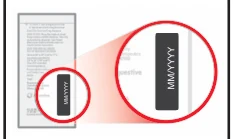
What Emylif is
The active substance in Emylif is riluzole which acts on the nervous system.
What Emylif is used for
Emylif is used in adult patients with
amyotrophic lateral sclerosis (ALS).
ALS is a form of motor neurone disease where attacks of the nerve cells responsible for sending instructions to the muscles lead to weakness, muscle waste and paralysis.
The destruction of nerve cells in motor neurone  disease may be caused by too much glutamate (a chemical messenger) in the brain and spinal
  cord. Emylif stops the release of glutamate and this may help in preventing the nerve cells being damaged.
Please consult your doctor for more information about ALS and the reason why this medicine has been prescribed for you.
2. What you need to know before you take Emylif
Do not take Emylif
if you are allergic to riluzole or any of the other
ingredients of this medicine (listed in section 6),
if you have any liver disease or increased blood
levels of some enzymes of the liver (transaminases),
- if you are pregnant or breast-feeding.
Warnings and precautions
Talk to your doctor before taking Emylif:
if you have any liver problems: yellowing of your
skin or the white of your eyes (jaundice), itching all over, feeling sick, being sick
- if your kidneys are not working very well
if you have any fever: it may be due to a low
number of white blood cells which can cause an increased risk of infection
if you have excessive drooling or severe
swallowing difficulties.
If any of the above applies to you, or if you are not sure, tell your doctor who will decide what to do.
Children and adolescents
If you are less than 18 years of age, the use of Emylif is not recommended because there is no information available in this population.
Other medicines and Emylif
Tell your doctor if you are taking, have recently taken or might take any other medicines.
Pregnancy, breast-feeding and fertility
You MUST NOT take Emylif if you are or think you may be pregnant, or if you are breast-feeding. If you think you may be pregnant, or if you intend to breast-feed, ask your doctor for advice before taking Emylif.
Driving and using machines
You can drive or use any tools or machines, unless you feel dizzy or light-headed after taking this medicine.
Emylif contains:
- 2 mg fructose in each orodispersible film. May be harmful to the teeth.
- sunset yellow FCF (E110). May cause allergic reactions.
3. How to take Emylif
Always take this medicine exactly as your doctor has told you. Check with your doctor or pharmacist if you are not sure.
The recommended dose is one orodispersible film, twice a day.
The orodispersible films should be taken by mouth, every 12 hours, at the same time of the day each day (e.g. in the morning and evening).
After taking this medicine, you can feel reduced oral sensitivity after 1 minute. Pay attention taking food until this feeling is over, which is usually in about 40 minutes.
Method of administration:
Instructions for oral use are reported below.
Step 1. Before Taking Emylif
- Ensure hands are clean and dry before handling Emylif so the film does not stick to your fingers.
Check expiration date printed on foil sachet before use as shown in Figure 1. Do not use Emylif if expired.
Figure 1
Step 2. Open Sachet
- Fold foil sachet along solid line at top as shown in Figure 2.
While keeping top of sachet folded over at solid line, tear down at the slit along the arrow on the side of the sachet to open.
Figure 2
Package leaflet: Information for the patient
EMYLIF 50 mg orodispersible film riluzole
Package leaflet: Information for the patient
EMYLIF 50 mg
orodispersible film
riluzole
Step 3. Remove Film
- Remove Emylif film from foil sachet. Each sachet contains one dose of Emylif.
Do not fold Emylif film.
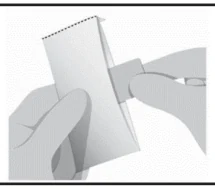
Figure 3
Step 4. Place Film on Tongue
Place Emylif film on top of the tongue as shown in Figure 4. The film will stick to the tongue and begin to dissolve.
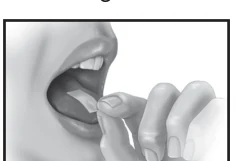
Figure 4
Step 5. Close Mouth and Swallow Saliva Normally
- Close mouth as shown in Figure 5 and swallow saliva normally as Emylif dissolves within 3 minutes.
- Do not take Emylif with liquids
Do not chew, spit or talk while Emylif dissolves.

Figure 5
Step 6. After the administration of Emylif, wash your hands
If you take more Emylif than you should
If you take too many orodispersible film, contact your doctor or the nearest hospital emergency department immediately.
If you forget to take Emylif
If you forget to take your orodispersible film, leave out that dose completely and take the next orodispersible film at the usual time. Do not take a double dose to make up for a forgotten orodispersible film.
If you have any further questions on the use of this medicine, ask your doctor or pharmacist.
4. Possible side effects
Like all medicines, this medicine can cause side effects, although not everybody gets them.
IMPORTANT
Tell your doctor immediately
if you experience any fever (increase in
temperature) because Emylif may cause a decrease in the number of white blood cells. Your doctor may want to take a blood sample to check the number of white blood cells, which are important in fighting infections.
if you experience any of the following symptoms:
yellowing of your skin or the white of your eyes (jaundice), itching all over, feeling sick, being sick, as this may be signs of liver disease (hepatitis). Your doctor may do regular blood tests while you are taking Emylif to make sure that this does not occur.
if you experience cough or difficulties in
breathing, as this may be a sign of lung disease (called interstitial lung disease).
Other side effects
Very common side effects (may affect more than 1 in 10 people) of Emylif are:
- tiredness
- feeling sick
increased blood levels of some enzymes of the
liver (transaminases).
- reduced oral sensitivity
Common side effects (may affect up to 1 in 10 people) of Emylif are:
- dizziness
- numbness or tingling of the mouth
- vomiting
- sleepiness
- increase in heart beat
- diarrhoea
- headache
- abdominal pain
- pain
Uncommon side effects (may affect up to 1 in 100 people) of Emylif are:
- anaemia
- allergic reactions
inflammation of the pancreas (pancreatitis).
Not known: frequency cannot be estimated from the available data
- rash
Reporting of side effects
If you get any side effects, talk to your doctor or pharmacist. This includes any possible side effects not listed in this leaflet. You can also report side effects directly via
Yellow Card Scheme
Website: www.mhra.gov.uk/yellowcard or search for MHRA Yellow Card in the Google Play or Apple App Store.
By reporting side effects, you can help provide more information on the safety of this medicine.
5. How to store Emylif
Keep this medicine out of the sight and reach of children.
Do not use this medicine after the expiry date which is stated on the sachet and carton after “EXP” The expiry date refers to the last day of that month.
Store below 30°C.
Do not throw away any medicines via wastewater or household waste. Ask your pharmacist how to throw away medicines you no longer use. These measures will help protect the environment.
6. Contents of the pack and other information
What Emylif contains
- The active substance is riluzole.
The other ingredients are:
polacrilex resin, pullulan (E1204), xylitol (E967), hypromellose (E464), glycerol (E422), glycerol mono-oleate, sucralose (E955), fructose, macrogol, flavor honey, xhanthan gum, flavor lemon, sunset yellow FCF (E110), white ink (water purified, titanium dioxide (E171), propylene glycol (E1520), hypromellose (E464), isopropyl alcohol, ethanol and methanol).
Trace levels of the antioxidant butylated hydroxytoluene (E321).
What Emylif looks like and content of the pack
Orodispersible film:
Orange, rectangular-shaped, orally dissolving thin film (32 mm x 22 mm) with “R50” printed in white on one side.
Emylif is available in a pack of 14, 28, 56, 112, 140 orodispersible film to be taken orally. Each carton box contains 14, 28, 56, 112, 140 sachets.
Not all pack sizes may be marketed.
Marketing Authorisation Holder
Zambon S.p.A.
Via Lillo del Duca 10 20091 Bresso (MI) Italy Tel: +39 02665241
Fax: +39 02 66501492
Email: info.zambonspa@zambongroup.com
Manufacturer
Zambon S.p.A.
Via della Chimica, 9
36100 Vicenza
Italy
This leaflet was last revised in April 2023.
6277001 E01.1022 IS136CV (cp. 9/10.7)