

Patient leaflet - Dorzolamide 20 mg/ml eye drops, solution BP
1. What Dorzolamide is and what it is used for
This medicine contains dorzolamide which belongs to a group of medicines called "carbonic anhydrase inhibitors".
This medicine is prescribed to lower raised pressure in the eye and to treat glaucoma. This medicine can be used alone or in addition to other medicines which lower the pressure in the eye (so-called beta-blockers).
2. What you need to know before you use Dorzolamide
Do not use Dorzolamide
if you are allergic to Dorzolamide Hydrochloride or any of the other ingredients of
this medicine (listed in section 6).
if you have severe kidney impairment or problems, or a prior history of kidney
stones.
Warnings and precautions
Talk to your doctor or pharmacist before using this medicine.
Tell your doctor or pharmacist about any medical problems you have now or have had in the past, including eye problems and eye surgeries, and about any allergies to any medications.
If you develop any eye irritation or any new eye problems such as redness of the eye or swelling of the eyelids, contact your doctor immediately.
If you suspect that this medicine is causing an allergic reaction (for example, skin rash, severe skin reaction or itching) stop its use and contact your doctor immediately. Children
Dorzolamide has been studied in infants and children less than 6 years of age who have raised pressure in the eye(s) or have been diagnosed with glaucoma. For more information, talk to your doctor.
Elderly
In studies with Dorzolamide, the effects of this medicine were similar in both elderly and younger patients.
Patients with liver impairment
Tell your doctor about any liver problems you now have or have suffered from in the past.
Other medicines and Dorzolamide
Tell your doctor or pharmacist if you are using, have recently used or might use any other medicines (including eye drops). This is particularly important if you are taking another carbonic anhydrase inhibitor such as acetazolamide, or asulpha drug. Pregnancy and breast-feeding
If you are pregnant or breast-feeding, think you may be pregnant or are planning to have a baby, ask your doctor or pharmacist for advice before using this medicine. Pregnancy
You should not use this medicine during pregnancy. Tell your doctor if you are pregnant or intend to become pregnant.
Breast-feeding
If treatment with this medicine is required, breast-feeding is not recommended. Tell your doctor if you are breast-feeding or intend to breast-feed.
Driving and using machines
No studies on the effects on the ability to drive or use machines have been performed. There are side effects associated with this medicine, such as dizziness and blurred vision, which may affect your ability to drive and/or operate machinery. Do not drive or operate machinery until you feel well or your vision is clear.
Dorzolamide contains Benzalkonium chloride
This medicine contains 0.075 mg/ml benzalkonium chloride as a preservative. Benzalkonium chloride may be absorbed by soft contact lenses and may change the colour of the contact lenses. You should remove contact lenses before using this medicine and put them back 15 minutes afterwards.
Benzalkonium chloride may also cause eye irritation, especially if you have dry eyes or disorders of the cornea (the clear layer at the front of the eye). If you feel abnormal eye sensation, stinging or pain in the eye after using this medicine, talk to your doctor.
3. How to use Dorzolamide
Always use Dorzolamide exactly as your doctor has told you. Check with your doctor or pharmacist if you are not sure. The appropriate dosage and duration of treatment will be established by your doctor.
When this medicine is used alone, the recommended dose is one drop in the affected eye(s) in the morning, in the afternoon and in the evening.
If your doctor has recommended you to use this medicine with a beta-blocker eye drop to lower eye pressure, then the recommended dose is one drop of Dorzolamide in the affected eye(s) in the morning and in the evening.
If you are using this medicine with another eye drop, the drops should be instilled at least 10 minutes apart.
Do not allow the tip of the container to touch the eye or areas around the eye. It may become contaminated with bacteria that can cause eye infections leading to serious damage of the eye, even loss of vision. To avoid possible contamination, wash your hands before using this medicine and keep the tip of the container away from contact with any surface. If you think your medication may be contaminated, or if you develop an eye infection, contact your doctor immediately concerning continued use of this bottle.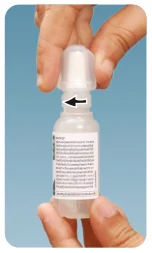
Instructions for use:
- First wash your hands.
Avoid touching the eye (or any other surface) with the tip of
the bottle.
If you wear soft contact lenses, they should be removed before
using the eye drops and wait at least 15 minutes before reinserting.
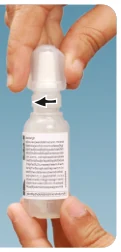
These drops are supplied in a plastic bottle with an insert cap
assembly, with a tamper proof dust cover. When using the
bottle for the first time, snap off the 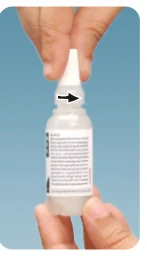
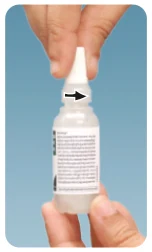
dust cover by turning it clockwise to
break the seal.
- Unscrew the inner cap.
Tilt your head back and look at the
ceiling.
Pull the lower eyelid gently
downwards to form a pocket between
your eyelid and your eye.
- Hold the bottle upside down above the eye and
gently squeeze the bottle to release a drop into 
your eye. DO NOT TOUCH YOUR EYE OR 
EYELID WITH THE DROPPER TIP.
Keep the affected eye closed and press your
fingertip against the inside corner of the closed
eye, and hold for 2 minute. This helps to stop the
medicine from getting into the rest of the body.
Repeat for the other eye if instructed to do so by
your doctor.
Recap the bottle after every use, tighten the inner
cap on the nozzle.
If you use more Dorzolamide than you should
If you put too many drops in your eye or the contents of the container are swallowed, you should contact your doctor immediately.
If you forget to use Dorzolamide
It is important to use this medicine as prescribed by your doctor. If you miss a dose, use it as soon as possible. However, if it is almost time for the next dose, skip the missed dose and go back to your regular dosing schedule.
Do not use a double dose to make up for the forgotten dose.
If you stop using Dorzolamide
If you want to stop using this medicine talk to your doctor first. If you have any further questions on the use of this product, ask your doctor or pharmacist.
4. Possible side effects
Like all medicines, Dorzolamide can cause side effects, although not everybody gets them.
If you develop allergic reactions including hives, swelling of the face, lips, tongue, and/or throat which may cause difficulty in breathing or swallowing, you should stop using this medicine and seek immediate medical advice.
The following side effects have been reported with Dorzolamide either during clinical trials or during post-marketing experience:
Very Common: (may affect more than 1 in 10 people)
Burning and stinging of the eyes.
Common : (may affect up to 1 in 10 people)
Disease of the cornea with sore eye and blurred vision (superficial punctuate keratitis), discharge with itching of the eyes (conjunctivitis), irritation/inflammation of the eyelid, blurred vision, headache, nausea, bitter taste, and fatigue.
Uncommon: (may affect up to 1 in 100 people)
Inflammation of the iris.
Rare : (may affect up to 1 in 1,000 people)
Tingling or numbness of the hands or feet, temporary shortsightedness which may resolve when treatment is stopped, development of fluid under the retina (choroidal detachment, following filtration surgery), eye pain, eyelid crusting, low pressure in the eye, swelling of the cornea (with symptoms of visual disturbances), eye irritation including redness, kidney stones, dizziness, nose bleed, throat irritation, dry mouth, localized skin rash (contact dermatitis),severe skin reactions, allergic type reactions such as rash, hives, itching, in rare cases possible swelling of the lips, eyes and mouth, shortness of breath, and more rarely wheezing.
Not known: (frequency cannot be estimated from the available data) Shortness of breath, foreign body sensation in eye (feeling that there is something in your eye), abnormal sensitivity of the eyes to light, forceful heartbeat that may be rapid or irregular (palpitations), increased heart rate and increased blood pressure. Reporting of side effects
If you get any side effects, talk to your doctor, pharmacist or nurse. This includes any possible side effects not listed in this leaflet. You can also report side effects directly via the Yellow Card Scheme at or search for MHRA Yellow
www.mhra.gov.uk/yellowcard
Card in the Google Play or Apple App Store. By reporting side effects you can help provide more information on the safety of this medicine.
5. How to store dorzolamide
Keep this medicine out of the sight and reach of children.
Do not store above 25°C.
Keep the bottle in the outer carton in order to protect from light. Use the solution within 28 days after opening the bottle.
Do not use Dorzolamide after the expiry date which is stated on the bottle and on the carton the bottle is packed in. The expiry date refers to the last day of that month. Do not throw away any medicines via wastewater or household waste. Ask your pharmacist how to throw away medicines you no longer use. These measures will help protect the environment.
6. Contents of the pack and other information
What Dorzolamide contains
- The active substance is dorzolamide.
- Each ml contains 22.26 mg of dorzolamide hydrochloride corresponding to 20 mg dorzolamide.
- The other ingredients are hydroxyethylcellulose, mannitol, sodium citrate, sodium hydroxide and water for Injections. Benzalkonium Chloride is added as a preservative.
What Dorzolamide looks like and contents of the pack
One bottle of Dorzolamide contains 5 ml solution.
Dorzolamide is a clear, colourless and slightly viscous solution filled in 5 mL labeled LDPE bottle with insert-cap assembly comprising of an orange colored, HDPE screw-cap over a LDPE nozzle with tamper-evident LDPE dust-cover sealing the bottle cap. Marketing Authorisation Holder and Manufacturer
FDC International Ltd.,
Unit 6, Fulcrum 1, Solent Way, Whiteley,
Fareham, Hampshire, PO15 7FE, United Kingdom
Tel: + 44 (0) 1489 565222