

Summary of Product Characteristics (SmPC) - Dienogest/ethinylestradiol 2.0/0.03 mg film-coated tablets
1 NAME OF THE MEDICINAL PRODUCT
Dienogest/Ethinylestradiol 2.0/0.03mg film-coated tablets.
2 QUALITATIVE AND QUANTITATIVE COMPOSITION
Each film-coated tablet contains 0.03 mg of ethinylestradiol and 2.0 mg of dienogest.
Excipient(s) with known effect:
Each film-coated tablet contains 60.90 mg of lactose monohydrate.
For a full list of excipients, see section 6.1.
3 PHARMACEUTICAL FORM
Film-coated tablet
White, round film-coated tablets.
4 CLINICAL PARTICULARS
4.1 Therapeutic indications
Oral contraception.
Treatment of moderate acne after failure of suitable topical treatments or oral antibiotic treatment in women who elect to use an oral contraceptive.
The decision to prescribe Dienogest/Ethinylestradiol should take into consideration the individual woman’s current risk factors, particularly those for venous thromboembolism (VTE), and how the risk of VTE with Dienogest/Ethinylestradiol compares with other CHCs (see sections 4.3 and 4.4).
4.2 Posology and method of administration
Posology
How to take Dienogest/Ethinylestradiol
The tablets must be taken every day at about the same time, if necessary with a little liquid, in the order shown on the blister pack. One tablet of
Dienogest/Ethinylestradiol daily for 21 consecutive days.
The first tablet to be taken is the one that corresponds to the day of the week in which the medication is started as written in the blister pack (e.g. “Mo” for Monday). The rest of the intake is done the in arrow direction, until the blister pack is consumed. Each subsequent pack is started after a 7-day tablet-free interval, during which time a withdrawal bleeding usually occurs. This usually starts on day 2-3 after the last tablet and may not have finished before the next pack is started.
Apparent improvement of acne usually takes at least three months and further improvement has been reported after six months of treatment. Women should be assessed 3-6 months after treatment initiation and periodically thereafter to review the need for continuation of treatment
How to start Dienogest/Ethinylestradiol
No preceding hormonal contraceptive use (in the past month):
Tablet-taking has to start on day 1 of the woman’s natural cycle (i.e. the first day of her menstrual bleeding) will begin with the intake. If the intake starts between days 2 and 5, during the first 7 days of the tablet-taking, a non-hormonal method of contraception (barrier methods) should be additionally used.
Changing from another combined oral contraceptive (COC):
The woman should start with Dienogest/ Ethinylestradiol preferably on the day after the hormone-containing tablet of her previous COC, but, at the latest, on the day following the usual tablet-free or horomone-free tablet interval of her previous COC.
Changing from a vaginal ring or transdermal patch:
The woman should start using Dienogest/ Ethinylestradiol preferably on the day of removal of the last ring or patch of a cycle pack, but, at the latest, when the next application would have been due.
- Changing from a progestogen-only method (progestogen-only pill, injection, implant) or from an progestogen-releasing intrauterine system (IUS): The woman may switch any day from the progestogen-only pill (from an implant or an IUS on the day of its removal, from an injectable when the next injection would be due), but, in all of these cases, should be advised to additionally use a non-hormonal protection method (barrier method) for the first 7 days of the intake of Dienogest/Ethinylestradiol.
Following a first trimester abortion:
The woman may started immediately. When doing so, no additional contraceptive measures are necessary.
Following delivery or a second trimester abortion
Since in the period immediately following childbirth, the risk of thromboembolic events is increased, women should be advised to start at day 21 to 28 days after delivery or after an abortion in the second trimester. When starting later, the woman should be advised to additionally use a non-hormonal contraceptive method (barrier method). However, if intercourse has already occurred, pregnancy should be excluded before the actual start of COC use or the woman has to wait for her first menstrual period.
For breastfeeding women see section 4.6.
Management of missed tablets
The contraceptive effect of Dienogest/Ethinylestradiol can be reduced if it is not taken regularly.
If the user is less than 12 hours late in taking any tablet, contraceptive protection is not reduced. The woman should take the tablet as soon as she remembers and should take further tablets at the usual time.
If she is more than 12 hours late taking any tablet, contraceptive protection may be reduced. The management of missed tablets can be guided by the following two basic rules:
- 1. Tablet-taking must never be discontinued for longer than 7 days.
- 2. 7 day of uninterrupted tablet-taking are required to attain adequate suppression of the hypothalamic-pituitary-ovarian axis.
Accordingly the following advice can be given in daily practice:
- Week 1:
The user should take the last missed tablet as soon as she remembers, even if this means taking two tablets at the same time. She then continues to take tablets at her usual time. In addition, a barrier method such as a condom should be used for the next 7 days. If intercourse took place in the preceding 7 days, the possibility of a pregnancy should be considered. The more tablets are missed and the closer they are to the regular tablet-free interval, the higher the risk of a pregnancy.
- Week 2:
The user should take the last missed tablet as soon as she remembers, even if this means taking two tablets at the same time. She then continues to take tablets at her usual time. Provided that the woman has taken her tablets correctly in the 7 days preceding the first missed tablet, there is no need to use extra contraceptive precautions. However, if she has missed more than 1 tablet, the woman should be advised to use extra precautions for 7 days.
- Week 3:
The risk of reduced reliability is imminent because of the forthcoming 7-day tablet-free interval. However, by adjusting the tablet-intake schedule, reduced contraceptive protection can still be prevented. By adhering to either of the following two options, there is therefore no need to use extra contraceptive precautions, provided that in the 7 days preceding the first missed tablet the woman has taken all tablets correctly. If this is not the case, she should follow the first of these two options and use extra precautions for the next 7 days as well.
- 1. The user should take the last missed tablet as soon as she remembers, even if this means taking two tablets at the same time. She then continues to take tablets at her usual time. The next blister pack must be started as soon as the current blister pack is finished, i.e., no gap should be left between packs. The user is unlikely to have a withdrawal bleed until the end of the second pack, but she may experience spotting or breakthrough bleeding on tablet-taking days.
- 2. The woman may also be advised to discontinue tablet-taking from the current blister pack. She should then have a tablet-free interval of up to 7 days, including the days she missed tablets, and subsequently continue with the next blister pack. If the woman missed tablets and subsequently has no withdrawal bleed in the first normal tablet- free interval, the possibility of a pregnancy should be considered.
Advice in case of gastro-intestinal disturbances
In case of severe gastro-intestinal disturbances, absorption may not be complete and additional contraceptive measures should be used.
If vomiting occurs within 3-4 hours after tablet taking, a new tablet should be taken as soon as possible. If more than 12 hours elapse, the advice concerning missed tablets, as given in Section 4.2 "Management of missed tablets", is applicable. If the woman does not want to change her normal tablet-taking schedule, she has to take the extra tablet(s) from another blister pack
How to postpone a withdrawal bleed
To delay a period the woman should continue with another blister pack of Dienogest/Ethinylestradiol without a tablet-free interval. The extension can be carried on for as long as wished until the end of the second pack. During the extension the woman may experience breakthrough-bleeding or spotting. Regular intake of Dienogest/Ethinylestradiol is then resumed after the usual 7-day tablet-free interval. To shift her periods to another day of the week than the woman is used to with her current scheme, she can be advised to shorten her forthcoming tablet-free interval by as many days as she likes. The shorter the interval, the higher the risk that she does not have a withdrawal bleed and will
experience breakthrough-bleeding and spotting during the subsequent pack (just as when delaying a
period).
Additional information on special populations
Children and adolescents
Dienogest/Ethinylestradiol is only indicated after menarche.
Geriatric patients
Not applicable. Dienogest/Ethinylestradiol is not indicated after menopause.
Patients with hepatic impairment
Dienogest/Ethinylestradiol is contraindicated in women with severe hepatic diseases. See also section ‘Contraindications’.
Patients with renal impairment
Dienogest/Ethinylestradiol has not been specifically studied in renally impaired patients. Available data do not suggest a change in treatment in this patient population.
Method of administration
Oral use.
4.3 Contraindications
Combined hormonal contraceptives (CHCs) should not be used in the following conditions. Should any of the conditions appear for the first time during CHC use, the product should be stopped immediately.
Presence or risk of venous thromboembolism (VTE):
- Venous thromboembolism – current VTE (on anticoagulants) or history of (e.g. deep venous thrombosis [DVT] or pulmonary embolism [PE]).
- Known hereditary or acquired predisposition for venous thromboembolism, such as APC-resistance, (including Factor V Leiden), antithrombin-III-deficiency, protein C deficiency, protein S deficiency.
- Major surgery with prolonged immobilisation (see section 4.4).
- A high risk of venous thromboembolism due to the presence of multiple risk factors (see section 4.4).
Presence or risk of arterial thromboembolism (ATE)
- Arterial thromboembolism – current arterial thromboembolism, history of arterial thromboembolism (e.g. myocardial infarction) or prodromal condition (e.g. angina pectoris).
- Cerebrovascular disease – current stroke, history of stroke or prodromal condition (e.g. transient ischaemic attack, TIA).
- Known hereditary or acquired predisposition for arterial thromboembolism, such as hyperhomocysteinaemia and antiphospholipid-antibodies (anticardiolipin-antibodies, lupus anticoagulant).
- History of migraine with focal neurological symptoms.
A high risk of arterial thromboembolism due to multiple risk factors (see section 4.4) or to the presence of one serious risk factor such as:
- diabetes mellitus with vascular symptoms.
- severe hypertension.
- severe dyslipoproteinaemia.
- Pancreatitis or a history, thereof if associated with severe hypertriglyceridemia.
- Presence or history of severe hepatic disease, as long as liver function values have not returned to normal.
- Presence or history of liver tumours (benign or malignant).
- Known or suspected sex-steroid influenced malignancies (e.g. of the genital organs or the breasts).
- Undiagnosed vaginal bleeding.
- Hypersensitivity to the active substances or to any of the excipients listed in section 6.1.
Dienogest/Ethinylestradiol is contraindicated for concomitant use with medicinal products containing ombitasvir/paritaprevir/ritonavir, dasabuvir, glecaprevir/pibrentasvir and sofosbuvir/velpatasvir/voxilaprevir (see sections 4.4 and 4.5).
4.4 Special warnings and precautions for use
Warnings
If any of the conditions or risk factors mentioned below is present, the suitability of Dienogest/Ethinylestradiol should be discussed with the woman. In the event of aggravation or first appearance of any of these conditions or risk factors, the woman should be advised to contact her doctor to determine whether the use of Dienogest/Ethinylestradiol should be discontinued.
In case of suspected or confirmed VTE or ATE, CHC use should be discontinued. In case anti- coagulant therapy is started, adequate alternative contraception should be initiated because of teratogenicity of anticoagulant therapy (coumarins).
Circulatory Disorders
Risk of venous thromboembolism (VTE)
The use of any combined hormonal contraceptive (CHC) increases the risk of venous thromboembolism (VTE) compared with no use. Products that contain levonorgestrel, norgestimate or norethisterone are associated with the lowest risk of VTE. Other products such as Dienogest/Ethinylestradiol may have up to 1.6 fold this level of risk. The decision to use any product other than one with the lowest VTE risk should be taken only after a discussion with the woman to ensure she understands the risk of VTE with Dienogest/Ethinylestradiol, how her current risk factors influence this risk, and that her VTE risk is highest in the first ever year of use. There is also some evidence that the risk is increased when a CHC is re-started after a break in use of 4 weeks or more.
In women who do not use a CHC and are not pregnant, about 2 out of 10,000 will develop a VTE over the period of one year. However, in any individual woman the risk may be far higher, depending on her underlying risk factors (see below).
Epidemiological studies in women who use low dose (<50 μg ethinylestradiol) combined oral contraceptives have found that out of 10,000 women between about 6 and 12 will develop a VTE in one year.
It is estimated that out of 10,000 women who use a low dose CHC that contains levonorgestrel, about 61 will develop a VTE in one year.
It is estimated2 that out of 10,000 women who use a CHC containing dienogest and ethinylestradiol between 8 and 11 women will develop a VTE in one year.
The number of VTEs per year is fewer than the number expected in women during pregnancy or in the postpartum period.
VTE may be fatal in 1-2% of the cases.
Number of VTE events per 10,000 women in one year 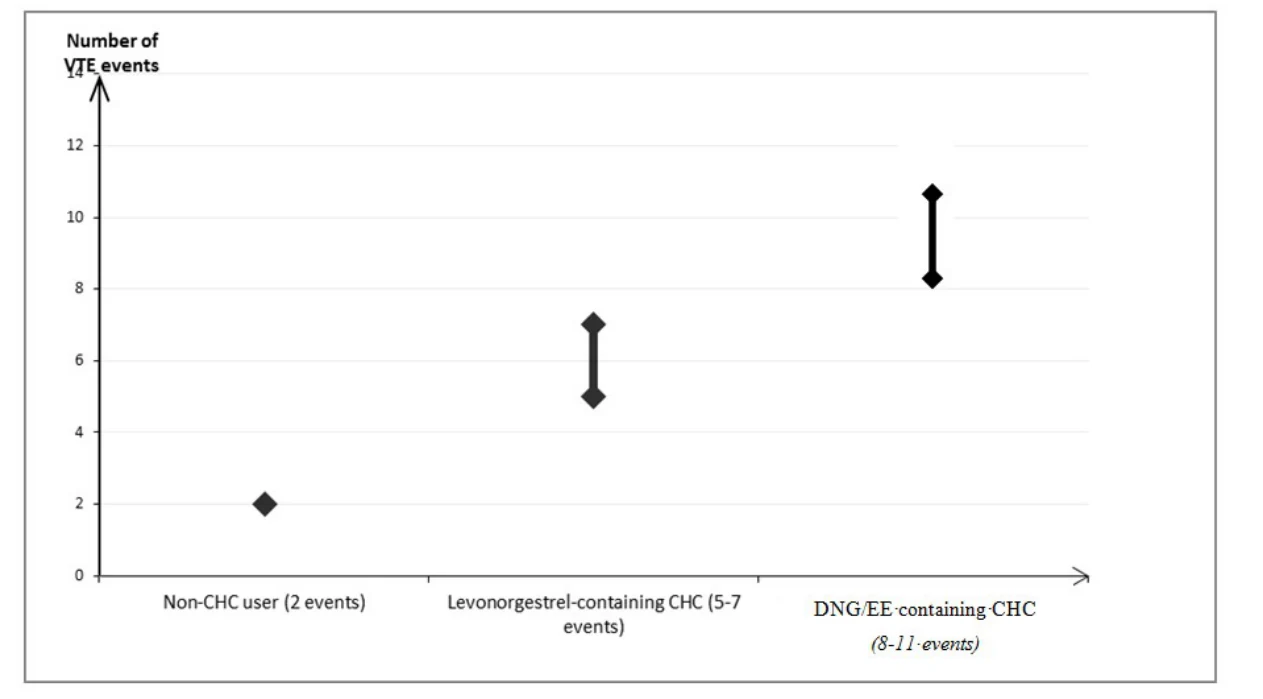
Risk factors for VTE
1 Mid-point of range of 5-7 per 10,000 WY, based on a relative risk for CHCs containing levonorgestrel versus non-use of approximately 2.3 to 3.6.
2 Data from a meta-analysis estimate that the VTE risk in Dienogest/Ethinylestradiol users is slightly higher compared to users of COCs containing levonorgestrel (Hazard Ratio of 1.57 with the risk ranging from 1.07 to 2.30).
The risk for venous thromboembolic complications in CHC users may increase substantially in a woman with additional risk factors, particularly if there are multiple risk factors (see table).
Dienogest/Ethinylestradiol is contraindicated if a woman has multiple risk factors that put her at high risk of venous thrombosis (see section 4.3). If a woman has more than one risk factor, it is possible that the increase in risk is greater than the sum of the individual factors – in this case, her total risk of VTE should be considered. If the balance of benefits and risks is considered to be negative, a CHC should not be prescribed (see section 4.3).
Table: Risk factors for VTE
| Risk factor | Comment |
| Obesity (body mass index over 30 kg/m²) | Risk increases substantially as BMI rises. Particularly important to consider, if other risk factors also present. |
Prolonged immobilisation, major surgery, any surgery to the legs or pelvis, neurosurgery, or major trauma Note: temporary immobilisation including air travel >4 hours can also be a risk factor for VTE, particularly in women with other risk factors. | In these situations, it is advisable to discontinue use of the patch/pill/ring (in the case of elective surgery at least four weeks in advance) and not resume until two weeks after complete remobilisation. Another method of contraception should be used to avoid unintentional pregnancy. Antithrombotic treatment should be considered if Dienogest/Ethinylestradiol has not been discontinued in advance. |
| Positive family history (venous thromboembolism ever in a sibling or parent especially at a relatively early age e.g. before 50). | If a hereditary predisposition is suspected, the woman should be referred to a specialist for advice before deciding about any CHC use. |
| Other medical conditions associated with VTE | Cancer, systemic lupus erythematosus, haemolytic uraemic syndrome, chronic inflammatory bowel disease (Crohn’s disease or ulcerative colitis) and sickle cell disease. |
| Increasing age | Particularly above 35 years |
There is no consensus about the possible role of varicose veins and superficial thrombophlebitis in the onset or progression of venous thrombosis.
The increased risk of thromboembolism in pregnancy, and particularly the 6-week period of the puerperium, must be considered (for information on “Pregnancy and lactation”, see section 4.6).
Symptoms of VTE (deep vein thrombosis and pulmonary embolism)
In the event of symptoms, women should be advised to seek urgent medical attention and to inform the healthcare professional that she is taking a CHC.
Symptoms of deep vein thrombosis (DVT) can include:
- unilateral swelling of the leg and/or foot or along a vein in the leg;
- pain or tenderness in the leg which may be felt only when standing or walking,
- increased warmth in the affected leg; red or discoloured skin on the leg.
Symptoms of pulmonary embolism (PE) can include:
- sudden onset of unexplained shortness of breath or rapid breathing;
- sudden coughing which may be associated with haemoptysis;
- sharp chest pain;
- severe light headedness or dizziness;
- rapid or irregular heartbeat.
Some of these symptoms (e.g. “shortness of breath”, “coughing”) are non-specific and might be misinterpreted as more common or less severe events (e.g. respiratory tract infections).
Other signs of vascular occlusion can include: sudden pain, swelling and slight blue discoloration of an extremity.
If the occlusion occurs in the eye symptoms, can range from painless blurring of vision which can progress to loss of vision. Sometimes loss of vision can occur almost immediately.
Risk of arterial thromboembolism (ATE)
Epidemiological studies have associated the use of CHCs with an increased risk for arterial thromboembolism (myocardial infarction) or for cerebrovascular accident (e.g. transient ischaemic attack, stroke). Arterial thromboembolic events may be fatal.
Risk factors for ATE
The risk of arterial thromboembolic complications or of a cerebrovascular accident in CHC users increases in women with risk factors (see table). Dienogest/Ethinylestradiol is contraindicated if a woman has one serious or multiple risk factors for ATE that puts her at high risk of arterial thrombosis (see section 4.3). If a woman has more than one risk factor, it is possible that the increase in risk is greater than the sum of the individual factors - in this case, her total risk should be considered. If the balance of benefits and risks is considered to be negative, a CHC should not be prescribed (see section 4.3).
Table: Risk factors for ATE
| Risk factor | Comment |
| Increasing age | Particularly above 35 years |
| Smoking | Women should be advised not to smoke if they wish to use a CHC. Women over 35 who continue to smoke should be strongly advised to use a different method of contraception. |
| Hypertension | |
| Obesity (body mass index over 30 kg/m2) | Risk increases substantially as BMI increases. Particularly important in women with additional risk factors. |
| Positive family history (arterial thromboembolism ever in a sibling or parent especially at relatively early age e.g. below 50). | If a hereditary predisposition is suspected, the woman should be referred to a specialist for advice before deciding about any CHC use |
| Migraine | An increase in frequency or severity of migraine during CHC use (which may be prodromal of a cerebrovascular event) may be a reason for immediate discontinuation |
| Other medical conditions associated with adverse vascular events | Diabetes mellitus, hyperhomocysteinaemia, valvular heart disease and atrial fibrillation, dyslipoproteinaemia and systemic lupus erythematosus. |
Symptoms of ATE
In the event of symptoms, women should be advised to seek urgent medical attention and to inform the healthcare professional that she is taking a CHC.
Symptoms of a cerebrovascular accident can include:
- sudden numbness or weakness of the face, arm or leg, especially on one side of the body;
- sudden trouble walking, dizziness, loss of balance or coordination;
- sudden confusion, trouble speaking or understanding;
- sudden trouble seeing in one or both eyes;
- sudden, severe or prolonged headache with no known cause;
- loss of consciousness or fainting with or without seizure.
Temporary symptoms suggest the event is a transient ischaemic attack (TIA).
Symptoms of myocardial infarction (MI) can include:
- pain, discomfort, pressure, heaviness, sensation of squeezing or fullness in the chest, arm, or below the breastbone;
- discomfort radiating to the back, jaw, throat, arm, stomach;
- feeling of being full, having indigestion or choking;
- sweating, nausea, vomiting or dizziness;
- extreme weakness, anxiety, or shortness of breath;
- rapid or irregular heartbeats.
Tumours
An increased risk of cervical cancer in long-term users of COCs has been reported in some epidemiological studies, but there continues to be controversy about the extent to which this finding is attributable to the confounding effects of sexual behaviour and other factors such as human papilloma virus (HPV).
A meta-analysis from 54 epidemiological studies reported that there is a slightly increased relative risk (RR = 1.24) of having breast cancer diagnosed in women who are currently using COCs. During the course of 10 years after cessation of COC use, this increased risk gradually returns to the age-related background risk. Because breast cancer is rare in women under 40 years of age, the excess number of breast cancer diagnoses in current and recent COC users is small in relation to the overall risk of breast cancer.
In rare cases, benign liver tumours, and even more rarely, malignant liver tumours, have been reported in users of COCs. In isolated cases, these tumours have led to life-threatening intra- abdominal haemorrhages. A liver tumour should be considered in the differential diagnosis when severe upper abdominal pain, liver enlargement or signs of intra-abdominal haemorrhage occur in women taking COCs.
Malignancies may be life-threatening or may have a fatal outcome.
Other conditions
Women with hypertriglyceridemia, or a family history, thereof may be at an increased risk of pancreatitis when using COCs.
Although small increases in blood pressure have been reported in many women taking COCs, clinically relevant increases are rare. However, if a sustained clinically significant hypertension develops during the use of a COC then it is prudent for the physician to withdraw the COC and treat the hypertension. Where considered appropriate, COC use may be resumed if normotensive values can be achieved with antihypertensive therapy. If, during the use of a COC in pre-existing hypertension, constantly elevated blood pressure values or a significant increase in blood pressure do not respond adequately to antihypertensive treatment, the COC must be withdrawn.
The following conditions have been reported to occur or deteriorate with both pregnancy and COC use, but the evidence of an association with COC use is inconclusive: jaundice and/or pruritus related to cholestasis; gallstones; porphyria; systemic lupus erythematosus; haemolytic uremic syndrome; Sydenham’s chorea; herpes gestationis; otosclerosis-related hearing loss.
Exogenous estrogens may induce or exacerbate symptoms of hereditary and acquired angioedema.
Acute or chronic disturbances of liver function may necessitate the discontinuation of COC use until markers of liver function return to normal. Recurrence of cholestatic jaundice and/or cholestasis-related pruritus which previously occurred during pregnancy or during previous use of sex steroids necessitates the discontinuation of COCs.
Although COCs may have an effect on peripheral insulin resistance and glucose tolerance, there is no evidence for a need to alter the therapeutic regimen in diabetics using low-dose COCs (containing < 0.05 mg ethinylestradiol). However, diabetic women should be carefully observed, particularly in the early stage of COC use.
Worsening of endogenous depression, of epilepsy, of Crohn’s disease and of ulcerative colitis has been reported during COC use.
Depressed mood and depression are well-known undesirable effects of hormonal contraceptive use (see section 4.8). Depression can be serious and is a well-known risk factor for suicidal behaviour and suicide. Women should be advised to contact their physician in case of mood changes and depressive symptoms, including shortly after initiating the treatment.
Chloasma may occasionally occur, especially in women with a history of chloasma gravidarum. Women with a tendency to chloasma should avoid exposure to the sun or ultraviolet radiation whilst taking COCs.
During clinical trials with patients treated for hepatitis C virus infections (HCV) with the medicinal products containing ombitasvir/paritaprevir/ritonavir and dasabuvir with or without ribavirin, transaminase (ALT) elevations higher than 5 times the upper limit of normal (ULN) occurred significantly more frequent in women using ethinylestradiol-containing medications such as combined hormonal contraceptives (CHCs). ALT elevations have also been observed with HCV anti-viral medicinal products containing glecaprevir/pibrentasvir and sofosbuvir/velpatasvir/voxilaprevir (see sections 4.3 and 4.5).
Medical examination/consultation
Prior to the initiation or reinstitution of Dienogest/Ethinylestradiol a complete medical history (including family history) should be taken and pregnancy must be ruled out. Blood pressure should be measured and a physical examination should be performed, guided by the contra-indications (see section 4.3) and warnings (see section 4.4). It is important to draw a woman’s attention to the information on venous and arterial thrombosis, including the risk of Dienogest/Ethinylestradiol compared with other CHCs, the symptoms of VTE and ATE, the known risk factors and what to do in the event of a suspected thrombosis.
The woman should also be instructed to carefully read the user leaflet and to adhere to the advice given. The frequency and nature of examinations should be based on established practice guidelines and be adapted to the individual woman.
Women should be advised that hormonal contraceptives do not protect against HIV infections (AIDS) and other sexually transmitted diseases.
Reduced efficacy
The efficacy of COCs may be reduced in the event of e.g. missed tablets (section 4.2), gastro-intestinal disturbances (see section 4.2) or concomitant medication (see section 4.5).
Reduced cycle control
With all COCs, irregular bleeding (spotting or breakthrough bleeding) may occur, especially during the first months of use. Therefore, the evaluation of any irregular bleeding is only meaningful after an adaptation interval of about three cycles.
If bleeding irregularities persist or occur after previously regular cycles, then non-hormonal causes should be considered and adequate diagnostic measures are indicated to exclude malignancy or pregnancy. These may include curettage.
In some women withdrawal bleeding may not occur during the tablet-free interval. If the COC has been taken according to the directions described in section 4.2, it is unlikely that the woman is pregnant. However, if the COC has not been taken according to these directions prior to the first missed withdrawal bleed or if two withdrawal bleeds are missed, pregnancy must be ruled out before COC use is continued.
Hypersensitivity to lactose
This product contains lactose. Patients with rare hereditary problems of galactose intolerance, total lactase deficiency or glucose-galactose malabsorption should not take this medicine.
Medical examination/consultation
Prior the initiation or reinstitution of combined oral contraceptives a complete medical history (including family history) should be taken. Blood pressure should be measured and a physical examination should be performed, guided by the contra-indications (section 4.3) and warnings (section 4.4). It is important to draw a woman’s attention to the information on venous and arterial thrombosis, including the risk of Ethinylestradiol/Dienogest Exeltis 0.03 mg/2.0 mg Film-coated tablets compared with other CHCs, the symptoms of VTE and ATE, the known risk factors and what to do in the event of a suspected thrombosis.
The woman should also be instructed to carefully read the user leaflet and to adhere to the advice given. The frequency and nature of examinations should be based on established practice guidelines and be adapted to the individual woman.
Women should be advised that hormonal contraceptives do not protect against HIV infections (AIDS) and other sexually transmitted diseases.
4.5 Interaction with other medicinal products and other forms of interaction
Note: The prescribing information of concomitant medications should be consulted to identify potential interactions.
Effects of other medicinal products on Dienogest/Ethinylestradiol
Interactions can occur with drugs that induce microsomal enzymes which can result in increased clearance of sex hormones and which may lead to breakthrough bleeding and/or contraceptive failure.
Management
Enzyme induction can already be observed after a few days of treatment. Maximal enzyme induction is generally seen within a few weeks. After the cessation of drug therapy enzyme induction may be sustained for about 4 weeks.
Short-term treatment
Women on treatment with enzyme inducing drugs should temporarily use a barrier method or another method of contraception in addition to the COC. The barrier method must be used during the whole time of concomitant drug administration and for 28 days after its discontinuation. If the drug beyond the end of the tablets in the COC pack, the next COC pack should be started right after the previous one without the usual tablet-free interval.
Long-term treatment
In women on long-term treatment with hepatic enzyme-inducing active substances, another reliable non-hormonal method of contraception is recommended.
Substances increasing the clearance of COCs (diminished efficacy of COCs by enzyme -induction), e.g.:
Barbiturates, carbamazepine, phenytoin, primidone, rifampicin and possibly also oxcarbazepine, topiramate, felbamate, griseofulvin and products containing the herbal remedy St. John’s wort (hypericum perforatum).
Substances with variable effects on the clearance of COCs, e.g.: When co-administered with COCs, many combinations of HIV/HCV protease inhibitors and non- nucleoside reverse transcriptase inhibitors can increase or decrease plasma concentrations of estrogen or progestin. The net effect of these changes may be clinically relevant in some cases.
Therefore, the prescribing information of concomitant HIV/HCV medications should be consulted to identify potential interactions and any related recommendations. In case of any doubt, an additional barrier contraceptive method should be used by women on protease inhibitor or non- nucleoside reverse transcriptase inhibitor therapy.
Substances decreasing the clearance of COC (enzyme inhibitors) The clinical relevance of potential interactions with enzyme inhibitors remains unknown.
Concomitant administration of strong CYP3A4 inhibitors can increase plasma concentrations of the estrogen or the progestin or both.
Etoricoxib doses of 60 to 120 mg/day have been shown to increase plasma concentrations of ethinylestradiol and 1.4 to 1.6-fold, respectively when taken concomitantly with a combined hormonal contraceptive containing 0.035 mg ethinylestradiol.
Effects of Dienogest/Ethinylestradiol on other medicinal products
COCs may affect the metabolism of certain other active substances. Accordingly, plasma and tissue concentrations may either increase (e.g. cyclosporin) or decrease (e.g. lamotrigine).
However, based on the in vitro data, inhibition of CYP enzymes by dienogest is unlikely at the therapeutic dose.
Clinical data suggests that ethinylestradiol is inhibiting the clearance of CYP1A2 substrates leading to a weak (e.g. theophylline) or moderate (e.g. tizanidine) increase in their plasma concentration.
Pharmacodynamic interactions
Concomitant use with the medicinal products containing
ombitasvir/paritaprevir/ritonavir and dasabuvir, with or without ribavirin, glecaprevir/pibrentasvir and sofosbuvir/velpatasvir/voxilaprevir, may increase the risk of ALT elevations (see sections 4.3 and 4.4).
Therefore, Dienogest/Ethinylestradiol users must switch to an alternative method of contraception (e.g., progestagen-only contraception or non-hormonal methods) prior to starting therapy with this these drug regimens. Dienogest/Ethinylestradiol can be restarted 2 weeks following completion of treatment with this combination thesedrug regimens.
Other forms of interactions
Laboratory tests
The use of contraceptive steroids may influence the results of certain laboratory tests, including biochemical parameters of liver, thyroid, adrenal and renal function, plasma levels of (carrier) proteins, e.g. corticosteroid binding globulin and lipid/lipoprotein fractions, parameters of carbohydrate metabolism and parameters of coagulation and fibrinolysis. Changes generally remain within the normal laboratory range.
4.6 Fertility, pregnancy and lactation
Pregnancy
Dienogest/Ethinylestradiol is not indicated during pregnancy.
If pregnancy occurs during use of Dienogest/Ethinylestradiol, the medication should be withdrawal immediately.
Extensive epidemiological studies have revealed neither an increased risk of birth defects in children born to women who used COCs prior to pregnancy, nor a teratogenic effect, when COCs taken inadvertently during pregnancy.
Animal studies have shown adverse effects during pregnancy and lactation (see section 5.3). Based on these animal data, an adverse effect due to hormonal action of the active compounds cannot be excluded. However, general experience with COCs during pregnancy did not provide evidence for an actual adverse effect in humans.
The increased risk of VTE during the postpartum period should be considered when re-starting Dienogest/Ethinylestradiol (see section 4.2 and 4.4).
Breast-feeding
Lactation may be influenced by COCs as they may reduce the quantity and change the composition of breast milk. Small amounts of the contraceptive steroids and/or their metabolites may be excreted with the milk during COC use. These amounts may affect the child. Therefore,
Dienogest/Ethinylestradiol should not be used until the nursing mother has completely weaned her child.
4.7 Effects on ability to drive and use machines
No studies on the effects on the ability to drive and use machines have been performed. No effects on ability to drive and use machines have been observed in users of COCs.
4.8 Undesirable effects
The frequencies of ADRs reported in clinical trials (N = 4.942) are summarised in the table below. Within each frequency grouping, adverse effects are presented in order of decreasing seriousness.
Frequencies are defined as common (≥1/100 to <1/10), uncommon (≥1/1,000 to <1/100), and rare (≥1/10,000 to <1/1,000). Additional ADRs identified only during postmarketing surveillance, and for which a frequency could not be estimated, are listed under “not known”.
| System organ class | Common | Uncommon | Rare | Unknown |
| Infections and infestations | Vaginitis / vulvovaginitis Vaginal candidiasis or other fungal vulvovaginal infections | Salpingo-oophoritis Urinary tract infections Cystitis Mastitis Cervicitis Fungal infections Candidiasis Oral herpes Influenza Bronchitis Sinusitis Upper respiratory infections Viral infections | ||
| Neoplasms(including cysts and polyps) | Uterine leiomyoma Lipoma of breast | |||
| Blood and lymphatic system disorders | Anaemia | |||
| Immune system disorders | Hypersensitivity | |||
| Endocrine disorders | Virilism | |||
| Metabolism and nutrition disorders | Increased appetite | Anorexia |
| Psychiatric disorders | Depressive mood | Depression Mental disorders Insomnia Sleep disorder Aggression | Mood altered Libido decreased Libido increased | |
| Nervous system disorders | Headaches | Migraines Dizziness | Ischemic stroke Cerebrovascular disorder Dystonia | |
| Eye disorders | Dry eye Eye irritation Oscillopsia Visual impairment | Contact lens intolerance | ||
| Ear and labyrinth disorders | Sudden hearing loss Tinnitus Vertigo Hearing impairment | |||
| Cardiac disorders | Cardiovascular disorders Tachycardia3 | |||
| Vascular disorders | Hypotension Hypertension | Venous thromboembolism (VTE) Arterial thromboembolism (ATE) Pulmonary embolism Thrombophlebitis Diastolic hypertension Orthostatic hypotension Orthostatic circulatory dysregulation Hot flush Varicose veins Vein disorder Veins pain | ||
Diseases of the respiratory tract, thoracic and mediastinal disorders | Asthma Hyperventilation |
3 Including increased heart rate.
| Gastrointestinal disorders | Abdominal pain4 Nausea Vomiting Diarrhea | Gastritis Enteritis Dyspepsia | ||
Skin and subcutaneous tissue disorders | Acne Alopecia Rash5 Pruritus6 | Dermatitis allergic Dermatitis atopic / neurodermatitis Eczema Psoriasis Hyperhidrosis Chloasma Pigmentation disorder / hyperpigmentation Seborrhea Dandruff Hirsutism Skin disorders Skin reaction Peau d’orange Spider naevus | Urticaria Erythema nodosum Erythema multiforme Exacerbation of symptoms of hereditary and acquired angioedema | |
| Musculoskeletal and connective tissue disorders | Back pain Muskoskeletal discomfort Myalgia Pain in extremity |
4 Including upper and lower abdominal pain, abdominal discomfort/distension. 5 Including rash macular.
6 Including pruritus generalised.
| Reproductive system and breast disorders | Breast pain7 | Abnormal withdrawal bleeding8 Intermestrual bleeding9 Breast enlargement10 Breast oedema Dysmenorrhoea Genital/vaginal discharge Ovarian cyst Pelvic pain | Cervical dysplasia Adnexa uteri cyst Adnexa uteri pain Breast cyst Fibrocystic breast disease Dyspareunia Galactorrhea Menstrual disorders | Breast gland secretion |
| General disorders and administration site conditions | Fatigue11 | Chest pain Oedema peripheral Influenza-like illness Inflammation Pyrexia Irritability | Fluid retention | |
| Investigations | Weight increase | Blood triglycerides increase Hypercholesterolemia Weight decrease Weight fluctuation | ||
| Congenital, familial and genetic disorders | Manifestation of asymptomatic accessory breast |
The most appropriate MedDRA term to describe a certain adverse reaction is listed. Synonyms or related conditions are not listed, but should be taken into account as well.
Description of selected adverse reactions
The following serious adverse events have been reported in women using COCs, which are discussed in section 4.4 “Special warnings and precautions for use”.
7 Including breast discomfort and breast tenderness.
8 Including menorrhagia, hypomenorrhoea, oligomenorrhoea, and amenorrhoea. 9 Consisting of vaginal haemorrhage and metrorrhagia.
10 Including breast engorgement and breast swelling.
11 Including asthenia and malaise.
Tumours
- The frequency of diagnosis of breast cancer is very slightly increased among OC users. As breast cancer is rare in women under 40 years of age the excess number is small in relation to the overall risk of breast cancer. Causation with COC use is unknown.
- Liver tumours (benign and malignant)
- Cervical Cancer
Other conditions
- Women with hypertriglyceridemia (increased risk of pancreatitis when using COCs)
- Hypertension
- Occurrence or deterioration of conditions for which association with COC use is not conclusive: jaundice and/or pruritus related to cholestasis; gallstone formation; porphyria; systemic lupus erythematosus; haemolytic uremic syndrome; Sydenham’s chorea; herpes gestationis; otosclerosis-related hearing loss
- Exogenous estrogens may induce or exacerbate symptoms of hereditary and acquired angioedema.
- Liver function disturbances
- Changes in glucose tolerance or effect on peripheral insulin resistance
- Crohn’s disease, ulcerative colitis
- Chloasma
Interactions
Breakthrough bleeding and/or contraceptive failure may result from interactions of other drugs (enzyme inducers) with oral contraceptives (see section “Interaction with other medicinal products and other forms of interaction”).
Reporting of suspected adverse reactions
Reporting suspected adverse reactions after authorisation of the medicinal product is important. It allows continued monitoring of the benefit/risk balance of the medicinal product. Healthcare professionals are asked to report any suspected adverse reactions via Yellow Card Scheme; Website: www.mhra.gov.uk/yellowcard or search for MHRA Yellow Card in the Google Play or Apple App Store.
4.9 Overdose
The acute oral toxicity of ethinylestradiol and dienogest is very low. If, for example, a child takes several Dienogest/Ethinylestradiol tablets at the same time, toxic symptoms are unlikely as a result. Symptoms which may occur in such a case are nausea and vomiting and withdrawal bleeding. Withdrawal bleeding may even occur in girls before their menarche, if they accidentally take the medicinal product. Specific treatment is not normally required. Supportive therapy should be given if necessary.
5 PHARMACOLOGICAL PROPERTIES
5.1 Pharmacodynamic properties
Pharmacotherapeutic group: Progestogens and estrogens, fixed combination contraceptives, ATC code: G03AA, as well as G03HB
All hormonal contraceptive methods have a very low failure rate, if taken according to instruction. The failure rate may be higher if they are not taken according to instruction (e.g. missed pill).
In clinical trials performed with Dienogest/Ethinylestradiol, the following Pearl index was calculated:
- Unadjusted Pearl Index: 0.454 (upper 95% confidence limit: 0.701)
- Adjusted Pearl Index: 0.182 (upper 95% confidence limit: 0.358).
Dienogest/Ethinylestradiol is a COC with ethinylestradiol and the progestogen dienogest.
Dienogest/Ethinylestradiol is an effective antiandrogen compound for oral contraception, consisting of the estrogen ethinylestradiol and the progestogen dienogest.
The contraceptive effect of Dienogest/Ethinylestradiol is based on the interaction interaction of various factors, the most important of which are seen as the inhibition of ovulation and changes in cervical secretion.
Dienogest is a nortestosterone derivate with an in-vitro affinity for the progesterone receptor 10-30 times less compared to other synthetic progestogens. In-vivo data in animals demonstrated a strong progestational activity and antiandrogenic activity. Dienogest has no significant androgenic, mineralocorticoid or glucocorticoid activity in vivo.
The ovulation-inhibition dose of dienogest alone was determined to be 1 mg/day.
With the use of the higher-dosed COCs (50 μg ethinylestradiol), the risk of endometrial and ovarian cancer is reduced. Whether this also applies to lower-dosed COCs, remains to be confirmed.
5.2 Pharmacokinetic properties
Ethinylestradiol
Absorption
Ethinylestradiol is rapidly and fully absorbed following oral administration. Maximum serum concentrations of about 67 pg/ml, are reached approximately 1.5 to 4 hours after intake of a Dienogest/Ethinylestradiol tablet.
During absorption and the first-pass metabolism in the liver, ethinylestradiol is extensively metabolized, resulting in a mean oral bioavailability of approximately 44%.
Distribution
Ethinylestradiol is pronounced (about 98 %) but is non-specifically bound to serum albumin and induces an increase in serum concentrations of sexual hormone binding globulin (SHBG). The absolute distribution of volume of ethinylestradiol is 2.8 to 8.6 L/kg.
Biotransformation
Ethinylestradiol is eliminated by presystemic conjugation in mucous membrane of the small intestine and the liver. Ethinylestradiol is primarily metabolized by aromatic hydroxylation; in that process different hydroxylated and methylated metabolites are formed, which are detectable as free metabolites or as a glucuronide sulphate conjugates in the serum. Ethinylestradiol is subjected to an enterohepatic circuit. The clearance rate was reported to be about 2.3 - 7 mL/min/kg.
Elimination
The serum levels of ethinylestradiol decrease in two phases, characterized by half-life periods of about 1 hour and 10 – 20 hours, respectively.
Ethinylestradiol is not excreted in unchanged form. The metabolites are excreted in urine and the bile in a ratio of 4: 6. The half-life of metabolite excretion is about 1 day.
Steady-State Conditions
Steady-state conditions are reached during the second half of a treatment cycle when serum drug levels are about twofold higher as compared to single dose.
Dienogest
Absorption
Dienogest is rapidly and almost completely absorbed after oral administration. Maximum serum concentrations of 51 ng/mL after about 2.5 hours following a single intake of Dienogest/Ethinylestradiol tablet. An absolute bioavailability of approximately 96% was detected in combination with ethinylestradiol.
Distribution
Dienogest is bound to the serum albumin and does not bind to SHBG or corticosteroid-binding globulin (CBG). Approximately 10% of the total serum drug concentration is present as free steroid, 90% is not specifically bound to albumin. The ethinylestradiol- induced increase in SHBG does not influence the serum protein binding of dienogest. The apparent distribution volume of dienogest is from 37 to 45 L.
Biotransformation
Dienogest is mainly degraded by hydroxylation and by conjugation to endocrinologically extensively inactive metabolites. These metabolites are quickly eliminated from plasma, so that, besides the unchanged dienogest in human plasma, no essential metabolite was found. The total clearance (Cl/F) after a single dose is 3.6 L/h.
Elimination
The dienogest serum levels decrease with a half-life time of approximately 9 hours. Only negligible amounts of dienogest are renally excreted in unchanged form. After the oral administration of 0.1 mg of dienogest per kg of body weight, the ratio of renal to fecal excretion is 3.2. Within 6 days, approximately 86% of the administered dose is eliminated, where the majority, i.e. 42%, is excreted in the first 24 hours through urine.
Steady-State conditions
The pharmacokinetics of dienogest is not influences by the SHBG level. In case of a daily intake, the serum drug levels increase approximately 1.5 times and after a 4-day administration, reach the steady state.
5.3 Preclinical safety data
Preclinical studies with ethinylestradiol and dienogest revealed the expected estrogenic and progestagenic effects.
Preclinical data revealed no special risk for humans based on conventional studies of repeated dose toxicity, genotoxicity, carcinogenic potential and toxicity to reproduction. However, it should be borne in mind that sex steroids can promote the growth of certain hormone-dependent tissues and tumours.
Environmental risk assessment studies have shown that ethinylestradiol and dienogest have the potential of posing a risk to the aquatic environment (see section 6.6).
6 PHARMACEUTICAL PARTICULARS
6.1 List of excipients
Tablet core
Lactose monohydrate
Magnesium stearate
Maize starch
Povidone K-30
Film coating
Hypromellose 2910
Polyethylene Glycol
Titanium dioxide (E171)
6.2 Incompatibilities
Not applicable.
6.3 Shelf life
3 years
6.4 Special precautions for storage
Do not store above 30ºC.
Store in the original package.
6.5 Nature and contents of container
PVC/PVDC/Aluminium blister, pack sizes: 21, 3x21 and 6x21 film-coated tablets.
The blister packs may come with a blister holder. Not all pack sizes may be marketed.
6.6 Special precautions for disposal
No special requirements.
This medicinal product may pose a risk to the environment (see section 5.3). Any unused medicinal product or waste material should be disposed of in accordance with local requirements.
7 MARKETING AUTHORISATION HOLDER
Crescent Pharma Limited
Key House, Sarum Hill,
Basingstoke RG21 8SR,
United Kingdom
8 MARKETING AUTHORISATION NUMBER(S)
PL20416/0461
9 DATE OF FIRST AUTHORISATION/RENEWAL OF THE
AUTHORISATION
09/01/2024
10 DATE OF REVISION OF THE TEXT
09/01/2024