


Patient leaflet - Diclofenac Sodium 100 mg suppositories, Voltarene 100 mg suppositories, Voltarol 100 mg suppositories
1. What Voltarol Suppositories are and what they are used for
What Voltarol Suppositories contains Each suppository contains 100mg of diclofenac sodium as the active ingredient.
- you are more than six months pregnant
2. Things to consider before you start to use Voltarol Suppositories
- you suffer from ineffectual straining to empty the bowels, diarrhoea or rectal bleeding
Voltarol Suppositories also has the following inactive ingredient: suppository mass 5.
3. How to use Voltarol Suppositories
4. Possible side effects
You should also ask yourself these questions before using Voltarol Suppositories:
5. How to store Voltarol Suppositories
What Voltarol Suppositories looks like and contents of the pack
6. Further information
- Do you suffer from any stomach or bowel disorders including ulcerative colitis or Crohn's disease?
Voltarol Suppositories are a white to yellowish, torpedo-shaped, with smooth surface and slightly fatty odour and are sealed in a composite foil. Voltarol Suppositories comes in foil packs of 10 Suppositories.
- 1.
WHAT VOLTAROL SUPPOSITORIES ARE AND WHAT THEY ARE USED FOR
- Do you have kidney or liver problems, or are you elderly?
Diclofenac sodium, the active ingredient in Voltarol Suppositories, is one of a group of medicines called non-steroidal anti‑inflammatory drugs (NSAIDs). NSAIDs reduce pain and inflammation.
- Do you have a condition called porphyria?
- Do you suffer from any blood or bleeding disorder? If you do, your doctor may ask you to go for regular check-ups while you are using these suppositories.
Manufacturer and Licence Holder
This medicine is manufactured by Novartis Pharma S.A.S., 8-10 Rue Henri Sainte-Claire Deville, 92500 Rueil Malmaison, France and are procured from within the EU and repackaged by the Product Licence Holder: Lexon (UK) Limited, Unit 18, Oxleasow Road, East Moons Moat, Redditch, Worcestershire, B98 0RE.
Voltarol Suppositories relieve pain, reduce swelling and ease inflammation in conditions affecting the joints, muscles and tendons including:
- Have you ever had asthma?
- Are you breast-feeding?
Rheumatoid arthritis, osteoarthritis, acute gout, ankylosing spondylitis
- Do you have angina, blood clots, high blood pressure, abnormally high levels of fat in your blood (raised cholesterol or raised triglycerides)?
Backache, sprains and strains, soft tissue sports injuries, frozen shoulder, dislocations and fractures
- Do you have heart problems, or have you had a stroke, or do you think you might be at risk of these conditions (for example, if you have high blood pressure, diabetes or high cholesterol or are a smoker)?
If you have any questions or are not sure about anything, ask your doctor or pharmacist. They will have additional information about this medicine and will be able to advise you.
- Tendonitis, tenosynovitis, bursitis.
They are also used to treat pain and inflammation associated with dental and minor surgery.
- Do you have diabetes?
PL 15184/1089
POM
In children aged 1 to 12 Voltarol Suppositories 12.5 and 25 mg are used to treat juvenile chronic arthritis.
- Do you smoke?
- Do you have Lupus (SLE) or any similar condition?
Voltarol is a registered trademark of Novartis AG
- In children aged over 6 they can also be used alone, or in combination with other painkillers, for the short term treatment of any pain experienced after an operation.
Leaflet revision date: 15/04/21
If the answer to any of these questions is YES, discuss your treatment with your doctor or pharmacist because Voltarol Suppositories might not be the right medicine for you.
Blind or partially sighted? Is this leaflet hard to see or read? Phone Lexon (UK) Limited,
Are you taking other medicines?
Some medicines can interfere with your treatment. Tell your doctor or pharmacist if you are taking any of the following:
Tel: 01527 505414 to obtain the leaflet in a format suitable for you
- Medicines to treat diabetes
- Anticoagulants (blood thinning tablets like warfarin)
- Diuretics (water tablets)
- Lithium (used to treat some mental problems)
- Methotrexate (for some inflammatory diseases and some cancers)
- Ciclosporin and tacrolimus (used to treat some inflammatory diseases and after transplants)
- Trimethoprim (a medicine used to prevent or treat urinary tract infections)
- Quinolone antibiotics (for infections)
- Any other NSAID or COX-2 (cyclo-oxgenase-2) inhibitor, for example aspirin or ibuprofen
- Mifepristone (a medicine used to terminate pregnancy)
- Cardiac glycosides (for example digoxin), used to treat heart problems
- Medicines known as SSRIs used to treat depression
- Oral steroids (an anti-inflammatory drug)
- Medicines used to treat heart conditions or high blood pressure, for example betablockers or ACE inhibitors.
- Voriconazole (a medicine used to treat fungal infections).
- Phenytoin (a medicine used to treat seizures)
- Colestipol/cholestyramine (used to lower cholesterol)
Always tell your doctor or pharmacist about all the medicines you are taking. This means medicines you have bought yourself as well as medicines on prescription from your doctor.
Pregnancy
- Are you pregnant or planning to become pregnant? Although not common, abnormalities have been reported in babies whose mothers have taken NSAIDs during pregnancy. You should not use Voltarol Suppositories during the last 3 months of pregnancy as it may affect the baby’s circulation.
- Are you trying for a baby? Using Voltarol Suppositories may make it more difficult to conceive. You should talk to your doctor if you are planning to become pregnant, or if you have problems getting pregnant.
Will there be any problems with driving or using machinery?
Very occasionally people have reported that Voltarol Suppositories have made them feel dizzy, tired or sleepy. Problems with eyesight have also been reported. If you are affected in this way, you should not drive or operate machinery.
Other special warnings
- You should take the lowest dose of Voltarol for the shortest possible time, particularly if you are underweight or elderly.
There is a small increased risk of heart attack or stroke when you are taking any medicine like Voltarol. The risk is higher if you are taking high doses for a long time.
Always follow the doctor’s instructions on how much to take and how long to take it for.
- If at any time while taking Voltarol you experience any signs or symptoms of problems with your heart or blood vessels such as chest pain, shortness of breath, weakness, or slurring of speech, contact your doctor immediately.
- Whilst you are taking these medicines your doctor may want to give you a check‑up from time to time.
- If you have a history of stomach problems when you are taking NSAIDs, particularly if you are elderly, you must tell your doctor straight away if you notice any unusual symptoms.
- Because it is an anti-inflammatory medicine, Voltarol may reduce the symptoms of infection, for example, headache and high temperature. If you feel unwell and need to see a doctor, remember to tell him or her that you are taking Voltarol.
- VOLTAROL Suppositories 50 mg and 100 mg are not suitable for children.
VOLTAROL Suppositories 12.5 mg are not used for adults.
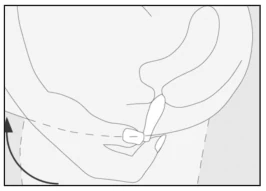
Lie on one side with your knees pulled up towards your chest.
- Allergic reactions which can include skin rash, itching, bruising, painful red areas, peeling or blistering
- Gently push the suppository pointed end first into your back passage (rectum) with your finger. Push the suppository in as far as possible as shown in the diagram.
Suppositories, as Voltarol Suppositories can sometimes worsen wound healing in your gut after surgery.
- Wheezing or shortness of breath
(bronchospasm)
- Swollen face, lips, hands or fingers
- Yellowing of your skin or the whites of your eyes
- HOW TO USE VOLTAROL SUPPOSITORIES
- Persistent sore throat or high temperature
- An unexpected change in the amount of urine produced and/or its appearance.
The doctor will tell you how to use Voltarol Suppositories. Always follow his/her instructions carefully. The dose will be on the pharmacist’s label. Check the label carefully. If you are not sure, ask your doctor or pharmacist. Keep using the suppositories for as long as you have been told, unless you have any problems. In that case, check with your doctor.
- Mild cramping and tenderness of the abdomen, s starting shortly after the start of the treatment with Voltarol Suppositories and followed by rectal bleeding or bloody diarrhoea usually within 24 hours of the onset of abdominal pain.
- Lower your legs and, if possible, stay still for a few minutes.
- Chest pain, which can be a sign of a potentially serious allergic reaction called Kounis syndrome.
- If you feel as if you need to push the suppository out, try to resist this by lying still with your buttocks pressed together. It is important to keep the suppository in the rectum to allow it to melt and the medicine to be absorbed. Pushing the suppository high into the rectum with your finger will help to reduce this feeling.
Suppositories are designed for insertion into the back passage (rectum). Never take them by mouth.
If you notice that you are bruising more easily than usual or have frequent sore throats or infections, tell your doctor.
The doctor may also prescribe another drug to protect the stomach to be taken at the same time, particularly if you have had stomach problems before, or if you are elderly, or taking certain other drugs as well.
Voltarol Suppositories may also occasionally cause itching or burning in your back passage or make any haemorrhoids (piles) worse.
- Wash your hands.
The procedure is the same for a child. Once they have emptied their bowels, get them to lie down on their front or side. Gently push the suppository into the child’s back passage until it disappears. Try and stop the child moving around for a few minutes to reduce the risk of the suppository coming out.
The side effects listed below have also been reported.
Adults
Voltarol Suppositories are normally inserted one, two or three times a day up to a maximum total daily dose of 150mg. The number of suppositories you need will depend on the strength which the doctor has given you.
Common side effects (These may affect between 1 and 10 in every 100 patients):
- Stomach pain, heartburn, nausea, vomiting, diarrhoea, indigestion, wind, loss of appetite
- Headache, dizziness, vertigo
What if you forget to take a dose?
- Skin rash or spots
Elderly
If you forget to use a suppository, do not worry. Use one as soon as you remember. If it is nearly time for your next dose though, just take the next dose and forget about the one you missed. Do not double up the next dose to make up for the one you missed. Do not insert 2 suppositories at the same time. The total dose should not be more than 150 mg each day if you are an adult. Children should not take more than the dose that is prescribed by their doctor.
- Raised levels of liver enzymes in the blood
Your doctor may advise you to take a dose that is lower than the usual adult dose if you are elderly. Your doctor may also want to check closely that the Voltarol Suppositories are not affecting your stomach, particularly during the first 4 weeks that you are using the suppositories.
- Irritation where the suppository is inserted
Uncommon side effects (these may affect between 1 and 10 in every 1000 patients):
- Fast or irregular heart beat (palpitations), chest pain, heart disorders, including heart attack or breathlessness, difficulty breathing when lying down, or swelling of the feet or legs (signs of heart failure), especially if you have been taking a higher dose (150 mg per day) for a long period of time.
Children
For the treatment of chronic juvenile arthritis in children aged 1 to 12:
Doses vary with age, but are usually between 1 and 3 mg/kg body weight every day divided into 2 or 3 doses.
What if you use too many suppositories? You should not take more than 150 mg in one day if you are an adult. Children should not take more than the dose that is prescribed by their doctor. If you accidentally use too many suppositories or use them too often, tell your doctor or go to your nearest casualty department straight away.
Rare side effects (These may affect between 1 in every 1000 to 1 in every 10,000 patients):
For the treatment of post-operative pain in children aged 6 and over:
- Stomach ulcers or bleeding (there have been very rare reported cases resulting in death, particularly in the elderly)
Doses vary with age, but are usually between 1 and 2 mg/kg body weight per day divided into 2 or 3 doses for no more than 4 days.
- Gastritis (inflammation, irritation or swelling of the stomach lining)
- POSSIBLE SIDE EFFECTS
- Vomiting blood
Your child’s doctor will work out the dose that is suitable for your child and will tell you how many Voltarol Suppositories to use and how often. Follow his/her instructions carefully. If you are not sure about the dose, check with your doctor or pharmacist.
- Diarrhoea with blood in it or bleeding from the back passage
Voltarol Suppositories are suitable for most people, but, like all medicines, they can sometimes cause side effects. Side effects may be minimised by using the lowest effective dose for the shortest duration necessary.
- Black, tarry faeces or stools
- Drowsiness, tiredness
- Skin rash and itching
- Fluid retention, symptoms of which include swollen ankles
How to insert the suppositories
Some side effects can be serious
- Liver function disorders, including hepatitis and jaundice
Empty your bowels before inserting a suppository.
Stop using the suppositories and tell your doctor straight away if you notice:
- Asthma (symptoms may include wheezing, breathlessness, coughing and a tightness across the chest).
- Wash your hands.
- Sudden and crushing chest pain (signs of myocardial infarction or heart attack)
- Take out the strip of suppositories and tear off one along the perforation.
- Breathlessness, difficulty breathing when lying down, swelling of the feet or legs (signs of heart failure)
Then take the suppository out of the plastic wrapping by pulling back the loose end.
Very rare side effects (These may affect less than 1 in every 10,000 patients):
Effects on the nervous system: 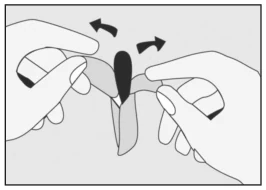
Sudden weakness or numbness in the face, arm or leg especially on one side of the body; sudden loss or disturbance of vision; sudden difficulty in speaking or ability to understand speech; sudden migraine-like headaches which happen for the first time, with or without disturbed vision. These symptoms can be an early sign of a stroke
Inflammation of the lining of the brain (meningitis), tingling or numbness in the fingers, tremor, visual disturbances such as blurred or double vision, taste changes, hearing loss or impairment, tinnitus (ringing in the ears), sleeplessness, nightmares, mood changes, depression, anxiety, irritability, mental disorders, disorientation and loss of memory, fits, headaches together with a dislike of bright lights, fever and a stiff neck.
- Stomach pain, indigestion, heartburn, wind, nausea (feeling sick) or vomiting (being sick)
Any sign of bleeding in the stomach or intestine, for example, when emptying your bowels, blood in vomit or black, tarry faeces
Ref: 1089/150421/1/B