

Patient leaflet - Diavorin 6 mg/ml solution for injection in Pre-filled pen
1. What Diavorin is and what it is used for
Diavorin contains the active substance liraglutide. It helps your body reduce your blood sugar level only when blood sugar is too high. It also slows food passage through your stomach and can help prevent heart disease.
Diavorin is used on its own if your blood sugar is not properly controlled by diet and exercise alone, and you cannot use metformin (another diabetes medicine).
Diavorin is used with other medicines for diabetes when they are not enough to control your blood sugar levels. These may include:
oral antidiabetics (such as metformin, pioglitazone, sulfonylurea, sodium-glucose
cotransporter 2 inhibitor (SGLT2i)) and/or insulin.
2. What you need to know before you use Diavorin
Do not use Diavorin
if you are allergic to liraglutide or any of the other ingredients of this medicine (listed
in section 6).
Warnings and precautions
Talk to your doctor, pharmacist or nurse before using liraglutide:
- before using Diavorin.
- if you have or have had a disease of the pancreas.
If you know that you are due to have surgery where you will be under anaesthesia (sleeping), please tell your doctor that you are taking Diavorin.
This medicine should not be used if you have type 1 diabetes (your body does not produce any insulin) or diabetic ketoacidosis (a complication of diabetes with high blood sugar and increase in effort to breathe). It is not an insulin and should therefore not be used as a substitute for insulin.
The use of Diavorin is not recommended if you are on dialysis.
The use of Diavorin is not recommended if you have severe liver disease. The use of Diavorin is not recommended if you have severe heart failure.
This medicine is not recommended if you have a severe stomach or gut problem which results in delayed stomach emptying (called gastroparesis), or in ammatory bowel disease.
If you have ever had pancreatitis (in ammation of the pancreas which may cause severe pain in the stomach and back which does not go away; see section 4).
If you have thyroid disease including thyroid nodules and enlargement of the thyroid gland, consult your doctor.
When initiating treatment with Diavorin, you may in some cases experience loss of uids/dehydration, e.g. in case of vomiting, nausea and diarrhoea. It is important to avoid dehydration by drinking plenty of uids. Contact your doctor if you have any questions or concerns.
Children and adolescents
Diavorin can be used in adolescents and children aged 10 years and above. No data are available in children below 10 years of age.
Other medicines and Diavorin
Please tell your doctor, pharmacist or nurse if you are taking, have recently taken or might take any other medicines.
In particular, tell your doctor, pharmacist or nurse if you are using medicines containing any of the following active substances:
Sulfonylurea (such as glimepiride or glibenclamide) or insulin. You may get
hypoglycaemia (low blood sugar) when using Diavorin together with a sulfonylurea or insulin, as sulfonylureas and insulin increase the risk of hypoglycaemia. When you rst start using these medicines together, your doctor may tell you to lower the dose of the sulfonylurea or insulin. Please see section 4 for the warning signs of low blood sugar. If you are also taking a sulfonylurea (such as glimepiride or glibenclamide) or insulin, your doctor may tell you to test your blood sugar levels. This will help your doctor to decide if the dose of the sulfonylurea or insulin needs
to be changed.
If you are using insulin, your doctor will tell you how to reduce the dose of insulin
and will recommend you to monitor your blood sugar more frequently, in order to avoid hyperglycaemia (high blood sugar) and diabetic ketoacidosis (a complication of diabetes that occurs when the body is unable to break down glucose because there is not enough insulin).
Warfarin or other oral anti-coagulation medicines. More frequent blood testing to
determine the ability of your blood to clot may be required.
Pregnancy and breast-feeding
Tell your doctor if you are, you think you might be, or are planning to become pregnant. Diavorin should not be used during pregnancy because it is not known if it may harm your unborn child.
It is not known if liraglutide passes into breast milk, therefore do not use this medicine if you are breast- feeding.
Driving and using machines
Low blood sugar (hypoglycaemia) may reduce your ability to concentrate. Avoid driving or using machines if you experience signs of hypoglycaemia. Please see section 4 for the warning signs of low blood sugar. Please consult your doctor for further information on this topic.
Important information about some of the ingredients of Diavorin
This medicine contains less than 1 mmol sodium (23 mg) per dose. This means that it is essentially 'sodium free'.
This medicine contains 42 mg propylene glycol in each 3 ml pre- lled multidose pen which is equivalent to 14 mg/ml.
If your baby is less than 4 weeks old, talk to your doctor or pharmacist before giving them this medicine, in particular if the baby is given other medicines that contain propylene glycol or alcohol.
3. How to use Diavorin
Always use this medicine exactly as your doctor has told you. Check with your doctor, pharmacist or nurse if you are not sure.
- The starting dose is 0.6 mg once a day, for at least one week.
- Your doctor will tell you when to increase it to 1.2 mg once a day.
Your doctor may tell you to further increase the dose to 1.8 mg once a day, if your
blood glucose is not adequately controlled with a dose of 1.2 mg. Do not change your dose unless your doctor has told you to.
Diavorin is given as an injection under the skin (subcutaneous).
Do not inject it into a vein or muscle. The best places to give yourself the injection are the front of your thighs, the front of your waist (abdomen), or your upper arm. Change the place where you inject each day to reduce the risk of developing lumps.
You can give yourself the injection at any time of the day, regardless of meals. When you have found the most convenient time of the day it is preferred that you inject Diavorin around the same time of the day.
Before you use the pen for the rst time, your doctor or nurse will show you how to use it. Detailed instructions for use are provided on the other side of this lea et.
TM Injection needles are not included with the pen. For example, BD Ultra-Fine disposable
®
needles or NovoFine disposable needles as thin as 32 G and length up to 8 mm can be used.
If you use more Diavorin than you should
If you use more Diavorin than you should, talk to your doctor straight away. You may need medical treatment. You may experience nausea, vomiting, diarrhoea or low blood sugar (hypoglycaemia). Please refer to section 4 for warning signs of low blood sugar.
If you forget to use Diavorin
If you forget a dose, use Diavorin as soon as you remember.
However, if it is more than 12 hours since you should have used Diavorin, skip the missed dose. Then take your next dose as usual the following day.
Do not take an extra dose or increase the dose on the following day to make up for the missed dose.
If you stop using Diavorin
Do not stop using Diavorin without talking to your doctor. If you stop using it, your blood sugar levels may increase.
If you have any further questions on the use of this medicine, ask your doctor, pharmacist or nurse.
4. Possible side effects
Like all medicines, this medicine can cause side effects, although not everybody gets them.
Serious side effects
Common: may affect up to 1 in 10 people
Hypoglycaemia (low blood sugar). The warning signs of low blood sugar may come
on suddenly and can include: cold sweat, cool pale skin, headache, fast heartbeat, feeling sick, feeling very hungry, changes in vision, feeling sleepy, feeling weak, nervous, anxious, confused, dif culty concentrating, shaking (tremor). Your doctor will tell you how to treat low blood sugar and what to do if you notice these warning signs. This is more likely to happen if you also take a sulfonylurea or insulin. Your doctor may reduce your dose of these medicines before you start using Diavorin.
Rare: may affect up to 1 in 1,000 people
A severe form of allergic reaction (anaphylactic reaction) with additional symptoms
Note : Booklet to be sealed with
2 numbers of transparent perforated stickers.
Size:13x30mm plain perforated tape
Material : UPM 6L/RP37/01 PP CLEAR TC50/RP37/WG65
such as breathing problems, swelling of throat and face, fast heartbeat, etc. If you experience these symptoms you should seek immediate medical help and inform your doctor as soon as possible.
Bowel obstruction. A severe form of constipation with additional symptoms such as
stomach ache, bloating, vomiting etc.
Very rare: may affect up to 1 in 10,000 people
In amed pancreas (acute pancreatitis), which could cause severe pain in the stomach
and back which does not go away.This is a serious, potentially life-threatening condition. You should see a doctor immediately if you experience such symptoms.
Stop taking Diavorin and contact a doctor immediately if you notice any of the following serious side effects:
Severe and persistent pain in the abdomen (stomach area) which might reach through to your back, with or without nausea and vomiting. This could be a sign of acute pancreatitis, which is serious and potentially life-threatening.
Other side effects
Very common: may affect more than 1 in 10 people
- Nausea (feeling sick). This usually goes away over time.
- Diarrhoea. This usually goes away over time.
Common
- Vomiting.
When initiating treatment with Diavorin, you may in some cases experience loss of uids/dehydration, e.g. in case of vomiting, nausea and diarrhoea. It is important to avoid dehydration by drinking plenty of uids.
- Headache
- Indigestion
- In amed stomach (gastritis). The signs include stomach ache, nausea and vomiting.
- Gastro-oesophageal re ux disease (GORD). The signs include heartburn.
- Painful or swollen tummy (abdomen)
- Abdominal discomfort
- Constipation
- Wind ( atulence)
- Decreased appetite
- Bronchitis
- Common cold
- Dizziness
- Increased pulse
- Tiredness
- Toothache
- Injection site reactions (such as bruising, pain, irritation, itching and rash)
- Increase of pancreatic enzymes (such as lipase and amylase).
Uncommon: may affect up to 1 in 100 people
- Allergic reactions like pruritus (itching) and urticaria (a type of skin rash)
- Dehydration, sometimes with a decrease in kidney function
- Malaise (feeling unwell)
- Gallstones
- In amed gallbladder
- Change in how things taste
- A delay in the emptying of the stomach.
Not known: frequency cannot be estimated from the available data
Lumps under the skin may be caused by build-up of a protein called amyloid
(cutaneous amyloidosis; how often this occurs is not known).
Reporting of side effects
If you get any side effects, talk to your doctor, pharmacist or nurse. This includes any possible side effects not listed in this lea et. You can also report side effects directly via the Yellow Card Scheme at: www.mhra.gov.uk/yellowcard or search for MHRA Yellow Card in the Google Play or Apple App Store. By reporting side effects you can help provide more information on the safety of this medicine.
5. How to store Diavorin
Keep this medicine out of the sight and reach of children.
Do not use this medicine after the expiry date which is stated on the pen label and carton after 'EXP'. The expiry date refers to the last day of that month.
Before opening:
Store in a refrigerator (2˚C to 8˚C). Do not freeze. Keep away from the freezer compartment.
During use:
You can keep the pen for 1 month when stored at a temperature below 30˚C or in a refrigerator (2˚C to 8˚C), away from the freezer compartment. Do not freeze. When you are not using the pen, keep the pen cap on in order to protect from light.
Do not use this medicine if the solution is not clear and colourless or almost colourless.
Do not throw away any medicines via wastewater or household waste. Ask your pharmacist how to throw away medicines you no longer use. These measures will help protect the environment.
6. Contents of the pack and other information
What Diavorin contains
The active substance is liraglutide. 1 ml solution for injection contains 6 mg
liraglutide. One pre- lled pen contains 18 mg liraglutide.
12307
- The other ingredients are sodium citrate dihydrate, propylene glycol, phenol and water for injection. In addition, hydrochloric acid and/or sodium hydroxide solution may have been added for pH adjustment.
What Diavorin looks like and contents of the pack.
Diavorin is supplied as a clear, and colourless or almost colourless, solution for injection in a pre- lled pen. Each pen contains 3 ml of solution, delivering 30 doses of 0.6 mg, 15 doses of 1.2 mg or 10 doses of 1.8 mg.
Diavorin is available in packs containing 1, 2, 3, 5 or 10 pens. Not all pack sizes may be marketed. Needles are not included.
Marketing Authorisation Holder and Manufacturer
Marketing Authorisation Holder:
Biocon Pharma UK Limited
16, Great Queen Street
Covent Garden
London, WC2B 5AH
United Kingdom
Manufacturer:
Biocon Pharma UK Limited
Hamilton House, Mabledon Place,
London, WC1H 9BB, United Kingdom or
Pharmadox Healthcare Limited
KW20A Kordin Industrial Park, Paola, PLA 3000,
Malta
or
KM Biosciences Ltd,
Hamilton House, Mabledon Place, London, WC1H 9BB,
United Kingdom
This leaflet was last revised in 08/2026
Other sources of information
For information on large print, Braille or audio CD call emc accessibility on 0800 198 5000
®
Diavorin 6 mg/ml solution for injection in pre-filled pen
93315 / 101725 / 115479 / 124225 Biocon Biologics Limited
Biocon Pharma UK Limited
UK
NA
BPCM0394/01
12307
60 gsm Maplitho Paper
Magenta
FORM-000308741 Ver: 1.0 BF01801/01 BPCM0394/01
Booklet
Folding Size: 43.33mm-9 folds, 30mm-1 fold, 20mm-1 fold x 150 (H) mm
NA
BLACK P 284C
Frutiger 57 Cn
11 Points
NA


 Specification:
Please read these instructions carefully before using your pen.
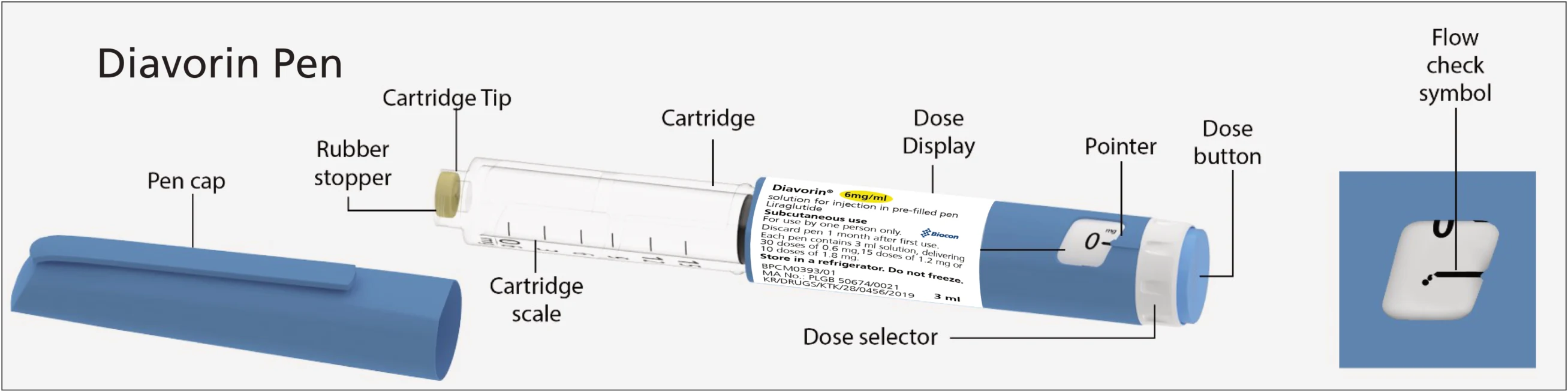
Your pen comes with 18 mg of liraglutide. You can select doses of 0.6 mg, 1.2 mg and 1.8 mg.
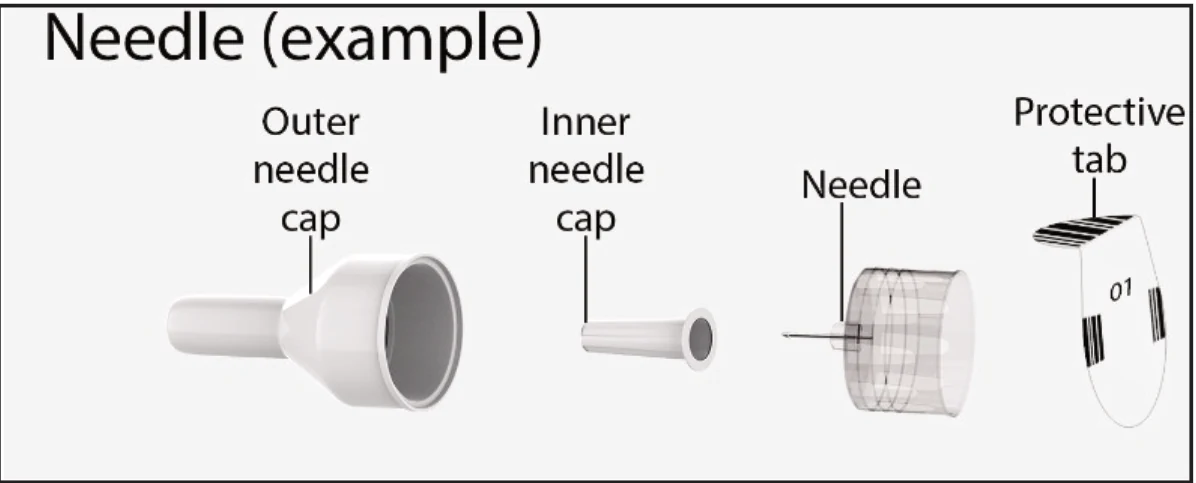
The pen is designed to be used with disposable needles. Needles are not included in the pack.
TM ®
BD Ultra ne disposable needles or NovoFine disposable needles are recommended for use with this device.
Prepare your pen
With each new pen, check the flow
Split your dose into two injections:
Check the name and coloured label of your pen to
Check the flow before your first injection with each new pen. If your pen is already in use, go to 'Select your dose', step H.
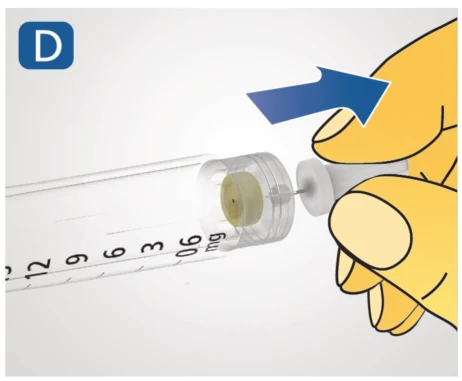
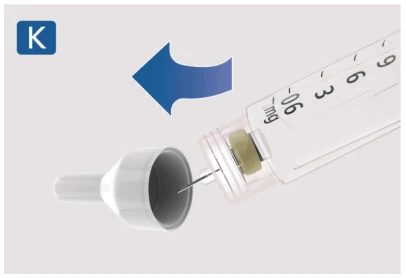
When the needle is covered, carefully push the outer needle
Turn the dose selector in either direction until 0.6 mg or
make sure that it contains liraglutide. Using the wrong
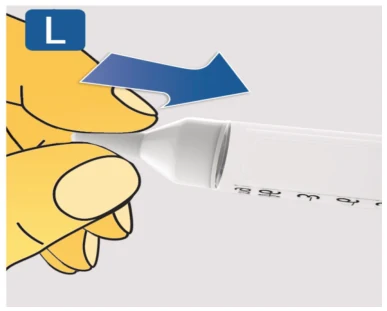
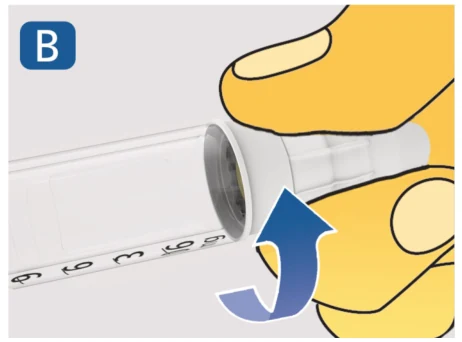
cap completely on. Then unscrew the needle. Dispose of it
1.2 mg lines up with the pointer. Inject the dose. Then prepare a new pen for injection and inject the remaining number of mg to complete your dose.
medicine could cause severe harm.
carefully and put the pen cap back on.
When the pen is empty, carefully dispose of it without a
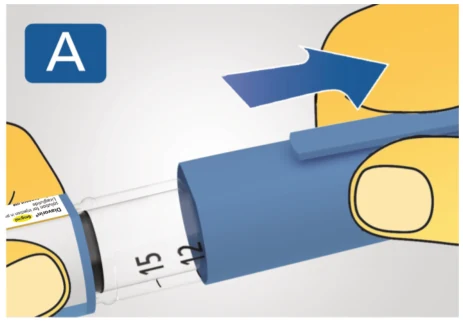
Pull off the pen cap.
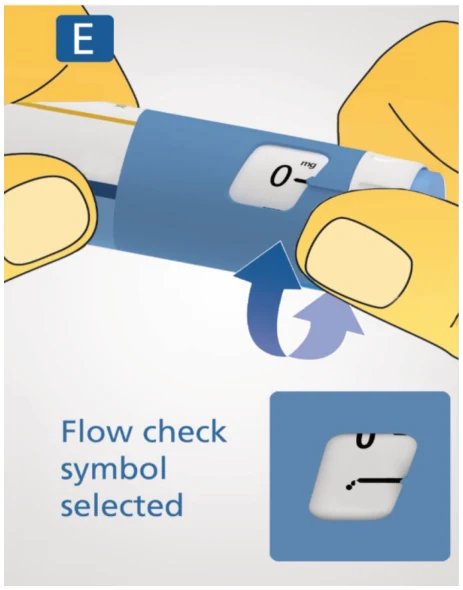
Turn the dose selector until the ow check symbol lines up with the pointer.
needle attached. Please dispose of the pen and needle in
You may only split your dose between your current pen and a new pen if trained or advised by your healthcare
accordance with local requirements.
professional. Use a calculator to plan the doses. If you split the dose wrong, you may inject too much or too little
Pull off the paper tab from a new disposable needle.
liraglutide.
Screw the needle straight and tightly onto your pen.
Always remove the needle after each injection, and store your pen without a needle attached. This reduces the risk of contamination, infection, leakage of liraglutide, blocked needles and inaccurate dosing.
Inject the full dose with a new pen:
If the dose selector stops before 0.6 mg lines up with the
Caregivers must be very careful when handling used needles - to prevent needle injury and cross-infection.
pointer, prepare a new pen and inject the full dose with the new pen.
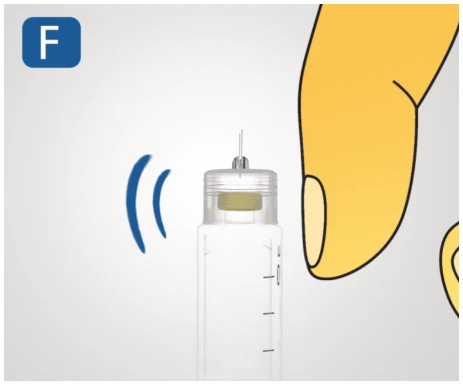
Hold the pen with the needle pointing up. Tap the cartridge gently with your nger a few times. This will make any air bubbles collect at the top of the cartridge.
Do not try to select other doses than 0.6 mg, 1.2 mg or 1.8 mg. The numbers in the display must line up precisely with the pointer to ensure that you get the correct dose. The dose selector clicks when you turn it. Do not use these clicks to select your dose. Do not use the cartridge scale to measure how much liraglutide to inject – it is not accurate enough.
Pull off the outer needle cap and keep it for later.
Inject your dose
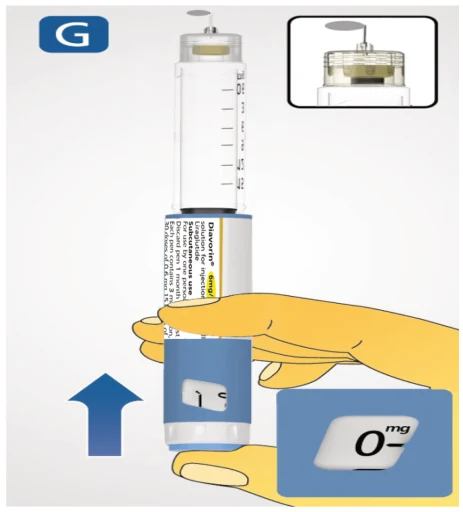
Keep the needle pointing up and press the dose button until 0 mg lines up with the pointer.
Insert the needle into your skin using the injection technique shown by your doctor or nurse. Then follow the instructions below:
A drop of liraglutide should appear at the needle tip. If no drop appears, repeat steps E to G up to four times. If there is still no drop of liraglutide, change the needle and repeat steps E to G once more.
FORM-000308741 Ver: 1.0 BF01799/01 BPCM0395/01
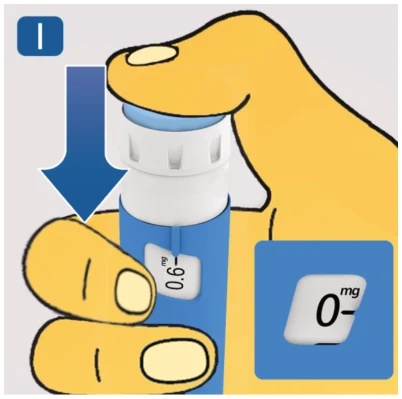
Press the dose button to inject until 0 mg lines up with the pointer. Be careful not to touch the display with your other ngers or press the dose selector sideways when you inject. This is because it may block the injection.
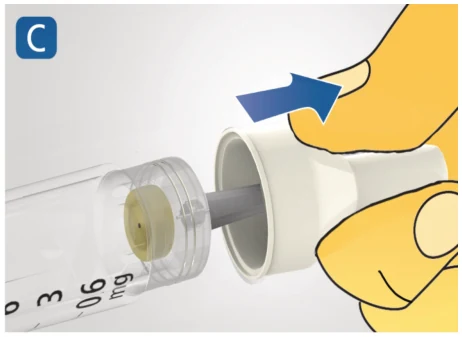
Pull off the inner needle cap and dispose of it.
Do not use the pen if a drop of liraglutide still does not appear. This indicates the pen is defective and you must use a new one.
Keep the dose button pressed down and leave the needle under the skin for at least 6 seconds. This is to make sure that you get your full dose.
If you have dropped your pen against a hard surface or suspect that something is wrong with it, always put on a new disposable needle and check the ow before you inject.
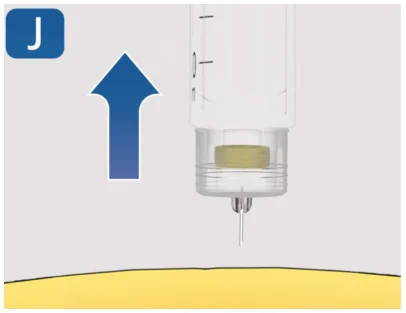
Pull out the needle.
After that, you may see a drop liraglutide at the needle tip.
Always use a new needle for each injection. This reduces the risk of contamination, infection, leakage of liraglutide, blocked needles and inaccurate dosing.
This is normal and does not affect your dose.
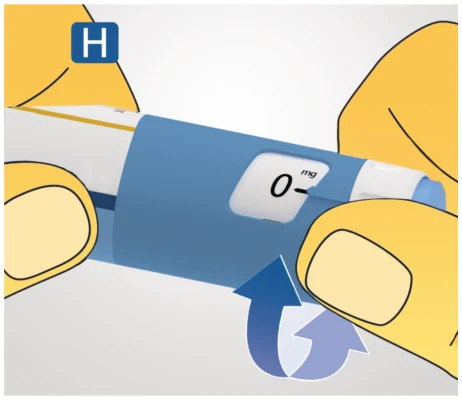
Select your dose
Always check that the pointer lines up with 0 mg.
Be careful not to bend or damage the needle.
Turn the dose selector until your needed dose lines up with the pointer (0.6 mg, 1.2 mg or 1.8 mg).
Never try to put the inner needle cap back on the needle. You may stick yourself with the needle.
Caring for your pen
If you selected a wrong dose by mistake, simply change it by turning the dose selector backwards or forwards until the right dose lines up with the pointer.
- Do not try to repair your pen or pull it apart.
- Keep your pen away from dust, dirt and all kinds of liquids.
Clean the pen with a cloth moistened with a mild detergent.
Guide the needle tip into the outer needle cap without
Do not try to wash, soak or lubricate it – this can harm the pen.
touching the needle or the outer needle cap.
Be careful not to press the dose button when turning the dose selector backwards, as liraglutide may come out.
Important information
- Do not share your pen or needles with anyone else.
Keep your pen out of the reach of others, especially children.
If the dose selector stops before your needed dose lines up with the pointer, there is not enough liraglutide left for a full dose. Then you can either:
Change the place where you inject each day to reduce the risk of developing lumps.
®
Diavorin 6 mg/mL Solution for Injection in Pre-filled Pen
IFU
Biocon Biologics Limited
Note : Booklet to be sealed with
Folding Size: 43.33mm-9 folds, 30mm-1 fold, 20mm-1 fold x 150 (H) mm
Size: 750 (W) x 440 (H) mm
Biocon Pharma UK Limited
NA
2 numbers of transparent perforated stickers.
Folding Size: 43.33mm-9 folds, 30mm-1 fold, 20mm-1 fold x 150 (H) mm Paper: 60 gsm Maplitho Paper
UK
P 284C
Frutiger 57 Cn
NA
Size:13x30mm plain perforated tape
11 Points
BPCM0395/01
12305
NA
12305
60 gsm Maplitho Paper
93315 / 101725 / 115479 / 124225
Magenta