

Patient leaflet - Desmopressin nasal spray 10 micrograms/dose
1. What Desmopressin is and what it is used for
The ingredient that makes the spray work (the active substance) is called desmopressin. Desmopressin is an antidiuretic, which reduces the amount of urine produced by the kidneys.
Desmopressin nasal spray is used to:
- treat and diagnose a chronic disease called diabetes insipidus which causes extreme thirst and continuous production of large volumes of dilute urine. Important: Not to be confused with diabetes mellitus (sugar diabetes)
- treat frequent urination during the night in adults (nocturia) associated with multiple sclerosis
- investigate kidney function.
2. Before you use Desmopressin nasal spray
Do not use Desmopressin nasal spray if you:
- are allergic (hypersensitive) to desmopressin or any of the other ingredients in Desmopressin nasal spray (see section 6)
drink unusually large amounts of fluid (polydipsia)
- suffer from heart problems, high blood pressure or other diseases needing treatment with diuretics (water tablets)
- are elderly (over the age of 65 years)
- suffer with alcohol abuse
- have moderate or severe kidney problems
- have been told you have hyponatraemia (very low levels of sodium in your blood)
- have syndrome of inappropriate ADH secretion (SIADH).
Check with your doctor or pharmacist before using Desmopressin nasal spray if you have:
- kidney disease or bladder problems
- cystic fibrosis
- a medical condition causing fluid and/or electrolyte imbalance in the body (with symptoms such as being sick, diarrhoea, fever)
- increased pressure in the skull (intracranial pressure)
- are elderly or have low sodium levels in your blood
- are on a low potassium diet.
Taking other medicines
Please tell your doctor or pharmacist if you are taking or have recently taken any other medicines, including medicines obtained without a prescription. Especially:
- tricyclic antidepressants (used to treat depression e.g. amitriptyline or imipramine)
- carbamazepine (used to treat epilepsy)
- chlorpromazine (used to treat psychosis or schizophrenia)
- indomethacin (painkillers called non-steroidal anti-inflammatory drugs (NSAIDs)).
Fluid intake
- Before you start treatment with this medicine, your doctor should give you advice about fluid intake.
- When using this medicine for nocturia or to investigate kidney function, keep your fluid intake to a minimum from 1 hour before a dose until 8 hours after a dose.
- Too much fluid intake may lead to a build up of water, which dilutes the salt in the body. This can occur with or without warnings or symptoms, which include unusually bad or prolonged headache, feeling or being sick, unexplained weight gain and in serious cases, fits or swelling of the brain. If you have any of these symptoms, stop the treatment and contact your doctor at once.
Pregnancy and breastfeeding
Desmopressin nasal spray can be used during breastfeeding but should only be used in pregnancy as directed by a doctor.
Ask your doctor or pharmacist for advice before taking any medicine.
Important information about one of the ingredients of Desmopressin nasal spray
This medicine contains 0.042mg potassium per dose. To be taken into consideration by patients with reduced kidney function or patients on a controlled potassium diet.
Tests
Your blood pressure and weight may be monitored whilst you are using this medicine.
3. How to use Desmopressin nasal spray
Always use Desmopressin nasal spray exactly as your doctor has told you. If you are not sure, check with your doctor or pharmacist.
Usual doses: Where 2 sprays are required you should give 1 spray into each nostril unless directed otherwise.
- Nocturia
Adults under 65 years old- 1 or 2 sprays at bedtime. Do not repeat the dose in a 24 hour period. Do not drink for 8 hours after using the spray except to satisfy thirst.
- Diabetes insipidus
Treatment: Adults and children – 1 or 2 sprays once or twice a day.
Diagnosis: Adults and children – 2 sprays.
- To investigate kidney function
Adults – 2 sprays into each nostril
Children aged 1 – 15 year old – 1 spray into each nostril
Children under 1 year old – 1 spray
When using this medicine for diabetes insipidus or kidney function investigations keep your fluid intake to a minimum (not more than 0.5 litres) from 1 hour before a dose until 8 hours after a dose.
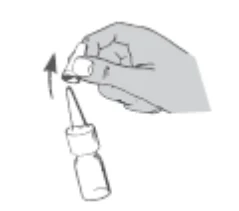
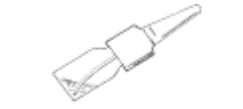
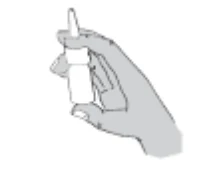
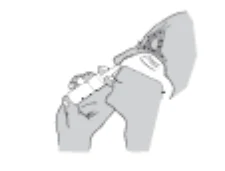
Instructions for use:
| |
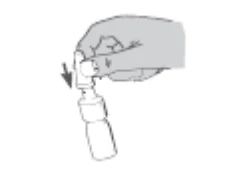
Before you use the spray for the first time, the pump must be filled. To do this, press the pump down 5 times or until you get a fine mist. The spray is then ready for use. If the nasal spray is not used daily, the pump has to be filled again before use. | |
| |
| |
|
If you use more Desmopressin nasal spray than you should
An overdose may lengthen the effect of desmopressin and increase the risk of water build up in the body and low blood salt, symptoms include fits.If you use more Desmopressin nasal spray than prescribed, contact your doctor, pharmacist or the nearest hospital at once.
If you forget to use Desmopressin nasal spray
Do not use a double dose to make up for a forgotten dose.
If you stop using Desmopressin nasal spray
You should only change or stop your treatment if advised by your doctor.
4. Possible side effects
Like all medicines, Desmopressin nasal spray can cause side effects, although not everybody gets them.
Stop using the spray and tell your doctor as soon as possible if you have any of the following symptoms:
- itching, skin rashes, swelling of the face, lips or throat, difficulty in breathing - they may be a sign of an allergic reaction.
- symptoms of a build up of water in the body, reducing the amount of salt in the body: unusually unexplained weight gain, headache, feeling and /or being sick, and in serious cases, fits or brain swelling.
Other effects which have been reported include:
- unusual changes in moods (aggression has been reported in children)
- tummy pain, blocked or runny nose, nosebleeds.
Reporting of side effects If you get any side effects, talk to your doctor, pharmacist or nurse. This includes any possible side effects not listed in this leaflet. You can also report side effects directly via the Yellow Card Scheme at: www.mhra.gov.uk/yellowcard
By reporting side effects you can help provide more information on the safety of this medicine.
5. How to store Desmopressin nasal spray
Keep out of the sight and reach of children.
Store Desmopressin nasal spray below 25°C.
Do not use Desmopressin nasal spray after the expiry date, stated on the pack.
Always return any leftover medicine to your pharmacist.
6. Further information
What Desmopressin nasal spray contains
- the active substance (the ingredient that makes the spray work) is desmopressin acetate. Each spray contains 10micrograms (0.1mg in 1ml) of the active substance.
- the other ingredients are potassium sorbate, sodium chloride, hydrogen chloride and purified water.
What Desmopressin nasal spray looks like and contents of the pack
Desmopressin nasal spray is a solution in an amber, glass bottle with a nasal applicator.
Pack size 6ml.
Marketing Authorisation Holder
Accord Healthcare Limited
Sage House, 319 Pinner Road,North Harrow, Middlesex, HA1 4HF, United Kingdom
Manufacturer
Balkanpharma-Dupnitsa AD, 3, Samokovsko shosse Str.,
2600 Dupnitsa, Bulgaria
This leaflet was last revised in February 2019
Accord Healthcare Ltd, North Harrow, HA1 4HF, UK