

Patient leaflet - Deltius 10 000 I.U./ml oral drops solution
1. What DELTIUS is and what it is used for
DELTIUS oral drops, solution contains colecalciferol (vitamin D3). Vitamin D3, can be found in some foods and is also produced by the body when skin is exposed to sunlight. Vitamin D3 helps the kidneys and intestine absorb calcium and it helps build bones. Vitamin D3 deficiency is the predominant cause of rickets (defective mineralization of bones in children) and osteomalacia (inadequate mineralization of bones in adults).
DELTIUS oral drops, solution is used to prevent and treat vitamin D3 deficiency in adults, adolescents and children with an identified risk of vitamin D deficiency.
DELTIUS oral drops, solution can also be used as an adjunct to specific bone loss medication.
2. What you need to know before you use DELTIUS
Do not use DELTIUS:
- if you are allergic to vitamin D3 or any of the other ingredients of this medicine (listed in section 6);
- if you have high levels of calcium in your blood (hypercalcaemia) or urine (hypercalciuria);
- if you have kidney stones (renal calculi) or serious kidney problems;
- if you have high levels of vitamin D3 in your blood (hypervitaminosis D).
Warnings and precautions
Talk to your doctor or pharmacist or nurse before using DELTIUS if you:
- are undergoing treatment with certain medicines used to treat heart disorders (eg, cardiac glycosides, such as digoxin);
- have sarcoidosis (an immune system disorder which may cause increased levels of vitamin D3 in the body);
- are taking medicines containing vitamin D3 or eating foods or milk enriched with vitamin D3;
- are likely to be exposed to a lot of sunshine whilst using DELTIUS;
- take additional supplements containing calcium. Your doctor will monitor your blood levels of calcium to make sure they are not too high whilst you are using DELTIUS
- have kidney damage or disease. Your doctor may want to measure the levels of calcium in your blood or urine.
- take a daily dose of vitamin D3 exceeding 1,000 I.U. over a long period of time, your doctor should monitor the level of calcium in your blood by lab test.
Other medicines and DELTIUS
Tell your doctor or pharmacist if you are using or have recently used or might use any other medicines. This is especially important if you are taking:
- medicines that act on the heart or kidneys, such as cardiac glycosides (eg, digoxin) or diuretics (eg, bendroflumethazide). When used at the same time as vitamin D3, these medicines may cause a large increase in the level of calcium in the blood and urine;
- medicines containing vitamin D3 or eating food rich in vitamin D3, such as some types of vitamin D3-enriched milk;
- actinomycin (a medicine used to treat some forms of cancer) and imidazole antifungals (eg, clotrimazole and ketoconazole, medicines used to treat fungal disease). These medicines may interfere with the way your body processes vitamin D3;
the following medicines because they can interfere with the effect or the absorption of vitamin D3;
- antiepileptic medicines (anticonvulsants), barbiturates,
- glucocorticoids (steroid hormones such as hydrocortisone or prednisolone). These can decrease the effect of vitamin D3,
- medicines that lower the level of cholesterol in the blood (such as cholestyramine, or colestipol),
- certain medicines for weight loss that reduce the amount of fat your body absorbs (eg, orlistat),
- certain laxatives (such as liquid paraffin).
DELTIUS with food, drink and alcohol
You should take this medicine preferably together with a large meal to help your body absorb the vitamin D3. You can also mix the drops with cold or lukewarm food, to help you take this medicine. For detailed information see section 3 “How to use DELTIUS”.
Pregnancy, breast-feeding and fertility
If you are pregnant or breast-feeding, think you may be pregnant or are planning to have a baby, ask your doctor or pharmacist for advice before taking this medicine. DELTIUS should be used during pregnancy and breast-feeding only if recommended by your doctor.
Overdoses of vitamin D must be avoided during pregnancy, as prolonged hypercalcaemia may lead to retardation of physical and mental development, supravalvular aortic stenosis and retinopathy in the child.
Driving and using machines
There is limited information on the possible effects of this medicine on your ability to drive. However, it is not expected that it would affect your ability to drive or to operate machinery.
3. How to use DELTIUS
Always take this medicine exactly as your doctor or pharmacist has told you. Check with your doctor or pharmacist if you are not sure.
Shake before use.
You should take DELTIUS preferably together with a large meal.
This medicine has a taste of olive oil. It can be taken on its own or you can mix the prescribed number of drops with a spoonful or a small amount of cold or lukewarm food immediately before use. Make sure the entire dose is taken.
Use in adults
Recommended dose for prevention of vitamin D deficiency and as an adjunct to specific bone loss medication (osteoporosis) is 3-4 drops (600 IU - 800 IU) per day.
For treatment of vitamin D deficiency the dosage is usually 4 drops (800 IU) per day. Higher doses should be adjusted dependent upon desirable serum levels of 25-hydroxycolecalciferol (25(OH)D), the severity of the disease and the patient´s response to treatment.
The daily dose should not exceed 4,000 IU (20 drops per day).
Use in children and adolescents
For prevention of vitamin D deficiency in children (0 years to 11 years old) with an identified risk, the recommended dose is 2 drops (400 IU) per day. For prevention in adolescents (12 years to 18 years old) with an identified risk, the recommended dose is 3-4 drops (600-800 IU) per day.
For treatment of vitamin D deficiency in children (0 years to 11 years old) and adolescents (12 years to 18 years old), the dose should be adjusted dependent upon desirable serum levels of 25-hydroxycolecalciferol (25(OH)D), the severity of the disease and the patient´s response to treatment. The daily dose should not exceed 1000 IU per day for infants <1 years, 2000 IU per day for children 1 year to 10 years old, and 4000 IU per day for adolescents.
In children, DELTIUS can be mixed with a small amount of children’s foods, yogurt, milk, cheese or other dairy products. Do not mix this medicine into a bottle of milk or container of soft food, in case your child does not consume the whole portion, and does not receive the full dose. You should make sure that the entire dose is taken. For children who are no longer breast-feeding you should give the prescribed dose with a substantial meal.
Do not store any product or food mixture that contains DELTIUS for use at a later time or a next meal.
Use in pregnancy and breast-feeding
The recommended dose is 400 IU/day (2 drops). Higher doses may be required . after confirmation of vitamin D deficiency, but you should not take more than recommended by your doctor.
Instructions for use of bottle with dropper applicator
The pack contains 1 bottle and a dropper applicator cap. The bottle is sealed with a plastic child-proof cap. The dropper is protected by a plastic cylinder. Shake the bottle before use and follow the instructions below:
- a. To open the bottle, press down and twist the plastic cap at the same time (see Figure 1). Do not throw away the plastic cap, you will use it to close the bottle;
- b. Before using the dropper applicator cap, unscrew the plastic tube protecting the dropper applicator cap (see Figure 2). Do not throw away the plastic tube, you will use it to close the dropper applicator cap;
- c. Insert the glass stem of dropper applicator cap into the bottle to take up the contents. Collect the prescribed number of drops onto a spoon;
- d. Close the bottle with its original plastic cap and return the dropper applicator cap into the plastic tube. Make sure that both are well closed (see Figure 3);
- e. Place the medicine bottle and dropper applicator cap back into the original package.
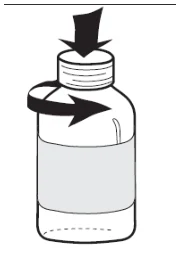 Figure 1 | 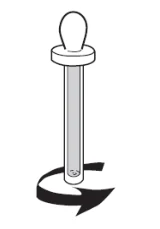 Figure 2 | 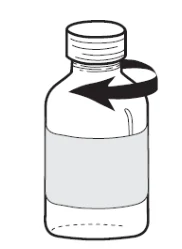 Figure 3 |
|---|
Instructions for use of dropper container
The box contains a dropper container. The dropper container is closed by a child-proof cap. The instructions for opening and use are reported below:
- a. To open the dropper container, press down and twist the plastic cap at the same time;
- b. Put the dropper container upside-down in a vertical position and collect the prescribed number of drops onto a spoon;
- c. After the administration of drops, bring the dropper container upwards;
- d. To close the dropper container, re-screw the plastic cap;
- e. Place the dropper container into the original package carton box.
If you take more DELTIUS than you should
If you or your child take more medicine than prescribed, stop using this medicine and contact your doctor. If it is not possible to talk to a doctor go to the nearest hospital emergency department and take the medicine package with you.
The most common symptoms of overdose are: nausea, vomiting, excessive thirst, the production of large amounts of urine over 24 hours, constipation and dehydration, high levels of calcium in the blood and in urine (hypercalcaemia and hypercalciuria) shown by lab test.
If you forget to take DELTIUS
If you forget to take a dose of DELTIUS, take the forgotten dose as soon as possible. Then take the next dose at the correct time. However, if it is almost time to take the next dose, do not take the dose you have missed; just take the next dose as normal.
Do not take a double dose to make up for a forgotten dose.
If you have any further questions on the use of this medicine, ask your doctor or pharmacist.
4. Possible side effects
Like all medicines, this medicine can cause side effects, although not everybody gets them.
Possible side effects reported with the use of DELTIUS may include:
Uncommon (affects less than 1 in 100 people)
- Too much calcium in your blood (hypercalcaemia)
- Too much calcium in your urine (hypercalciuria)
Rare (affects less than 1 in 1000 people)
- Skin rash
- Itching
- Hives
Reporting of side effects
If you get any side effects, talk to your doctor or pharmacist. This includes any possible side effects not listed in this leaflet. You can also report side effects directly via the Yellow Card Scheme website: www.mhra.gov.uk/yellowcard or search for MHRA Yellow Card in the Google Play or Apple App Store.
By reporting side effects you can help provide more information on the safety of this medicine.
5. How to store DELTIUS
Keep this medicine out of the sight and reach of children.
Do not use this medicine after the expiry date which is stated on the carton and container after "Exp". The expiry date refers to the last day of that month.
Do not store above 30° C.
Keep the container in the outer carton in order to protect from light.
Do not freeze or refrigerate.
After the first opening the container: the product may be stored for a maximum of 6 months.
Do not use this medicine if you notice the solution is cloudy.
Do not throw away any medicines via wastewater or household waste. Ask your pharmacist how to throw away medicines you no longer use. These measures will help to protect the environment.
6. Contents of the pack and other information
What DELTIUS contains
The active substance is colecalciferol (vitamin D3).
1 ml oral drops, solution (50 drops) contains 10 000 I.U. colecalciferol (vitamin D3), equivalent to 0.25 mg.
1 drop contains 200 I.U. colecalciferol (vitamin D3).
The other ingredient is refined olive oil.
What DELTIUS looks like and contents of pack
DELTIUS 10 000 I.U./ml oral drops, solution is a clear and colourless to greenish-yellow oily solution without visible solid particles and/or precipitate. It may be supplied in:
Bottle with dropper applicator
20 ml amber glass bottle sealed with a plastic child-proof cap.
Each pack contains 1 amber glass bottle containing 10 ml solution (corresponding to 500 drops), and 1 dropper applicator cap (CE mark 0068).
Dropper container
20 ml amber glass dropper container sealed with a plastic child-proof cap.
Each pack contains 1 amber glass dropper container with 10 ml solution (corresponding to 500 drops).
Marketing authorisation holder
Galen Limited
Seagoe Industrial Estate
Craigavon
Northern Ireland
BT63 5UA
UK
Manufacturer
Abiogen Pharma S.p.A.
Via Meucci, 36 – Pisa (Italy)
info@abiogen.it
This medicinal product is authorised in the Member States of the EEA under the following names:
United Kingdom: DELTIUS 10 000 I.U. /ml oral drops, solution
France: Deltius 10 000 UI/ml, solution buvable en gouttes
Spain: Deltius 10.000 UI/ml gotas orales en solución
Portugal: Deltius 10 000 UI/ml, gotas orais, solução
Greece: DELTIUS 10.000 I.U./ml πόσιμες σταγόνες, διάλυμα
Cyprus: DELTIUS 10.000 I.U./ml πόσιμες σταγόνες, διάλυμα