

Summary of Product Characteristics (SmPC) - Degarelix 120 mg powder and solvent for solution for injection
1 NAME OF THE MEDICINAL PRODUCT
Degarelix 120 mg Powder and Solvent for Solution for Injection
2 QUALITATIVE AND QUANTITATIVE COMPOSITION
Each vial contains degarelix acetate equivalent to 120 mg degarelix. After reconstitution, each ml of the solution contains 40 mg of degarelix.
For the full list of excipients, see section 6.1.
3 PHARMACEUTICAL FORM
Powder and solvent for solution for injection
Powder: white or off-white mass or powder.
Solvent: colourless and clear solution.
4 CLINICAL PARTICULARS
4.1 Therapeutic indications
Degarelix is a gonadotrophin releasing hormone (GnRH) antagonist indicated:
- for treatment of adult male patients with advanced hormone-dependent prostate cancer.
- for treatment of high-risk localised and locally advanced hormone dependent prostate cancer in combination with radiotherapy.
- as neo-adjuvant treatment prior to radiotherapy in patients with high-risk localised or locally advanced hormone dependent prostate cancer
4.2 Posology and method of administration
Posology
Table 1. Starting dose and maintenance dose of Degarelix
| Starting dose | Maintenance dose – monthly administration |
| 240 mg administered as two consecutive subcutaneous injections of 120 mg each | 80 mg administered as one subcutaneous injection |
The first maintenance dose should be given one month after the starting dose.
Degarelix may be used as neo-adjuvant or adjuvant therapy in combination with radiotherapy in high-risk localised and locally advanced prostate cancer.
The therapeutic effect of degarelix should be monitored by clinical parameters and prostate specific antigen (PSA) serum levels. Clinical studies have shown that testosterone (T) suppression occurs immediately after administration of the starting dose with 96% of the patients having serum testosterone levels corresponding to medical castration (T≤0.5 ng/ml) after three days and 100% after one month. Long term treatment with the maintenance dose up to 1 year shows that 97% of the patients have sustained suppressed testosterone levels (T≤0.5 ng/ml).
In case the patient's clinical response appears to be sub-optimal, it should be confirmed that serum testosterone levels are remaining sufficiently suppressed.
Since degarelix does not induce a testosterone surge it is not necessary to add an anti-androgen as surge protection at initiation of therapy.
Special populations
Elderly, hepatically or renally impaired patients:
There is no need to adjust the dose for the elderly or in patients with mild or moderate liver or kidney function impairment (see section 5.2). Patients with severe liver or kidney impairment have not been studied and caution is therefore warranted (see section 4.4).
Paediatric population
There is no relevant use of Degarelix in children and adolescents in the treatment of adult male patients with advanced hormone-dependent prostate cancer.
Method of administration
Degarelix must be reconstituted prior to administration. For instructions on reconstitution and administration, please see section 6.6.
Degarelix is for subcutaneous use ONLY, not to be administered intravenously.
Intramuscular administration is not recommended as it has not been studied.
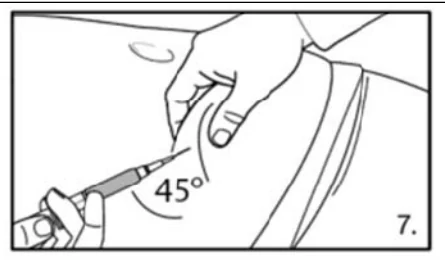
Degarelix is administered as a subcutaneous injection in the abdominal region. The injection site should vary periodically. Injections should be given in areas where the patient will not be exposed to pressure e.g. not close to waistband or belt and not close to the ribs.
4.3 Contraindications
Hypersensitivity to the active substance or to any of the excipients listed in section 6.1.
4.4 Special warnings and precautions for use
Effect on QT/QTc interval
Long-term androgen deprivation therapy may prolong the QT interval. In the confirmatory study comparing degarelix to leuprorelin periodic (monthly) electrocardiograms (ECGs) were performed; both therapies showed QT/QTc intervals exceeding 450 msec in approximately 20% of the patients, and 500 msec in 1% and 2% of the degarelix and leuprorelin patients, respectively (see section 5.1).
Degarelix has not been studied in patients with a history of a corrected QT interval over 450 msec, in patients with a history of or risk factors for torsades de pointes and in patients receiving concomitant medicinal products that might prolong the QT interval. Therefore in such patients, the benefit/risk ratio of degarelix must be thoroughly appraised (see sections 4.5 and 4.8).
A thorough QT study showed that there was no intrinsic effect of degarelix on QT/QTc interval (see section 4.8).
Hepatic impairment
Patients with known or suspected hepatic disorder have not been included in long-term clinical trials with degarelix. Mild, transient increases in ALT and AST have been seen, these were not accompanied by a rise in bilirubin or clinical symptoms. Monitoring of liver function in patients with known or suspected hepatic disorder is advised during treatment. The pharmacokinetics of degarelix has been investigated after single intravenous administration in subjects with mild to moderate hepatic impairment (see section 5.2).
Renal impairment
Degarelix has not been studied in patients with severe renal impairment and caution is therefore warranted.
Hypersensitivity
Degarelix has not been studied in patients with a history of severe untreated asthma, anaphylactic reactions or severe urticaria or angioedema.
Changes in bone density
Decreased bone density has been reported in the medical literature in men who have had orchiectomy or who have been treated with a GnRH agonist. It can be anticipated that long periods of testosterone suppression in men will have effects on bone density. Bone density has not been measured during treatment with degarelix.
Glucose tolerance
A reduction in glucose tolerance has been observed in men who have had orchiectomy or who have been treated with a GnRH agonist. Development or aggravation of diabetes may occur; therefore diabetic patients may require more frequent monitoring of blood glucose when receiving androgen deprivation therapy. The effect of degarelix on insulin and glucose levels has not been studied.
Cardiovascular disease
Cardiovascular disease such as stroke and myocardial infarction has been reported in the medical literature in patients with androgen deprivation therapy. Therefore, all cardiovascular risk factors should be taken into account.
4.5 Interaction with other medicinal products and other forms of interaction
No interaction studies have been performed.
Since androgen deprivation treatment may prolong the QTc interval, the concomitant use of degarelix with medicinal products known to prolong the QTc interval or medicinal products able to induce torsades de pointes such as class IA (e.g. quinidine, disopyramide) or class III (e.g. amiodarone, sotalol, dofetilide, ibutilide) antiarrhythmic medicinal products, methadone, moxifloxacin, antipsychotics, etc. should be carefully evaluated (see section 4.4).
Degarelix is not a substrate for the human CYP450 system and has not been shown to induce or inhibit CYP1A2, CYP2C8, CYP2C9, CYP2C19, CYP2D6, CYP2E1, or CYP3A4/5 to any great extent in vitro. Therefore, clinically significant pharmacokinetic drug-drug interactions in metabolism related to these isoenzymes are unlikely.
4.6 Fertility, pregnancy and lactation
Pregnancy and breast-feeding
There is no relevant indication for use of degarelix in women.
Fertility
Degarelix may inhibit male fertility as long as the testosterone is suppressed.
4.7 Effects on ability to drive and use machines
Degarelix has no or negligible influence on the ability to drive and use machines. Fatigue and dizziness are common adverse reactions that might influence the ability to drive and use machines.
4.8 Undesirable effects
Summary of the safety profile
The most commonly observed adverse reactions during degarelix therapy in the confirmatory phase III study (N=409) were due to the expected physiological effects of testosterone suppression, including hot flushes and weight increase (reported in 25% and 7%, respectively, of patients receiving treatment for one year), or injection site adverse reactions. Transient chills, fever or influenza like illness were reported to occur hours after dosing (in 3%, 2% and 1% of patients, respectively).
The injection site adverse reactions reported were mainly pain and erythema, reported in 28% and 17% of patients, respectively, less frequently reported were swelling (6%), induration (4%) and nodule (3%). These events occurred primarily with the starting dose whereas during maintenance therapy with the 80 mg dose, the incidence of these events per 100 injections was: 3 for pain and <1 for erythema, swelling, nodule and induration. The reported events were mostly transient, of mild to moderate intensity and led to very few discontinuations (<1%). Serious injection site reactions were very rarely reported such as injection site infection, injection site abscess or injection site necrosis that could require surgical treatment/drainage.
Tabulated list of adverse reactions
The frequency of undesirable effects listed below is defined using the following convention: very common (≥ 1/10); common (≥ 1/100 to < 1/10); uncommon (≥ 1/1,000 to < 1/100), rare (≥ 1/10,000 to <1/1,000) and very rare (<1/10,000). Within each frequency grouping, undesirable effects are presented in order of decreasing seriousness.
Table 2: Frequency of adverse drug reactions reported in 1,259 patients treated for a total of 1781 patient years (phase II and III studies) and from post-marketing reports
MedDRA System Organ Class (SOC) | Very common | Common | Uncommon | Rare |
Blood and lymphatic system disorders | Anaemia* | Neutropenic fever | ||
| Immune system disorders | Hypersensitivity | Anaphylactic reactions | ||
| Metabolism and nutrition disorders | Weight increase* | Hyperglycaemia/Diabetes mellitus, cholesterol increased, weight decreased, appetite decreased, changes in blood calcium | ||
| Psychiatric disorders | Insomnia | Depression, libido decreased* | ||
| Nervous system disorders | Dizziness, headache | Mental impairment, hypoaesthesia | ||
| Eye disorders | Vision blurred |
| Cardiac disorders | Cardiac arrhythmia (incl. atrial fibrillation), palpitations, QT prolongation* (see sections 4.4 and 4.5) | Myocardial infarction, cardiac failure | ||
| Vascular disorders | Hot flush* | Hypertension, vasovagal reaction (incl. hypotension) | ||
| Respiratory, thoracic and mediastinal disorders | Dyspnoea | |||
| Gastrointestinal disorders | Diarrhoea, nausea | Constipation, vomiting, abdominal pain, abdominal discomfort, dry mouth | ||
| Hepatobiliary disorders | Liver transaminases increased | Bilirubin increased, alkaline phosphatase increased | ||
Skin and subcutaneous tissue disorders | Hyperhidrosis (incl. night sweats)*, rash | Urticaria, skin nodule, alopecia, pruritus, erythema | ||
| Musculoskeleta l, connective tissue and bone disorders | Musculoskeleta l pain and discomfort | Osteoporosis/osteopenia, arthralgia, muscular weakness, muscle spasms, joint swelling/stiffness | Rhabdomyolysis | |
Renal and urinary disorders | Pollakiuria, micturition urgency, dysuria, nocturia, renal impairment, incontinence | |||
Reproductive system and breast disorders | Gynaecomastia *, testicular atrophy*, erectile dysfunction* | Testicular pain, breast pain, pelvic pain, genital irritation, ejaculation failure | ||
General disorders and administration site conditions | Injection site adverse reactions | Chills, pyrexia, fatigue*, Influenza- like illness | Malaise, peripheral oedema |
* Known physiological consequence of testosterone suppression
Description of selected adverse reactions
Changes in laboratory parameters
Changes in laboratory values seen during one year of treatment in the confirmatory phase III study (N=409) were in the same range for degarelix and a GnRH-agonist (leuprorelin) used as comparator. Markedly abnormal (>3*ULN) liver transaminase values (ALT, AST and GGT) were seen in 2-6% of patients with normal values prior to treatment, following treatment with both medicinal products. Marked decrease in haematological values, hematocrit (≤0.37) and haemoglobin (≤115 g/l) were seen in 40% and 13-15%, respectively, of patients with normal values prior to treatment, following treatment with both medicinal products. It is unknown to what extent this decrease in haematological values was caused by the underlying prostate cancer and to what extent it was a consequence of androgen deprivation therapy. Markedly abnormal values of potassium (≥5.8 mmol/l), creatinine (≥177 μmol/l) and BUN (≥10.7 mmol/l) in patients with normal values prior to treatment, were seen in 6%, 2% and 15% of degarelix treated patients and 3%, 2% and 14% of leuprorelin treated patients, respectively.
Changes in ECG measurements
Changes in ECG measurements seen during one year of treatment in the confirmatory phase III study (N=409) were in the same range for degarelix and a GnRH-agonist (leuprorelin) used as comparator. Three (<1%) out of 409 patients in the degarelix group and four (2%) out of 201 patients in the leuprorelin 7.5 mg group, had a QTcF ≥ 500 msec. From baseline to end of study the median change in QTcF for degarelix was 12.0 msec and for leuprorelin was 16.7 msec.
The lack of intrinsic effect of degarelix on cardiac repolarisation (QTcF), heart rate, AV conduction, cardiac depolarisation, or T or U wave morphology was confirmed in a thorough QT study in healthy subjects (N=80) receiving an i.v. infusion of degarelix over 60 min, reaching a mean Cmax of 222 ng/mL, approx. 3-4- fold the Cmax obtained during prostate cancer treatment.
Reporting of suspected adverse reactions
Reporting suspected adverse reactions after authorisation of the medicinal product is important. It allows continued monitoring of the benefit/risk balance of the medicinal product. Healthcare professionals are asked to report any suspected adverse reactions via the Yellow Card Scheme Website: https://yellowcard.mhra.gov.uk/ or search for MHRA Yellow Card in the Google Play or Apple App Store.
4.9 Overdose
There is no clinical experience with the effects of an acute overdose with degarelix. In the event of an overdose the patient should be monitored and appropriate supportive treatment should be given, if considered necessary.
5 PHARMACOLOGICAL PROPERTIES
5.1 Pharmacodynamic properties
Pharmacotherapeutic group: Endocrine therapy, Other hormone antagonists and related agents; ATC code: L02BX02
Mechanism of action
Degarelix is a selective gonadotrophin releasing-hormone (GnRH) antagonist that competitively and reversibly binds to the pituitary GnRH receptors, thereby rapidly reducing the release of the gonadotrophins, luteinizing hormone (LH) and follicle stimulating hormone (FSH), and thereby reducing the secretion of testosterone (T) by the testes. Prostatic carcinoma is known to be androgen sensitive and responds to treatment that removes the source of androgen. Unlike GnRH agonists, GnRH antagonists do not induce a LH surge with subsequent testosterone surge/tumour stimulation and potential symptomatic flare after the initiation of treatment.
A single dose of 240 mg degarelix, followed by a monthly maintenance dose of 80 mg, rapidly causes a decrease in the concentrations of LH, FSH and subsequently testosterone. The serum concentration of dihydrotestosterone (DHT) decreases in a similar manner to testosterone.
Degarelix is effective in achieving and maintaining testosterone suppression well below medical castration level of 0.5 ng/ml. Maintenance monthly dosing of 80 mg resulted in sustained testosterone suppression in 97% of patients for at least one year. No testosterone microsurges were observed after re-injection during degarelix treatment. Median testosterone levels after one year of treatment were 0.087 ng/ml (interquartile range 0.06-0.15) N=167.
Results of the confirmatory Phase III study
The efficacy and safety of degarelix was evaluated in an open-label, multi-centre, randomised, active comparator controlled, parallel-group study. The study investigated the efficacy and safety of two different degarelix monthly dosing regimens with a starting dose of 240 mg (40 mg/ml) followed by monthly doses subcutaneous administration of 160 mg (40 mg/ml) or 80 mg (20 mg/ml), in comparison to monthly intramuscular administration of 7.5 mg leuprorelin in patients with prostate cancer requiring androgen deprivation therapy. In total 620 patients were randomised to one of the three treatment groups, of which 504 (81%) patients completed the study. In the degarelix 240/80 mg treatment group 41 (20%) patients discontinued the study, as compared to 32 (16%) patients in the leuprorelin group.
Of the 610 patients treated
- 31% had localised prostate cancer
- 29% had locally advanced prostate cancer
- 20% had metastatic prostate cancer
- 7% had an unknown metastatic status
- 13% had previous curative intent surgery or radiation and a rising PSA
Baseline demographics were similar between the arms. The median age was 74 years (range 47 to 98 years). The primary objective was to demonstrate that degarelix is effective with respect to achieving and maintaining testosterone suppression to below 0.5 ng/ml, during 12 months of treatment.
The lowest effective maintenance dose of 80 mg degarelix was chosen.
Attainment of serum testosterone (T) ≤0.5 ng/ml
Degarelix is effective in achieving fast testosterone suppression, see Table 3.
Table 3: Percentage of patients attaining T≤0.5 ng/ml after start of treatment.
| Time | Degarelix 240/80 mg | Leuprorelin 7.5 mg |
| Day 1 | 52% | 0% |
| Day 3 | 96% | 0% |
| Day 7 | 99% | 1% |
| Day 14 | 100% | 18% |
| Day 28 | 100% | 100% |
Avoidance of testosterone surge
Surge was defined as testosterone exceeding baseline by ≥15% within the first 2 weeks.
None of the degarelix-treated patients experienced a testosterone surge; there was an average decrease of 94% in testosterone at day 3. Most of the leuprorelin-treated patients experienced testosterone surge; there was an average increase of 65% in testosterone at day 3. This difference was statistically significant (p<0.001).
Figure 1: Percentage change in testosterone from baseline by treatment group until day 28 (median with interquartile ranges).
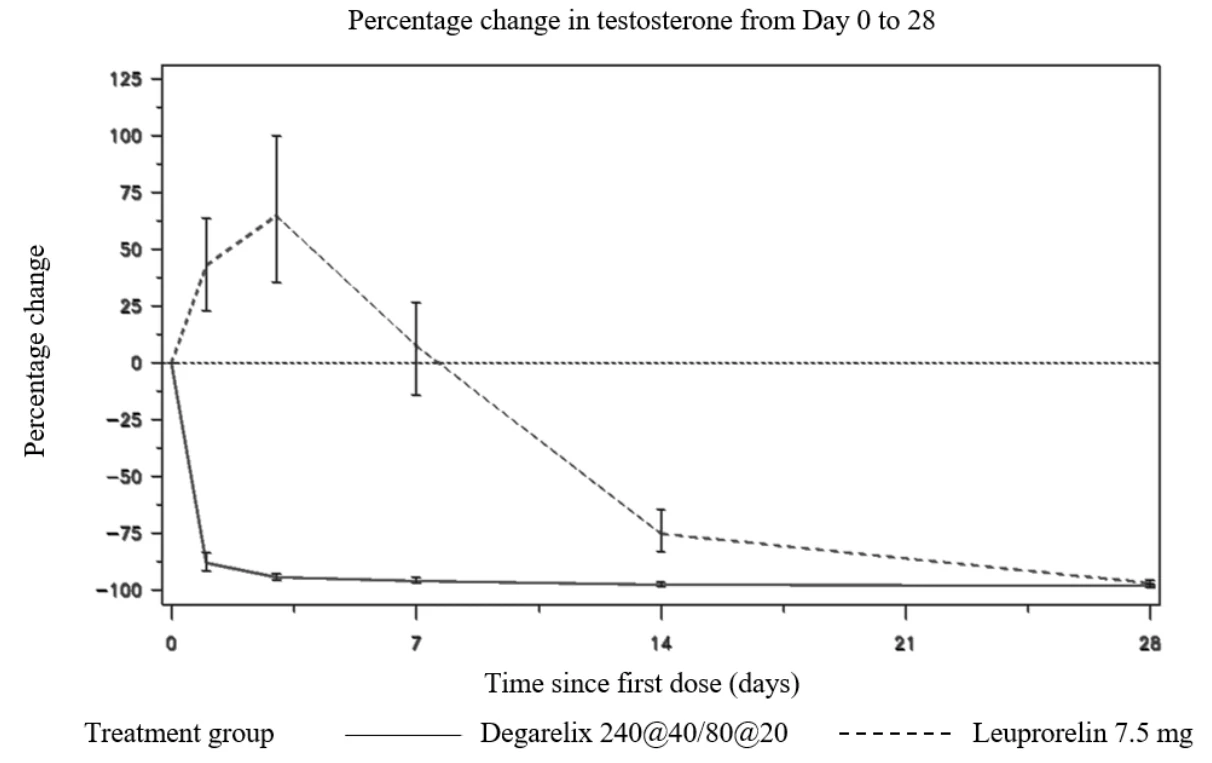
The primary end-point in the study was testosterone suppression rates after one year of treatment with degarelix or leuprorelin. The clinical benefit for degarelix compared to leuprorelin plus anti-androgen in the initial phase of treatment has not been demonstrated.
Testosterone Reversibility
In a study involving patients with rising PSA after localised therapy (mainly radical prostatectomy and radiation) were administered degarelix for seven months followed by a seven months monitoring period. The median time to testosterone recovery (>0.5 ng/mL, above castrate level) after discontinuation of treatment was 112 days (counted from start of monitoring period, i.e 28 days after last injection). The median time to testosterone >1.5 ng/mL (above lower limit of normal range) was 168 days.
Long-term effect
Successful response in the study was defined as attainment of medical castration at day 28 and maintenance through day 364 where no single testosterone concentration was greater than 0.5 ng/ml.
Table 4: Cumulative probability of testosterone ≤0.5 ng/ml from Day 28 to Day 364.
| Degarelix 240/80 mg N=207 | Leuprorelin 7.5 mg N=201 |
| No. of responders | 202 | 194 |
Response Rate (confidence intervals)* | 97.2% (93.5; 98.8%) | 96.4% (92.5; 98.2%) |
* Kaplan Meier estimates within group
Attainment of prostate specific antigen (PSA) reduction
Tumour size was not measured directly during the clinical trial programme, but there was an indirect beneficial tumour response as shown by a 95% reduction after 12 months in median PSA for degarelix.
The median PSA in the study at baseline was:
for the degarelix 240/80 mg treatment group 19.8 ng/ml (interquartile range:
P25 9.4 ng/ml, P75 46.4 ng/ml)
for the leuprorelin 7.5 mg treatment group 17.4 ng/ml (interquartile range: P25
8.4 ng/ml, P75 56.5 ng/ml)
Figure 2: Percentage change in PSA from baseline by treatment group until day 56 (median with interquartile ranges). 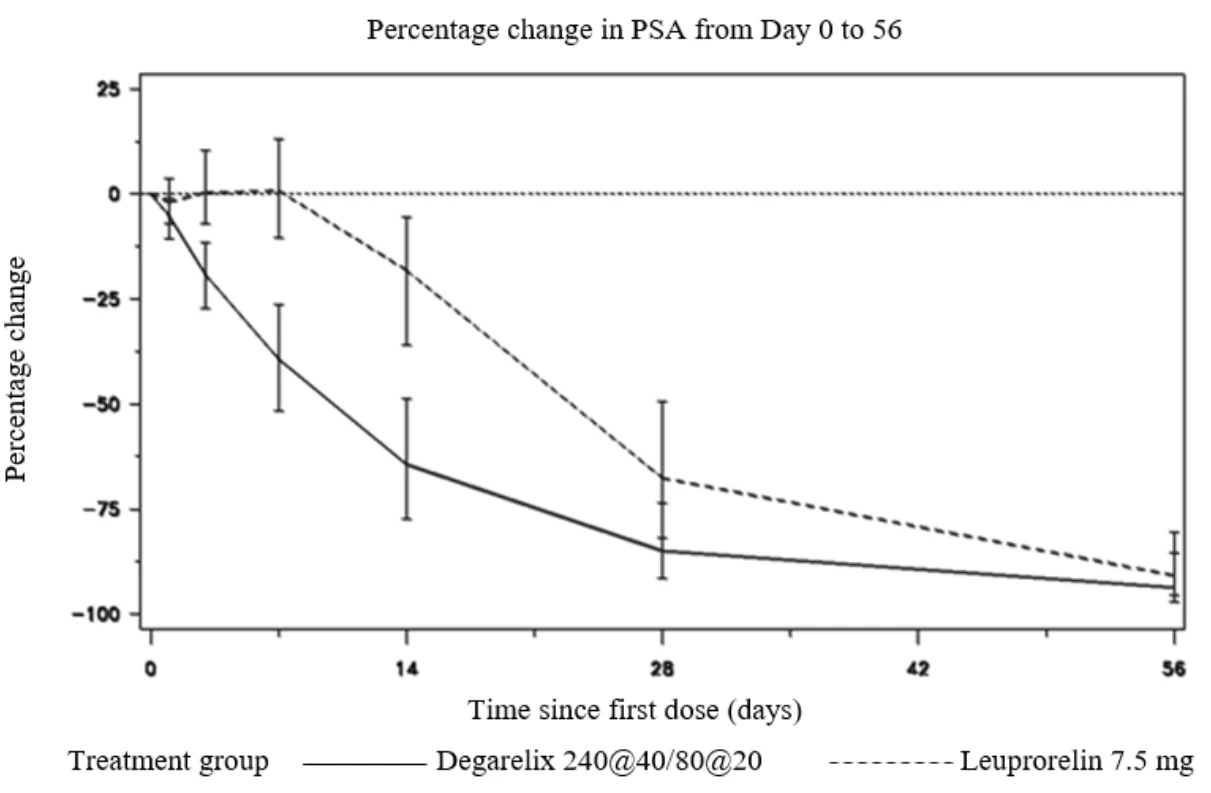
This difference was statistically significant (p<0.001) for the pre-specified analysis at day 14 and day 28.
Prostate specific antigen (PSA) levels are lowered by 64% two weeks after administration of degarelix, 85% after one month, 95% after three months, and remained suppressed (approximately 97%) throughout the one year of treatment.
From day 56 to day 364 there were no significant differences between degarelix and the comparator in the percentage change from baseline.
Effect on prostate volume, disease related mortality and increased disease free survival
Neo-adjuvant androgen deprivation therapy prior to radiotherapy has been shown to impact prostate volume reduction, reduced disease related mortality and increased disease free survival in patients with high-risk localised or locally advanced prostate cancer (RTOG 86-10, TROG 96-01, RTOG 92-02, and Mason M et al. Clinical Oncology 2013).
In a randomised parallel-arm, active-controlled, open-label trial, conducted in 244 men with a UICC prostate cancer TNM category T2 (b or c)/T3/T4, N0, M0, Gleason score >7, or prostate specific antigen >10ng/mL and a total prostate volume >30, three months therapy with degarelix (240/80 mg dose regimen) resulted in a 37% reduction in prostate volume as measured by trans-rectal ultrasound scan (TRUS) in patients requiring hormonal therapy prior to radiotherapy and in patients who were candidates for medical castration. The prostate volume reduction was similar to that attained with goserelin plus anti-androgen protection (Mason M et al. Clinical Oncology 2013).
Combination with radiotherapy
The effect of degarelix in combination with radiotherapy is based on an indirect comparison to the LHRH agonists efficacy data by using the clinical efficacy surrogate endpoints; testosterone suppression and PSA reduction demonstrating non-inferiority to LHRH agonists and indirectly establish efficacy.
In patients with locally advanced prostate cancer several randomised long-term clinical trials provide evidence for the benefit of androgen deprivation therapy (ADT) in combination with radiotherapy (RT) compared to RT alone (RTOG 85-31, RTOG 86-10, EORTC 22863).
Clinical data from a phase III clinical trial (EORTC 22961) in 970 patients with locally advanced prostate cancer (mainly T2c-T4 with some T1c to T2b patients with pathological regional nodal disease) have shown that radiotherapy followed by long-term therapy (3 years) is preferable to short-term therapy (6 months). Overall total mortality at 5 years in the short-term hormonal treatment and long-term hormonal treatment groups was 19.0% and 15.2% respectively, with a relative risk of 1.42 (an upper one sided 95.71% CI = 1.79; or two sided 95.71% CI = [1.09; 1.85], p = 0.65 for non-inferiority and p = 0.0082 for post-hoc test of difference between groups of treatment). The 5-year mortality specifically related to the prostate cancer in the short-term hormonal treatment and long-term hormonal treatment groups was 4.78% and 3.2% respectively, with a relative risk of 1.71 (95% CI = [1.14 to 2.57], p = 0.002).
The recommended duration of androgen deprivation therapy in medical guidelines for T3-T4 patients receiving radiotherapy is 2-3 years.
Evidence for the indication of high-risk localised prostate cancer is based on a number of published studies of radiotherapy combined with GnRH analogues. Clinical data from five published studies were analysed (EORTC 22863, RTOG 85-31, RTOG 92-02, RTOG 86-10 and D’Amico et al., JAMA 2004), which all demonstrate a benefit for the combination of GnRH analogue with radiotherapy.
Clear difference of the respective study populations for the indications locally advanced prostate cancer and high-risk localised prostate cancer was not possible in the published studies.
Effect on QT/QTc intervals
In the confirmatory study comparing degarelix to leuprorelin periodic electrocardiograms were performed. Both therapies showed QT/QTc intervals exceeding 450 msec in approximately 20% of the patients. From baseline to end of study the median change for degarelix was 12.0 msec and for leuprorelin it was 16.7 msec.
Anti-degarelix antibodies
Anti-degarelix antibody development has been observed in 10% of patients after treatment with degarelix for one year and 29% of patients after treatment with degarelix for up to 5.5 years. There is no indication that the efficacy or safety of degarelix treatment is affected by antibody formation after up to 5.5 years of treatment.
Paediatric population
The European Medicines Agency has waived the obligation to submit the results of studies with the reference medicinal product containing degarelix in all subsets of the paediatric population (see section 4.2 for information on paediatric use).
5.2 Pharmacokinetic properties
Absorption
Following subcutaneous administration of 240 mg degarelix at a concentration of 40 mg/ml to prostate cancer patients in the pivotal study CS21, AUC0-28 days was 635 (602-668) day*ng/ml, Cmax was 66.0 (61.0- 71.0) ng/ml and occurred at tmax at 40 (37-
- 42) hours. Mean trough values were approximately 11-12 ng/ml after the starting dose and 11-16 ng/ml after maintenance dosing of 80 mg at a concentration of 20 mg/ml. Cmax degarelix plasma concentration decreases in a biphasic fashion, with a mean terminal half-life (t½) of 29 days for the maintenance dose. The long half-life after subcutaneous administration is a consequence of a very slow release of degarelix from the depot formed at the injection site(s). The pharmacokinetic behaviour of the medicinal product is influenced by its concentration in the solution for injection. Thus, Cmax and bioavailability tend to decrease with increasing dose concentration while the half-life is increased. Therefore, no other dose concentrations than the recommended should be used.
Distribution
The distribution volume in healthy elderly men is approximately 1 l/kg. Plasma protein binding is estimated to be approximately 90%.
Biotransformation
Degarelix is subject to common peptidic degradation during the passage of the hepato-biliary system and is mainly excreted as peptide fragments in the faeces. No significant metabolites were detected in plasma samples after subcutaneous administration. In vitro studies have shown that degarelix is not a substrate for the human CYP450 system.
Elimination
In healthy men, approximately 20-30% of a single intravenously administered dose is excreted in the urine, suggesting that 70-80% is excreted via the hepato-biliary system. The clearance of degarelix when administered as single intravenous doses (0.864-49.4 µg/kg) in healthy elderly men was found to be 35-50 ml/h/kg.
Special populations
Patients with renal impairment
No pharmacokinetic studies in renally impaired patients have been conducted. Only about 20-30% of a given dose of degarelix is excreted unchanged by the kidneys. A population pharmacokinetics analysis of the data from the confirmatory Phase III study has demonstrated that the clearance of degarelix in patients with mild to moderate renal impairment is reduced by approximately 23%; therefore, dose adjustment in patients with mild or moderate renal impairment is not recommended. Data on patients with severe renal impairment is scarce and caution is therefore warranted in this patient population.
Patients with hepatic impairment
Degarelix has been investigated in a pharmacokinetic study in patients with mild to moderate hepatic impairment. No signs of increased exposure in the hepatically impaired subjects were observed compared to healthy subjects. Dose adjustment is not necessary in patients with mild or moderate hepatic impairment. Patients with severe hepatic dysfunction have not been studied and caution is therefore warranted in this group.
5.3 Preclinical safety data
Animal reproduction studies showed that degarelix caused infertility in male animals. This is due to the pharmacological effect; and the effect was reversible.
In female reproduction toxicity studies degarelix revealed findings expected from the pharmacological properties. It caused a dosage dependent prolongation of the time to mating and to pregnancy, a reduced number of corpora lutea, and an increase in the number of pre- and post-implantation losses, abortions, early embryo/foetal deaths, premature deliveries and in the duration of parturition.
Nonclinical studies on safety pharmacology, repeated dose toxicity, genotoxicity, and carcinogenic potential revealed no special hazard for humans. Both in vitro and in vivo studies showed no signs of QT prolongation.
No target organ toxicity was observed from acute, subacute and chronic toxicity studies in rats and monkeys following subcutaneous administration of degarelix. Drug-related local irritation was noted in animals when degarelix was administered subcutaneously in high doses.
6 PHARMACEUTICAL PARTICULARS
6.1 List of excipients
Powder
Mannitol (E421)
Solvent
Water for injections
6.2 Incompatibilities
In the absence of compatibility studies, this medicinal product must not be mixed with other medicinal products.
6.3 Shelf life
2 years.
After reconstitution
Chemical and physical in-use stability has been demonstrated for 4 hours at 25°C.
From a microbiological point of view, unless the method of reconstitution precludes the risk of microbial contamination, the product should be used immediately. If not used immediately, in-use storage times and conditions are the responsibility of the user.
6.4 Special precautions for storage
Store below 25°C.
For storage conditions after reconstitution of the reconstituted medicinal product, see section 6.3.
6.5 Nature and contents of container
Glass (type I) vial with bromobutyl rubber stopper and aluminium-plastic cap containing 120 mg powder for solution for injection.
Glass (type I) pre-filled syringe barrel with luer tip and tip cap, fluoropolymer coated bromobutyl rubber plunger containing 3 ml solvent.
Backstop.
Plunger rod.
Vial adapter.
Sterile hypodermic needle for single use (25 G 0.50 x 25 mm).
Pack sizes
Pack size of 2 trays containing 2 vials (powder), 2 pre-filled syringes (solvent), 2 plunger rods, 2 vial adapters and 2 needles.
Not all pack sizes may be marketed.
6.6 Special precautions for disposal
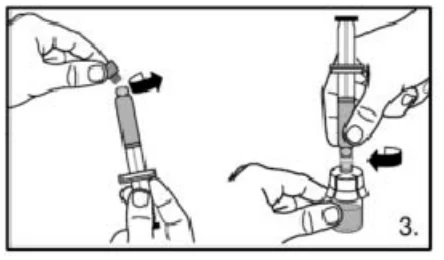
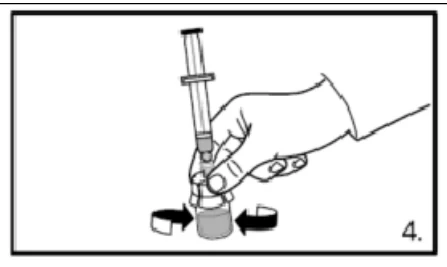
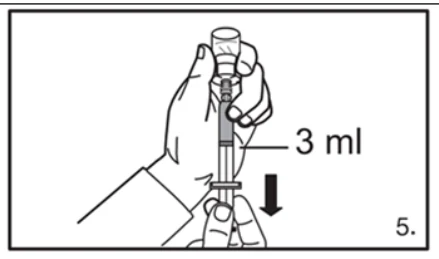
The instructions for reconstitution must be followed carefully.
Administration of other concentrations is not recommended because the gel depot formation is influenced by the concentration. The reconstituted solution should be a clear liquid, free of undissolved matter.
NOTE: THE VIALS SHOULD NOT BE SHAKEN
The pack contains two vials of powder and two pre-filled syringes with solvent that must be prepared for subcutaneous injection. Hence, the procedure described below needs to be repeated a second time. 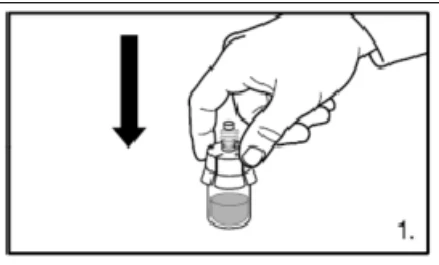
| |
| |
| |
| |
| |
| |
| |
| |
| |
Any unused medicinal product or waste material should be disposed of in accordance with local requirements.
7 MARKETING AUTHORISATION HOLDER
Accord Healthcare Limited
Sage House
319 Pinner Road
North Harrow
Middlesex
HA1 4HF
United Kingdom
8 MARKETING AUTHORISATION NUMBER(S)
PLGB 20075/1486
9 DATE OF FIRST AUTHORISATION/RENEWAL OF THE
AUTHORISATION
18/06/2024
10 DATE OF REVISION OF THE TEXT
18/06/2024