

Patient leaflet - Decapeptyl SR 22.5 mg powder and solvent for suspension for injection
1. What Decapeptyl SR is and what it is used for
Decapeptyl SR contains triptorelin, which is similar to a hormone called gonadotropin releasing hormone (GnRH analogue).
Triptorelin belongs to a group of medicines called GnRH analogues. It is a long acting formulation designed to slowly deliver 22.5mg of triptorelin over a 6-month period (twenty four weeks). In men, triptorelin lowers the levels of the hormone testosterone. In women, it lowers the levels of the hormone oestrogen.
In men: Decapeptyl SR is used to treat prostate cancer.
In children 2 years of age and older Decapeptyl SR is used to treat puberty that occurs at a very young age, i.e. before 8 years in girls and 10 years in boys (central precocious Puberty). This is called ‘early puberty’ in the rest of this leaflet.
Decapeptyl SR is available in two other strengths: Decapeptyl SR 3 mg is used once a month, and Decapeptyl SR 11.25 mg is used once every 3 months. Ask your doctor if you would like to discuss changing your treatment.
2. What you need to know before you use
Decapeptyl SR
Do not use Decapeptyl SR
- If you are allergic (hypersensitive) to triptorelin pamoate, gonadotropin releasing hormone (GnRH), other GnRH analogues or any of the other ingredients of this medicine (listed in section 6).
- If you are pregnant or breast-feeding
Warnings and precautions
- There have been reports of depression in patients taking Decapeptyl SR, which may be severe. If you are taking Decapeptyl SR and develop depressed mood, inform your doctor. Your doctor may want to monitor your depression during your treatment.
- If you are using medicines for preventing your blood clotting, since you may experience bruising at the site of injection.
If any convulsions occur, inform immediately your doctor. There have been reports of convulsions in patients receiving triptorelin or similar medicines. These occurred in patients with or without medical history of epilepsy.
The product should only be injected in the muscle.
In men:
At the beginning of treatment there will be an increased amount of testosterone in your body. This may cause the symptoms of the cancer to worsen. Contact your doctor if this happens. The doctor may give you some medicine (an anti-androgen) to prevent your symptoms from getting worse.
- You may experience (as with other GnRH analogues) symptoms due to compression of your spinal cord (e.g. pain, numbness or weakness of legs) or a blockage in the urethra (where you pass urine) during the first weeks of treatment. If any of these symptoms occur, contact your doctor immediately, who will assess and treat you for these conditions appropriately.
In adults, Decapeptyl SR may cause thinning of the bones (osteoporosis) with an increased risk of bone fractures. You should therefore tell your doctor if you have any of the below risk factors as he/she might give you bisphosphonate (drugs used to treat weak bones) to treat bone loss. Risk factors may include:
- ο If you or any of your close family have thinning of the bones.
ο If you drink excessive amounts of alcohol, and/or smoke heavily and/or have a poor diet.
- ο If you take medicines over a long period of time that may cause thinning of the bones, for example medicines for epilepsy or steroids (such as hydrocortisone or prednisolone).
- If you need any diagnostic tests of pituitary gonadal function or sex organs during or after your Decapeptyl SR treatment, the results may be misleading. Please tell your doctor you have been treated with Decapeptyl SR.
- Tell your doctor if you have diabetes or if you suffer from heart problems.
- Tell your doctor if you have any heart or blood vessel conditions, including heart rhythm problems (arrhythmia), or are being treated with medicines for these conditions. The risk of heart rhythm problems may be increased when using Decapeptyl SR.
- After surgically castration, triptorelin does not induce any further decrease in serum testosterone levels and therefore should not be used.
- If you are about to take a diagnostic test of the function of your pituitary gland or sex organs, the result can be misleading if you are on Decapeptyl or have just discontinued treatment with Decapeptyl.
- If you have an enlargement (benign tumour) of the pituitary gland that you were unaware of, this may be discovered during treatment with Decapeptyl SR. Symptoms include sudden headache, vomiting, problems with eye sight and paralysis of the eye muscles.
- Testosterone decreasing agents may cause changes in ECG associated with heart rhythm abnormalities (QT prolongation).
Treatment with GnRH analogues including Decapeptyl SR might increase the risk of anaemia (defined as a decrease in the count of red blood cells).
In children:
- If you have a progressive brain tumour, tell your doctor. This may affect the way your doctor decides to treat you.
- Girls who have an early puberty may have some vaginal bleeding in the first month of treatment.
- If your child suffers from a bad or recurrent headache, problems with eyesight and ringing or buzzing in the ears, contact a doctor immediately (see section 4).
When treatment is stopped signs of puberty will occur. In girls, menstrual bleeding will start on average one year after stopping treatment.
Early puberty caused by other diseases should be ruled out by your doctor.
The amount of minerals in the bones decreases during the treatment but it returns to normal after treatment is stopped.
- A pathology od the hip may occur after stopping treatment (slipped capital femoral epiphysis of the hip). It results in stiffness of the hip, a limp and / or severe pain in the groin radiating to the thigh. If this occurs, you should consult your doctor.
Please talk with your doctor if you are concerned about any of the above.
Other medicines and Decapeptyl SR
Tell your doctor or pharmacist if you are taking, have recently taken or might take any other medicines.
Decapeptyl SR might interfere with some medicines used to treat heart rhythm problems (e.g. quinidine, procainamide, amiodarone and sotalol) or might increase the risk of heart rhythm problems when used with some other drugs (e.g. methadone (used for pain relief and part of drug addiction detoxification), moxifloxacin (an antibiotic), antipsychotics used for serious mental illnesses).
Pregnancy and breast-feeding
Do not take Decapeptyl SR if you are pregnant.
Do not take Decapeptyl SR if you are breast-feeding.
Driving and using machines
You may feel dizzy, tired or have problems with your sight such as blurred vision. These are possible side effects of treatment or from the underlying disease. If you experience any of these side effects you should not drive or use machines.
Important information about some of the ingredients of Decapeptyl SR
Decapeptyl SR is essentially ‘sodium free’ since it contains less than 1mmol sodium (23mg) per dose and may be taken if you are on a low sodium diet.
3. How to use Decapeptyl SR
Decapeptyl SR will be administered to you under the supervision of a physician. Your doctor or another healthcare professional should explain your treatment before you are given Decapeptyl SR.
In men:
Therapy of prostrate cancer with Decapeptyl SR requires long term treatment.
The usual dose is 1 vial of Decapeptyl SR injected into a muscle every 6 months (24 weeks). Decapeptyl SR is for injection into the muscle only.
Also read 'Other medicines and Decapeptyl SR' in section 2.
Decapeptyl SR will be given to you regularly to reduce testosterone levels. Your doctor will determine the treatment duration.
Blood tests may be performed by your doctor to measure how effective the treatment is.
In children:
You will usually receive an injection into a muscle every 6 months (24 weeks). Decapeptyl SR is for injection into the muscle only.
Your doctor will decide when treatment should be stopped (normally when you are about 12-13 years old if you are a girl and about 13-14 years old if you are a boy).
If you think the effect of Decapeptyl SR is too strong or too weak, contact your doctor.
If you have any further questions on the use of this product, ask your doctor or pharmacist.
4. Possible side effects
Like all medicines, this medicine can cause side effects, although not everybody gets them.
In rare cases you may experience a severe allergic reaction.
Tell your doctor immediately if you develop symptoms such as swallowing or breathing problems, swelling of your lips, face, throat or tongue, a rash.
In men:
As seen following treatment with other GnRH agonist therapies or after surgical castration, the most commonly observed adverse events related to triptorelin treatment were due to its expected pharmacological effects. These effects included hot flushes and decreased libido.
Increased lymphocyte count has been reported with patients undergoing GnRH analogue treatment.
With the exception of immuno-allergic reactions and injection site reactions, all adverse events are known to be related to changed testosterone levels.
As with other GnRH agonist, hypersensitivity and allergic (anaphylactic) reactions have been reported with triptorelin.
In other triptorelin products, uncommonly pressure sensitive infiltration at the injection site have been reported after subcutaneous injection.
Side effects which are very common (may affect more than 1 in 10 people) are:
- Hot flushes
- Weakness
- Excessive sweating
- Back pain
- Pins and needles sensation in the legs
Reduced libido
- Impotence.
Side effects which are common (may affect up to 1 in 10 people) are:
- Nausea, dry mouth
- Pain, bruising, redness, and swelling at injection site
- Muscle and bone pain,
- Pain in the arms and legs, oedema (build-up of fluid in the body tissues), lower abdominal pain
- High blood pressure
- Allergic reaction
- Increase in weight
- Dizziness, headache
- Loss of libido, depression, mood changes
Side effects which are uncommon (may affect up to 1 in 100 people) are:
- Increase of blood platelets
- Feeling your heartbeat
- Ringing in the ears, vertigo, blurred vision
- Pain in abdomen, constipation, diarrhoea, vomiting
- Drowsiness, severe shivering associated with sweating and a fever, sleepiness, pain
- Some blood tests affected (including raised liver function tests)
- Blood pressure increased
- Weight loss
- Loss or increase of appetite, gout (severe pain and swelling in the joints usually in the big toe)
- Diabetes, excessive lipids in the blood
- Joint pain, muscle cramp, muscle weakness, muscle pain, swelling and tenderness, bone pain
- Tingling or numbness
- Inability to sleep, feeling of irritability
- Development of enlarged breasts in men, breast pain, reduction in testicular size, pain in testicles
- Difficulty in breathing
- Acne, hair loss, itching, rash, redness of the skin, hives
- Waking up at night to pass urine, problems passing urine
- Nosebleeds.
Side effects which are rare (may affect up to 1 in 1 000 people) are:
- Red or purple discolorations on the skin
- Abnormal sensation in the eye, blurring or disturbance in vision
- Sensation of fullness in the abdomen, flatulence, abnormal sense of taste
- Chest pain
- Difficulty in standing
- Flu-like symptoms, fever
- Anaphylactic reaction (serious allergic reaction which can cause dizziness or difficulty in breathing, swelling of the face or throat)
- Inflammation of the nose/throat
- Increased body temperature
- Stiff joints, joint swelling, musculoskeletal stiffness, osteoarthritis
- Memory loss
- Feeling confused, decreased activity, having a feeling of elation
- Shortness of breath when lying flat
- Blisters
- Low blood pressure.
Not known: Frequency cannot be estimated from the available data:
- Anaphylactic reaction (serious allergic reaction which causes difficulty in breathing or dizziness, swelling of the face or throat)
- Changes in ECG (QT prolongation)
- Convulsions
- General discomfort
- Anxiety
- Rapid formation of wheals due to swelling of the skin or mucous membranes
- Urinary incontinence
- If an existing pituitary tumour, an increased risk of bleeding to the area.
- Anaemia (decrease in the count of red blood cells)
In children:
Side effects which are very common (may affect more than 1 in 10 people) are:
- Vaginal bleeding which may occur in girls in the first month of treatment.
Side effects which are common (may affect up to 1 in 10 people) are:
- Acne
- Headache
- Hot flushes
- Weight gain
- Pain in the abdomen
- Hypersensitvity reactions
- Pain, redness and swelling at injection site.
Side effects that are uncommon (may affect up to 1 in 100 people) are:
- Itching
- Neck pain
- Nosebleeds
- Consitipation
- Blurred vision
- Rash or hives
- Nausea, vomiting
- Overweight
- Pain in the breast
- Changes in mood
- General discomfort.
Not known: Frequency cannot be estimated from the available data:
- high blood pressure
- abnormal vision
- severe allergic reaction which causes difficulty swallowing, breathing problems, swelling of your lips, face, throat or tongue, or hives
- convulsions
- some blood tests affected including hormone levels
- rapid formation of wheals due to swelling of the skin or mucous membranes
- muscle pain
- mood disorders
- depression
- nervousness
- idiopathic intracranial hypertension (increased intracranial pressure around the brain characterised by headache, double vision and other visual symptoms, and ringing or buzzing in the ears)
Your doctor will determine the countermeasures be to taken.
Reporting of side effects
If you get any side effects, talk to your doctor, pharmacist or nurse. This includes any possible side effects not listed in this leaflet. You can also report side effects directly via the Yellow Card Scheme at: www.mhra.gov.uk/yellowcard or search for MHRA Yellow Card in the Google Play or Apple App Store.
By reporting side effects, you can help provide more information on the safety of this medicine.
5. How to store Decapeptyl SR
Keep out of the sight and reach of children.
Do not store above 25°C.
The reconstituted suspension must be used immediately.
Do not use the vial and ampoule after the expiry date which is stated on the carton, tray, vial and ampoule labels after ‘Exp’. The expiry date refers to the last day of that month.
If the powder and solvent becomes discoloured or shows any other signs of deterioration, seek the advice of your pharmacist.
Medicines should not be disposed of via wastewater or household waste. Ask your pharmacist how to dispose of medicines no longer required. These measures will help to protect the environment.
6. Contents of the pack and other information
What Decapeptyl SR contains
The active ingredient in Decapeptyl SR is triptorelin pamoate.
Each vial contains 28mg triptorelin pamoate.
This quantity per vial allows for a dose of 22.5mg to be administered providing the instructions for use are followed.
The other ingredients are Poly [DL-lactide-co-glycolide], mannitol, carmellose sodium and polysorbate 80.
The suspension vehicle is a water for injections.
What Decapeptyl SR looks like and contents of the pack
Decapeptyl SR is a white to off-white, water-dispersible powder available in 6mL amber glass vial with a rubber stopper and aluminium cap along with a glass ampoule containing 2mL clear, colourless liquid solvent for reconstitution.
The pack contains- 1 vial of Decapeptyl SR, 1 ampoule of 2ml suspension vehicle, 1 syringe (3ml), 1 needle (38mm) for drawing up the solvent and reconstitution,
1 needle (38mm) for lM injection with safety device.
Manufactured by: Ipsen Pharma Biotech, Parc d'Activites du Plateau de Signes, chemin departemental N°402,
83870 Signes, France
Procured from within the EU and repackaged by the Product Licence holder: B&S Healthcare, Unit 4,
Bradfield Road, Ruislip, Middlesex, HA4 0NU, UK.
Decapeptyl® SR 22.25mg, powder and solvent for
suspension for injection; PL 18799/4048
POM
Leaflet date: 20.12.2024
Decapeptyl is the registered trademark of IPSEN PHARMA S.A.S.
Blind or partially sighted?
Is this leaflet hard to see or read? Call 0208 515 3763 to obtain the leaflet in a format suitable for you.
The following information is intended for medical or healthcare professionals only:
INSTRUCTIONS FOR RECONSTITUTION
- 1. PREPARATION OF THE PATIENT BEFORE RECONSTITUTION
- •
Prepare the patient by disinfecting the injection site.
This operation needs to be performed first because once reconstituted, the drug should be injected immediately.
- 2. PREPARATION OF THE INJECTION
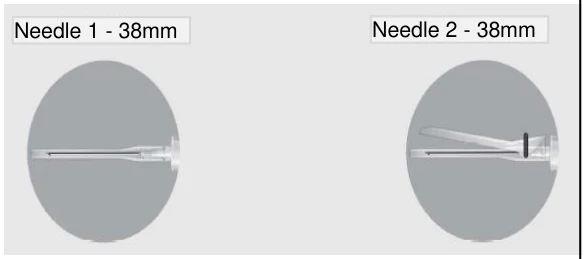
Two needles are provided in the box:
- Needle 1: a 20G needle (38mm of length) without safety device to be used for reconstitution
Needle 2: a 20G needle (38mm of length) with safety device to be used for injection
Needle 2 - 38mm
Needle 1 - 38mm
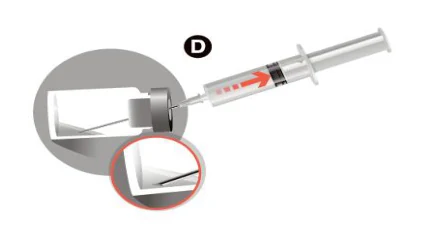
The presence of bubbles on top of the lyophilisate is a normal appearance of the product.
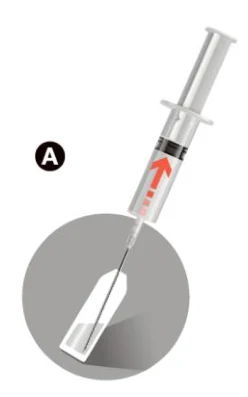
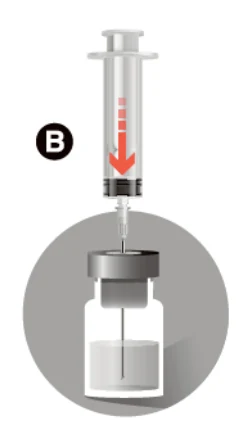
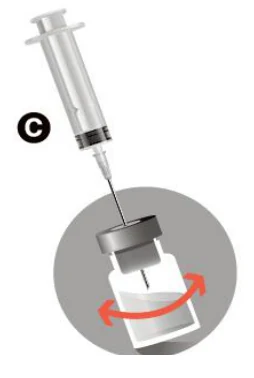
The following steps must be completed in a continuous sequence.
2a
| |
2b
|
2C
| |
 2d
| |
|
|
|
|
- 4. AFTER USE
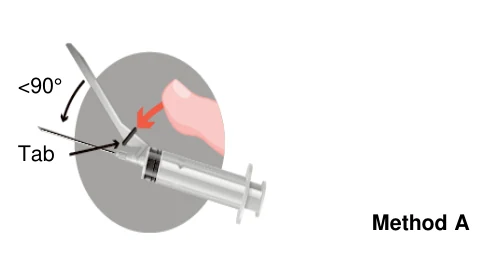
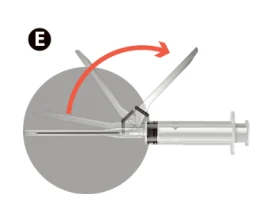
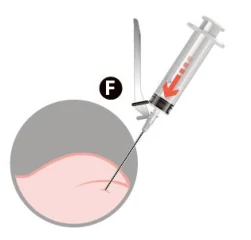
- • Activation of the safety system using a one-handed technique.
- • Note: Keep your finger behind the tab at all times.
There are two alternatives to activate the safety system:
Method A: push the tab forward with your finger
<90°
Tab
Method A or
- Method B: push the sheath to a flat surface
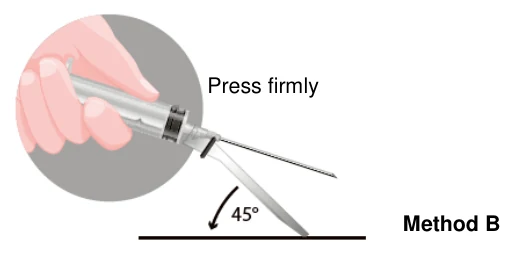
Press firmly
Method B
- In both cases press down with a firm quick motion until a distinct audible click is heard.
- Visually confirm that the needle is fully engaged under the lock.
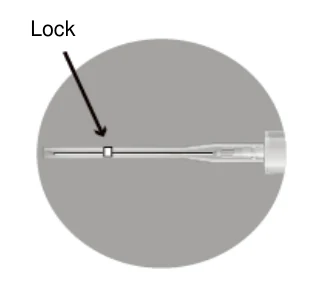
Lock
- Used needles, any unused suspension or other waste materials should be disposed of in accordance with local requirements.
 | |
 |
 | |
 |
 |