

Patient leaflet - Dalacin cream 2%
1. What Dalacin Cream is and what it is used for
Dalacin Cream is a vaginal cream. It contains clindamycin phosphate which is an antibiotic. It is used in the treatment of bacterial vaginosis (a bacterial infection of the vagina).
2. What you need to know before you use Dalacin Cream
Do not use Dalacin Cream
- if you are allergic to clindamycin, lincomycin or any of the other ingredients of this medicine (listed in section 6).
- if you suffer with a history of inflammatory bowel disease or antibiotic-associated colitis.
Warnings and precautions
Talk to your doctor or pharmacist before using this medicine if you have diarrhoea or usually get diarrhoea when you take antibiotics.
If you develop severe, prolonged or bloody diarrhoea during or after using Dalacin Cream tell your doctor immediately since it may be necessary to interrupt the treatment. This may be a sign of bowel inflammation (pseudomembranous colitis) which can occur following treatment with antibiotics.
As with all vaginal infections, sexual intercourse during treatment with this medicine is not recommended. Dalacin Cream may weaken condoms and diaphragms. Do not rely on condoms or contraceptive diaphragms when using this medicine.
The use of other vaginal products such as tampons or douches (vaginal washes) during treatment with this medicine is not recommended.
Children
Dalacin Cream is not recommended for use in children.
Other medicines and Dalacin Cream
Tell your doctor or pharmacist if you are taking, have recently taken or might take any other medicines.
Dalacin Cream may affect other medicines taken at the same time. Tell your doctor if you are taking erythromycin (an antibiotic) or have recently taken any other medicines including medicines obtained without a prescription.
Pregnancy and breast-feeding
Pregnancy
If you are pregnant, think you may be pregnant or are planning to have a baby, ask your doctor or pharmacist for advice before using this medicine.
Breast-feeding
Tell your doctor if you will be breast-feeding while using Dalacin Cream as the active substance in this medicine may be passed into breast milk. Your doctor will decide if this medicine is suitable for you. Although it is not likely that a nursing infant will take in very much of the active substance from the milk it drinks, if your baby gets bloodstained diarrhoea or shows any signs of illness, tell your doctor at once. You should stop breast-feeding if this happens.
Driving and using machines
No effects on the ability to drive or use machines have been seen with Dalacin Cream.
Dalacin Cream contains propylene glycol, cetostearyl alcohol, benzyl alcohol and polysorbate 60.
This medicine contains 250 mg propylene glycol in each 5 g applicator which is equivalent to 50 mg/g.
This medicine contains 160.5 mg cetostearyl alcohol in each 5 g applicator, which is equivalent to 32.1 mg/g. Cetostearyl alcohol may cause local skin reactions (e.g. contact dermatitis).
This medicine contains 50 mg of benzyl alcohol in each 5 g applicator which is equivalent to 10 mg/g. Benzyl alcohol may cause allergic reactions and mild local irritation.
This medicine contains 250 mg polysorbate 60 in each 5 g applicator which is equivalent to 50 mg/g. Polysorbates can cause allergic reactions. Tell your doctor if you have any known allergies.
3. How to use Dalacin Cream
Always use this medicine exactly as your doctor or pharmacist has told you. Check with your doctor or pharmacist if you are not sure.
The usual dose is one applicator full (approx 5 grams), which should be placed into the vagina each night at bedtime for seven consecutive nights.
Your doctor may recommend a shorter, three-day course of treatment depending on your symptoms.
Always wash your hands before using this medicine.
Insertion:
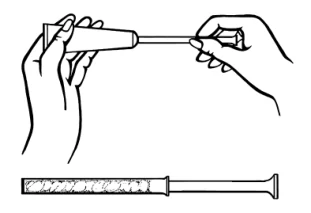
Remove the cap from the tube.
Screw one of the disposable plastic applicators supplied on to the tube where the cap has been removed. Holding the tube from the bottom, squeeze gently and force the cream into the applicator.
When the plunger stops moving, the applicator is full.
Unscrew the applicator and replace the cap on the tube.
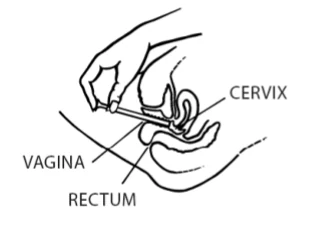
Lie on your back, firmly grasp the applicator barrel, and insert gently into the vagina as far as possible without causing discomfort. Still holding the barrel, slowly push the plunger until it stops and all the cream has been expelled.
Carefully withdraw the applicator and dispose of it. It is preferable to wrap it in paper before disposal in a waste container. Do not try to flush it down the toilet.
Wash your hands well after applying this medicine.
If you use more Dalacin Cream than you should
Tell your doctor. Do not use any more of this medicine until your doctor tells you to.
If you swallow Dalacin Cream
If you or somebody else swallows this medicine, contact your doctor. It is not likely to cause any harm, but your doctor will be able to give you advice on what to do.
If you forget to use Dalacin Cream
If the forgotten dose is just a few hours late, use it straight away.
If it is nearly time for your next application, miss out the forgotten one. Do the next application at the normal time. Do not use double the amount to make up for a forgotten dose.
If you stop using Dalacin Cream
Sometimes you may feel better after only a few days treatment. Even if you do feel better, do not stop using this medicine until you have completed the full course of treatment.
If you have any further questions on the use of this medicine, ask your doctor or pharmacist.
4. Possible side effects
Like all medicines, this medicine can cause side effects, although not everybody gets them.
Tell your doctor immediately if you:
- develop severe, persistent or bloody diarrhoea (which may be associated with stomach pain or fever). This is an uncommon side effect which may occur after treatment with antibiotics and can be a sign of serious bowel inflammation (pseudomembranous colitis).
- experience an allergic reaction or skin reaction such as hives or a rash which is flat and raised bumps in tight clusters giving the skin a splotchy appearance.
Very common: may affect more than 1 in 10 people
- Vaginal thrush (a yeast infection that causes soreness and itching around the vulva and vagina)
Common: may affect up to 1 in 10 people
- Fungal infection (candida), can cause red, itchy rashes
- Headache, dizziness
- Change to sense of taste
- Cough, cold, sore throat
- Stomach-ache
- Difficulty or delay emptying bowels
- Diarrhoea
- Feeling sick (nausea)
- Vomiting
- Itchy skin
- Rash
- Back pain
- Urinary tract infection: bacterial infection of the urinary system, symptoms may include pain or burning while passing urine, needing to pass urine suddenly or more urgently than usual, needing to pass urine more often than usual during the night, urine looking cloudy, has a strong smell or blood in urine, lower tummy pain, back pain or pain under ribs
- Increased levels of sugar and protein in the urine, signs may include urinary infections, foamy or frothy appearance of urine
- Abnormal labour
- Vaginal pain and swelling
- Abnormal bleeding, pain, or stress during your period (menstrual disorder)
- Vaginal discharge
Uncommon: may affect up to 1 in 100 people
- Bacterial infection
- Over-reaction of immune system (hypersensitivity)
- A sensation of whirling and loss of balance
- Nosebleed
- Upset stomach
- Bad breath
- Passing wind
- Reddening of the skin
- A nettle-like rash, hives
- Painful urination
- Vaginal infection
- Pelvic pain
Abnormal laboratory test results
Not known: frequency cannot be estimated from the available data
- White discharge or patches usually within folds of skin with itching, irritation and sometimes soreness (Fungal infection (‘candida’) of skin)
Overactive thyroid gland which can cause increased appetite,
weight loss or sweating
- Bowel disorders
- Inflammation of the lining of the large intestine causing severe diarrhoea with blood in stools (pseudomembranous colitis)
- Indigestion
- Rash with red spots
- Pain in women’s lower tummy or back, usually worse during a period (endometriosis)
- Body pain
- Swelling
Reporting of side effects
If you get any side effects, talk to your doctor, pharmacist or nurse. This includes any possible side effects not listed in this leaflet. You can also report side effects directly via the Yellow Card Scheme at: www.mhra.gov.uk/yellowcard or search for MHRA Yellow Card in the Google Play or Apple App Store. By reporting side effects, you can help provide more information on the safety of this medicine.
5. How to store Dalacin Cream
- Keep out of the sight and reach of children.
- Do not use this medicine after the expiry date which is stated on the tube and carton after EXP. The expiry date refers to the last day of that month.
- Do not store above 25°C. Do not freeze.
- If the cream becomes discoloured or show signs of any deterioration, you should seek the advice of your pharmacist.
- Do not throw away any medicines via wastewater or household waste. Ask your pharmacist how to throw away medicines you no longer use. These measures will help to protect the environment.
6. Contents of the pack and other information
What Dalacin Cream contains
- The active substance is clindamycin (as phosphate). Each gram of cream contains clindamycin phosphate equivalent to 20mg or 2% w/w clindamycin. Each applicator full of 5 grams of vaginal cream contains approximately 100mg of clindamycin.
- The other ingredients are: benzyl alcohol, sorbitan stearate, polysorbate 60, propylene glycol, stearic acid, cetostearyl alcohol, cetyl palmitate, mineral oil and purified water. (see section 2 “Dalacin Cream contains propylene glycol, cetostearyl alcohol and benzyl alcohol and polysorbate 60”).
What Dalacin Cream looks like and contents of the pack
Dalacin Cream is a white, semi solid cream. It is supplied in a laminated tube. Each tube contains 40g of cream, packed in a cardboard carton together with a plastic container containing 7 disposable plastic applicators.
Dalacin Cream is available in 40g tubes.
PL: 15814/0953 POM
Manufactured by Pfizer Service Company BVBA, Zaventem, Belgium OR
Pfizer Service Company BV, Hoge Wei 10, Zaventem 1930, Belgium.
Procured from within the EU and repackaged by the Product Licence holder: OPD Laboratories Limited, Unit 5-7, Colonial Way, Watford, WD24 4YR.
Leaflet revision and issue date (Ref.) 01.05.2026.
Dalacin is a registered trademark of Pfizer Inc.
To request a copy of this leaflet in Braille, large print or audio please call 01923 332 796.