

Summary of Product Characteristics (SmPC) - Compound Sodium Lactate solution for infusion
1 NAME OF THE MEDICINAL PRODUCT
Compound Sodium Lactate Solution for Infusion
2 QUALITATIVE AND QUANTITATIVE COMPOSITION
Sodium chloride: 6.00 g/l
Potassium chloride: 0.40 g/l
Calcium chloride dihydrate: 0.27 g/l
Sodium lactate: 3.20 g/l
(as sodium (S)-lactate solution): 5.33 g/l
Na+ K+ Ca++ Cl- C3H5O3- (lactate) mmol/l 131 5 2 111 29
For the full list of excipients, see section 6.1
3 PHARMACEUTICAL FORM
Solution for infusion.
Clear, colourless solution, free from visible particles.
osmolarity: 278 mOsmol/l
pH: 5.0 – 7.0
4 CLINICAL PARTICULARS
4.1 Therapeutic indications
Compound Sodium Lactate is used in the following indications:
- Restoration of extracellular fluid and electrolytes balances or replacement of extracellular fluid loss where isotonic concentrations of electrolytes are sufficient
- Short term volume replacement (alone or in association with colloid) in case of hypovolaemia or hypotension.
- Regulation or maintenance of metabolic acidosis balance and/or treatment of mild to moderate metabolic acidosis (except lactic acidosis)
4.2 Posology and method of administration
Posology
Adults, the Elderly and Children:
Fluid balance, serum electrolytes and acid-base balance should be monitored before and during administration, with particular attention to serum sodium in patients with increased non-osmotic vasopressin release (syndrome of inappropriate antidiuretic hormone secretion, SIADH) and in patients co-medicated with vasopressin agonist drugs, due to the risk of hospital acquired hyponatraemia (see sections 4.4, 4.5 and 4.8). Monitoring of serum sodium is particularly important for hypotonic fluids.
The infusion rate and volume depend on the age, weight, clinical condition (e.g. burns, surgery, head-injury, infections), and concomitant therapy should be determined by the consulting physician experienced in intravenous fluid therapy (see sections 4.4. and 4.8).
Recommended dosage:
The amount of Compound Sodium Lactate needed to restore normal blood volume is 3 to 5 times the volume of lost blood.
The recommended dosage is:
- for adults: 500 ml to 3 L/24h
- for infants, toddlers and children: 20 ml to 100 ml/kg/24 h
Administration rate:
The infusion rate is usually 40 mL/kg/24h in adults.
Use in paediatric patients
The safety and efficacy of Compound Sodium Lactate in children has not been established by adequate and well-controlled trials; however, the use of electrolyte solutions in the paediatric population is referenced in the medical literature. Lactate-containing solutions should be administered with particular caution to neonates and infants less than 6 months of age.
Paediatric infusion rates is 5 ml/kg/h in average but the value varies with age:
- infants: 6-8 mL/kg/h,
- toddlers: 4-6 mL/kg/h
- children: 2-4 mL/kg/h
In children with burns, the dose is on average 3.4 mL/kg/percent burn at 24 h post-burn and 6.3 mL/kg/percent burn at 48 h.
In severely head-injured children the dose is on average 2850 mL/m². Infusion rate and total volume can be higher in surgery or in case of need.
Note:
- infants and toddlers: aged from 28 days to 23 months (a toddler is an infant who can walk) - children: age from 2 to 11 years
Use in geriatric patients
When selecting the type of infusion solution and the volume/rate of infusion for a geriatric patient, consider that geriatric patients are generally more likely to have cardiac, renal, hepatic, and other diseases or concomitant drug therapy.
Method of administration:
The solution is for intravenous administration through a sterile and non-pyrogenic administration set using aseptic technique. The equipment should be primed with the solution in order to prevent air entering the system.
The product should be inspected visually for particulate matter and discoloration prior to administration. Do not administer unless solution is clear, free from visible particles and the bag is intact. Administer immediately following the insertion of infusion set.
For information regarding precautions to be taken before manipulating or administering the product, please see section 6.6.
Additives may be introduced before infusion or during infusion through the injection port. For information on incompatibilities and preparation of the product (with additives), please see sections 6.2 and 6.6.
4.3 Contraindications
As for other calcium-containing infusion solutions, concomitant administration of ceftriaxone and Compound Sodium Lactate is contraindicated in new-borns (≤28 days of age), even if separate infusion lines are used (risk of fatal ceftriaxone calcium salt precipitation in the neonate’s bloodstream). For patients over 28 days of age please see section 4.4.
Compound Sodium Lactate is also contraindicated in patients with
- A known hypersensitivity to sodium lactate.
- Extracellular hyperhydration or hypervolaemia
- Severe renal insufficiency (with oliguria/anuria)
- Uncompensated cardiac failure
- Hyperkalaemia
- Hypercalcaemia
- Metabolic alkalosis
- Ascitic cirrhosis
- Severe metabolic acidosis
- Conditions associated with increased lactate levels (hyperlactataemia) including lactic acidosis, or impaired lactate utilization, such as severe hepatic insufficiency.
- Concomitant digitalis therapy (see section 4.5 Interactions with other medicinal products and other forms of interaction)
4.4 Special warnings and precautions for use
Hypersensitivity reactions
The infusion must be stopped immediately if any signs or symptoms of a suspected hypersensitivity reaction develop. Appropriate therapeutic countermeasures must be instituted as clinically indicated.
Incompatibilities
Ceftriaxone
In patients older than 28 days (including adults), ceftriaxone must not be administered simultaneously with intravenous calcium-containing solutions, including Compound Sodium Lactate, through the same infusion line. If the same infusion line is used for sequential administration, the line must be thoroughly flushed between infusions with a compatible fluid. For patients under 28 days please see section 4.3.
Electrolyte balance
Hypernatraemia
Compound Sodium Lactate should only be administered to patients with hypernatraemia after careful consideration of the underlying cause and alternative intravenous fluids. Monitoring of plasma sodium and volume status during treatment is recommended.
Compound Sodium Lactate should be administered with particular caution in patients with conditions predisposing to hypernatraemia (such as adrenocortical insufficiency, diabetes insipidus or extensive tissue injury) and in patients with cardiac disease.
Hyperchloraemia
Compound Sodium Lactate should only be administered to patients with hyperchloraemia after careful consideration of the underlying cause and alternative intravenous fluids. Monitoring of plasma chloride and acid-base balance during treatment is recommended.
Compound Sodium Lactate should be administered with particular caution to patients with conditions predisposing to hyperchloraemia (such as renal failure and renal tubular acidosis, diabetes insipidus), and patients with urinary diversion or patients taking certain diuretics (carbonic anhydrase inhibitors e.g. acetazolamide) or steroids (androgens, oestrogens corticosteroids) and in patients with severe dehydration.
Use in patients with potassium deficiency
Although Compound Sodium Lactate has a potassium concentration similar to the concentration in plasma, it is insufficient to produce a useful effect in case of severe potassium insufficiency and therefore it should not be used for this purpose.
Use in patients at risk for hyperkalaemia
Compound Sodium Lactate should be administered with particular caution to patients with conditions predisposing to hyperkalaemia (such as severe renal impairment or adrenocortical insufficiency, acute dehydration, or extensive tissue injury or burns) and in patients with cardiac disease. The plasma potassium level of the patient must be particularly closely monitored in patients at risk of hyperkalaemia.
Use in patients at risk for hypercalcaemia
Calcium chloride is irritant; therefore, care should be taken to prevent extravasation during intravenous injection and intramuscular injection must be avoided. Solutions containing calcium salts should be used with caution in patients with conditions predisposing to hypercalcaemia, such as patients with renal impairment and granulomatous diseases associated with increased calcitriol synthesis such as sarcoidosis, calcium renal calculi or a history of such calculi.
Fluid balance/renal function
Use in patients with renal impairment
Compound Sodium Lactate should be administered with particular caution to patients with renal impairment. In such patients administration of Compound Sodium Lactate may result in sodium and/or potassium retention.
Risk of Fluid and/or Solute Overload and Electrolyte Disturbances Depending on the volume and rate of infusion, intravenous administration of Compound
Sodium Lactate solution can cause
- fluid and/or solute overload resulting in overhydration and, for example, congested states, including pulmonary congestion and oedema.
- clinically relevant electrolyte disturbances and acid-base imbalance. Clinical evaluation and periodic laboratory determinations may be necessary to monitor changes in fluid balance, electrolyte concentrations and acid-base balance during prolonged parenteral therapy or whenever the condition of the patient or the rate of administration warrants such evaluation.
High volume infusion must be used under specific monitoring in patients with cardiac or pulmonary failure and in patients with non-osmotic vasopressin release (including SIADH), due to the risk of hospital-acquired hyponatraemia (see below).
Hyponatraemia
Patients with non-osmotic vasopressin release (e.g. in acute illness, pain, post-operative stress, infections, burns, and CNS diseases), patients with heart-, liver- and kidney diseases and patients exposed to vasopressin agonists (see section 4.5) are at particular risk of acute hyponatraemia upon infusion of hypotonic fluids. Acute hyponatraemia can lead to acute hyponatraemic encephalopathy (cerebral oedema) characterized by headache, nausea, seizures, lethargy and vomiting. Patients with cerebral oedema are at particular risk of severe, irreversible and life-threatening brain injury.
Children, women in the fertile age and patients with reduced cerebral compliance (e.g. meningitis, intracranial bleeding, cerebral contusion and brain oedema) are at particular risk of the severe and life-threatening brain swelling caused by acute hyponatraemia.
Use in patients with hypervolaemia, overhydration or conditions causing sodium retention and oedema
Compound Sodium Lactate should be administered with particular caution to hypervolaemic or overhydrated patients.
Due to the sodium chloride content Compound Sodium Lactate should be administered with particular caution to patients with conditions that may cause sodium retention, fluid overload and oedema, such as patients with primary hyperaldosteronism, secondary hyperaldosteronism (associated with, e.g., hypertension, congestive heart failure, renal artery stenosis, or nephrosclerosis), or preeclampsia. (see also Section 4.5)
Acid-base balance
Use in patients at risk for alkalosis
Compound Sodium Lactate should be administered with particular caution to patients at risk for alkalosis. Because lactate is metabolized to bicarbonate, administration may result in, or worsen, metabolic alkalosis. Seizure may be precipitated by the alkalosis induced by lactate but this is uncommon.
Other warnings
Administration of citrate anticoagulated/preserved blood
Due to the risk of coagulation precipitated by its calcium content, Compound Sodium Lactate must not be added to or administered simultaneously through the same tubing with citrate anticoagulated/preserved blood.
Use in patients with type 2 diabetes
Lactate is a substrate for gluconeogenesis. Therefore, glucose levels should be carefully monitored in patients receiving Compound Sodium Lactate.
Administration
Adding other medication or using an incorrect administration technique might cause the appearance of fever reactions due to the possible introduction of pyrogens. In such case the infusion must be stopped immediately.
For information on incompabilities and preparation of the product and additives, please see sections 6.2 and 6.6.
During long term parenteral treatment, a convenient nutritive supply must be given to the patient.
4.5 Interaction with other medicinal products and other forms of interaction
Ceftriaxone: See sections 4.3 and 4.4 for more information
Drugs leading to an increased vasopressin effect
The below listed drugs increase the vasopressin effect, leading to reduced renal electrolyte free water excretion and may increase the risk of hospital acquired hyponatraemia following inappropriately balanced treatment with i.v. fluids (see sections 4.2, 4.4 and 4.8).
- Drugs stimulating vasopressin release include: Chlorpropamide, clofibrate, carbamazepine, vincristine, selective serotonin reuptake inhibitors, 3.4- methylenedioxy-N-methamphetamine, ifosfamide, antipsychotics, narcotics
- Drugs potentiating vasopressin action include: Chlorpropamide, NSAIDs, cyclophosphamide
- Vasopressin analogues include: Desmopressin, oxytocin, terlipressin
Other medicinal products increasing the risk of hyponatraemia also include diuretics in general and antiepileptics such as oxcarbazepine.
Interaction related to the presence of sodium:
Caution is advised when administering Compound Sodium Lactate to patients treated with drugs that may increase the risk of sodium and fluid retention (with oedema and hypertension), such as corticosteroids.
Interaction related to the presence of potassium:
Because of its potassium content, Compound Sodium Lactate should be administered with caution in patients treated with agents or products that can cause hyperkalaemia or increase the risk of hyperkalaemia, such as
- Potassium-sparing diuretics (amiloride, spironolactone, triamterene, alone or in association).
- Angiotensin converting enzyme inhibitors (ACEi) and angiotensin II receptor antagonists
- Tacrolimus, cyclosporine.
Administration of potassium in patients treated with such medications can produce severe and potentially fatal hyperkalaemia, particularly in patients with severe renal insufficiency.
Interaction related to the presence of calcium:
Administration of calcium may increase the effects of digitalis and lead to serious or fatal cardiac arrhythmia. Therefore, larger volumes or a faster infusion rates should be used with caution in patients treated with digitalis glycosides.
- Caution is advised when administering Compound Sodium Lactate to patients treated with thiazide diuretics or vitamin D, as these can increase the risk of hypercalcaemia.
- Bisphosphonates, fluoride, some fluoroquinolones and tetracyclines which are less absorbed (lower availability) when administered with calcium.
Interaction related to the presence of lactate (which is metabolized into bicarbonate): Caution is advised when administering Compound Sodium Lactate to patients treated with drugs for which renal elimination is pH dependent. Due to the alkalinizing action of lactate (formation of bicarbonate), Compound Sodium Lactate solution may interfere with the elimination of such drugs.
- Renal clearance of acidic drugs such as salicylates, barbiturates, and lithium may be increased because of the alkalinisation of urine by the bicarbonate resulting from lactate metabolism.
- Renal clearance of alkaline drugs, such as sympathomimetics (e.g. ephedrine, pseudoephedrine) and stimulants (e.g. dexamphetamine sulfate, phenfluramine hydrochloride) may be decreased.
4.6 Fertility, pregnancy and lactation
Pregnancy
Compound Sodium Lactate can be used safely during pregnancy as long as the electrolyte- and fluid balance is controlled.
It is reminded that calcium crosses the placenta.
Compound Sodium Lactate should be administrated with special caution for pregnant women during labour particularly as to serum-sodium if administered in combination with oxytocin (see sections 4.4, 4.5 and 4.8).
When a medicinal product is added, the nature of the drug and its use during pregnancy have to be considered separately.
Breast-feeding
Compound Sodium Lactate can be used safely during breast-feeding as long as the electrolyte- and fluid balance is controlled.
It is reminded that calcium is distributed into breast milk.
When a medicinal product is added, the nature of the drug and its use during breast-feeding have to be considered separately.
4.7 Effects on ability to drive and use machines
There is no information of the effects of Compound Sodium Lactate on the ability to drive and use machines.
4.8 Undesirable effects
The following adverse reactions (listed by MedDRA System Organ Class) have been reported spontaneously during the post-market experience.
| Immune System Disorders | Hypersensitivity/Infusion reactions including Anaphylactic/Anaphylactoid reaction, possibly manifested by one or more of the following symptoms: Angioedema, Chest pain, Chest discomfort, Decreased heart rate, Tachycardia, Blood pressure decreased, Respiratory distress, Bronchospasm, Dyspnoea, Cough, Urticaria, Rash, Pruritus, Erythema, Flushing, Throat irritation, Paraesthesia, Hypoesthesia oral, Dysgeusia, Nausea, Anxiety, Pyrexia, Headache |
| Metabolism and Nutrition Disorders | Hyperkalaemia Hospital acquired hyponatraemia* |
| Nervous system disorders | Acute hyponatraemic encephalopathy* |
| General Disorders and Administration Site Conditions | Infusion Site Reactions manifested by one or more of the following symptoms: Phlebitis, Infusion site inflammation, Infusion site swelling, Infusion site rash, Infusion site pruritus, Infusion site erythema, Infusion site pain, Infusion site burning |
*Hospital acquired hyponatraemia may cause irreversible brain injury and death, due to development of acute hyponatraemic encephalopathy, frequency unknown (see sections 4.2. 4.4, 4.5).
The following adverse reactions have been reported spontaneously during the use of other sodium-lactate containing solutions:
- Hypersensitivity: Laryngeal oedema (Quincke’s oedema), skin swelling, Nasal congestion, Sneezing
- Electrolyte disturbances
- Hypervolemia
- Panic Attack
- Other infusion site reactions: Infection at the site of injection, Extravasation, Infusion site anaesthesia (numbness).
Reporting of suspected adverse reactions
Reporting suspected adverse reactions after authorisation of the medicinal product is important. It allows continued monitoring of the benefit/risk balance of the medicinal product. Healthcare professionals are asked to report any suspected adverse via reactions via the Yellow Card Scheme at: www.mhra.gov.uk/yellowcard or search for MHRA Yellow Card in the Google Play or Apple App Store.
4.9 Overdose
An excessive volume or too high a rate of administration of Compound Sodium Lactate may lead to fluid and sodium overload with a risk of oedema (peripheral and/or pulmonary), particularly when renal sodium excretion is impaired. In this case extra renal dialysis may be necessary.
Excessive administration of potassium may lead to the development of hyperkalaemia, especially in patients with renal impairment. Symptoms include paraesthesia of the extremities, muscle weakness, paralysis, cardiac arrhythmias, heart block, cardiac arrest, and mental confusion.
Excessive administration of calcium salts may lead to hypercalcaemia. Symptoms of hypercalcaemia may include anorexia, nausea, vomiting, constipation, abdominal pain, muscle weakness, mental disturbances, polydipsia, polyuria, nephrocalcinosis, renal calculi, and, in severe cases, cardiac arrhythmias and coma. Too rapid intravenous injection of calcium salts may also lead to many of the symptoms of hypercalcaemia as well as to chalky taste, hot flushes, and peripheral vasodilatation. Mild asymptomatic hypercalcaemia will usually resolve on stopping administration of calcium and other contributory drugs such as vitamin D. If hypercalcaemia is severe, urgent treatment (such as loop diuretics, haemodialysis, calcitonin, bisphosphonates, trisodium edetate) is required.
Excessive administration of lactate may lead to metabolic alkalosis. Metabolic alkalosis may be accompanied by hypokalaemia, Symptoms may include mood changes, tiredness, shortness of breath, muscle weakness, and irregular heartbeat. Muscle hypertonicity, twitching, and tetany may develop especially in hypocalcaemic patients. Treatment of metabolic alkalosis due to bicarbonate overdose consists mainly of appropriate correction of fluid and electrolyte balance. Replacement of calcium, chloride, and potassium may be of particular importance. When overdose is related to medications added to the solution infused, the signs and symptoms of over infusion will be related to the nature of the additive being used. In the event of accidental over infusion, treatment should be discontinued and the patient should be observed for the appropriate signs and symptoms related to the drug administered. The relevant symptomatic and supportive measures should be provided as necessary.
5 PHARMACOLOGICAL PROPERTIES
5.1 Pharmacodynamic properties
Pharmacotherapeutic group (ATC code): B05BB01 “Electrolytes”
Compound Sodium Lactate (synonym: Ringer Lactate solution) is an isotonic solution of electrolytes. The constituents of Compound Sodium Lactate and their concentrations are designed to match those of plasma.
The pharmacological properties of the Compound Sodium Lactate are those of its components (sodium, potassium, calcium, chloride and lactate). The main effect of Compound Sodium Lactate is the expansion of the extracellular compartment including both the interstitial fluid and the intravascular fluid. The lactate is metabolised into bicarbonate, mainly in the liver, and produces an alkalinising effect on the plasma.
In healthy volunteers receiving Compound Sodium Lactate, central venous pressure changes were associated with a secretion of atrial natriuretic peptide. In healthy volunteers, Compound Sodium Lactate decreased serum osmolality, increased blood pH, and the time until first urination was shorter than that with normal saline.
There are no significant changes in glucagon, norepinephrine, epinephrine, blood glucose and insulin levels in aortic surgery patients receiving Compound Sodium Lactate.
When medication is added to Compound Sodium Lactate, the overall pharmacodynamics of the solution will depend on the nature of the drug used.
5.2 Pharmacokinetic properties
The pharmacokinetic properties of the Compound Sodium Lactate (synonym: Ringer Lactate solution) are those of the ions its composition includes (sodium, potassium, calcium and chloride).
Infusion of Compound Sodium Lactate in normal hemodynamically stable adults does not increase circulating lactate concentrations.
The pharmacokinetics of D-lactate and L-lactate are similar.
The lactate in Compound Sodium Lactate is metabolized by both oxidation and gluconeogenesis, predominantly in the liver, and bicarbonate is generated by both processes over 1-2 h.
When medication is added to Compound Sodium Lactate, the overall pharmacokinetics of the solution will depend on the nature of the drug used.
5.3 Preclinical safety data
Preclinical safety data of Compound Sodium Lactate (synonym: Ringer Lactate) solution in animals are not relevant since its constituents are physiological components in animal and human plasma.
Toxic effects are not to be expected under the condition of clinical application. The safety of potential additives should be considered separately.
6 PHARMACEUTICAL PARTICULARS
6.1 List of excipients
Water for Injections
6.2 Incompatibilities
Ceftriaxone must not be mixed with calcium-containing solutions including Compound Sodium Lactate. See also sections 4.3 and 4.4.
As with all parenteral solutions additives my be incompatible. Compatibility of the additives with the solution must be assessed before addition. Detection of incompatibility with any added medicinal product with the Compound Sodium Lactate falls within the user’s responsibility. A user should inspect potential change in the solution colour and/or the potential presence of a clot, insoluble complexes, or formation of crystals. A user should also read the authorised product information on the use of the added medicinal product.
Prior to the addition of a medicinal product, it should be verified whether the medicinal product is soluble and stable in water within the pH range. When making additions to Compound Sodium Lactate solution, aseptic technique must be used.
Once a compatible medicinal product is added to the Compound Sodium Lactate, the solution must be used immediately.
As a guidance the following medications are incompatible with the Compound Sodium Lactate (non-exhaustive listing):
Medications incompatible with Compound Sodium Lactate (Hartmann’s Solution) Aminocaproic acid
Amphotericin B
Metaraminol tartrate
Cefamandole
Ceftriaxone
Cortisone acetate
Diethylstilbestrol
Etamivan
Ethyl alcohol
Phosphate and carbonate solutions
Oxytetracycline
Thiopental sodium
Versenate disodium
Medications with partial incompatibility with Compound Sodium Lactate: Tetracycline stable for 12 hours
Ampicillin sodium
concentration of 2%-3% stable for 4 hours
concentration >3% must be given within 1 hour
Minocycline stable for 12 hours
Doxycycline stable for 6 hours
Additives known or determined to be incompatible should not be used. In the absence of compatibility studies, this medicinal product must not be mixed with other medicinal products.
See also section 6.6 for further instructions on the use of the product with additives.
6.3 Shelf life
Shelf life as packaged:
24 months
From a microbiological point of view, unless the method of opening precludes the risk of microbial contamination, the product should be used immediately. If not used immediately, in-use storage times and conditions are the responsibility of the user.
6.4 Special precautions for storage
Do not store above 25°C. Do not freeze.
6.5 Nature and contents of container
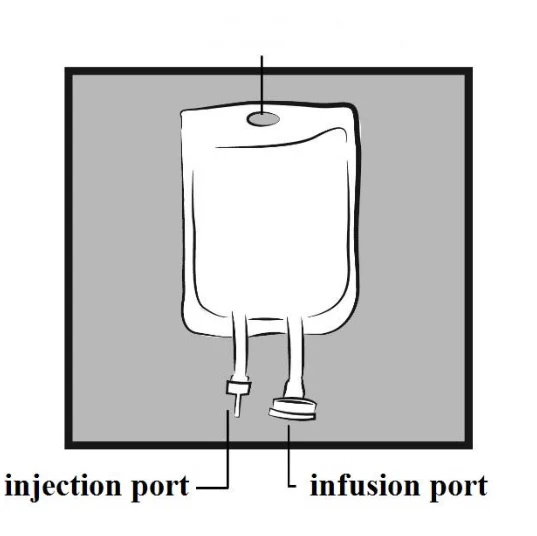
A polyolefin/polypropylene bag with a polycarbonate-chlorobutyl infusion port covered with a blue flip-cap and a polycarbonate-isoprene injection port covered with breakcable cap.
Bags may be wrapped in a sealed, protective, plastic dustcover. The bags are available in following sizes:
1 x 100 ml, 1 x 250 ml, 1 x 500 ml, 1 x 1 000 ml (individually) 40 x 100 ml, 50 x 100 ml, 60 x 100ml, 18 x 250 ml, 30 x 250 ml, 10 x 500 ml, 20 x 500 ml,
10 x 1000 ml (in a cardboard box)
Not all pack sizes may be marketed.
6.6 Special precautions for disposal
Please see section 4.2 for information regarding the method of administration. Use only if the solution is clear, free of any visible particles, and if the packaging is intact. Administer immediately once attached to the infusion set.
Do not use plastic bags in series connections. Such use could result in air embolism due to residual air being drawn from the primary container before the administration of the fluid from the secondary container is completed. Pressurizing intravenous solutions contained in flexible plastic containers to increase flow rates can result in air embolism if the residual air in the container is not fully evacuated prior to administration.
Use of a vented intravenous administration set with the vent in the open position could result in air embolism.
Vented intravenous administration sets with the vent in the open position should not be used with flexible plastic containers.
The solution must be administered aseptically, using a sterile device. To prevent the air from penetrating into the system, the device must be filled up with the solution.
Other medicinal products may be added before or during the infusion administration via a venous line.
If another medicinal product is added to the solution, check the isotonicity prior to the parenteral administration. All added medicinal products must be thoroughly and carefully mixed in an aseptic manner. Solutions containing other added medicinal products must be used immediately and must not be stored for later use.
Adding other medication or using an incorrect administration technique might cause the appearance of fever reactions due to the possible introduction of pyrogens. In case of adverse reaction, infusion must be stopped immediately.
For single use only.
Any unused medicinal product or waste material should be disposed of in accordance with local requirements.
Do not reconnect partially used bags.
INSTRUCTIONS FOR HANDLING THE INFUSION BAG
Figure 1: Bag
hanger
- 1. INSPECTION PRIOR TO ADMINISTRATION
- a) Check for minute leaks by squeezing the bag gently. If you observe any bag integrity disruption, discard the bag containing the solution, as its sterility may be impaired.
- b)
Check visually whether the solution meets the characteristics listed in the section
3 of the Summary of Product Characteristics. If not, the solution should be discarded. For preparation and administration use sterile material.
- 2. PREPARATION FOR THE ADMINISTRATION
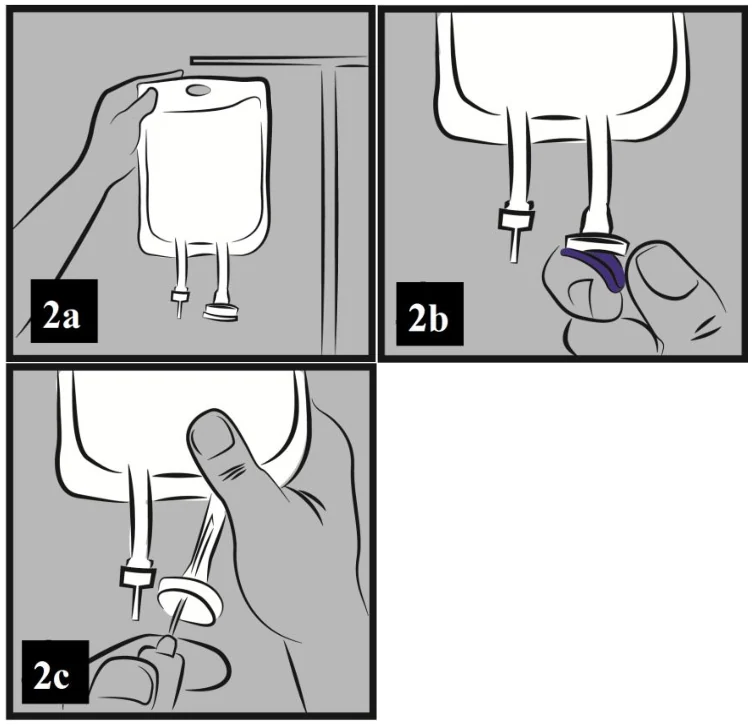
- a) Hang the bag on a stand position (Figure 2a).
- b) Break off a blue plastic cover from the delivery port (infusion port) (Figure 2b).
- c) Disinfect the administration site of the infusion port . Connect a thick perforation needle of the infusion set to the infusion port (Figure 2c)
- d) Proceed as described in the instructions accompanying the infusion set (set filling and solution application).
- 3. ADDING A MEDICINE TO THE SOLUTION
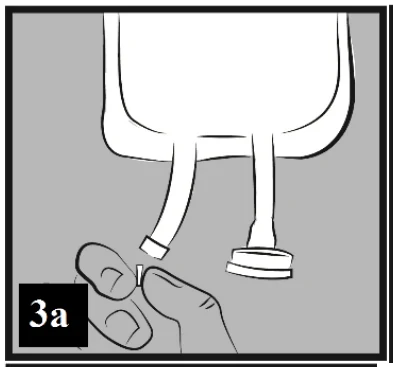
- a) Break off a transparent cover on the injection port. Disinfect the administration site (Figure 3a).
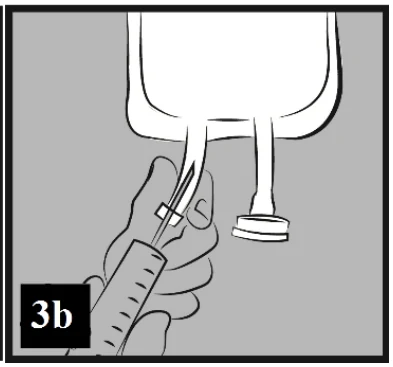
- b)
Puncture the injection port and add the medicine. A recommended needle size: 19
G (1.10 mm) to 22 G (0.70 mm) (Figure 3b).
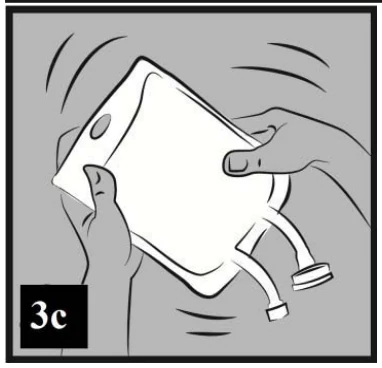
- c) Thoroughly mix the bag content (Figure 3c).
Warning: Follow the instructions for the disposal of bags in the healthcare area (regarding content of the added medicinal product).
The bag may be filled up with the following maximum amounts of other medicines:
| 100 ml bag | max. 70 ml |
| 250 ml bag | max. 75 ml |
| 500 ml bag | max. 115 ml |
| 1 000 ml bag | max. 130 ml |
7 MARKETING AUTHORISATION HOLDER
IMUNA PHARM, a.s.
Jarková 269/17
082 22 Šarišské Michaľany
Slovak Republic
8 MARKETING AUTHORISATION NUMBER(S)
PL 43817/0002
9 DATE OF FIRST AUTHORISATION/RENEWAL OF THE
AUTHORISATION
08/07/2022
10 DATE OF REVISION OF THE TEXT
18/10/2023