

Summary of Product Characteristics (SmPC) - Clonidine Hydrochloride 50 micrograms / 5 ml oral solution
1 NAME OF THE MEDICINAL PRODUCT
Clonidine hydrochloride 50micrograms/5ml Oral Solution
2 QUALITATIVE AND QUANTITATIVE COMPOSITION
Each 5 ml oral solution contains 50 micrograms of Clonidine hydrochloride
Excipients with known effect:
Each 5 ml of oral solution contains 9 mg methyl parahydroxybenzoate (E218).
For the full list of excipients, see section 6.1
3 PHARMACEUTICAL FORM
Oral solution.
A clear, colourless solution.
4 CLINICAL PARTICULARS
4.1 Therapeutic indications
(a) The prophylactic management of migraine or recurrent vascular headache.
(b) The management of vasomotor conditions commonly associated with the menopause and characterised by flushing.
4.2 Posology and method of administration
Posology
Adults:
Initially 5 ml (50 micrograms) twice daily. If after two weeks there has been no remission, increase to 7.5 ml (75 micrograms) twice daily.
The duration of treatment depends upon the severity of the condition.
If symptoms continue to occur the patient should be informed that it may take 2 - 4 weeks until Clonidine hydrochloride is fully effective.
Elderly:
No specific information on the use of this product in the elderly is available.
Clinical trials have included patients over 65 years and no adverse reactions specific to this age group have been reported.
Paediatric Population:
There is insufficient evidence for the application of clonidine in children and adolescents younger than 18 years. Therefore, the use of clonidine is not recommended in paediatric subjects under 18 years.
Patients with renal impairment
Clonidine hydrochloride should be used with caution in patients with renal insufficiency. Careful monitoring of blood pressure is required.
4.3 Contraindications
Clonidine hydrochloride should not be used in patients with severe bradyarrhythmia resulting from either sick-sinus syndrome or AV block of 2nd or 3rd degree, or hypersensitivity to the clonidine hydrochloride or to any of the excipients listed in section 6.1.
4.4 Special warnings and precautions for use
Clonidine hydrochloride should be used with caution in patients with cerebrovascular disease, coronary insufficiency, heart failure, occlusive peripheral vascular disorders, such as Raynaud’s disease, polyneuropathy, constipation, or those with depression or a a history of depression.
At doses higher than those recommended above, clonidine is an effective antihypertensive agent. Caution should therefore be observed where antihypertensive agents are being used, as potentiation of the hypotensive effect may occur. Provided the recommended Clonidine hydrochloride dosage regimen is followed, no difficulty with hypotension should arise during the routine management of patients with either migraine or menopausal flushing.
Depending on the dose given, Clonidine hydrochloride can cause bradycardia. In patients with pre-existing cardiac conduction abnormalities, arrhythmias have been observed after high doses of Clonidine hydrochloride.
Patients with renal failure require extreme care (see section 4.2).
Patients should be instructed not to discontinue therapy without consulting their physician. Following sudden discontinuation of Clonidine hydrochloride after prolonged treatment with high doses, agitation, restlessness, palpitations, rapid rise in blood pressure, nervousness, tremor, headache or nausea have been reported. When discontinuing therapy with Clonidine hydrochloride, the physician should reduce the dose gradually over 2-4 days.
Patients who wear contact lenses should be warned that treatment with Clonidine hydrochloride may cause decreased lacrimation.
The use and the safety of clonidine in children and adolescents have little supporting evidence in randomized controlled trials and therefore cannot be recommended for use in this population.
Serious adverse events, including sudden death, have been reported in concomitant use with methylphenidate. The safety of using methylphenidate in combination with clonidine has not been systematically evaluated.
Excipients warnings
This product contains methyl parahydroxybenzoate (E218), which may cause allergic reactions (possibly delayed).
4.5 Interaction with other medicinal products and other forms of interaction
Concurrent administration of antihypertensive agents, vasodilators or diuretics, may lead to an increased hypotensive effect.
Substances with alpha2-receptor blocking properties, such as mirtazapine, may abolish the alpha2-receptor mediated effects of clonidine in a dose-dependent manner.
Concomitant use of beta-blockers and/or cardiac glycosides can cause bradycardia or dysrhythmia (AV-block) in isolated cases.
It cannot be ruled out that concomitant administration of a beta-receptor blocker will cause or potentiate peripheral vascular disorders.
If during combined treatment with a beta-blocker there is a need to interrupt or discontinue antihypertensive therapy, the beta-blocker must always be discontinued slowly first, (reducing the dose gradually to avoid sympathetic hyperactivity) and then the Clonidine hydrochloride, which should also be reduced gradually over several days if previously given in high doses.
Orthostatic hypotension may be provoked or aggravated by concomitant administration of tricyclic antidepressants or neuroleptics with alpha-receptor blocking properties.
As the effects of clonidine can be antagonised by tricyclic anti-depressants, it may be necessary to adjust the dosage of Clonidine hydrochloride, if these agents are administered concurrently.
Although there is no experience from clinical trials, the effect of tranquillisers, hypnotics or alcohol could theoretically be potentiated by Clonidine hydrochloride.
4.6 Fertility, pregnancy and lactation
Pregnancy
There is limited amount of data from the use of clonidine in pregnant women. As with all medicines, clonidine should not be used in pregnancy, especially the first trimester, unless Clonidine and the expected benefit is thought to outweigh any possible risk to the foetus.
In animal studies involving doses higher than the equivalent maximum therapeutic dose in man, effects on foetal development were only seen in one species. Foetal malformations did not occur.
Careful monitoring of mother and child is recommended.
Clonidine passes the placental barrier and may lower the heart rate of the foetus. Post partum a transient rise in blood pressure in the newborn cannot be excluded.
There is no adequate experience regarding the long-term effects of prenatal exposure.
Lactation
Clonidine is excreted in human milk. However, there is insufficient information on the effect on newborns. The use of Clonidine hydrochloride is therefore not recommended during breast feeding.
Fertility
No clinical studies on the effect on human fertility have been conducted with clonidine. Non-clinical studies with clonidine indicate no direct or indirect harmful effects with respect to the fertility index.
4.7 Effects on ability to drive and use machines
No studies on the effects on the ability to drive and use machines have been performed.
However, patients should be advised that they may experience undesirable effects such as dizziness, sedation and accommodation disorder during treatment with Clonidine hydrochloride. If patients experience the above-mentioned side effects, they should avoid potentially hazardous tasks such as driving or operating machinery.
4.8 Undesirable effects
Most adverse effects are mild and tend to diminish with continued therapy.
Adverse events have been ranked under headings of frequency using the following convention:
Very common ≥1/10
Common ≥1/100 to < 1/10
Uncommon ≥1/1000 to < 1/100
Rare ≥1/10000 to < 1/1000
Very rare < 1/10000
Not known Cannot be estimated from the available data
Endocrine disorders:
Gynaecomastia
rare
Psychiatric disorders:
confusional state not known delusional perception uncommon depression common hallucination uncommon libido decreased not known nightmare uncommon sleep disorder
common
Nervous system disorders:
dizziness very common headache common paraesthesia uncommon sedation very common
Eye disorders:
accommodation disorder not known lacrimation decreased rare
Cardiac disorders:
atrioventricular block rare
bradyarrhythmia not known sinus bradycardia uncommon
Vascular disorders:
orthostatic hypotension very common
Raynaud’s phenomenon uncommon
Respiratory, thoracic and mediastinal disorders:
nasal dryness
rare
Gastrointestinal disorder:
colonic pseudo-
obstruction
rare
constipation common
dry mouth very common
nausea common
salivary gland pain common
vomiting
common
Skin and subcutaneous tissue disorders:
Alopecia rare
Pruritus uncommon
Rash uncommon
Urticaria
uncommon
Reproductive system and breast disorders:
erectile dysfunction
common
General disorders and administration site conditions:
Fatigue common
Malaise
uncommon
Investigations:
blood glucose increased rare
Reporting of suspected adverse reactions
Reporting suspected adverse reactions after authorisation of the medicinal product is important. It allows continued monitoring of the benefit/risk balance of the medicinal product. Healthcare professionals are asked to report any suspected adverse reactions via Yellow Card Scheme; website: www.mhra.gov.uk/yellowcard or search for MHRA Yellow Card in the Google Play or Apple App Store.
4.9 Overdose
Symptoms:
Manifestations of intoxication are due to generalised sympathetic depression and include pupillary constriction, somnolence including coma, hypotension, orthostatic hypotension, bradycardia, hypothermia, respiratory depression including apnoea, occasionally vomiting, very occasionally hypertension, dryness of the mouth.
Treatment:
There is no specific antidote for clonidine overdose. Administration of activated charcoal should be performed where appropriate.
Supportive care may include atropine sulfate for symptomatic bradycardia, and intravenous fluids and/or inotropic sympathomimetic agents for hypotension. Severe persistent hypertension may require correction with alpha-adrenoceptor blocking drugs.
Naloxone may be a useful adjunct for the management of clonidine-induced respiratory depression.
5 PHARMACOLOGICAL PROPERTIES
5.1 Pharmacodynamic properties
Pharmacotherapeutic group: Other antimigraine preparations; ATC code: N02CX02
Clonidine is an antihypertensive agent which acts centrally by stimulating alpha2-adrenergic receptors and producing a reduction in sympathetic tone, resulting in a fall in diastolic and systolic blood pressure and a reduction in heart rate.
Treatment with Clonidine hydrochloride diminishes the responsiveness of peripheral vessels to constrictor and dilator stimuli, thereby preventing the vascular changes associated with migraine. The same direct action on peripheral vessels moderates the vascular changes associated with menopausal flushing.
Paediatric population
The efficacy of clonidine in the treatment of hypertension has been investigated in five clinical studies in paediatric patients. The efficacy data confirms the properties of clonidine in reduction of systolic and diastolic blood pressure. However, due to limited data and methodological insufficiencies, no definitive conclusion can be drawn on the use of clonidine for hypertensive children.
The efficacy of clonidine has also been investigated in a few clinical studies with paediatric patients with ADHD, Tourette syndrome and stuttering. The efficacy of clonidine in these conditions has not been demonstrated.
There were also two small paediatric studies in migraine, neither of which demonstrated efficacy. In the paediatric studies the most frequent adverse events were drowsiness, dry mouth, headache, dizziness and insomnia. These adverse events might have serious impact on daily functioning in paediatric patients.
Overall, the safety and efficacy of clonidine in children and adolescents have not been established (see section 4.2).
5.2 Pharmacokinetic properties
Absorption and distribution
The pharmacokinetics of clonidine is dose-proportional in the range of 75-300 micrograms; over this range, dose linearity has not been fully demonstrated. Clonidine, the active ingredient of Clonidine hydrochloride, is highly absorbed and undergoes a minor first pass effect. Peak plasma concentrations are reached within 1-3 h after oral administration.
The plasma protein binding is 30-40 %. Clonidine is rapidly and extensively distributed into tissues and crosses the blood-brain barrier, as well as the placental barrier. Clonidine is excreted in human milk. However, there is insufficient information on the effect on newborns.
Metabolism and elimination
The terminal elimination half-life of clonidine has been found to range from 5 to 25.5 hours. It can be prolonged in patients with severely impaired renal function up to 41 hours.
About 70 % of the dose administered is excreted with the urine mainly in form of the unchanged parent drug (40-60 % of the dose). The main metabolite p-hydroxy-clonidine is pharmacologically inactive. Approximately 20% of the total amount is excreted with the faeces. There is no definitive data about food or race effects on the pharmacokinetics of clonidine.
The antihypertensive effect is reached at plasma concentrations between about 0.2 and 2.0 ng/ml in patients with normal renal function. The hypotensive effect is attenuated or decreases with plasma concentrations above 2.0 ng/ml.
5.3 Preclinical safety data
There are no preclinical data of relevance to the prescriber which are additional to that already included in other sections of the SPC.
6 PHARMACEUTICAL PARTICULARS
6.1 List of excipients
Methyl parahydroxybenzoate (E 218)
Sucralose (E 955)
Purified water
6.2 Incompatibilities
In the absence of compatibility studies, this medicinal product must not be mixed with other medicinal products.
6.3 Shelf life
24 Months
Discard 30 days after first opening.
6.4 Special precautions for storage
This medicinal product does not require any special storage conditions.
Do not refrigerate or freeze.
6.5 Nature and contents of container
Bottle: Ph. Eur. Type III 100 ml amber glass bottles.
Closure: 28 mm child resistant white polypropylene closure.
Dosing device: 10 ml polypropylene oral syringe with 0.5 ml graduation mark and an adaptor for the syringe.
Pack Size: 100 ml
6.6 Special precautions for disposal
Any unused medicinal product or waste material should be disposed of in accordance with local requirements.
Instructions for the use of syringe:
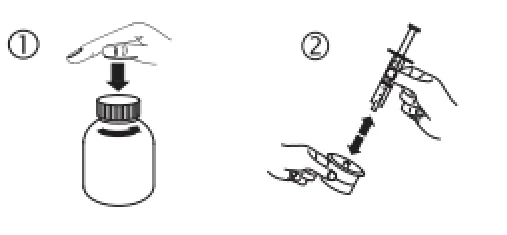
- a) Open the bottle: press the cap and turn it anticlockwise (figure 1). Separate the adaptor from the syringe (figure 2).
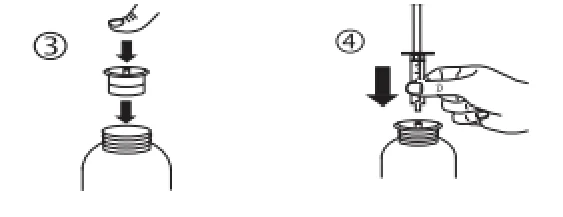
- b) Insert the adaptor into the bottle neck (figure 3). Ensure it is properly fixed. Take the syringe and put it in the adaptor opening (figure 4).
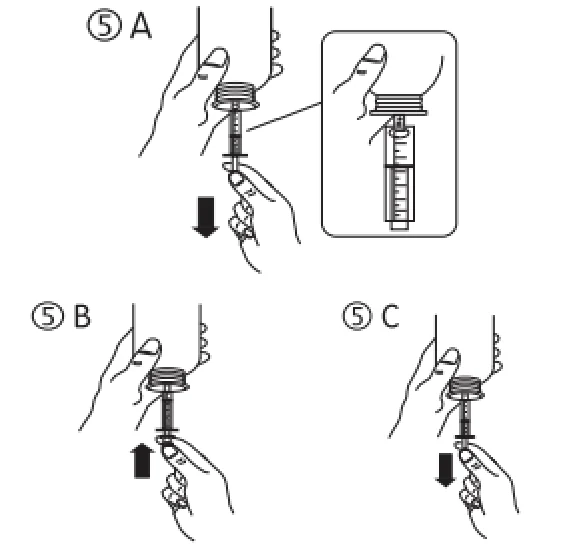
- c) Turn the bottle upside down. Fill the syringe with a small amount of solution by pulling the piston down (figure 5A), then push the piston upwards in order to remove any possible bubble (figure 5B). Pull the piston down to the graduation mark corresponding to the quantity in millilitres (ml) prescribed by your doctor (figure 5C).
- d) Turn the bottle the right way up (figure 6A). Remove the syringe from the
adaptor (figure 6B). 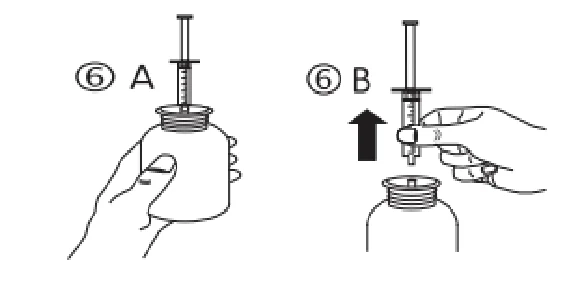
- e) Empty the contents of the syringe into the patient’s mouth by pushing the piston
to the bottom of the syringe (figure 7). Close the bottle with the plastic screw cap. Wash the syringe with water and let it dry before you use it again (figure 8) 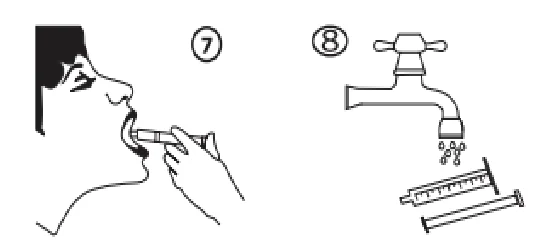
7 MARKETING AUTHORISATION HOLDER
Novumgen Limited
20-22 Wenlock Road, London,
N1 7GU, United Kingdom
8 MARKETING AUTHORISATION NUMBER(S)
PL 55863/0137
9 DATE OF FIRST AUTHORISATION/RENEWAL OF THE
AUTHORISATION
21/07/2026
10 DATE OF REVISION OF THE TEXT
21/07/2026