

Patient leaflet - Ceftazidime 2 g powder for solution for injection/infusion
1. What Ceftazidime is and what it is used for
Ceftazidime is an antibiotic used in adults and children (including newborn babies). It works by killing bacteria that cause infections. It belongs to a group of medicines called cephalosporins.
Ceftazidime is used to treat severe bacterial infections of:
- the lungs or chest
- the lungs and bronchi in patients suffering from cystic fibrosis
- the brain (meningitis)
- the ear
- the urinary tract
- the skin and soft tissues
- the abdomen and abdominal wall (peritonitis)
- the bones and joints.
Ceftazidime can also be used:
- to prevent infections during prostate surgery in men
- to treat patients with low white blood cell counts (neutropenia) who have a fever due to a bacterial infection.
2. What you need to know before you are given Ceftazidime
You must not be given ceftazidime:
if you are allergic to ceftazidime or any of the other ingredients of this medicine (listed in section 6).
if you have had a severe allergic reaction to any other antibiotic (penicillins, monobactams and carbapenems) as you may also be allergic to ceftazidime.
→ Tell your doctor before you are given Ceftazidime if you think that this applies to you. You must not receive this medicine in such case.
Warnings and precautions
Talk to your doctor or nurse before you are given Ceftazidime.
You must look out for certain symptoms such as allergic reactions, nervous system disorders and gastrointestinal disorders, such as diarrhoea, while you are receiving this medicine. This will reduce the risk of possible problems. See ‘Conditions you need to look out for’ in section 4. If you have had an allergic reaction to other antibiotics you may also be allergic to ceftazidime.
Serious skin reactions including Stevens-Johnson syndrome, toxic epidermal necrolysis, drug reaction with eosinophilia and systemic symptoms (DRESS), acute generalized exanthematous pustulosis (AGEP) have been reported in association with ceftazidime treatment. Seek medical attention immediately if you notice any of the symptoms related to these serious skin reactions described in section 4.
If you need a blood or urine test
Ceftazidime can affect the results of urine tests for sugar and a blood test known as the Coombs test. If you are having tests:
→ Tell the person taking the sample that you have been given Ceftazidime.
Other medicines and Ceftazidime
Tell your doctor if you are taking, have recently taken or might take any other medicines. This includes medicines you can obtain without a prescription.
You shouldn’t be given ceftazidime without talking to your doctor if you are also taking:
- an antibiotic called chloramphenicol
- a type of antibiotic called aminoglycosides e.g. gentamicin, tobramycin
water tablets called furosemide
→ Tell your doctor if this applies to you.
Pregnancy and breast-feeding
If you are pregnant or breast-feeding, think you may be pregnant or are planning have a baby, ask your doctor for advice before you are given this medicine.
Your doctor will consider the benefit of treating you with ceftazidime against the risk to your baby.
Driving and using machines
This medicine can cause side effects that affect your ability to drive, such as dizziness. Don’t drive or use machines unless you are sure you’re not affected.
Ceftazidime contains sodium
You need to take this into account if you are on a controlled sodium diet.
| Ceftazidime Strength | Amount per vial |
| Ceftazidime 1 g | This medicine contains 52 mg sodium (main component of cooking/table salt) in each vial. This is equivalent to 2.6 % of the recommended maximum daily dietary intake of sodium for an adult. |
| Ceftazidime 2 g | This medicine contains 104 mg sodium (main component of cooking/table salt) in each vial. This is equivalent to 5.2 % of the recommended maximum daily dietary intake of sodium for an adult. |
3. How Ceftazidime is given
Ceftazidime is usually given by a doctor or nurse.
Ceftazidime 1 g can be given by intravenous injection or infusion, or by deep intramuscular injection.
Ceftazidime 2 g can be given by intravenous injection or infusion.
The recommended dose
The correct dose of ceftazidime for you will be decided by your doctor and depends on: the severity and type of infection; whether you are on any other antibiotics; your weight and age; how well your kidneys are working.
Newborn babies (0-2 months)
For every 1 kg the baby weighs, they’ll be given 25 to 60 mg of ceftazidime per day divided in two doses.
Babies (over 2 months) and children who weigh less than 40 kg
For every 1 kg the baby or child weighs, they’ll be given 100 to 150 mg of ceftazidime per day divided in three doses. Maximum dose is 6 g per day.
Adults and adolescents who weigh 40 kg or more
1 to 2 g of ceftazidime three times daily. Maximum dose is 9 g per day.
Patients over 65 years old
The daily dose should not normally exceed 3 g per day, especially if you are over 80 years of age.
Patients with kidney problems
You may be given a different dose than the usual one. The doctor or nurse will decide how much Ceftazidime you will need, depending on the severity of your kidney disease. Your doctor will check you closely and you may have more regular kidney function tests.
If you are given more Ceftazidime than you should
If you think you were accidentally given more medicine than your prescribed dose, contact your doctor or nearest hospital straight away.
If you miss your dose of Ceftazidime
If you miss an injection of this medicine, you should receive it as soon as possible. You should not be given a double dose (two injections at the same time) to make up for the missed dose.
If you stop receiving Ceftazidime
Don’t stop receiving Ceftazidime unless your doctor tells you to.
If you have any further questions on the use of this medicine ask your doctor or nurse.
4. Possible side effects
Like all medicines, this medicine can cause side effects, although not everybody gets them.
Conditions you need to look out for
The following serious side effects have occurred in a small number of people (their exact frequency is unknown):
- Severe allergic reaction. Signs include: raised and itchy rash, swelling, sometimes of the face or mouth causing difficulty in breathing.
Skin rash, which may blister, and looks like small targets (central dark spot surrounded by a paler area, with a dark ring around the edge).
- A widespread rash with blisters and peeling skin, ulcers of mouth, throat, nose, genitals and eyes. These serious skin rashes can be preceded by fever and flu-like symptoms (These may be signs of Stevens-Johnson syndrome or toxic epidermal necrolysis).
- Nervous system disorders: tremors, fits and, in some cases coma. These have occurred in people when the dose they are given is too high, particularly in people with kidney disease.
- There have been rare reports of severe hypersensitivity reactions with severe rash, which may be accompanied by fever, fatigue, swelling of the face or lymph glands, increase of eosinophils (type of white blood cells), effects on liver, kidney or lung (a reaction called DRESS).
- A red, scaly widespread rash with bumps under the skin and blisters accompanied by fever. The symptoms usually appear at the initiation of treatment (acute generalised exanthematous pustulosis).
→ Contact a doctor or nurse immediately if you get any of these symptoms.
Other side effects:
Common: may affect up to 1 in 10 people
- diarrhoea
- swelling and redness along a vein
- red raised skin rash which may be itchiness
- pain, burning, swelling or inflammation at the injection site.
→ Tell your doctor if any of these are troubling you.
Common side effects that may show up in blood tests:
- an increase in a type of white blood cell (eosinophilia)
- an increase in the number of cells that help the blood to clot
- an increase in liver enzymes.
Uncommon: may affect up to 1 in 100 people
- inflammation of the gut which can cause pain, or diarrhoea which may contain blood
- thrush (fungal infections in the mouth or vagina)
- headache • dizziness
- stomach ache
- feeling sick or being sick
- fever and chills.
→ Tell your doctor if you get any of these.
Uncommon side effects that may show up in blood tests:
- a decrease in the number of white blood cells
- a decrease in the number of blood platelets (cells that help the blood to clot)
- an increase in the level of urea, urea nitrogen or serum creatinine in the blood.
Very rare: may affect up to 1 in 10,000 people:
- inflammation or failure of the kidneys
Not known: frequency cannot be estimated from the available data
- inflammation or failure of the kidneys
- pins and needles
- unpleasant taste in the mouth
- yellowing of the whites of the eyes or skin.
Side effects with not know frequency that may show up in blood tests:
- red blood cells destroyed too quickly
- an increase in a certain type of white blood cells
- severe decrease in the number of white blood cells.
Reporting of side effects
If you get any side effects, talk to your doctor, pharmacist or nurse. This includes any possible side effects not listed in this leaflet. You can also report side effects directly via Yellow Card Scheme
Website: www.mhra.gov.uk/yellowcard or search for MHRA Yellow Card in the Google Play or Apple App Store.
By reporting side effects you can help provide more information on the safety of this medicine.
5. How to store Ceftazidime
Keep this medicine out of the sight and reach of children.
- This medicine must not be given after the expiry date which is stated on the vial and carton after EXP. The expiry date refers to the last day of that month.
- Store below 25°C.
- Keep vials in the outer carton to protect from light.
- Reconstituted and diluted solution: The doctor, pharmacist or nurse will make up your medicine in Water for Injections or compatible fluids.
- Chemical and physical in-use stability has been demonstrated for 24 hours at 2ºC to 8ºC and 2 hours at 25°C.
- From a microbiological point of view, unless the method of opening/reconstitution/dilution precludes the risk of microbial contamination, the product should be used immediately. If not used immediately, in-use storage times and conditions are the responsibilities of the user.
- Do not throw away any medicine via wastewater or household waste. Your doctor or nurse will throw away any medicine that is no longer required. This will help protect the environment.
6. Contents of the pack and other information
What Ceftazidime contains
- Ceftazidime is available in the following strengths: 2 g and 1 g. The active substance is 2 g or 1 g of ceftazidime (present as ceftazidime pentahydrate).
The only other ingredient is sodium carbonate.
See section 2 for further important information about sodium, one of the ingredients of Ceftazidime.
What Ceftazidime looks like and contents of the pack
Ceftazidime 1 g powder for solution for injection/infusion is a sterile white or almost white crystalline powder filled in glass 15 ml vial with a butyl rubber stopper and aluminum cap.
Available in packs of 1, 10, 50 vials.
Ceftazidime 2 g powder for solution for injection/infusion is a sterile white or almost white crystalline powder filled in glass 50 ml vial with a butyl rubber stopper and aluminum cap.
Available in packs of 1, 10 or 50 vials.
Not all pack sizes may be marketed.
Your doctor, pharmacist or nurse will make the injection or infusion up with water for injections or a suitable infusion fluid. When made up, Ceftazidime varies in colour from light yellow to amber. This is perfectly normal.
Marketing Authorisation Holder and Manufacturer
Marketing Authorisation Holder
QILU PHARMA SPAIN S.L.
Paseo de la Castellana 40,
planta 8, 28046 – Madrid,
Spain
Manufacturer:
KYMOS, S.L.
Ronda de Can Fatjó,
7B (Parque Tecnológico del Vallès),
Cerdanyola del Vallès, 08290, Barcelona,
Spain
EMCURE PHARMA UK LIMITED
Basepoint Business Centre,
110 Butterfi eld, Great Marlings,
Luton,
LU2 8DL,
United Kingdom
MIAS Pharma Limited
Suite 2, Stafford House, Strand Road, Portmarnock, Co. Dublin, Ireland
Tillomed Malta Ltd.
Malta Life Sciences Park, LS2.01.06 Industrial Estate, San Gwann, SGN 3000,
Malta
Tillomed Laboratories Limited
220 Butterfield, Great Marlings,
Luton, LU2 8DL
United Kingdom
This leaflet was last revised in 01/2026.
<------------------------------------------------------------------------------------------------------------------------>
The following information is intended for healthcare professionals only:
Ceftazidime1 g powder for solution for injection/infusion
Ceftazidime2 g powder for solution for injection/infusion
ceftazidime
Please refer to the Summary of Product Characteristics for further information
After reconstitution:
Chemical and physical in-use stability has been demonstrated for 24 hours at 2ºC to 8ºC and 2 hours at 25°C in Water for Injections or compatible fluids listed below.
From a microbiological point of view, unless the method of opening/reconstitution/dilution precludes the risk of microbial contamination, the product should be used immediately.
If not used immediately, in-use storage times and conditions are the responsibilities of the user.
After dilution:
Chemical and physical in-use stability has been demonstrated for 24 hours at 2ºC to 8ºC and 2 hours at 25°C in Water for Injections or compatible fluids listed below.
From a microbiological point of view, unless the method of opening/reconstitution/dilution precludes the risk of microbial contamination, the product should be used immediately.
If not used immediately, in-use storage times and conditions are the responsibilities of the user.
Special precautions for storage
Store below 25°C.
Keep vials in the outer carton to protect from light.
Special precautions for disposal and other handling
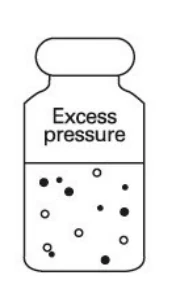
As the product dissolves, carbon dioxide is released and a positive pressure develops. Small bubbles of carbon dioxide in the constituted solution may be ignored.
Instructions for constitution
See Table 1 and Table 2 for addition volumes and solution concentrations, which may be useful when fractional doses are required.
Table 1: Powder for Solution for Injection
| Presentation | Amount of diluent to be added (ml) | Approximate concentration (mg/ml) | |
| 1 g | |||
| Intramuscular | 3 ml | 260 | |
| Intravenous bolus | 10 ml | 90 | |
| 2 g | |||
| Intravenous bolus | 10 ml | 170 | |
Note:
- The resulting volume of the solution of ceftazidime in reconstitution medium is increased due to the displacement factor of the drug product resulting in the listed concentrations in mg/ml presented in the above table.
Table 2: Powder for Solution for Infusion
| Presentation | Amount of diluent to be added (ml) | Approximate concentration (mg/ml) | |
| 1 g | |||
| Intravenous infusion | 50 ml* | 20 | |
| 2 g | |||
| Intravenous infusion | 50 ml* | 40 | |
- * Addition should be in two stages.
Note:
- The resulting volume of the solution of ceftazidime in reconstitution medium is increased due to the displacement factor of the drug product resulting in the listed concentrations in mg/ml presented in the above table.
Solutions range in color from light yellow to amber depending on concentration, diluent and storage conditions used. Within the stated recommendations, product potency is not adversely affected by such color variations.
Ceftazidime at concentrations between 1 mg/ml and 40 mg/ml is compatible with:
- sodium chloride 9 mg/ml (0.9%) solution for injection
- M/6 sodium lactate injection
- compound sodium lactate injection (Hartmann's solution)
- 50 mg/ml (5%) glucose injection
- 2.25 mg/ml (0.225%) sodium chloride and 50 mg/ml (5%) glucose injection
- 4.5 mg/ml (0.45%) sodium chloride and 50 mg/ml (5%) glucose injection
- 9 mg/ml (0.9%) sodium chloride and 50 mg/ml (5%) glucose injection
- 1.8 mg/ml (0.18%) sodium chloride and 40 mg/ml (4%) glucose injection
- 100 mg/ml (10%)_glucose Injection
- Dextran 40 injection 100 mg/ml (10%) in 9 mg/ml (0.9%) sodium chloride injection
- Dextran 40 injection 100 mg/ml (10%) in 50 mg/ml (5%) glucose Injection
- Dextran 70 injection 60 mg/ml (6%) in 9 mg/ml (0.9%) sodium chloride injection
- Dextran 70 injection 60 mg/ml (6%) in 50 mg/ml (5%) glucose injection.
Ceftazidime at concentrations between 0.05 mg/ml (0.005 %) and 0.25 mg/ml (0.025 %) is compatible with Intra-peritoneal Dialysis Fluid (Lactate).
Ceftazidime at concentrations detailed in Table 1 may be constituted for intramuscular use with 5 mg/ml (0.5%) or 10 mg/ml (1%) Lidocaine Hydrochloride Injection.
1 g, 2 g powder for solution for injection or infusion:
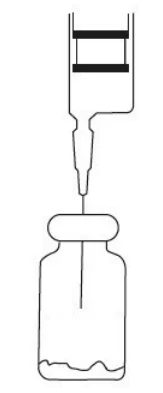
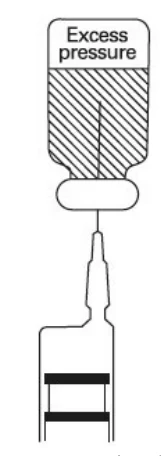
Preparation of solution for bolus injection:
- 1. Insert the syringe needle through the vial closure and inject the recommended volume of diluent. Remove the syringe needle.
- 2. Shake to dissolve: carbon dioxide is released and a clear solution will be obtained in about 1 to 2 minutes.
- 3. Invert the vial. With the syringe plunger fully depressed, insert the needle through the vial closure and withdraw the total volume of solution into the syringe (the pressure in the vial may aid withdrawal). Ensure that the needle remains within the solution and does not enter the head space. The withdrawn solution may contain small bubbles of carbon dioxide; they may be disregarded.
These solutions may be given directly into the vein or introduced into the tubing of a giving set if the patient is receiving parenteral fluids. Ceftazidime is compatible with the intravenous fluids listed above.
1 g, 2 g powder for solution for injection/infusion.:
Preparation of solutions for iv infusion from Ceftazidime in standard vial presentation (mini-bag or burette-type set):
Prepare using a total of 50 ml (for 1 g and 2 g vials) of compatible diluents (listed above), added in TWO stages as below.
- 1. Introduce the syringe needle through the vial closure and inject 10 ml of diluent for the 1 g and 2 g vials.
- 2. Withdraw the needle and shake the vial to give a clear solution.
- 3. Do not insert a gas relief needle until the product has dissolved. Insert a gas relief needle through the vial closure to relieve the internal pressure.
- 4. Transfer the reconstituted solution to final delivery vehicle (e.g. mini-bag or burette-type set) making up a total volume of at least 50 ml, and administer by intravenous infusion over 15 to 30 min.
Note: To preserve product sterility, it is important that the gas relief needle is not inserted through the vial closure before the product has dissolved.
Any residual antibiotic solution should be discarded.
For single use only.
Any unused medicinal product or waste material should be disposed of in accordance with local requirements.