

Patient leaflet - Buplast 70 micrograms/h transdermal patches
1. What Buplast is and what it is used for
The active substance of Buplast is buprenorphine.
Buplast is an analgesic (a pain-relieving medicine) intended to relieve moderate to severe cancer pain and severe pain that has not responded to other types of painkillers. Buplast acts through the skin. Buprenorphine is an opioid (strong pain reliever), which reduces pain by acting on the central nervous system (specific nerve cells in the spinal cord and in the brain). The effect of the transdermal patch lasts for up to four days. Buplast is not suitable for the treatment of acute (short-lasting) pain.
2. What you need to know before you use Buplast
Do not use Buplast
- if you are allergic to buprenorphine or any of the other ingredients of this medicine (listed in section 6).
- if you are dependent on strong pain relievers (opioids);
- if you suffer from a disease in which you have or may have great difficulty breathing
- if you are taking monoamine oxidase (MAO) inhibitors (certain medicines used to treat depression or Parkinson’s disease such as moclobemide,selegiline) or you have taken this type of medicine in the last two weeks (see " Other medicines and Buplast");
- if you suffer from myasthenia gravis (a certain type of severe muscle weakness);
- if you suffer from delirium tremens (confusion and trembling caused by abstinence
Read all of this leaflet carefully before you start using this medicine because it contains important information for you.
- Keep this leaflet. You may need to read it again.
- If you have any further questions, ask your doctor or pharmacist.
- This medicine has been prescribed for you only. Do not pass it on to others. It may harm them, even if their signs of illness are the same as yours.
- If you get any side effects, talk to your doctor or pharmacist. This includes any possible side effects not listed in this leaflet. See section 4.
- These patches contain a strong pain killer
- Ensure that old patches are removed before applying a new one
- Patches must not be cut
- Do not expose the patches to a heat source (such as a hot water bottle)
- If you develop a fever tell your doctor immediately
- Follow the dosage instructions carefully and only change your patch twice a week at the chosen times
If your breathing becomes shallow and weak take the patch off and seek medical help
from alcohol following habitual excessive drinking or occurring during an episode of heavy alcohol consumption);
- if you are pregnant.
Buplast must not be used to treat withdrawal symptoms in drug-dependent persons.
Warnings and precautions
Talk to your doctor or pharmacist before using Buplast
- if you have recently drunk a lot of alcohol;
- if you suffer from seizures or convulsions (fits)
- if your consciousness is disturbed (feeling light-headed or faint) for an unknown reason;
- if you are in a state of shock (cold sweat might be a sign of it);
- if the pressure in your skull is increased (for instance after head injury or in brain disease), and artificial respiration is not possible;
- if you have difficulty breathing or are taking other medicines that may make you breathe more slowly or weakly (see " Other medicines and Buplast");
- if your liver does not work properly;
- if you are inclined to abuse medicines or drugs.
- if you have depression or other conditions that are treated with antidepressants. The use of these medicines together with [<invented name>] can lead to serotonin syndrome, a potentially life-threatening condition (see “Other medicines and [<invented name>]”).
Also, please be aware of the following precautions:
- Some people may become dependent on strong pain relievers such as Buplast when they use them over a long period of time. They may have withdrawal effects when they stop using them (see “If you stop using Buplast”).
- Fever and external heat may lead to larger quantities of buprenorphine in the blood than normal. Also, external heat may prevent the transdermal patch from sticking properly. Therefore, do not expose yourself to external heat (e.g. sauna, infra-red lamps, electric blankets, hot water bottles) and consult your doctor if you have fever.
Athletes should be aware that this medicine may cause a positive reaction to sports doping control tests.
Tolerance, dependence, and addiction
This medicine contains buprenorphine which is an opioid medicine. Repeated use of opioids can result in the drug being less effective (you become accustomed to it, known as tolerance). Repeated use of Buplast can also lead to dependence, abuse, and addiction, which may result in life-threatening overdose. The risk of these side effects can increase with a higher dose and longer duration of use.
Dependence or addiction can make you feel that you are no longer in control of how much medicine you need to take or how often you need to take it.
The risk of becoming dependent or addicted varies from person to person. You may have a greater risk of becoming dependent on or addicted to Buplast if:
- You or anyone in your family have ever abused or been dependent on alcohol, prescription medicines or illegal drugs (“addiction”).
- You are a smoker.
- You have ever had problems with your mood (depression, anxiety, or a personality disorder) or have been treated by a psychiatrist for other mental illnesses.
If you notice any of the following signs whilst taking Buplast, it could be a sign that you have become dependent or addicted:
- You need to take the medicine for longer than advised by your doctor
- You need to take more than the recommended dose
- You might feel that you need to carry on taking your medicine, even when it doesn’t help to relieve your pain.
- You are using the medicine for reasons other than prescribed, for instance, ‘to stay calm’ or ‘help you sleep’
- You have made repeated, unsuccessful attempts to quit or control the use of the medicine
- When you stop taking the medicine you feel unwell, and you feel better once taking the medicine again (‘withdrawal effects’)
If you notice any of these signs, speak to your doctor to discuss the best treatment pathway for you, including when it is appropriate to stop and how to stop safely (see section 3, If you stop taking Buplast).
Sleep-related breathing disorders
Buplast contains an active substance that belongs to the group of opioids. Opioids can cause sleep-related breathing disorders, for example central sleep apnea (shallow/pause of breathing during sleep) and sleep-related hypoxemia (low level of oxygen in the blood). The risk of experiencing central sleep apnea is dependent on the dose of opioids. Your doctor may consider decreasing your total opioid dosage if you experience central sleep apnea.
Children and adolescents
Buplast should not be used in persons below the age of 18 years, because no experience has so far been gained in this age group.
Other medicines and Buplast
Tell your doctor or pharmacist if you are taking, have recently taken or might take any other medicines.
- Gabapentin or pregabalin to treat epilepsy or pain due to nerve problems (neuropathic pain).
- Buplast must not be used together with monoamine oxidase (MAO) inhibitors (medicines to treat Parkinson’s disease or depression), or if you have taken this type of medicine for the last 2 weeks.
- Buplast may sometimes cause very serious reactions when taken with medicines to treat depression such as, citalopram, escitalopram, fluoxetine, fluvoxamine, paroxetine, sertraline, duloxetine, venlafaxine, amitriptyline, doxepin, or trimipramine. These medicines may interact with Buplast and you may experience symptoms such as involuntary, rhythmic contractions of muscles, including the muscles that control movement of the eye, agitation, hallucinations, coma, excessive sweating, tremor, exaggeration of reflexes, increased muscle tension, body temperature above 38°C. Contact your doctor when experiencing such symptoms.
- If Buplast is used together with some medicines, the effects of the transdermal patch may be increased. These medicines include e.g. certain anti-infectives/anti-fungals (e.g. containing erythromycin or ketoconazole) or HIV medicines (e.g. containing ritonavir).
- If Buplast is used together with other medicines, the effects of the transdermal patch may be reduced. These medicines include certain products, e.g. dexamethasone; medicines to treat epilepsy (e.g. containing carbamazepine, or phenytoin) or medicines for tuberculosis (e.g. rifampicin).
- Concomitant use of Buplast and sedative medicines such as benzodiazepines or related drugs, other strong pain relievers (opioids), certain sleeping pills, anaesthetics and medicines to treat psychiatric disorders (antipsychotics or neuroleptics) and anti-depressants increase the risk of drowsiness, difficulties in breathing (respiratory depression), coma and may be life-threatening.
- medicines used to treat allergies, travel sickness or nausea (antihistamines or antiemetics);
- muscle relaxants.
Concomitant use of sedative medicines such as benzodiazepines or related drugs, should only be considered when other treatment options are not possible.
However, if your doctor does prescribe Buplast together with sedative medicines the dose and duration of concomitant treatment should be limited by your doctor.
Please tell your doctor about all sedative medicines you are taking, and follow your doctor’s dose recommendation closely. It could be helpful to inform friends or relatives to be aware of the signs and symptoms stated above. Contact your doctor when experiencing such symptoms.
Buplast with food, drink and alcohol
You should not drink alcohol while using Buplast. Alcohol may intensify certain side effects of the transdermal patch and you may feel unwell.
Pregnancy and breast-feeding
Pregnancy
Do not use Buplast if you are pregnant (also see “Do not use Buplast”).
Breast-feeding
Buprenorphine, the active substance contained in the transdermal patch, may inhibit milk formation and passes into breast milk. Therefore, you should not use Buplast if you are breast-feeding.
If you are breast-feeding, think you may be pregnant or are planning to have a baby, ask your doctor or pharmacist for advice before using this medicine
Driving and using machines
Buplast can affect your ability to drive as it may make you sleepy or feel dizzy or experience blurred or double vision and affect your reactions to such an extent that you may not react adequately or quickly enough in the event of unexpected or sudden occurrences. This applies particularly
- at the beginning of treatment,
- when your dose is changed,
- when you switch to Buplast from another pain reliever,
- if you also use other medicines that act on the brain such as tranquilizers, sleeping pills and sedatives,
- if you drink alcohol.
This applies also at the end of treatment with Buplast. Do not drive or operate machinery for at least 24 hours after the patch has been removed.
The medicine can affect your ability to drive as it may make you sleepy or dizzy.
- Do not drive while taking this medicine until you know how it affects you.
- It is an offence to drive if this medicine affects your ability to drive.
- However, you would not be committing an offence if:
- the medicine has been prescribed to treat a medical or dental problem and
- you have taken it according to the instructions given by the prescriber or in the information provided with the medicine and
- it was not affecting your ability to drive safely.
Talk to your doctor or pharmacist if you are not sure whether it is safe for you to drive while taking this medicine
3. How to use Buplast
Always use this medicine exactly as your doctor or pharmacist has told you. Check with your doctor or pharmacist if you are not sure.
Before starting treatment and regularly during treatment, your doctor will discuss with you what you may expect from using Buplast, when and how long you need to take it, when to contact your doctor, and when you need to stop it (see also, If you stop taking Buplast).
Buplast is available in three strengths: Buplast 35 microgram/h transdermal patch, Buplast 52.5 microgram/h transdermal patch and Buplast 70 microgram/h transdermal patch.
The choice of which strength of Buplast will suit you best will be made by your doctor. During treatment your doctor may change which transdermal patch you use to a smaller or larger one if necessary.
Adults
The recommended starting dose is one Buplast 35 micrograms/h transdermal patch, unless otherwise specified by your doctor. Unless your doctor has told you differently, attach one Buplast transdermal patch (as described in detail below) and change it after 4 days at the latest. For convenience of use, you can change the transdermal patch twice a week at the same days, e.g. always on Monday mornings and Thursday evenings. To help you remember when to change your transdermal patch, you should make a note on the calendar on the outer packaging. If your doctor has advised you to take other pain relievers in addition to the transdermal patch, strictly follow the doctor's instructions, otherwise you will not fully benefit from treatment with Buplast.
You should not use more than two patches at the same time.
Elderly patients
No dosage adjustment is needed for elderly patients.
Patients with kidney disease / dialysis patients
In patients with kidney disease and in dialysis patients, no dosage adjustment is necessary.
Patients with liver disease
In patients with liver disease, the intensity and duration of action of Buplast may be affected. If this applies to you, your doctor will check on you more closely.
Use in children and adolescents
Buplast should not be used in persons below the age of 18 years, because no experience has so far been gained in this age group.
Route of administration
The patch is for transdermal use.
When the transdermal patch is applied to the skin, the active substance buprenorphine passes through the skin into the blood.
Method of administration
Before applying the transdermal patch
|
|---|
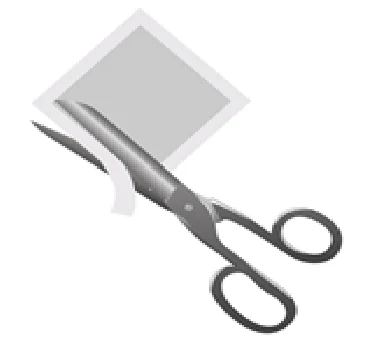
- If the chosen area has hairs, cut them off with a pair of scissors. Do not shave them off!
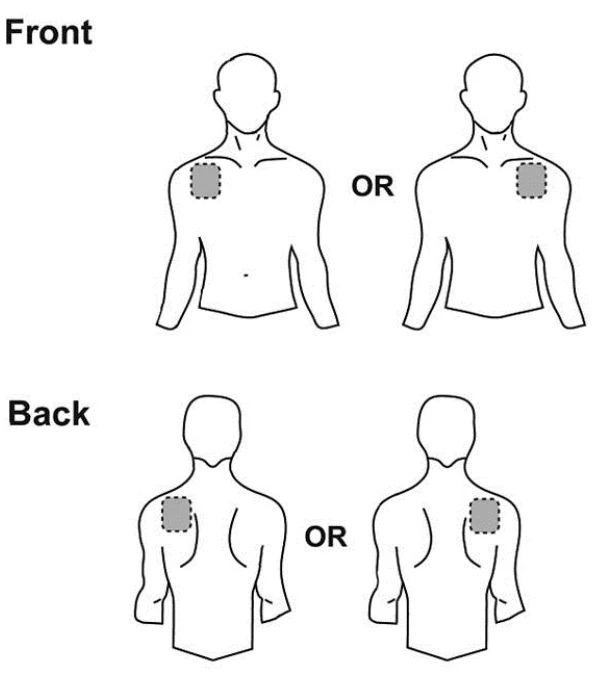
- Avoid skin which is red, irritated or has any other blemishes, for instance large scars.
- The area of skin you choose must be dry and clean. If necessary, wash it with cold or lukewarm water. Do not use soap or other detergents. After a hot bath or shower, wait until your skin is completely dry and cool. Do not apply lotion, cream or ointment to the chosen area. This might prevent your transdermal patch from sticking properly.
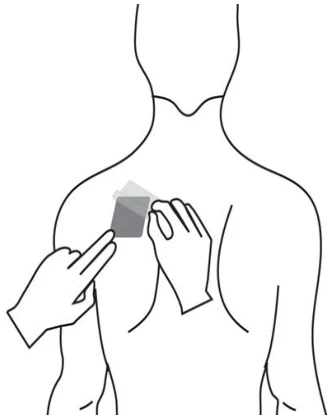
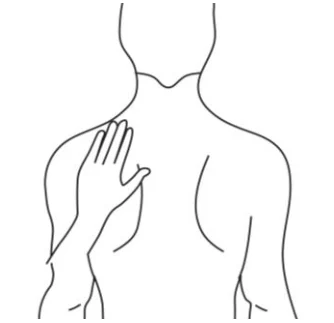
Applying the transdermal patch
| ||
|---|---|---|
|
| ||
|---|---|---|
| ||
|
Wearing the transdermal patch
You may wear the transdermal patch for up to 4 days. Provided that you have applied the transdermal patch correctly, there is little risk of it coming off. You may shower, bathe or swim while wearing it. However, do not expose the transdermal patch to extreme heat (e.g. sauna baths, infra-red lamps, electric blankets, hot water bottles).
In the unlikely event that your transdermal patch falls off before it needs changing, do not use the same transdermal patch again. Stick a new one on straight away (see "Changing the transdermal patch" below).
Changing the transdermal patch
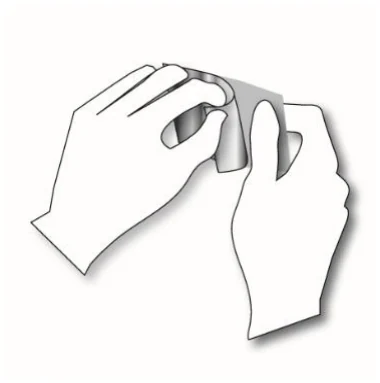
- Take the old transdermal patch off.
- Fold it in half with the sticky side inwards.
- Throw it away carefully.
- Stick a new transdermal patch on a different skin site (as described above). Wait at least one week before using the same site again.
- The following table shows you when to change your patch:
| Apply/change your patch in the morning of: | Apply/change your patch in the evening of: | |
|---|---|---|
| Monday | ⇄ | Thursday |
| Tuesday | ⇄ | Friday |
| Wednesday | ⇄ | Saturday |
| Thursday | ⇄ | Sunday |
| Friday | ⇄ | Monday |
| Saturday | ⇄ | Tuesday |
| Sunday | ⇄ | Wednesday |
Duration of treatment
Your doctor will tell you how long you may use Buplast. Do not stop using Buplast on your own account, because pain may return and you may feel unwell (see also "If you stop using Buplast" below).
If you have the impression that the effect of the Buplast transdermal patch is too weak or too strong, tell your doctor or pharmacist.
If you use more Buplast than you should
If this happens there may be signs of an overdose of the substance buprenorphine. An overdose may intensify the side effects of buprenorphine such as drowsiness, nausea, and vomiting. You may get pin-point pupils and breathing may become slow and weak. You may also suffer from heart failure.
As soon as you discover that you have used more transdermal patches than you should, remove the excess transdermal patches and talk to a doctor or pharmacist.
If you forget to use Buplast
If you forget an application, stick a new transdermal patch on as soon as you remember. You will then need to change your routine, e.g. if you usually apply your transdermal patches on Mondays and Thursdays, but you forget and don’t stick on a new transdermal patch until Wednesday, you will need to change your transdermal patches on Wednesdays and Saturdays from then on. Make a note of the new pair of days on the calendar on the outer packaging. If you are very late changing your transdermal patch, pain may return. In this case please contact your doctor.
Never apply twice the number of transdermal patches to make up for a forgotten application!
If you stop using Buplast
If you interrupt or finish using Buplast too soon, pain may return. If you wish to stop use on account of unpleasant side effects, please consult your doctor. He/she will tell you what can be done and whether you can be treated with other medicines.
Some people may experience withdrawal-effects when they have used strong pain relievers for a long time and stop using them. The risk of having effects after you stop using Buplast is very low.
However, if you feel agitated, anxious, nervous or shaky, if you are overactive, have difficulty sleeping or digestion problems, tell your doctor.
If you have any further questions on the use of this medicine, ask your doctor or pharmacist.
4. Possible side effects
Like all medicines, this medicine can cause side effects, although not everybody gets them.
If you experience any of the following side effects remove the transdermal patch and call your doctor immediately or seek help at the casualty department of the nearest hospital.
Uncommon (may affect up to 1 in 100 people):
- inability of heart to pump blood or lack of blood flow
- inability to pass urine (urinary retention)
Rare (may affect up to 1 in 1,000 people):
- difficulty breathing (respiratory depression)
Very rare (may affect up to 1 in 10,000 people)
- swelling of the hands, feet, ankles, face, lips, mouth, or throat which may cause difficulty in swallowing or breathing, hives, fainting. These can be symptoms of a very rare serious allergic reaction.
In some cases delayed allergic reactions occurred with marked signs of inflammation. In such a case you should stop using Buplast after you have talked to your doctor.
The following side effects have been reported:
Very common (may affect more than 1 in 10 people):
- nausea (feeling sick)
- skin redness, itching
Common (may affect up to 1 in 10 people):
- dizziness, headache
- shortness of breath
- vomiting, constipation
- skin eruptions or rash (exanthema, generally on repeated use), sweating
- oedema (e.g. swelling of the legs), tiredness
Uncommon (may affect up to 1 in 100 people):
- confusion, sleep disorder, restlessness
- various degrees of sedation (calmness), ranging from tiredness to muzziness
- sleepiness
- problems with your blood flow (such as low blood pressure)
- dry mouth
- rash
- difficulty in passing urine
- weariness
Rare (may affect up to 1 in 1,000 people):
- loss of appetite
- seeing or hearing things that are not there(hallucinations), anxiety and nightmares, reduced sex drive
difficulties concentrating, speech disorder, disturbed balance, abnormal skin
- (numbness, prickling or burning sensations)
- visual disturbance, blurred vision, swollen eyelids
- hot flushes
- heartburn
- hives
- erection difficulties
- withdrawal symptoms (see below), administration site reactions
Very rare (may affect up to 1 in 10,000 people):
- dependence, mood swings
- muscle twitching, taste disorders
- pin-point pupils
- ear pain
- abnormally rapid breathing, hiccups
- retching
- small fluid filled blisters
- chest pain
Not Known (frequency cannot be estimated from the available data):
- dermatitis contact (skin rash with inflammation which may include burning sensation, skin discolouration
Some people may have withdrawal symptoms when they have used strong pain relievers for a long time and stop using them. The risk of having withdrawal effects when you stop using Buplast is low. However, if you feel agitated, anxious, nervous or shaky, if you are overactive, have difficulty sleeping or digestion problems, tell your doctor.
Reporting of side effects
If you get any side effects, talk to your doctor or pharmacist. This includes any possible side effects not listed in this leaflet. You can also report side effects directly via the Yellow Card Scheme at www.mhra.gov.uk/yellowcard or search for MHRA Yellow Card in the Google Play or Apple App Store. By reporting side effects, you can help provide more information on the safety of this medicine.
5. How to store Buplast
- Keep this medicine out of the sight and reach of children.
- Do not use this medicine after the expiry date which is stated on the carton and sachet after EXP. The expiry date refers to the last day of that month.
- This medicine does not require any special storage conditions.
- Store this medicine in a safe and secure place, where other people cannot access it. It can cause serious harm and be fatal to people who may take this medicine by accident, or intentionally when it has not been prescribed for them.
- After removing a patch, fold it in half with the sticky sides inwards and press them together. Return the used patch to its sachet and carefully dispose of the transdermal patch.
- Do not throw away any medicines via wastewater or household waste. Ask your pharmacist how to throw away medicines you no longer use. These measures will help protect the environment.
6. Contents of the pack and other information
What Buplast contains
- The active substance is buprenorphine.
35 micrograms /h:
Each transdermal patch of 25 cm2 contains 20 mg of buprenorphine and releases 35 micrograms of buprenorphine per hour.
52.5 micrograms /h:
Each transdermal patch of 37.5 cm2 contains 30 mg of buprenorphine and releases 52.5 micrograms of buprenorphine per hour.
70 micrograms /h:
Each transdermal patch of 50 cm2 contains 40 mg of buprenorphine and releases 70 micrograms of buprenorphine per hour.
The other ingredients are:
Adhesive matrix (containing buprenorphine): povidone K90, levulinic acid, oleyl oleate, Poly[acrylic acid-co-butylacrylate-co-(2-ethylhexyl)acrylate-co-vinylacetate] (5:15:75:5) Adhesive matrix (without buprenorphine): Poly[(2-ethylhexyl)acrylate-co-glycidylmethacrylate-co-(2-hydroxyethyl)acrylate-co-vinylacetate] (68:0,15:5:27), Separating foil between adhesive matrices with and without buprenorphine: Polyethylene terephthalate film, Backing foil: polyester, Release liner: Polyethylene terephthalate film, siliconised Blue printing ink
What Buplast looks like and contents of the pack
Each transdermal patch is rectangular beige coloured with rounded corners and is imprinted
35 micrograms/h:
“Buprenorphin” and “35 μg/h”
52.5 micrograms/h:
“Buprenorphin” and “52.5 μg/h”
70 micrograms/h:
“Buprenorphin” and “70 μg/h”
Each transdermal patch is sealed in one child-resistant sachet. The patches are available in packs containing 4, 5, 8, 10, 16 or 20 transdermal patches.
Not all pack sizes may be marketed.
Marketing Authorisation Holder
Mylan, Potters Bar, Hertfordshire, EN6 1TL, United Kingdom
Manufacturer
Gerard Laboratories, Unit 35/36 Baldoyle Industrial Estate, Grange Road, Dublin 13, Ireland.
Labtec GmbH, Heykenaukamp 10, 21147 Hamburg, Germany
This leaflet was last revised in 08/2024
 |
|---|
 | ||
|---|---|---|
 |
 |
|---|