

Patient leaflet - Briviact 10 mg / ml oral solution
1. What Briviact is and what it is used for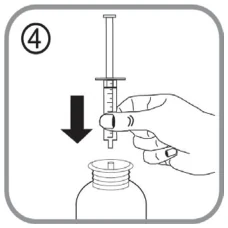
What Briviact is
Briviact contains the active substance brivaracetam. It belongs to a group of medicines called ‘anti-epileptics’. These medicines are used to treat epilepsy.
What Briviact is used for
Briviact is used in adults, adolescents and children from 2 years of age. – It is used to treat a type of epilepsy that has partial seizures with or without a
secondary generalisation.
Partial seizures are fits that start by only affecting one side of the brain. These
partial seizures can spread and extend to larger areas on both sides of the brain – this is called a ‘secondary generalisation’.
You have been given this medicine to lower the number of fits (seizures) you
have.
- Briviact is used together with other medicines for epilepsy.
2. What you need to know before you take Briviact
Do not take Briviact if:
- you are allergic to brivaracetam, other similar chemical compounds as
levetiracetam or piracetam or any of the other ingredients of this medicine (listed in section 6). If you are not sure, talk to your doctor or pharmacist before 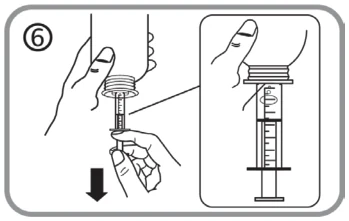 taking Briviact.
you have ever developed a severe skin rash or skin peeling, blistering and/or
mouth sores after taking Briviact.
Serious skin reactions including Stevens-Johnson syndrome have been reported in association with Briviact treatment. Stop using Briviact and seek medical attention immediately if you notice any of the symptoms related to these serious skin reactions described in section 4.
Warnings and precautions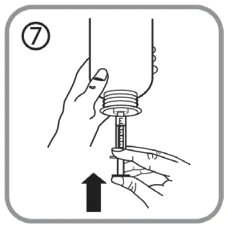
Talk to your doctor or pharmacist before taking Briviact if:
You have thoughts of harming or killing yourself. A small number of people
being treated with anti-epileptic medicines such as Briviact have had thoughts of harming or killing themselves. If you have any of these thoughts at any time, contact your doctor immediately.
- You have liver problems - your doctor may need to adjust your dose.
Children
Briviact is not recommended for use in children under 2 years of age.
Other medicines and Briviact
Tell your doctor or pharmacist if you are taking, have recently taken or might take any other medicines. 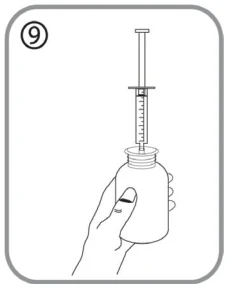
In particular, tell your doctor if you are taking any of the following medicines – this is because your doctor may need to adjust your Briviact dose: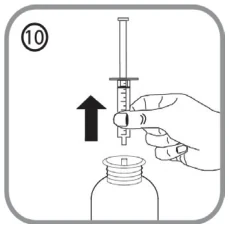
- Rifampicin - a medicine used to treat bacterial infections.
St John’s wort (also known as Hypericum perforatum) - a herbal medicine used
to treat depression and anxiety as well as other conditions.
Briviact with alcohol
Combining this medicine with alcohol is not recommended. – If you drink alcohol while taking Briviact the negative effects of alcohol may be
increased.
Pregnancy and breast-feeding
Fertile women should discuss the use of contraceptives with the doctor. If you are pregnant or breast-feeding, think you may be pregnant or planning to have a baby, ask your doctor or pharmacist for advice before taking this medicine. It is not recommended to take Briviact if you are pregnant, as the effects of Briviact on pregnancy and the unborn baby are not known. It is not recommended to breast-feed your baby while taking Briviact, as Briviact passes into breast milk. Do not stop treatment without talking to your doctor first. Stopping treatment could increase your seizures and harm your baby.
Driving and using machines
- You may feel sleepy, dizzy or tired while taking Briviact.
These effects are more likely at the start of the treatment or after a dose
increase.
Do not drive, cycle or use any tools or machines until you know how the
medicine affects you.
Briviact oral solution contains methyl parahydroxybenzoate, sodium, sorbitol and propylene glycol
Methyl parahydroxybenzoate (E218): This may cause allergic reactions
(possibly delayed).
Sodium: This medicine contains less than 1 mmol sodium (23mg) per millilitre,
that is to say essentially ‘sodium free’.
Sorbitol (E420) (a type of sugar): This medicine contains 168 mg sorbitol in
each ml. Sorbitol is a source of fructose. If your doctor has told you that you (or your child) have an intolerance to some sugars or if you have been diagnosed with hereditary fructose intolerance (HFI), a rare genetic disorder in which a person cannot break down fructose, talk to your doctor before you (or your child) take or receive this medicine.
Propylene glycol (E1520): This medicine contains maximum 5.5 mg propylene
glycol in each millilitre.
3. How to take Briviact
Always take this medicine exactly as your doctor has told you. Check with your doctor or pharmacist if you are not sure. You will take Briviact together with other medicines for epilepsy.
How much to take
Your doctor will work out the right daily dose for you. Take the daily dose in two equal divided doses, approximately 12 hours apart.
Adolescents and children weighing 50 kg or more, and adults
The recommended dose is from 25 mg to 100 mg taken twice a day. Your
doctor may then decide to adjust your dose to find the best dose for you.
The table below only shows examples of doses to take and which syringe to use. Your doctor will work out the right dose for you and which syringe to use, depending on your weight.
Dose in ml to be taken twice daily and which syringe to use - for adolescents and children weighing 50 kg or more, and adults:
| Weight | Dose in ml (corre-sponding to 25 mg) | Dose in ml (corre-sponding to 50 mg) | Dose in ml (corre-sponding to 75 mg) | Dose in ml (corre-sponding to 100 mg) |
50 kg or more | 2.5 ml | 5 ml | 7.5 ml | 10 ml |
| Use the 5 ml syringe (blue graduation marks) | Use the 10 ml syringe (black graduation marks) | |||
Adolescents and children weighing from 20 kg to less than 50 kg – The recommended dose is from 0.5 mg to 2 mg for each kg of bodyweight,
taken twice a day. Your doctor may then decide to adjust your dose to find the best dose for you.
The table below only shows examples of doses to take and which syringe to use. Your doctor will work out the right dose for you and which syringe to use, depending on your weight.
Dose in ml to be taken twice daily and which syringe to use
- for adolescents and children weighing from 20 kg to less than 50 kg:
| Weight | Dose in ml (corre-sponding to 0.5 mg/kg = 0.05 ml/kg) | Dose in ml (corre- sponding to 1 mg/kg = 0.1 ml/kg) | Dose in ml (corre- sponding to 1.5 mg/kg = 0.15 ml/kg) | Dose in ml (corre- sponding to 2 mg/kg = 0.2 ml/kg) |
| 20 kg | 1 ml | 2 ml | 3 ml | 4 ml |
| 25 kg | 1.25 ml | 2.5 ml | 3.75 ml | 5 ml |
| 30 kg | 1.5 ml | 3 ml | 4.5 ml | 6 ml* |
| 35 kg | 1.75 ml | 3.5 ml | 5.25 ml* | 7 ml* |
| 40 kg | 2 ml | 4 ml | 6 ml* | 8 ml* |
| 45 kg | 2.25 ml | 4.5 ml | 6.75 ml* | 9 ml* |
| Use the 5 ml syringe (blue graduation marks) | For volume between 0.5 ml and 5 ml, use the 5 ml oral syringe (blue graduation marks) * For volume above 5 ml and up to 10 ml, use the 10 ml oral syringe (black graduation marks) | |||
Children weighing from 10 kg to less than 20 kg
The recommended dose is from 0.5 mg to 2.5 mg for each kg of bodyweight,
taken twice a day. Your child’s doctor may then decide to adjust your child’s dose to find the best dose for your child.
The table below only shows examples of doses to take and which syringe to use. Your doctor will work out the right dose for you and which syringe to use, depending on your weight.
Dose in ml to be taken twice daily and which syringe to use - for children weighing from 10 kg to less than 20 kg:
| Weight | Dose in ml (corre- sponding to 0.5 mg/kg = 0.05 ml/kg) | Dose in ml (corres- ponding to 1.25 mg/kg = 0.125 ml/kg) | Dose in ml (corres- ponding to 1.5 mg/kg = 0.15 ml/kg) | Dose in ml (corre- sponding to 2 mg/kg = 0.2 ml/kg) | Dose in ml (corre- sponding to 2.5 mg/kg = 0.25 ml/kg) |
| 10 kg | 0.5 ml | 1.25 ml | 1.5 ml | 2 ml | 2.5 ml |
| 12 kg | 0.6 ml | 1.5 ml | 1.8 ml | 2.4 ml | 3.0 ml |
| 14 kg | 0.7 ml | 1.75 ml | 2.1 ml | 2.8 ml | 3.5 ml |
| 15 kg | 0.75 ml | 1.9 ml | 2.25 ml | 3 ml | 3.75 ml |
| Use the 5 ml syringe (blue graduation marks) | |||||
People with liver problems
If you have problems with your liver:
- As an adolescent or child weighing 50 kg or more, or as an adult, the maximum dose you will take is 75 mg twice a day.
- As an adolescent or child weighing from 20 kg to less than 50 kg, the maximum dose you will take is 1.5 mg for each kg of bodyweight twice a day. – As a child weighing from 10 kg to less than 20 kg, the maximum dose your child will take is 2 mg for each kg of bodyweight twice a day.
How to take Briviact oral solution
- You can take Briviact oral solution on its own, or dilute it in water or juice shortly before swallowing.
- The medicine may be taken with or without food.
Instructions for use for patients or carers:
Two oral syringes will be provided in the carton. Check with your doctor which one you should use.
For volume between 0.5 ml and 5 ml, you should use the 5 ml oral syringe (blue graduation marks) provided in the carton to ensure accurate dosing. – For volume above 5 ml and up to 10 ml, you should use the 10 ml oral syringe
(black graduation marks) provided in the carton to ensure accurate dosing.
| 5 ml oral dosing syringe | 10 ml oral dosing syringe |
| The 5 ml oral syringe has 2 overlapping blue graduation marks: in steps of 0.25 ml and in steps of 0.1 ml. | The 10 ml oral syringe has black graduation marks in steps of 0.25 ml. |
- Open the bottle: press the cap and turn it anti-clockwise (figure 1).
Follow these steps the first time you take Briviact:
- Take off the adaptor from the oral syringe (figure 2).
- Put the adaptor into the top of the bottle (figure 3). Make sure it is fixed well in place. You do not need to remove the adaptor after use.
Follow these steps each time you take Briviact:
- Put the oral syringe into the adaptor opening (figure 4).
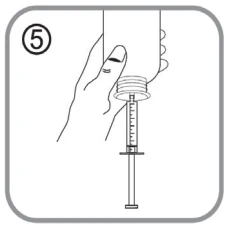
- Turn the bottle upside down (figure 5).
- Hold the bottle upside down in one hand and use the other hand to fill the oral syringe.
Pull the plunger down to fill the oral syringe with a small amount of solution
(figure 6).
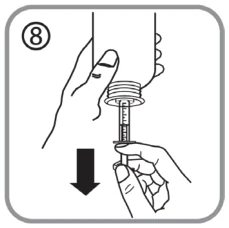
Then push the plunger up to remove any possible air bubbles (figure 7). – Pull the plunger down to the millilitre (ml) dose marker on the oral syringe prescribed by your doctor (figure 8).
The plunger may rise back up the barrel on the first dosage. Therefore, ensure that the plunger is kept in position until the oral syringe is disconnected from the bottle.
- Turn the bottle the right way up (figure 9).
- Take the oral syringe out of the adaptor (figure 10).
Package leaflet: information for the patient
Briviact® 10 mg/mL oral solution
(brivaracetam)
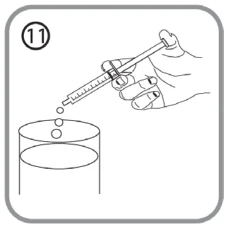
There are two ways in which you can choose to drink the medicine: – empty the contents of the syringe into water (or juice) by pushing the plunger to
the bottom of the oral syringe (figure 11) – you will then need to drink all of the water (add just enough to make it easy to drink) or
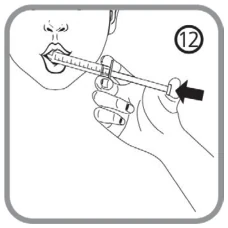
- drink the solution directly from the oral syringe without water – drink the whole contents of the syringe (figure 12).
Close the bottle with the plastic screw cap (you do not need to remove the
adaptor).
- To clean the oral syringe, rinse with cold water only, moving the plunger several
times up and down to take up and expel the water, without separating the two components of the syringe (figure 13).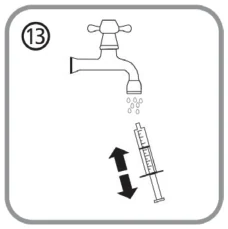
Keep the bottle, the oral syringe, and the leaflet in the carton.
How long to take Briviact for
Briviact is a long term treatment – keep taking Briviact until your doctor tells you to stop.
If you take more Briviact than you should
If you have taken more Briviact than you should, talk to your doctor. You may feel dizzy and sleepy.
You may also have any of the following symptoms: feeling sick, a feeling of ‘spinning’, problems of keeping your balance, anxiety, feeling very tired, irritability, being aggressive, not being able to sleep, depression, thoughts or attempts of harming or killing yourself.
If you forget to take Briviact
- If you miss a dose take it as soon as you remember.
- Then take your next dose at the time you would normally take it. – Do not take a double dose to make up for a forgotten dose. – If you are not sure what to do, ask your doctor or pharmacist.
If you stop taking Briviact
Do not stop taking this medicine unless your doctor tells you to. This is because
stopping treatment could increase the number of fits you have. – If your doctor asks you to stop taking this medicine they will lower your dose
gradually. This helps to stop your fits coming back or getting worse.
If you have any further questions on the use of this medicine, ask your doctor or pharmacist.
4. Possible side effects
Like all medicines, this medicine can cause side effects, although not everybody gets them.
Very common: may affect more than 1 in 10 people
- feeling sleepy or dizzy
Common: may affect up to 1 in 10 people
- flu
- feeling very tired (fatigue)
- convulsion, a feeling of ‘spinning’ (vertigo)
- feeling and being sick, constipation
- depression, anxiety, not being able to sleep (insomnia), irritability – infections of the nose and throat (such as the ‘common cold’), cough – decreased appetite
Uncommon: may affect up to 1 in 100 people
- allergic reactions
abnormal thinking and/or loss of touch with reality (psychotic disorder), being
aggressive, nervous excitement (agitation)
- thoughts or attempts of harming or killing yourself: tell your doctor straight away – a decrease in white blood cells (called ‘neutropenia’) - shown in blood tests
Not Known: frequency cannot be estimated from the available data – a widespread rash with blisters and peeling skin, particularly around the mouth,
nose, eyes and genitals (Stevens-Johnson syndrome)
Additional side effects in children
Common: may affect up to 1 in 10 people
- restlessness and hyperactivity (psychomotor hyperactivity)
Reporting of side effects
If you get any side effects, talk to your doctor or pharmacist. This includes any possible side effects not listed in this leaflet. You can also report side effects directly via the Yellow Card Scheme Website: www.mhra.gov.uk/yellowcard or search for MHRA Yellow Card in the Google Play or Apple App Store. By reporting side effects you can help provide more information on the safety of this medicine.
5. How to store Briviact
- Keep this medicine out of the sight and reach of children. – Do not use this medicine after the expiry date which is stated on the cardboard box and bottle after EXP. The expiry date refers to the last day of that month. – This medicinal product does not require any special storage conditions. – After first opening of the bottle, use within 8 months.
- If this medicine becomes discoloured or shows any other signs of deterioration, please contact your pharmacist who will advise you on what to do. – Do not throw away any medicines via wastewater or household waste. Ask your pharmacist how to throw away medicines you no longer use. These measures will help protect the environment.
6. Contents of the pack and other information
What Briviact contains
The active substance is brivaracetam.
Each millilitre (ml) contains 10 milligrams (mg) brivaracetam.
The other ingredients are: sodium citrate, citric acid anhydrous, methyl parahydroxybenzoate (E218), carmellose sodium, sucralose, sorbitol liquid (E420), glycerol (E422), raspberry flavour (propylene glycol (E1520) 90 % - 98 %), purified water.
What Briviact looks like and contents of the pack
Briviact 10 mg/ml oral solution is slightly viscous, clear, colourless to yellowish liquid.
The 300 ml glass bottle of Briviact is packed in a cardboard box containing a 10 ml oral polypropylene/polyethylene syringe (black graduation marks), a 5 ml oral polypropylene/polyethylene syringe (blue graduation marks), and polyethylene adaptors for the syringes.
Product Licence Holder and Manufacturer
Procured from within the EU by the Product Licence holder Orifarm UK Ltd., Ground Floor Suite A2, Breakspear Park, Breakspear Way, Hemel Hempstead, HP2 4TZ, UK
For any information about this medicine, please contact the
Product Licence Holder on www.orifarm.com/uk
Or phone: (+44) 1923 204333
Repacked by Orifarm Supply s.r.o., Palouky 1366, 253 01 Hostivice, Czech Republic
Manufactured by UCB Pharma S.A., Chemin du Foriest, B-1420 Braine-I’Alleud, Belgium
Briviact 10 mg/ml oral solution
PL 45985/1173
POM
Leaflet revision date: 10/04/2026
Blind or partially sighted? Is this leaflet hard to see or read?
Call +45 63 95 27 00 to obtain the leaflet in a format suitable for you.