

Patient leaflet - Brinzolamide Sandoz 10 mg / ml eye drops suspension
1. What Brinzolamide is and what it is used for 2. What you need to know before you use
Brinzolamide
- 3. How to use Brinzolamide
- 4. Possible side effects
- 5. How to store Brinzolamide
- 6.
1 What Brinzolamide Sandoz
10 mg/ml eye drops is and what it is used for
Brinzolamide Sandoz 10 mg/ml eye drops contains brinzolamide which belongs to a group of medicines called carbonic anhydrase inhibitors. It reduces pressure within the eye. Brinzolamide eye drops are used to treat high pressure in the eye. This pressure can lead to an illness called glaucoma.
If the pressure in the eye is too high, it can damage your sight.
2 What you need to know before
you use Brinzolamide Sandoz 10 mg/ml eye drops
Do not use Brinzolamide Sandoz 10 mg/ml eye drops
- if you have severe kidney problems.
if you are allergic to brinzolamide or any
of the other ingredients of this medicine (listed in section 6).
if you are allergic to medicines called
sulphonamides. Examples include medicines used to treat diabetes and infections and also diuretics (water tablets). Brinzolamide Sandoz 10 mg/ml eye drops may cause the same allergy.
if you have too much acidity in your blood
(a condition called hyperchloraemic acidosis).
If you have further questions, ask your doctor for advice.
Warnings and precautions
Talk to your doctor or pharmacist before using Brinzolamide Sandoz 10 mg/ml eye drops :
- if you have kidney or liver problems.
- if you have dry eyes or cornea problems.
if you are taking other sulphonamide
medicines
if you have a specific form of glaucoma
in which the pressure inside the eye rises due to deposits that block fluid draining out (pseudoexfoliative glaucoma or pigmentary glaucoma) or a specific form of glaucoma in which the pressure inside the eye (sometimes rapidly) rises because the eye bulges forward and blocks fluid draining out (narrow-angle glaucoma)
if you have ever developed a severe skin
rash or skin peeling, blistering and/or mouth sores after using Brinzolamide Sandoz 10 mg/ml eye drops or other related medicines.
Take special care with Brinzolamide Sandoz 10 mg/ml eye drops:
Serious skin reactions including Stevens-Johnson syndrome and toxic epidermal necrolysis have been reported in association with 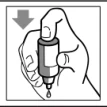
 brinzolamide treatment. Stop using Brinzolamide Sandoz 10 mg/ml eye drops and seek medical attention immediately if you notice any of the symptoms related to these serious skin reactions described in section 4.
Children and adolescents
Brinzolamide Sandoz 10 mg/ml eye drops is not to be used by infants, children or adolescents under 18 years of age unless advised by your doctor.
Other medicines and Brinzolamide Sandoz 10 mg/ml eye drops
Tell your doctor or pharmacist if you are taking, have recently taken or might take any other medicines, including medicines obtained without a prescription.
If you are taking another carbonic anhydrase inhibitor (acetazolamide or dorzolamide, see section 1 What Brinzolamide Sandoz 10 mg/ml eye drops is and what it is used for), talk to your doctor.
Pregnancy and breast-feeding
If you are pregnant or breast-feeding, think you may be pregnant or are planning to have a baby, ask your doctor or pharmacist for advice before using this medicine.
Women who may become pregnant are advised to use effective contraception during Brinzolamide Sandoz 10 mg/ml eye drops treatment. The use of Brinzolamide Sandoz 10 mg/ml eye drops is not recommended during pregnancy or breast-feeding. Do not use Brinzolamide Sandoz 10 mg/ml eye drops unless clearly indicated by your doctor.
Ask your doctor or pharmacist for advice before taking any medicine.
Driving and using machines
Do not drive or use machines until your vision is clear. You may find that your vision is blurred for a time just after using Brinzolamide Sandoz 10 mg/ml eye drops .
Brinzolamide Sandoz 10 mg/ml eye drops may impair the ability to perform tasks requiring mental alertness and/or physical coordination. If affected, take care when driving or using machines.
Brinzolamide Sandoz 10 mg/ml eye drops contains benzalkonium chloride
This medicine contains 0.0975 mg benzalkonium chloride per ml (0.003 mg benzalkonium chloride per drop).
Brinzolamide Sandoz 10 mg/ml eye drops contains a preservative (benzalkonium chloride) which may be absorbed by soft contact lenses and may change the colour of the contact lenses. You should remove contact lenses before using this medicine and put them back 15 minutes afterwards. Benzalkonium chloride may also cause eye irritation, especially if you have dry eyes or disorders of the cornea (the clear layer at the front of the eye). If you feel abnormal eye sensation, stinging or pain in the eye after using this medicine, talk to your doctor.
3 How to use Brinzolamide Sandoz
10 mg/ml eye drops
Always use this medicine exactly as your doctor or pharmacist has told you. Check with your doctor or pharmacist if you are not sure. Only use Brinzolamide Sandoz 10 mg/ml eye drops for your eyes. Do not swallow or inject. The recommended dose is
1 drop in the affected eye or eyes twice a day - morning and night.
Use this much unless your doctor told you to do something different. Only use Brinzolamide Sandoz 10 mg/ml eye drops, suspension in both eyes if your doctor told you to. Take it for as long as your doctor told you to.
How to use
| 1 | 2 | 3 |
- Get the Brinzolamide Sandoz 10 mg/ml eye drops bottle and a mirror
- Wash your hands
- Shake the bottle and twist off the cap. After the cap is removed, if the tamper evident snap collar is loose, remove before using product.
- Hold the bottle, pointing down, between your thumb and middle finger
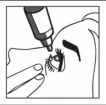
- Tilt your head back. Pull down your eyelid with a clean finger, until there is a ‘pocket’ between the eyelid and your eye. The drop will go in here (picture 1)
- Bring the bottle tip close to the eye. Use the mirror if it helps
- Do not touch your eye or eyelid, surrounding areas or other surfaces with the dropper. It could infect the drops Continued on the next page >>
Gently press on the base of the bottle to
release one drop of Brinzolamide Sandoz 10 mg/ml eye drops at a time.
Do not squeeze the bottle: it is designed so
that a gentle press on the bottom is all that it needs (picture 2)
After using Brinzolamide Sandoz 10 mg/ml eye
drops, press a finger to the corner of your eye, by the nose (picture 3) for at least 1 minute. This helps to stop Brinzolamide Sandoz 10 mg/ml eye drops getting into the rest of the body.
If you take drops in both eyes, repeat the
steps for your other eye.
Put the bottle cap back on firmly immediately
after use
- Use up one bottle before opening the next bottle. If a drop misses your eye, try again.
If you are using other eye drops, leave at least 5 minutes between putting in Brinzolamide Sandoz 10 mg/ml eye drops and the other drops. Eye ointments should be administered last. If you use more Brinzolamide Sandoz 10 mg/ml eye drops than you should
If you get too much in your eyes, rinse it all out with warm water. Do not put in any more drops until it’s time for your next regular dose. If you forget to use Brinzolamide Sandoz 10 mg/ml eye drops
Use a single drop as soon as you remember, and then go back to your regular routine. Do not use a double dose to make up for a forgotten dose. If you stop using Brinzolamide Sandoz 10 mg/ml eye drops
If you stop using Brinzolamide Sandoz 10 mg/ml eye drops without speaking to your doctor, the pressure in your eye will not be controlled which could lead to loss of sight.
4 Possible side effects
Like all medicines, this medicine can cause side effects, although not everyone gets them. The following side effects have been seen with Brinzolamide Sandoz 10 mg/ml eye drops. Stop using Brinzolamide Sandoz 10 mg/ml eye drops and seek medical attention immediately if you notice any of the following symptoms:
reddish non-elevated, target-like or circular
patches on the trunk, often with central blisters, skin peeling, ulcers of mouth, throat, nose, genitals and eyes. These serious skin rashes can be preceded by fever and flu-like symptoms (Stevens-Johnson syndrome, toxic epidermal necrolysis).
Common (may affect up to 1 in 10 people)
Effects in the eye: blurred vision, eye
irritation, eye pain, eye discharge, itchy eye, dry eye, abnormal eye sensation, redness of the eye.
- General side effects: bad taste. Uncommon (may affect up to 1 in 100 people)
Effects in the eye: sensitivity to light,
inflammation or infection of the conjunctiva, eye swelling, eyelid itching, redness or swelling, deposits in eye, glare, burning sensation, growth on surface of eye, increased pigmentation of the eye, tired eyes, eyelid crusting, or increased tear production.
General side effects: decreased or
reduced heart function, a forceful heartbeat that may be rapid or irregular, decreased heart rate, difficulty breathing, shortness of breath, cough, decreased red blood cell count in blood, increased chlorine level in blood, dizziness, difficulty with memory, depression, nervousness, decreased emotional interest, nightmare, generalized weakness, fatigue, feeling abnormal, pain, movement problems, decreased sex drive, male sexual difficulty, cold symptoms, chest congestion, sinus infection, throat irritation, throat pain, abnormal or decreased sensation in mouth, inflammation of the lining of the oesophagus, abdominal pain, nausea, vomiting, upset stomach, frequent bowel movements, diarrhoea, intestinal gas, digestive disorder, kidney pain, muscle pain, muscle spasms, back pain, nose bleeds, runny nose, stuffy nose, sneezing, rash, abnormal skin sensation, itching, smooth skin rash or redness covered by elevated bumps, skin tightness, headache, dry mouth, debris in eye.
Rare (may affect up to 1 in 1 000 people)
Effects in the eye: corneal swelling,
double or reduced vision, abnormal vision, flashes of light in the field of vision, decreased eye sensation, swelling around the eye, increased pressure in eye, damage to the optic nerve.
General side effects: memory impairment,
drowsiness, chest pain, upper respiratory tract congestion, sinus congestion, nasal congestion, dry nose, ringing in ears, hair loss, generalized itching, feeling jittery, irritability, irregular heart rate, body weakness, difficulty sleeping, wheezing, itchy skin rash.
Not known (frequency cannot be estimated from the available data)
- Effects in the eye: eyelid abnormality, visual disturbance, corneal disorder, eye allergy, decreased growth or number of eyelashes, eyelid redness.
- General side effects: increased allergic symptoms, decreased sensation, tremor, loss or decrease in taste, decreased blood pressure, increased blood pressure, increased heart rate, joint pain, asthma, pain in extremity, skin redness, inflammation, or itching, abnormal liver blood tests, swelling of the extremities, frequent urination, decreased appetite, feeling unwell, reddish non- elevated, target-like or circular patches on the trunk, often with central blisters, skin peeling, ulcers of mouth, throat, nose, genitals and eyes, which can be preceded by fever and flu-like symptoms. These serious skin rashes can be potentially life-threatening (Stevens-Johnson syndrome, toxic epidermal necrolysis).
Reporting of side effects
If you get any side effects, talk to your doctor or pharmacist. This includes any possible side effects not listed in this leaflet. You can also report side effects directly via the Yellow Card Scheme: (www.mhra.gov.uk/yellowcard) or search for MHRA Yellow Card in Google play or Apple App store. By reporting side effects you can help provide more information on the safety of this medicine.
5 How to store Brinzolamide
Sandoz 10 mg/ml eye drops
Keep this medicine out of the sight and reach of children.
Do not use this medicine after the expiry date which is stated on the carton and bottle label after EXP. The expiry date refers to the last day of that month.
This medicine does not require any special storage conditions.
You must throw away a bottle four weeks after you first opened it, to prevent infections.
Write down the date you opened each bottle in the space below and in the space on the bottle label and box. For a pack containing a single bottle, write only one date.
Opened (1):
Opened (2):
Opened (3):
Do not throw away any medicines via wastewater or household waste. Ask your pharmacist how to throw away medicines you no longer use. These measures will help protect the environment.
6 Contents of the pack and other
information
What Brinzolamide Sandoz 10 mg/ml eye drops contains
The active substance is brinzolamide.
Each ml contains 10 mg of brinzolamide (0.32 mg brinzolamide per drop).
- The other ingredients are benzalkonium chloride, mannitol (E421), carbomer, edetate disodium, sodium chloride, poloxamer 407 (contains butylhydroxytoluene), sodium hydroxide (E524) (for pH adjustment), water for injections.
What Brinzolamide Sandoz 10 mg/ml eye drops looks like and contents of the pack
Brinzolamide Sandoz 10 mg/ml eye drops is a white homogenous suspension (eye drops) in a plastic bottle with dropper and a tamper evident screw cap.
Brinzolamide Sandoz 10 mg/ml eye drops is available in packs containing 1 bottle of 5 ml or 3 bottles each containing 5 ml.
Not all pack sizes may be marketed.
Marketing Authorisation Holder
Sandoz Limited
Maxis 1
Western Road
Bracknell
United Kingdom
RG12 1RF
Manufacturer(s)
Pharmathen S.A.
Dervenakion 6
Pallini 15351
Attiki Greece
Balkanpharma-Razgrad AD
68 Aprilsko vastanie Blvd.,
Razgrad,
7200, Bulgaria
This leaflet was last revised in November 2025
| New MAA application | Tec | hnical Colours: | |
| Legend: | |||
| Cutting: | |||
| TextArea: | |||
| 160 x 400 mm | |||
| Technical data | : | ||
| SKUs: | N/A | ||
| SZ codes: | SZ00000LT000 | ||
| N/A | Col | ours: | |
| N/A |