

Patient leaflet - Brinzolamide/brimonidine 10 mg/ml + 2 mg/ml eye drops, suspension
1. WHAT BRINZOLAMIDE/BRIMONIDINE IS AND WHAT IT IS USED FOR
Brinzolamide/Brimonidine contains two active substanc-es, brinzolamide and brimonidine tartrate. Brinzolamide belongs to a group of medicines called carbonic anhydrase inhibitors and brimonidine tartrate belongs to a group of medicines called alpha-2 adrenergic receptor agonists. Both substances work together to reduce pressure within the eye.
Brinzolamide/Brimonidine is used to lower pressure in the eyes in adult patients (aged 18 years and over) who have eye conditions known as glaucoma or ocular hypertension and whose high pressure in the eyes cannot be controlled effectively by one medicine alone.
- 2. WHAT YOU NEED TO KNOW
BEFORE YOU USE
BRINZOLAMIDE/BRIMONIDINE
Do not use Brinzolamide/Brimonidine
- if you are allergic to brinzolamide or brimonidine tartrate or any of the other ingredients of this medicine (listed in section 6)
- if you are allergic to sulphonamides (examples include medicines used to treat diabetes and infections and also diuretics (water tablets))
- if you are taking a monoamine oxidase (MAO) inhibitors (examples include medicines to treat depression or Parkinson’s disease) or certain antidepressants. You must inform your doctor if you are taking any antidepressant medicines
- if you have severe kidney problems
- if you have too much acidity in your blood (a condition called hyperchloraemic acidosis)
- in babies and infants aged less than 2 years.
Warnings and precautions
Talk to your doctor, optometrist (optician) or pharmacist before using Brinzolamide/Brimonidine if you have now or have had in the past:
- liver problems
- a type of high pressure in the eyes called narrow-angle glaucoma
- dry eyes or cornea problems
- coronary heart disease (symptoms can include chest pain or tightness, breathlessness or choking), heart failure, high or low blood pressure
- depression
- disturbed or poor blood circulation (such as Raynaud’s disease, Raynaud’s syndrome or cerebral insufficiency).
- if you have ever developed a severe skin rash or skin peeling, blistering and/or mouth sores after using Brinzolamide/Brimonidine or other related medicines. Take special care with Brinzolamide/Brimonidine: Serious skin reactions including Stevens-Johnson syndrome and toxic epidermal necrolysis have been reported in association with brinzolamide treatment. Stop using Brinzolamide/Brimonidine and seek medical attention immediately if you notice any of the symptoms related to these serious skin reactions described in section 4.
If you wear soft contact lenses, do not use the drops with your lenses in. See section “Wearing contact lenses
- Brinzolamide/Brimonidine contains benzalkonium chloride” below).
Children and adolescents
Brinzolamide/Brimonidine is not intended for use by children and adolescents aged below 18 years because it has not been studied in this age group. It is particularly important that the medicine is not used in children under the age of 2 years (see section ‘Do not use Brinzola-
mide/Brimonidine’ above) because it is unlikely to be

safe.
Other medicines and Brinzolamide/Brimonidine
Tell your doctor, optometrist (optician) or pharmacist if you are using, have recently used, or might use any other medicines.
Brinzolamide/Brimonidine can affect or be affected by other medicines you are using, including other eye drops
for the treatment of glaucoma.
Tell your doctor if you are taking or intend to take any of the following medicines:
- medicines to lower blood pressure
- heart medicines including digoxin (used to treat heart conditions)
- other medicines for glaucoma that also treat altitude sickness known as acetazolamide, methazolamide and dorzolamide
- medicines that can affect the metabolism, such as chlorpromazine, methylphenidate and reserpine
- antiviral, antiretroviral (used to treat Human Immunodeficiency Virus (HIV)) or antibiotic medicines
- antiyeast or antifungal medicines
- monoamine oxidase (MAO) inhibitors, or antidepressants including amitriptyline, nortriptyline, clomipramine, mianserin, venlafaxine and duloxetine
- anaesthetics
- sedatives, opiates, or barbiturates
You should also tell your doctor if the dose of any of your current medicines is changed.
Brinzolamide/Brimonidine with alcohol
If you regularly consume alcohol, ask your doctor, optometrist (optician) or pharmacist for advice before taking this medicine. Brinzolamide/Brimonidine can be affected by alcohol.
Pregnancy and breast-feeding
If you are pregnant, think you may be pregnant or are planning to have a baby, ask your doctor, optometrist (optician) or pharmacist for advice before taking this medicine. Women who may become pregnant are advised to use effective contraception during Brinzola-mide/Brimonidine treatment. The use of Brinzola-mide/Brimonidine is not recommended during pregnan-cy. Do not use Brinzolamide/Brimonidine unless clearly indicated by your doctor.
If you are breast-feeding, Brinzolamide/Brimonidine may pass into your milk. The use of Brinzolamide/Brimonidine
is not recommended during breast-feeding.
Driving and using machines
You may find that your vision is blurred or abnormal for a
time just after using Brinzolamide/Brimonidine. Brinzolamide/Brimonidine may also cause dizziness, drowsiness or tiredness in some patients.
Do not drive or use machines until the symptoms are cleared.
Wearing contact lenses - Brinzolamide/Brimoni-dine contains benzalkonium chloride
This medicine contains 0.15 mg benzalkonium chloride in each 5 ml, which is equivalent to 0.03 mg/ml. Benzalkonium chloride may be absorbed by soft contact lenses and may change the colour of the contact lenses.
You should remove contact lenses before using this medicine and put them back 15 minutes afterwards. Benzalkonium chloride may also cause eye irritation, especially if you have dry eyes or a disorder of the cornea (the clear layer at the front of the eye). If you feel
abnormal eye sensation, stinging or pain in the eye after using this medicine, talk to your doctor.
3. HOW TO USE BRINZOLAMIDE/BRIMONIDINE
Always use this medicine exactly as your doctor, optometrist (optician) or pharmacist has told you. Check with your doctor, optometrist (optician) or pharmacist if you are not sure.
Only use Brinzolamide/Brimonidine for your eyes. Do not
swallow or inject.
The recommended dose is one drop in the affected eye
or eyes two times a day. Use at the same time each day.
How to use
- Wash your hands before you start.
- Shake well before use.
- Twist off the bottle cap. After the cap is removed, if the tamper evident snap collar is loose, remove it before using the medicine.
- Do not touch the dropper with your fingers when opening or closing the bottle. It could infect the drops.
- Hold the bottle, pointing down, between your thumb and fingers. Tilt your head back.
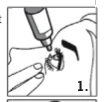
- Pull down your lower eyelid with a clean finger, until there is a ‘pocket’ between the eyelid and your eye. The drop will go in here (picture 1).
- Bring the bottle tip close to the
eye. Do this in front of a mirror if it
helps.
- Do not touch your eye or eyelid,
surrounding areas or other
surfaces with the dropper. It could
infect the drops.
- Gently press on the base of the
bottle to release one drop of
Brinzolamide/Brimonidine.
- Do not squeeze the bottle: it is
designed so that a gentle press on
the bottom is all that it needs
(picture 2).
PACKAGE LEAFLET: INFORMATION FOR THE USER
Brinzolamide/Brimonidine
10 mg/ml + 2 mg/ml eye drops, suspension
brinzolamide/brimonidine tartrate
1.
2.
To reduce the amount of medicine that could come into the rest of the body after application of the eye drop, close your eye and apply gentle pressure to the corner of the eye next to the nose with a finger for at least 2 minutes.
If you use drops in both eyes, repeat the steps for your other eye. It is not necessary to close and shake the bottle before you apply the drop in your other eye. Close the bottle cap firmly immediately after use. If you are using other eye drops as well as Brinzola-mide/Brimonidine, wait at least five minutes between using Brinzolamide/Brimonidine and the other drops. If a drop misses your eye, try again.
If you use more Brinzolamide/Brimonidine than you should
Rinse your eye with warm water. Do not put in any more drops until it is time for your next regular dose. Adults who accidentally swallowed medicines containing brimonidine experienced a decreased heart rate, decreased blood pressure which may be followed by increased blood pressure, heart failure, difficulty breathing and effects in the nervous system. Should this happen, contact your doctor immediately.
Serious side effects have been reported in children who accidently swallowed medicines containing brimonidine. Signs included sleepiness, floppiness, low body temperature, paleness and breathing difficulties. Should this happen, contact your doctor immediately. If Brinzolamide/Brimonidine has been accidentally swallowed then you should contact your doctor immediately.
If you forget to use Brinzolamide/Brimonidine
Continue with the next dose as planned. Do not use a double dose to make up for a forgotten dose. Do not use more than one drop in the affected eye(s) two times a day.
If you stop using Brinzolamide/Brimonidine
Do not stop using Brinzolamide/Brimonidine without first speaking to your doctor. If you stop using Brinzola-mide/Brimonidine the pressure in your eye will not be controlled, which could lead to loss of sight. If you have any further questions on the use of this medicine, ask your doctor, optometrist (optician) or pharmacist.
4. POSSIBLE SIDE EFFECTS
Like all medicines, this medicine can cause side effects, although not everybody gets them.
If you experience any of the following side effects, please stop using this medicine and seek immediate medical attention as these could be signs of a reaction to the medicine. The frequency of an allergic reaction to the medicine is not known (frequency cannot be estimated from the available data).
- Severe skin reactions, including rash or redness or itching on your body or eyes
- Trouble breathing
- Chest pain, irregular heart beat
Contact your doctor immediately if you develop extreme tiredness or dizziness.
The following side effects have been observed with Brinzolamide/Brimonidine and other medicines containing brinzolamide or brimonidine alone. Stop using Brinzolamide/Brimonidine and seek medical attention immediately if you notice any of the following symptoms:
- reddish non-elevated, target-like or circular patches on the trunk, often with central blisters, skin peeling, ulcers of mouth, throat, nose, genitals and eyes. These serious skin rashes can be preceded by fever and flu-like symptoms (Stevens-Johnson syndrome, toxic epidermal necrolysis).
Common (may affect up to 1 in 10 people)
- Effects in the eye: allergic conjunctivitis (eye allergy), eye surface inflammation, eye pain, eye discomfort, blurred or abnormal vision, eye redness
- General side effects: drowsiness, dizziness, bad taste in mouth, dry mouth
Uncommon (may affect up to 1 in 100 people)
- Effects in the eye: eye surface damage with loss of cells, inflammation of the eyelid, deposits on the eye surface, sensitivity to light, swelling of the eye (affecting the cornea or eyelid), dry eye, eye discharge, watery eye, eyelid redness, abnormal or decreased sensation in eye, tired eye, reduced vision, double vision, product particles in eyes.
- General side effects: decreased blood pressure, chest pain, irregular heartbeat, slow or fast heart rate, palpitations, difficulty sleeping (insomnia), nightmares, depression, generalised weakness, headache, dizziness, nervousness, irritability, general feeling of being unwell, memory loss, shortness of breath, asthma, nose bleeds, cold symptoms, dry nose or throat, sore throat, throat irritation, cough, runny nose, stuffy nose, sneezing, sinus infection, chest congestion, ringing in ear, indigestion, intestinal gas or stomach ache, nausea, diarrhoea, vomiting, abnormal sensation in mouth, increased allergic symptoms on skin, rash, abnormal skin sensation, hair loss, generalised itching, increased blood chlorine levels, or decreased red blood cell count as seen in a blood test, pain, back pain, muscle pain or spasm, kidney pain such as lower back pain, decreased libido, male sexual difficulty.
Very rare (may affect up to 1 in 10 000 people)
- Effects in the eye: decreased pupil size
General side effects: fainting, increased blood pressure
Not known (frequency cannot be estimated from the available data)
- Effects in the eye: decreased growth of eyelashes
- General side effects: tremor, decreased sensation, loss of taste, abnormal liver function values as seen in a blood test, swelling of the face, joint pain, frequent urination, chest pain, swelling of the extremities, reddish non-elevated, target-like or circular patches on the trunk, often with central blisters, skin peeling, ulcers of mouth, throat, nose, genitals and eyes, which can be preceded by fever and flu-like symptoms. These serious skin rashes can be potentially life-threatening (Stevens-Johnson syndrome, toxic epidermal necrolysis).
Reporting of side effects
If you get any side effects, talk to your doctor, or pharmacist or nurse. This includes any possible side effects not listed in this leaflet. You can also report side effects directly via the Yellow Card Scheme at: www.mhra.gov.uk/yellowcard or search for MHRA Yellow Card in the Google Play or Apple App Store. By reporting side effects you can help provide more information on the safety of this medicine.
5. HOW TO STORE BRINZOLAMIDE/BRIMONIDINE
Keep this medicine out of the sight and reach of children.
Do not use this medicine after the expiry date which is stated on the bottle and the carton after “EXP”. The expiry date refers to the last day of that month. This medicine does not require any special temperature storage conditions.
Throw away the bottle 4 weeks after first opening to prevent infections and use a new bottle. Write down the date of opening on the carton in the space provided. Do not throw away any medicines via wastewater or household waste. Ask your pharmacist how to throw away medicines you no longer use. These measures will help protect the environment.
6. CONTENTS OF THE PACK AND OTHER INFORMATION
What Brinzolamide/Brimonidine contains
- The active substances are brinzolamide and brimonidine tartrate. One ml of suspension contains 10 mg of brinzolamide and 2 mg of brimonidine tartrate equivalent to 1.3 mg brimonidine.
- The other ingredients are benzalkonium chloride (see section 2 “Wearing contact lenses - Brinzolamide/Brimonidine contains benzalkonium chloride”), propylene glycol (E1520), carbomer (974P), boric acid (E284), mannitol, sodium chloride, tyloxapol, hydrochloric acid (E507) and/or sodium hydroxide (E524) and water for injection. Tiny amounts of hydrochloric acid and/or sodium hydroxide are added to keep acidity levels
(pH levels) normal.
What Brinzolamide/Brimonidine looks like and contents of the pack
10 ml white LDPE ophthalmic bottle with a white LDPE sealed dropper tip and a white HDPE/LDPE cap with tamper proof seal, containing 5 ml white homogenous suspension.
The following pack sizes are available: outer cartons containing 1 x 5 ml.
Marketing Authorisation Holder
Blumont Pharma Ltd.,
23 Moortown Close,
Grantham, NG31 9GG UK
Manufacturer
Pharmathen S.A.
Dervenakion 6,
Pallini 15351,
Attiki, Greece
Hard to see
or read this leaflet?
Call 01476 978568 for help.
This leaflet was last revised in 08/2024
PL 31103/0047
PIL SIZE: 160 x 400mm
Main Body : News Gothic Std. Medium. 8pt Main Headings: 10pt bold