

Patient leaflet - Brimonidine Tartrate 2 mg / ml eye drops solution
1. What Brimonidine tartrate is and what it is used for
Brimonidine tartrate is used to reduce pressure within
the eye. The active ingredient in this medicinal product
is brimonidine tartrate which belongs to a group of
medicines called alpha-2 adrenergic receptor agonists
and works by reducing pressure within the eyeball.
It can be used either alone, when beta-blocker eye drops are contraindicated, or with another eye drop, when a single medicine is not enough to lower the increased pressure in the eye, in the treatment of open angle glaucoma or ocular hypertension. Package leaflet: Information for the patient
Brimonidine tartrate 2 mg/ml eye drops, solution brimonidine tartrate
2. What you need to know before you use Brimonidine tartrate
Do not use Brimonidine tartrate:
- If you are allergic (hypersensitive) to Brimonidine
tartrate or any of the other ingredients of this
medicine (listed in section 6).
- If you are taking monoamine oxidase (MAO) inhibitors
or certain other antidepressants. You must inform
your doctor if you are taking any antidepressant drug.
- If you are breast-feeding.
- In infants/babies (from birth until 2 years).
Warnings and precautions
Talk to your doctor before using Brimonidine tartrate
- If you suffer or have suffered from depression,
reduced mental capacity, reduced blood supply to the
brain, heart problems, a disturbed blood supply of the
limbs or a blood pressure disorder.
- If you have or have had in the past kidney or liver
problems.
Children and Adolescents
Brimonidine tartrate is not recommended for use in
children between the ages of 2 and 12 years.
Brimonidine tartrate should not usually be used in
adolescents aged 12 to 17 as clinical studies have not
been performed in this age group.
Other medicines and Brimonidine tartrate
Tell your doctor or pharmacist if you are taking or have
recently taken any other medicines, including
medicines obtained without a prescription.
Tell your doctor if you are taking any of the following
medicines:
- pain killers, sedatives, opiates, barbiturates or are
regularly consuming alcohol
- anaesthetics
- to treat a heart condition or to lower blood pressure
- that can affect the metabolism like chlorpromazine,
methylphenidate and reserpine
- which work on the same receptor as Brimonidine
tartrate, for example isoprenaline and prazosin
- monoamine oxidase (MAO) inhibitors and other
antidepressants
- medicines for any condition, even if unrelated to your
eye condition
- or if the dose of any of your current medicines is
changed.
These could affect your treatment with Brimonidine
tartrate.
Pregnancy and breast-feeding
If you are pregnant or breast-feeding, think you may be pregnant or are planning to have a baby, ask your doctor or pharmacist for advice before taking this medicine. Do not use Brimonidine tartrate if you are pregnant unless your doctor considers it necessary. Do not use Brimonidine tartrate if you are breast-feeding.
Driving and using machines
Brimonidine tartrate may cause blurred or abnormal vision. This effect may seem worse at night or in reduced lighting.
Brimonidine tartrate may also cause drowsiness or tiredness in some patients. If you experience any of these symptoms, do not drive or use machinery until the symptoms have cleared. Brimonidine tartrate contains benzalkonium chloride
Brimonidine tartrate contains 0.25 mg benzalkonium chloride in each 5 ml of solution which is equivalent to 0.05 mg/ml.
Benzalkonium chloride is a preservative which may be absorbed by soft contact lenses and may change the colour of the contact lenses. You should remove contact lenses before using this medicine and put them back 15 minutes afterwards.
Benzalkonium chloride may also cause eye irritation, especially if you have dry eyes or disorders of the cornea (the clear layer at the front of the eye). If you feel abnormal eye sensation, stinging or pain in the eye after using this medicine, talk to your doctor.
3. How to use Brimonidine tartrate
Always use this medicine exactly as your doctor has
told you. Check with your doctor or pharmacist if you 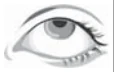
are not sure.
Adults
The recommended dose is one drop twice daily in the
affected eye(s), approximately 12 hours apart. Do not 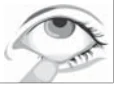
change the dose or stop taking Brimonidine tartrate
without speaking to your doctor.
Children under 12 years
Brimonidine tartrate must not be used for infants below
2 years of age. 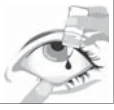
Brimonidine tartrate is not recommended for use in
children (from 2 years until 12 years).
Instructions for use
Brimonidine tartrate comes as eye drops. Always wash
your hands before applying eye drops. Your prescription
label tells you how many drops to use at each dose. If 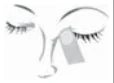
you use Brimonidine tartrate with another eye drop,
wait 5-15 minutes before applying the second eye drop.
Apply your eye drops in the following way:
- 1. Tilt your head back and look at the ceiling.
- 2. Gently pull the lower eyelid down until there is a small pocket.
- 3. Squeeze the upturned dropper bottle to release a drop into your eye.
- 4. Whilst keeping the affected eye closed, press your finger against the corner of the closed eye (the side where the eye meets the nose) and hold for 1 minute.
If a drop misses your eye, try again. To avoid contamination, do not let the tip of the bottle touch your eye or anything else. Replace and tighten the cap straight after use.
| Produkt/Product: BRIMONIDINE TARTRATE 2 MG/ML EYE DROPS, SOLUTION UK | |||
| Packmittel/Packaging: PIL | |||
| Format/Size: 148 × 420 mm | |||
| Schriftgröße: 8,5 pt (ZAB 9pt) – 16 pt | |||
| Hersteller Artikelnr.: --- | |||
| Schwarz 100 % | 70 % | 10 % | |||
| Version: 8. UMLAUF | |||
| Datum/Date: 30.03.2026 | |||
| Agentur/Agency: | |||
V01
If you use more Brimonidine tartrate than you should
Adults
In adult patients who used more drops than they were prescribed, the side effects reported were those already known to occur with brimonidine tartrate.
Adults who accidentally swallowed brimonidine tartrate experienced a drop in blood pressure, which in some patients was followed by an increase in blood pressure. Children
Serious side effects were reported in children who accidentally swallowed brimonidine tartrate. Signs included sleepiness, floppiness, low body temperature, paleness and breathing difficulties. Should this happen, contact your doctor immediately.
Adults and Children
If Brimonidine tartrate has been accidentally swallowed or if you have used more Brimonidine tartrate than you should, please contact your doctor immediately.
If you forget to use Brimonidine tartrate
If you forget to take a dose, apply it as soon as you remember. If, however, it is almost time for your next dose, omit the missed dose altogether and then follow your normal routine.
If you stop using Brimonidine tartrate
To be effective Brimonidine tartrate must be used every day. Do not stop using Brimonidine tartrate until your doctor tells you to.
If you have any further questions on the use of this medicine, ask your doctor or pharmacist.
4. Possible side effects
Like all medicines, this medicine can cause side effects, although not everybody gets them. The following side effects may be seen with brimonidine tartrate.
Affecting the eye
Very common (may affect more than 1 in 10 people):
- Irritation of the eye (eye redness, burning, stinging, a feeling of something in the eye, itching, follicles or white spots on the see-through layer which covers the surface of the eye)
- Blurred vision
- An allergic reaction in the eye
Common (may affect up to 1 in 10 people):
- Local irritation (inflammation, redness and discomfort in the eye, swelling of the eyelid, swelling of the see-through layer which covers the surface of the eye, sticky eyes, pain and tearing)
- Sensitivity to light
- Erosion on the surface of the eye and staining
- Eye dryness
- Whitening of the see-through layer which covers the surface of the eye
- Abnormal vision
- Inflammation of the see-through layer which covers the surface of the eye
- Small bulges on the back surface of the eyelids due to inflammation
Very rare (may affect up to 1 in 10,000 people):
- Inflammation within the eye
- Reduction in pupil size
Not known (frequency cannot be estimated from the available data):
Itching of eyelids
Affecting the body
Very common (may affect more than 1 in 10 people):
- Headache
- Dry mouth
- Tiredness/drowsiness
Common (may affect up to 1 in 10 people):
- Dizziness
- Cold-like symptoms
- Symptoms involving the stomach and digestion
- Abnormal taste
- General weakness
Uncommon (may affect up to 1 in 100 people):
- Depression
- Palpitations or changes in heart rate
- Dry nose
- General allergic reactions
Rare (may affect up to 1 in 1,000 people):
- Shortness of breath
Very rare (may affect up to 1 in 10,000 people):
- Sleeplessness
- Fainting
- High blood pressure
- Low blood pressure
Not known (frequency cannot be estimated from the available data):
- Skin reactions including redness, face swelling, itching, rash and widening of blood vessels Reporting of side effects
If you get any side effects, talk to your doctor or pharmacist. This includes any possible side effects not listed in this leaflet. You can also report side effects directly via the Yellow Card Scheme,
Website: www.mhra.gov.uk/yellowcard or search for MHRA Yellow Card in the Google Play or Apple App Store. By reporting side effects you can help provide more information on the safety of this medicine.
5. How to store Brimonidine tartrate
- Keep this medicine out of the sight and reach of children.
- Do not use this medicine if the tamper proof seal on the bottle neck is broken before you first begin to use it.
- Do not use this medicine after the expiry date which is stated on the bottle lable and carton after EXP. The expiry date refers to the last day of that month.
- This medicine does not require any special storage conditions.
Throw the bottle away 28 days after opening, even if there is solution remaining.
Do not throw away any medicines via wastewater or household waste. Ask your pharmacist how to dispose of medicines no longer required. These measures will help to protect the environment.
6. Contents of the pack and other information
What Brimonidine tartrate contains
- The active substance is Brimonidine tartrate. One ml solution contains 2.0 mg Brimonidine tartrate equivalent to 1.3 mg Brimonidine tartrate.
- The other ingredients are benzalkonium chloride as a preservative, poly(vinyl alcohol), sodium chloride, sodium citrate, citric acid monohydrate, purified water and hydrochloric acid and sodium hydroxide for pH-adjustment.
What Brimonidine tartrate looks like and contents of the pack
Brimonidine tartrate 2 mg/ml eye drops, solution is a clear slightly greenish-yellow solution. Each bottle contains 5 ml.
Brimonidine tartrate 2 mg/ml eye drops, solution is available in packs of 1, 3 and 6 bottles.
Not all pack sizes may be marketed.
Marketing Authorisation Holder
axunio Pharma GmbH
Van-der-Smissen-Str. 1
22767 Hamburg
Germany
Manufacturer
Famar Anonymous Industrial Single Member Company of Pharmaceuticals And Cosmetics
Agiou Dimitriou Street 63
Alimos, 174 56
Greece