

Summary of Product Characteristics (SmPC) - Botulinum Toxin Type A 500 units powder for solution for injection
1 NAME OF THE MEDICINAL PRODUCT
Botulinum Toxin Type A
500 units
Powder for solution for injection
2 QUALITATIVE AND QUANTITATIVE COMPOSITION
Clostridium botulinum type A toxin-haemagglutinin complex 500 units.
For a full list of excipients, see section 6.1.
3 PHARMACEUTICAL FORM
Powder for solution for injection
4.1 Therapeutic indications
Botulinum Toxin Type A is indicated for symptomatic treatment of focal spasticity of:
- Upper limbs in adults
- Lower limbs in adults affecting the ankle joint due
- Dynamic equinus foot deformity in ambulant paediatric cerebral palsy patients, two years of age or older
- Upper limbs in paediatric cerebral palsy patients, two years of age or older.
Botulinum Toxin Type A is indicated for the management of urinary incontinence in adults with neurogenic detrusor overactivity due to spinal cord injury (traumatic or non-traumatic) or multiple sclerosis, who are regularly performing clean intermittent catheterisation.
Botulinum Toxin Type A is indicated in adults for symptomatic treatment of:
- Spasmodic torticollis
- Blepharospasm
- Hemifacial spasm
- Severe primary hyperhidrosis of the axillae, which does not respond to topical treatment with antiperspirants or antihidrotics.
Botulinum Toxin Type A is indicated for the temporary improvement in the appearance of moderate to severe:
- Glabellar lines (vertical lines between the eyebrows) seen at maximum frown and/or
- Lateral canthal lines (crow’s feet lines) seen at maximum smile in adult patients under 65 years, when the severity of these lines has an important psychological impact on the patient.
4.2 Posology and method of administration
The units of Botulinum Toxin Type A are specific to the preparation and are not interchangeable with other preparations of botulinum toxin.
Botulinum Toxin Type A should only be administered by an appropriately qualified healthcare practitioner with expertise in the treatment of the relevant indication and the use of the required equipment, in accordance with national guidelines.
For instructions on reconstitution of the powder for solution for injection, handling and disposal of vials please refer to section 6.6.
Focal spasticity in adults
Upper limb:
Posology
Dosing in initial and sequential treatment sessions should be tailored to the individual based on the size, number and location of muscles involved, severity of spasticity, the presence of local muscle weakness, the patient's response to previous treatment, and/or adverse event history with Botulinum Toxin Type A. In clinical trials, doses of 500 units and 1000 units were divided among selected muscles at a given treatment session as shown below.
No more than 1 ml should generally be administered at any single injection site. The total dose should not exceed 1000 units at a given treatment session.
| Muscles Injected | Recommended Dose Botulinum Toxin Type A (U) |
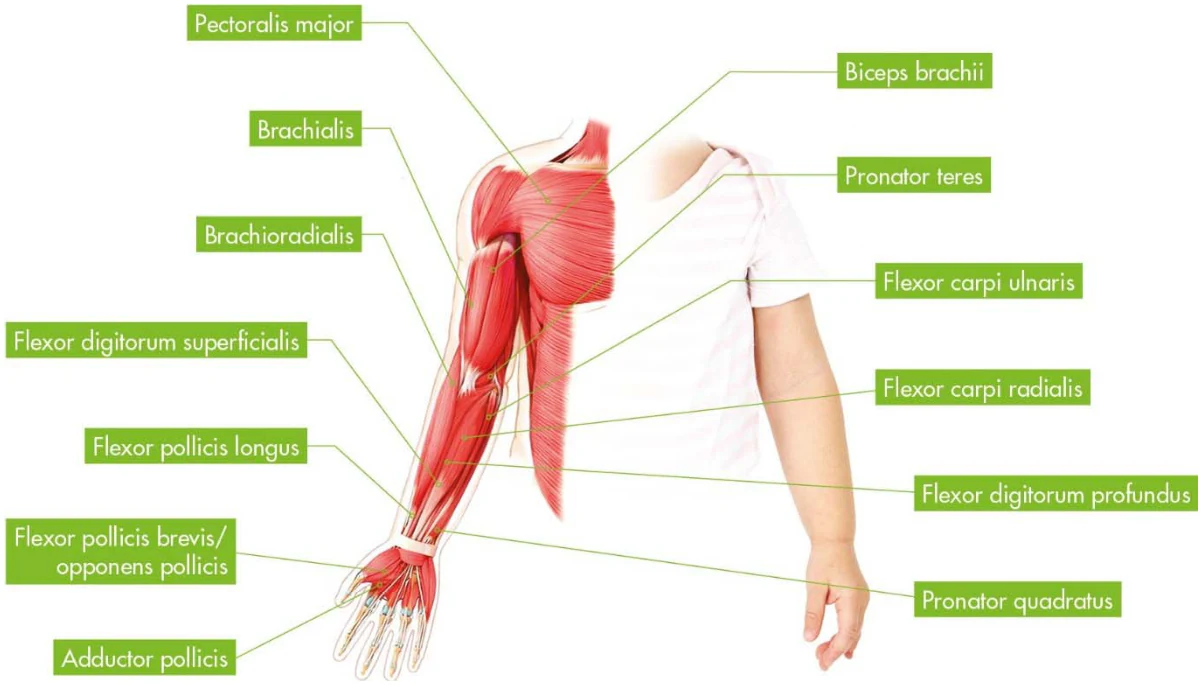
Flexor carpi radialis (FCR) Flexor carpi ulnaris (FCU) | 100-200U 100-200U |
Flexor digitorum profundus (FDP)
Flexor digitorum superficialis (FDS)
Flexor pollicis longus
Adductor pollicis
100-200U
100-200U
100-200U
25-50U
Brachialis Brachioradialis Biceps brachii (BB) Pronator teres | 200-400U 100-200U 200-400U 100-200U |
Triceps brachii (long head) Pectoralis major Subscapularis Latissimus dorsi | 150-300U 150-300U 150-300U 150-300U |
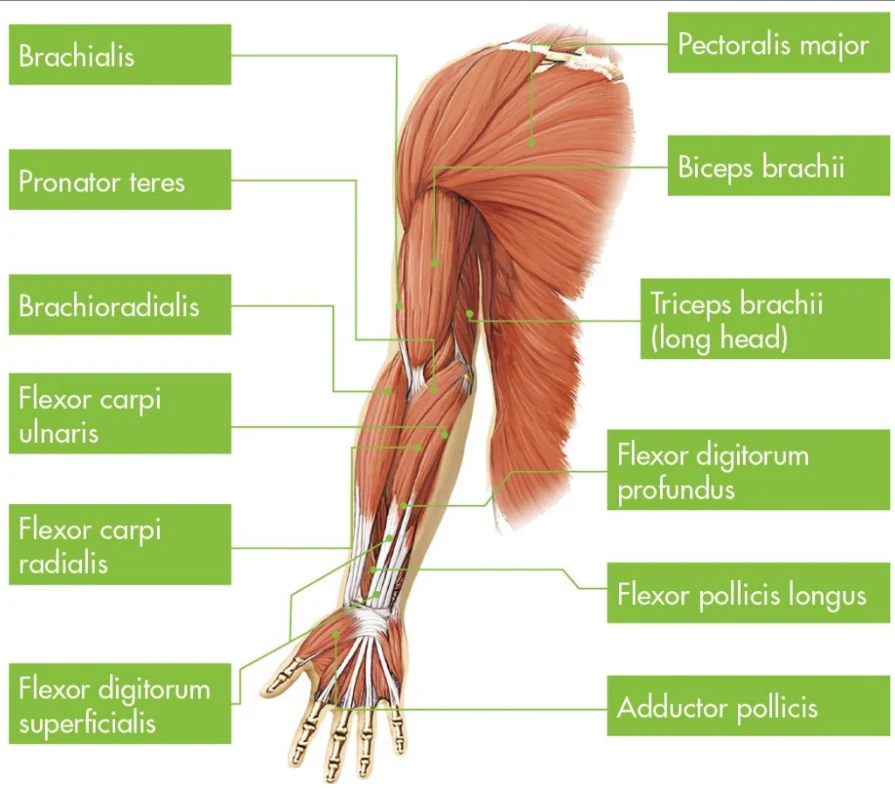
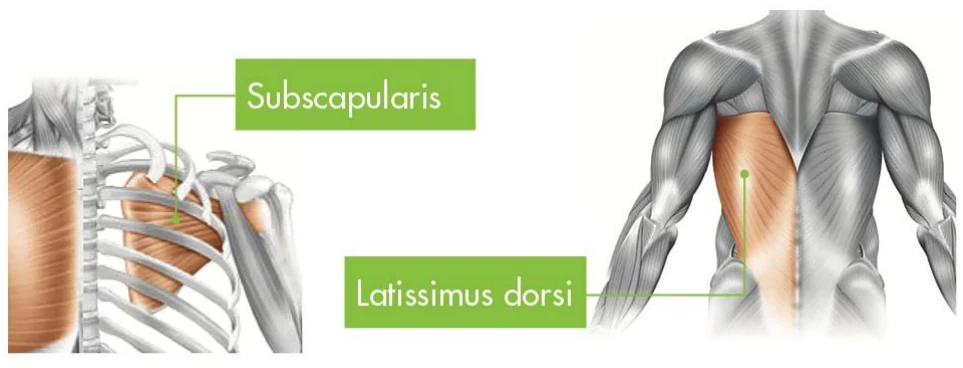
Although actual location of the injection sites can be determined by palpation, the use of injection guiding technique, e.g. electromyography, electrical stimulation or ultrasound is recommended to target the injection sites.
Clinical improvement may be expected one week after injection and may last up to 20 weeks. Injections may be repeated every 12 - 16 weeks or as required to maintain response, but not more frequently than every 12 weeks. The degree and pattern of muscle spasticity at the time of re-injection may necessitate alterations in the dose of Botulinum Toxin Type A and muscles to be injected.
Lower limb spasticity affecting the ankle joint:
Posology
In clinical trials, doses of 1000U and 1500U were divided among selected muscles. The exact dosage in initial and sequential treatment sessions should be tailored to the individual based on the size and number of muscles involved, the severity of the spasticity, also taking into account the presence of local muscle weakness and the patient’s response to previous treatment. However, the total dose should not exceed 1500U.
No more than 1 ml should generally be administered at any single injection site.
| Muscle | Recommended Dose Botulinum Toxin Type A (U) | Number of injection sites per muscle |
| Primary target muscle | ||
| Soleus muscle | 300 - 550U | 2 - 4 |
Gastrocnemius: Medial head Lateral head | ||
| 100 - 450U | 1 - 3 | |
| 100 - 450U | 1 - 3 | |
| Distal muscles | ||
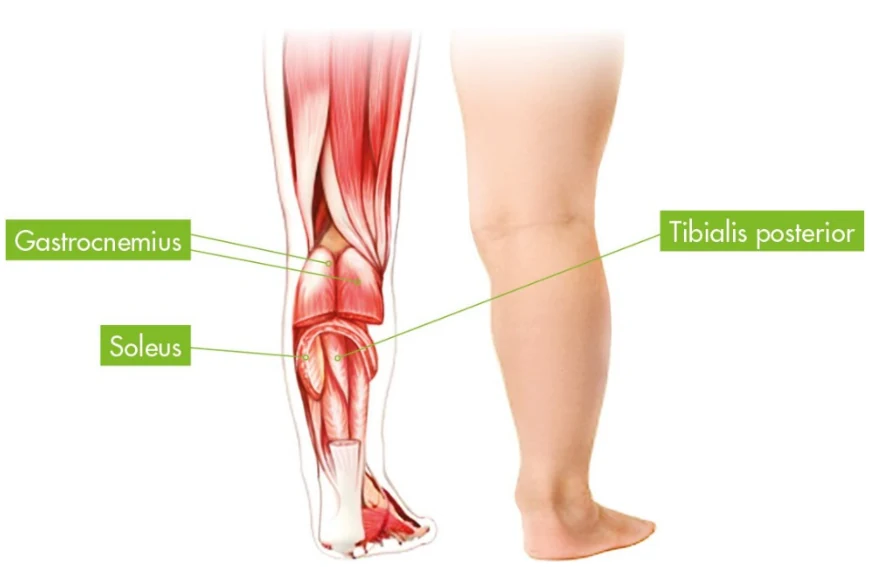
| Tibialis posterior | 100 - 250U | 1 - 3 |
Flexor digitorum longus | 50 - 200U | 1 - 2 |
Flexor digitorum brevis | 50 - 200U | 1 - 2 |
| Flexor hallucis longus | 50 - 200U | 1 - 2 |
| Flexor hallucis brevis | 50 - 100U | 1 - 2 |
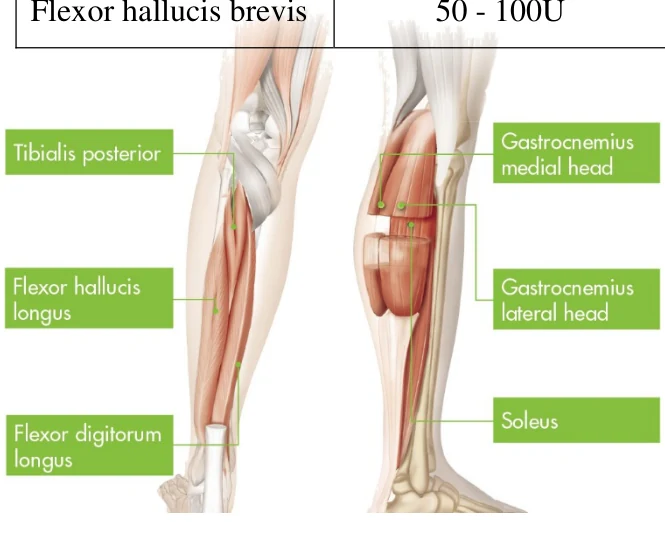
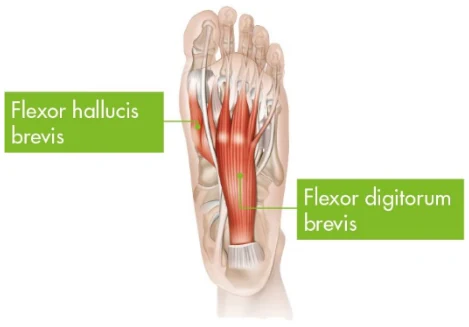 The degree and pattern of muscle spasticity at the time of re-injection may necessitate alterations in the dose of Botulinum Toxin Type A and muscles to be injected.
Although actual location of the injection sites can be determined by palpation, the use of injection guiding techniques, e.g. electromyography, electrical stimulation or ultrasound are recommended to help accurately target the injection sites.
Repeat Botulinum Toxin Type A treatment should be administered every 12 to 16 weeks, or longer as necessary, based on return of clinical symptoms but no sooner than 12 weeks after the previous injection.
Upper and Lower limbs:
If treatment is required in the upper and lower limbs during the same treatment session, the dose of Botulinum Toxin Type A to be injected in each limb should be tailored to the individual’s need according to the relevant posology and without exceeding a total dose of 1500U.
Elderly patients (≥ 65 years): Clinical experience has not identified differences in response between the elderly and younger adult patients. In general, elderly patients should be observed to evaluate their tolerability of Botulinum Toxin Type A, due to the greater frequency of concomitant disease and other drug therapy.
Method of administration
When treating focal spasticity affecting the upper and lower limbs in adults, Botulinum Toxin Type A is reconstituted with sodium chloride injection B.P. (0.9 % w/v) to yield a solution containing either 100 units per ml, 200 units per ml or 500 units per ml of Botulinum Toxin Type A (see section 6.6).
Botulinum Toxin Type A is administered by intramuscular injection into the muscles as described above.
Focal spasticity in paediatric cerebral palsy patients, two years of age or older
Botulinum Toxin Type A maximum total doses per treatment session and minimum times before retreatment
| Limb | Maximum total dose of Botulinum Toxin Type A to be administered per treatment session | Minimum time before retreatment should be considered |
| Single lower limb | 15 units/kg or 1000 | No sooner than 12 weeks |
| Both lower limbs | units* 30 units/kg or 1000 units* | |
| Single upper limb Both upper limbs | 16 units/kg or 640 units* 21 units/kg or 840 units * | No sooner than 16 weeks |
| Upper and lower limbs | 30 units/kg or 1000 units* | No sooner than 12-16 weeks |
*whichever is lower
Please see below for full posology and method of administration by treatment indication.
Dynamic equinus foot deformity due to focal spasticity in ambulant paediatric cerebral palsy patients, two years of age or older:
Posology
Dosing in initial and sequential treatment sessions should be tailored to the individual based on the size, number and location of muscles involved, severity of spasticity, the presence of local muscle weakness, the patient’s response to previous treatment, and/or adverse event history with botulinum toxins. For treatment initiation, consideration should be given to start with a lower dose.
The maximum total dose of Botulinum Toxin Type A administered per treatment session must not exceed 15 units/kg for unilateral lower limb injections or 30 units/kg for bilateral injections. In addition, the total Botulinum Toxin Type A dose per treatment session must not exceed 1000 units or 30 units/kg, whichever is lower. The total dose administered should be divided between the affected spastic muscles of the lower limb(s). When possible, the dose should be distributed across more than 1 injection site in any single muscle.
No more than 0.5 ml of Botulinum Toxin Type A should be administered in any single injection site. See below table for recommended dosing:
| Muscle | Recommended Dose Range per muscle per leg (U/kg Body Weight) | Number of injection sites per muscle |
| Gastrocnemius | 5 to 15 U/kg | Up to 4 |
| Soleus | 4 to 6 U/kg | Up to 2 |
| Tibialis posterior | 3 to 5 U/kg | Up to 2 |
| Total dose | Up to 15 U/kg in a single lower limb or 30 U/kg if both lower limbs injected and not exceeding 1000 U* | |
Note: For concomitant treatment of upper and lower limbs, the total dose should not exceed 30 U/kg or 1000 U*
*whichever is lower
Although actual location of the injection sites can be determined by palpation, the use of injection guiding technique, e.g. electromyography, electrical stimulation or ultrasound is recommended to target the injection sites.
Repeat Botulinum Toxin Type A treatment should be administered when the effect of a previous injection has diminished, but no sooner than 12 weeks after the previous injection. A majority of patients in clinical studies were re-treated between 16 - 22 weeks; however, some patients had a longer duration of response, i.e. 28 weeks. The degree and pattern of muscle spasticity at the time of re-injection may necessitate alterations in the dose of Botulinum Toxin Type A and muscles to be injected.
Clinical improvement may be expected within two weeks after injection.
Method of administration
When treating lower limb spasticity associated with cerebral palsy in children, Botulinum Toxin Type A is reconstituted with sodium chloride injection B.P. (0.9 % w/v) (see also section 6.6) and is administered by intramuscular injection as detailed above.
Focal spasticity of upper limbs in paediatric cerebral palsy patients, two years of age or older:
Posology
Dosing in initial and sequential treatment sessions should be tailored to the individual based on the size, number and location of muscles involved, severity of spasticity, the presence of local muscle weakness, the patient's response to previous treatment, and/or adverse event history with botulinum toxins. For treatment initiation, consideration should be given to start with a lower dose.
The maximum dose of Botulinum Toxin Type A administered per treatment session for unilateral upper limb injections must not exceed 16 U/kg or 640 U whichever is lower. When injecting bilaterally, the maximum Botulinum Toxin Type A dose per treatment session must not exceed 21 U/kg or 840 U, whichever is lower.
The total dose administered should be divided between the affected spastic muscles of the upper limb(s). No more than 0.5 ml of Botulinum Toxin Type A should be administered in any single injection site. See table below for recommended dosing:
Botulinum Toxin Type A Dosing by Muscle for Paediatric Upper Limb
Spasticity
| Muscle | Recommended Dose Range per muscle per upper limb (U/kg Body Weight) | Number of injection sites per muscle |
| Brachialis | 3 to 6 U/kg | Up to 2 |
| Brachioradialis | 1.5 to 3 U/kg | 1 |
| Biceps brachii | 3 to 6 U/kg | Up to 2 |
| Pronator teres | 1 to 2 U/kg | 1 |
| Pronator quadratus | 0.5 to 1 U/kg | 1 |
| Flexor carpi radialis | 2 to 4 U/kg | Up to 2 |
| Flexor carpi ulnaris | 1.5 to 3 U/kg | 1 |
| Flexor digitorum profundus | 1 to 2 U/kg | 1 |
| Flexor digitorum superficialis | 1.5 to 3 U/kg | Up to 4 |
| Flexor pollicis longus | 1 to 2 U/kg | 1 |
| Flexor pollicis brevis/ opponens pollicis | 0.5 to 1 U/kg | 1 |
| Adductor pollicis | 0.5 to 1 U/kg | 1 |
| Pectoralis major | 2.5 to 5 U/kg | Up to 2 |
| Total dose | Up to 16 U/kg or 640 U* in a single upper limb (and not exceeding 21 U/kg or 840 U* if both upper limbs injected) | |
Note: For concomitant treatment of upper and lower limbs the
total dose should not exceed 30 U/kg or 1000 U*
*whichever is lower
Although actual location of the injection sites can be determined by palpation the use of injection guiding technique, e.g. electromyography, electrical stimulation or ultrasound is recommended to target the injection sites.
Repeat Botulinum Toxin Type A treatment should be administered when the effect of a previous injection has diminished, but no sooner than 16 weeks after the previous injection. A majority of patients in the clinical study were retreated between 16-28 weeks; however, some patients had a longer duration of response, i.e. 34 weeks or more. The degree and pattern of muscle spasticity at the time of re-injection may necessitate alterations in the dose of Botulinum Toxin Type A and muscles to be injected.
Method of administration
When treating upper limb spasticity associated with cerebral palsy in children, Botulinum Toxin Type A is reconstituted with sodium chloride injection (0.9% w/v) (see section 6.6) and is administered by intramuscular injection as detailed above.
Focal spasticity of upper and lower limbs in paediatric cerebral palsy patients, two years of age or older:
Posology
When treating combined upper and lower spasticity in children aged 2 years or older refer to the posology section for the individual indications above. The dose of Botulinum Toxin Type A to be injected for concomitant treatment should not exceed a total dose per treatment session of 30 U/kg or 1000 U, whichever is lower.
Retreatment of the upper and lower limbs combined should be considered no sooner than a 12 to 16-week window after the previous treatment session. The optimal time to retreatment should be selected based on individuals progress and response to treatment.
Method of administration
When treating combined upper and lower spasticity associated with cerebral palsy in children refer to the method of administration section for the individual indications above.
Urinary incontinence due to neurogenic detrusor overactivity:
Posology
The recommended dose is 600 U. In case of insufficient response, such as in patients with a severe disease presentation, a dose of 800 U may be used. Botulinum Toxin Type A should be administered to patients who are regularly performing clean intermittent catheterisation.
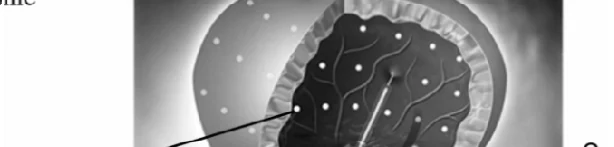
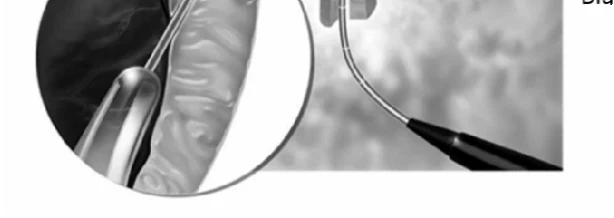
The total dose administered should be divided across 30 intradetrusor injections evenly distributed throughout the detrusor muscle, avoiding the trigone. Botulinum Toxin Type A is injected via a flexible or rigid cystoscope and each injection should be to a depth of approximately 2 mm with the delivery of 0.5 mL to each site. For the final injection, approximately 0.5 mL of sterile normal saline should be injected to ensure that the full dose is delivered. 


Prophylactic antibiotics should be commenced in line with the local guidelines and protocols or as used in the clinical studies (see Section 5.1). Medications with anticoagulant effects should be stopped at least 3 days prior to Botulinum Toxin Type A administration and only restarted on the day after administration. If medically indicated, low molecular weight heparins may be administered 24 hours prior to Botulinum Toxin Type A administration. Prior to injection, local anaesthesia to the urethra or lubricating gel can be administered to facilitate comfortable cystoscope insertion. If required, either an intravesical instillation of diluted anaesthetic (with or without sedation) or general anaesthesia may also be used.
If a local anaesthetic instillation is performed, the local anaesthetic solution must be drained, then the bladder instilled (rinsed) with saline and drained again before continuing with the intradetrusor injection procedure. Prior to injection, the bladder should be instilled with enough saline to achieve adequate visualisation for the injections.
After administration of all 30 intradetrusor injections, the saline used for bladder wall visualisation should be drained. The patient should be observed for at least 30 minutes post-injection.
Onset of effect is usually observed within 2 weeks of treatment. Repeat Botulinum Toxin Type A treatment should be administered when the effect of a previous injection has diminished, but no sooner than 12 weeks after the previous injection. The median time to retreatment in patients treated with Botulinum Toxin Type A was between 39 to 47 weeks, although a longer duration of response may occur as more than 40% of patients had not been retreated by 48 weeks.
Method of administration
When treating urinary incontinence due to neurogenic detrusor overactivity, Botulinum Toxin Type A is reconstituted with sodium chloride injection (0.9% w/v) to yield a 15 mL solution containing either 600 units or 800 units. For additional reconstitution instruction please see section 6.6. Botulinum Toxin Type A is administered by intradetrusor injection as detailed above.
Spasmodic torticollis
Posology
The doses recommended for torticollis are applicable to adults of all ages, provided the adults are of normal weight with no evidence of reduced neck muscle mass. A lower dose may be appropriate if the patient is markedly underweight or in the elderly, where reduced muscle mass may exist. The initial recommended dose for the treatment of spasmodic torticollis is 500 units per patient given as a divided dose and administered into the two or three most active neck muscles.
- For rotational torticollis distribute the 500 units by administering 350 units into the splenius capitis muscle, ipsilateral to the direction of the chin/head rotation and 150 units into the sternomastoid muscle, contralateral to the rotation.
- For laterocollis, distribute the 500 units by administering 350 units into the ipsilateral splenius capitis muscle and 150 units into the ipsilateral sternomastoid muscle. In cases associated with shoulder elevation the ipsilateral trapezoid or levator scapulae muscles may also require treatment, according to visible hypertrophy of the muscle or electromyographic (EMG) findings. Where injections of three muscles are required, distribute the 500 units as follows, 300 units splenius capitis, 100 units sternomastoid and 100 units to the third muscle.
- For retrocollis distribute the 500 units by administering 250 units into each of the splenius capitis muscles. Bilateral splenii injections may increase the risk of neck muscle weakness.
- All other forms of torticollis are highly dependent on specialist knowledge and EMG to identify and treat the most active muscles. EMG should be used diagnostically for all complex forms of torticollis, for reassessment after unsuccessful injections in non-complex cases, and for guiding injections into deep muscles or in overweight patients with poorly palpable neck muscles.
On subsequent administration, the doses may be adjusted according to the clinical response and side effects observed. Doses within the range of 250 - 1000 units are recommended, although the higher doses may be accompanied by an increase in side effects, particularly dysphagia. The maximum dose administered must not exceed 1000 units.
The relief of symptoms of torticollis may be expected within a week after the injection.
Injections may be repeated approximately every 16 weeks or as required to maintain a response, but not more frequently than every 12 weeks.
Children: The safety and effectiveness of Botulinum Toxin Type A in the treatment of spasmodic torticollis in children have not been demonstrated.
Method of administration
When treating spasmodic torticollis, Botulinum Toxin Type A is reconstituted with sodium chloride injection B.P. (0.9 % w/v) to yield a solution containing 500 units per ml of Botulinum Toxin Type A (see section 6.6).
Botulinum Toxin Type A is administered by intramuscular injection as described above.
Blepharospasm and hemifacial spasm
Posology
In a dose ranging clinical trial on the use of Botulinum Toxin Type A for the treatment of benign essential blepharospasm, a dose of 40 units per eye was significantly effective. Doses of 80 units and 120 units per eye resulted in a longer duration of effect. However, the incidence of local adverse events, specifically ptosis, was dose related. In the treatment of blepharospasm and hemifacial spasm, the maximum dose used must not exceed a total dose of 120 units per eye.
An injection of 10 units (0.05 ml) medially and 10 units (0.05 ml) laterally should be made into the junction between the preseptal and orbital parts of both the upper (3 and
- 4) and lower orbicularis oculi muscles (5 and 6) of each eye. In order to reduce the risk of ptosis, injections near the levator palpebrae superioris should be avoided.
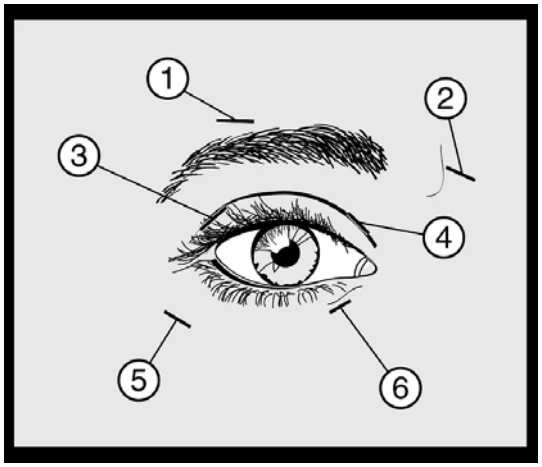
For injections into the upper lid the needle should be directed away from its centre to avoid the levator muscle. A diagram to aid placement of these injections is provided above. The relief of symptoms may be expected to begin within two to four days with maximal effect within two weeks.
| Injections should be repeated approximately every twelve weeks or as required to | |
| prevent recurrence of symptoms but not more frequently than every twelve weeks. | |
| On such subsequent administrations, if the response from the initial treatment is | |
| considered insufficient, the dose per eye may need to be increased to: | |
| |
| |
| |
| above and below each eye in the manner previously described. Additional sites in the | |
| frontalis muscle above the brow (1 and 2) may also be injected if spasms here | |
| interfere with vision. | |
In cases of unilateral blepharospasm the injections should be confined to the affected eye. Patients with hemifacial spasm should be treated as for unilateral blepharospasm. The doses recommended are applicable to adults of all ages including the elderly.
Children: The safety and effectiveness of Botulinum Toxin Type A in the treatment of blepharospasm and hemifacial spasm in children have not been demonstrated.
Method of administration
When treating blepharospasm and hemifacial spasm, Botulinum Toxin Type A is reconstituted with sodium chloride injection B.P. (0.9 % w/v) to yield a solution containing 200 units per ml of Botulinum Toxin Type A (see section 6.6). Botulinum Toxin Type A is administered by subcutaneous injection medially and laterally into the junction between the preseptal and orbital parts of both the upper and lower orbicularis oculi muscles of the eyes as described above.
Moderate to severe glabellar lines and/or lateral canthal lines
Posology
The treatment interval depends on the individual patient’s response after assessment. Treatment interval with Botulinum Toxin Type A should not be more frequent than every three months.
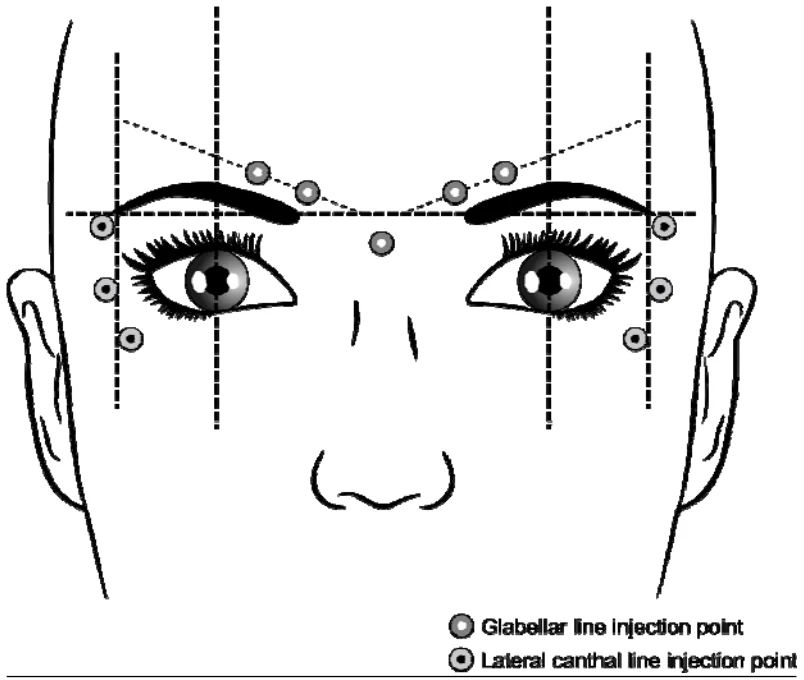
Remove any make-up and disinfect the skin with a local antiseptic. Intramuscular injections should be performed using a sterile 29 - 30 gauge needle. The recommended injection points for glabellar lines and lateral canthal lines are described below:
Glabellar lines:
The recommended dose is 50 units (0.25 ml of reconstituted solution) of Botulinum Toxin Type A to be divided into 5 injection sites, 10 units (0.05 ml of reconstituted solution) are to be administered intramuscularly, at right angles to the skin, into each of the 5 sites: 2 injections into each corrugator muscle and one into the procerus muscle near the nasofrontal angle as shown above.
The anatomical landmarks can be more readily identified if observed and palpated at maximal frown. Before injection, place the thumb or index finger firmly below the orbital rim in order to prevent extravasation below the orbital rim.
The needle should be pointed upward and medially during the injection. In order to reduce the risk of ptosis, avoid injections near the levator palpebrae superioris muscle, particularly in patients with larger brow-depressor complexes (depressor supercilii). Injections in the corrugator muscle must be made into the central part of that muscle, at least 1 cm above the orbital rim.
In clinical studies an optimal effect, in glabellar lines, was demonstrated for up to 4 months after injection. Some patients were still responders at 5 months (see section 5.1).
Lateral canthal lines:
The recommended dose per side is 30 units (60 units for both sides, 0.30 ml of reconstituted solution) of Botulinum Toxin Type A, to be divided into 3 injection sites; 10 units (0.05 ml of reconstituted solution) are to be administered intramuscularly into each injection point.
Injection should be lateral (20 - 30° angle) to the skin and very superficial. All injection points should be at the external part of the orbicularis oculi muscle and sufficiently far from the orbital rim (approximately 1 - 2 cm) as shown above. The anatomical landmarks can be more readily identified if observed and palpated at maximal smile. Care must be taken to avoid injecting the zygomaticus major/minor muscles to avoid lateral mouth drop and asymmetrical smile.
General information
In the event of treatment failure or diminished effect following repeat injections, alternative treatment methods should be employed. In case of treatment failure after the first treatment session, the following approaches may be considered:
- Analysis of the causes of failure, e.g. incorrect muscles injected, inappropriate injection technique, and formation of toxin-neutralising antibodies
- Re-evaluation of the relevance of treatment with Botulinum Toxin Type A.
The efficacy and safety, of repeat injections of Botulinum Toxin Type A, has been evaluated in glabellar lines up to 24 months and up to 8 repeat treatment cycles and for lateral canthal lines up to 12 months and up to 5 repeat treatment cycles.
Children: The safety and effectiveness of Botulinum Toxin Type A, in treating moderate to severe glabellar lines and lateral canthal lines, in individuals under 18 years of age have not been demonstrated.
Method of administration
For moderate to severe glabellar lines or lateral canthal lines, Botulinum Toxin Type A is reconstituted with sodium chloride injection B.P. (0.9 % w/v) to yield a solution containing 200 units per ml of Botulinum Toxin Type A (see section 6.6). Botulinum Toxin Type A is administered by intramuscular injection as described above.
Axillary hyperhidrosis
Posology
The recommended initial dosage is 100 units per axilla. If the desired effect is not attained, up to 200 units per axilla can be administered for subsequent injections. The maximum dose administered should not exceed 200 units per axilla.
The area to be injected may be determined beforehand using the iodine-starch test. Both axillae should be cleaned and disinfected. Intradermal injections at ten sites, each site receiving 10 units, i.e., to deliver 100 units per axilla, are then administered. The maximum effect should be seen by week two after injection. In many cases, the recommended dose will provide adequate suppression of sweat secretion for approximately 48 weeks. The time point for further applications should be determined on an individual basis according to clinical need. Injections should not be repeated more frequently than every 12 weeks. There is some evidence for a cumulative effect of repeated doses so the time of each treatment for a given patient should be assessed individually.
Children: The safety and effectiveness of Botulinum Toxin Type A in the treatment of axillary hyperhidrosis in children has not been demonstrated.
Method of administration:
When treating axillary hyperhidrosis, Botulinum Toxin Type A is reconstituted with sodium chloride solution B.P. (0.9 % w/v) to yield a solution containing 200 units per ml of Botulinum Toxin Type A (see section 6.6).
Botulinum Toxin Type A is administered by intradermal injection as described above.
4.3 Contraindications
- Known hypersensitivity to the active substance or to any of the excipients listed in section 6.1.
- Urinary tract infection at the time of treatment for the management of urinary incontinence due to neurogenic detrusor overactivity.
4.4 Special warnings and precautions for use
Side effects related to spread of toxin distant from the site of administration have been reported (see section 4.8) which, in some cases, was associated with dysphagia, pneumonia and/or significant debility resulting, very rarely, in death. Patients treated with therapeutic doses may present with excessive muscle weakness. Cases of iatrogenic botulism have been reported following injection of botulinum toxin products. The risk of occurrence of such undesirable effects may be reduced by using the lowest effective possible dose and by not exceeding the maximum recommended dose.
Botulinum Toxin Type A should only be used with caution and under close medical supervision in patients with subclinical or clinical evidence of marked defective neuromuscular transmission (e.g. myasthenia gravis). Such patients may have an increased sensitivity to agents such as Botulinum Toxin Type A, which may result in excessive muscle weakness with therapeutic doses. Patients with underlying neurological disorders are at increased risk of this side effect.
Caution should be exercised when treating adult patients especially the elderly, with focal spasticity affecting the lower limbs, who may be at increased risk of fall. In placebo-controlled clinical studies, where patients were treated for lower limb spasticity, 6.3% and 3.7% of patients experienced a fall in the Botulinum Toxin Type A and placebo groups, respectively.
Dry eye has been reported with the use of Botulinum Toxin Type A in the treatment of glabellar lines, lateral canthal lines, blepharospasm and hemifacial spasm (see section 4.8). Reduced tear production, reduced blinking, and corneal disorders, may occur with the use of botulinum toxins, including Botulinum Toxin Type A.
Very rare cases of death, occasionally in the context of dysphagia, pneumopathy (including but not limited to dyspnoea, respiratory failure, respiratory arrest) and/or in patients with significant asthenia have been reported following treatment with botulinum toxin A or B. Patients with disorders resulting in defective neuromuscular transmission, difficulty in swallowing or breathing are more at risk of experiencing these effects. In these patients, treatment must be administered under the control of a specialist and only if the benefit of treatment outweighs the risk.
Botulinum Toxin Type A should be administered with caution to patients with pre-existing swallowing or breathing problems as these can worsen following the distribution of the effect of toxin into the relevant muscles. Aspiration has occurred in rare cases and is a risk when treating patients who have a chronic respiratory disorder.
The recommended posology and frequency of administration for Botulinum Toxin Type A must not be exceeded (see section 4.2).
Patients and their care-givers must be warned of the necessity to seek immediate medical treatment if they experience any signs or symptoms consistent with the spread of botulinum toxin effect or in case of swallowing, speech or respiratory problems (see section 4.9).
Botulinum Toxin Type A should not be used to treat spasticity in patients who have developed a fixed contracture.
As with any intramuscular injection, Botulinum Toxin Type A should only be used where strictly necessary in patients with prolonged bleeding times, infection or inflammation at the proposed site(s) of injection.
Autonomic dysreflexia associated with the treatment procedure for neurogenic detrusor overactivity can occur. Prompt medical attention may be required.
Caution should be taken when Botulinum Toxin Type A is used where the targeted muscle shows excessive weakness or atrophy.
Botulinum Toxin Type A should only be used to treat a single patient, during a single session. Specific precautions must be taken during the preparation and administration of the product (see section 4.2) and for the inactivation and disposal of any unused reconstituted solution (see section 6.6).
Antibody formation to botulinum toxin has been noted rarely in patients receiving Botulinum Toxin Type A. Clinically, neutralising antibodies might be suspected by a substantial deterioration in response to therapy and/or the need for consistent use of increased doses.
When treating glabellar lines, it is essential to study the patient’s facial anatomy prior to administration. Facial asymmetry, ptosis, excessive dermatochalasis, scarring and any alterations to this anatomy, as a result of previous surgical interventions should be taken into consideration.
Careful consideration should be given before the injection of patients who have experienced a previous allergic reaction to a product containing botulinum toxin type A. The risk of a further allergic reaction must be considered in relation to the benefit of treatment.
Paediatric use
For the treatment of spasticity associated with cerebral palsy in children, Botulinum Toxin Type A should only be used in children of 2 years of age or over. Post-marketing reports of possible distant spread of toxin have been very rarely reported in paediatric patients with comorbidities, predominantly with cerebral palsy. In general, the dose used in these cases was in excess of that recommended (see section 4.8). There have been rare spontaneous reports of death sometimes associated with aspiration pneumonia in children with severe cerebral palsy after treatment with botulinum toxin, including following off-label use (e.g. neck area). Extreme caution should be exercised when treating paediatric patients who have significant neurologic debility, dysphagia, or have a recent history of aspiration pneumonia or lung disease. Treatment in patients with poor underlying health status should be administered only if the potential benefit to the individual patient is considered to outweigh the risks.
Traceability
In order to improve the traceability of biological medicinal products, the name and the batch number of the administered product should be clearly recorded.
4.5 Interaction with other medicinal products and other forms of interaction
The effects of botulinum toxin may be potentiated by drugs interfering either directly or indirectly with neuromuscular function (e.g. aminoglycosides, curare-like non-depolarising blockers, muscle relaxants) and such drugs should be used with caution in patients treated with botulinum toxin due to the potential for undesirable effects.
4.6 Fertility, pregnancy and lactation
Pregnancy:
There are limited data from the use of Clostridium botulinum type A toxin-haemagglutinin complex in pregnant women. Studies in animals have shown reproductive toxicity at high doses causing maternal toxicity (see section 5.3).
Botulinum Toxin Type A should be used during pregnancy only if the benefit justifies any potential risk to the foetus. Caution should be exercised when prescribing to pregnant women.
Breast-feeding:
It is not known whether Clostridium botulinum type A toxin-haemagglutinin complex is excreted in human milk. The excretion of Clostridium botulinum type A toxin-haemagglutinin complex in milk has not been studied in animals. The use of Clostridium botulinum type A toxin-haemagglutinin complex during lactation cannot be recommended.
Fertility:
Studies in male and female rats have shown effects on fertility (see section 5.3).
4.7 Effects on ability to drive and use machines
There is a potential risk of muscle weakness or visual disturbances which, if experienced, may temporarily impair the ability to drive or operate machinery.
4.8 Undesirable effects
General
| Side effects related to spread of toxin distant from the site of administration have been | |||||
| reported, such as dry mouth, exaggerated muscle weakness, dysphagia, | |||||
| aspiration/aspiration pneumonia, with fatal outcome in some very rare cases (see | |||||
| section 4.4). Hypersensitivity reactions have also been reported post-marketing. | |||||
| The frequency of adverse reactions reported in placebo-controlled trials after a single | |||||
administration is defined as follows: ≥ ≥ ≥ | |||||
Very common ( 1/10); common ( 1/100 to <1/10); uncommon ( 1/1,000 to <1/100); ≥ | |||||
| rare ( 1/10,000 to < 1/1,000); very rare (<1/10,000); not known (cannot be estimated | |||||
| from the available data). | |||||
| The following adverse reactions were seen in patients treated across a variety of | |||||
| indications including blepharospasm, hemifacial spasm, torticollis, spasticity | |||||
| associated with either cerebral palsy or stroke/TBI and axillary hyperhidrosis: | |||||
| System Organ Class | Frequency | Adverse Drug Reaction | |||
| Nervous system disorders | Rare | Neuralgic amyotrophy | |||
| Skin and subcutaneous tissue | Uncommon | Pruritus | |||
| disorders | Rare | Rash | |||
General disorders and administration site conditions | Common | Asthenia, fatigue, influenza like illness and injection site reactions (e.g. pain, bruising, pruritus, oedema) | |||
| Frequency of specific adverse reactions by indication | |||||
| In addition, the following adverse reactions specific to individual indications were | |||||
| reported: | |||||
| Focal spasticity affecting the upper limbs in adults | |||||
| System Organ Class | Frequency | Adverse Drug Reaction | |||
| Gastrointestinal disorders | Uncommon | Dysphagia* | |||
| Musculoskeletal and connective tissue disorders | Common | Muscular weakness, musculoskeletal pain, pain in the extremity | |||
*The frequency for Dysphagia was derived from pooled data from open-label studies. Dysphagia was not observed in the double-blind studies in the Adult Upper Limb (AUL) indication.
Focal spasticity affecting the lower limbs in adults
| System Organ Class | Frequency | Adverse Drug Reaction | ||
| Gastrointestinal disorders | Common | Dysphagia | ||
| Musculoskeletal and connective | Common | Muscular weakness, myalgia | ||
| tissue disorders |
General disorders and administration site conditions | Common | Asthenia, fatigue, influenza-like illness, injection site reactions (pain, bruising, rash, pruritus) | ||
| Injury, poisoning and procedural | Common | Fall | ||
| complications | ||||
Dynamic equinus foot deformity due to focal spasticity in ambulant paediatric cerebral palsy patients, two years of age or older
| System Organ Class | Frequency | Adverse Drug Reaction |
| Musculoskeletal and connective tissue disorders | Common | Myalgia, muscular weakness |
| Renal and urinary disorders | Common | Urinary incontinence |
General disorders and administration site conditions | Common | Influenza-like illness, injection site reaction (e.g. pain, erythema, bruising etc.), gait disturbance, fatigue |
| Uncommon | Asthenia | |
| Injury, poisoning and procedural complications | Common | Fall |
Focal spasticity of upper limbs in paediatric cerebral palsy patients, two years of age or older
| System Organ Class | Frequency | Adverse Drug Reaction | |
| Musculoskeletal and connective tissue disorders | Common | Muscular weakness, Pain in extremity | |
| Uncommon | Myalgia | ||
General disorders and administration site conditions | Common | Influenza-like illness, Asthenia, Fatigue, Injection site bruising | |
| Uncommon | Injection site eczema, Injection site pain, Injection site rash, Injection site swelling | ||
| Skin and subcutaneous tissue disorders | Common | Rash | |
| Focal spasticity of upper and lower limbs in paediatric cerebral palsy patients, | |||
| two years of age or older | |||
When treating upper and lower limbs concomitantly with Botulinum Toxin Type A at a total dose of up to 30 U/kg or 1000 U whichever is lower, there are no safety findings in addition to those expected from treating either upper limb or lower limb muscles alone.
Urinary incontinence due to neurogenic detrusor overactivity
| System Organ Class | Frequency | Adverse Drug Reaction |
| Infections and infestations | Very common | Urinary tract infectiona,b |
| Common | Bacteriuriaa | |
| Nervous system disorders | Uncommon | Hypoaesthesia |
| Gastrointestinal disorders | Common | Constipation |
| Musculoskeletal and connective tissue disorders | Uncommon | Muscle weakness |
| Renal and urinary disorders | Common | Haematuriaa |
| Reproductive system and breast disorders | Common | Erectile dysfunction |
General disorders and administration site conditions | Uncommon | Fatigue, influenza-like illness |
a Procedure related event
bIn the pivotal double blind placebo-controlled studies, over the first 12 weeks of treatment, urinary tract infections were reported in 15.8% of Botulinum Toxin Type A treated patients and 17.4% of placebo treated patients.
Spasmodic torticollis
| System Organ Class | Frequency | Adverse Drug Reaction |
| Nervous system disorders | Common | Headache, dizziness, facial paresis |
| Eye disorders | Common | Vision blurred, visual acuity reduced |
| Uncommon | Diplopia, ptosis | |
| Respiratory, thoracic and mediastinal disorders | Common | Dysphonia, dyspnoea |
| Rare | Aspiration | |
| Gastrointestinal disorders | Very common | Dysphagia, dry mouth |
| Uncommon | Nausea | |
| Musculoskeletal and connective tissue disorders | Very common | Muscle weakness |
| Common | Neck pain, musculoskeletal pain, myalgia, pain in extremity, musculoskeletal stiffness | |
| Uncommon | Muscle atrophy, jaw disorder |
Dysphagia appeared to be dose related and occurred most frequently following injection into the sternomastoid muscle. A soft diet may be required until symptoms resolve. These side effects may be expected to resolve within two to four weeks.
Blepharospasm and hemifacial spasm
| System Organ Class | Frequency | Adverse Drug Reaction |
| Nervous system disorders | Common | Facial paresis |
| Uncommon | VIIth nerve paralysis | |
| Eye disorders | Very common | Ptosis |
| Common | Diplopia, dry eye, lacrimation increased | |
| Rare | Ophthalmoplegia | |
| Skin and subcutaneous tissue disorders | Common | Eyelid oedema |
| Rare | Entropion |
Side effects may occur due to deep or misplaced injections of Botulinum Toxin Type A temporarily paralysing other nearby muscle groups.
Moderate to severe glabellar lines
| System Organ Class | Frequency | Adverse Drug Reaction |
| Nervous system disorders | Very common | Headache |
| Common | Temporary facial paresis (due to temporary paresis of facial muscles proximal to injection sites, predominantly describes brow paresis) | |
| Uncommon | Dizziness | |
| Eye disorders | Common | Asthenopia, Eyelid ptosis, Eyelid oedema, Lacrimation increased, Dry eye, Muscle twitching (twitching of muscles around the eyes) |
| Uncommon | Visual impairment, Vision blurred, Diplopia | |
| Rare | Eye movement disorder | |
| Skin and subcutaneous tissue disorders | Uncommon | Pruritus, Rash |
| Rare | Urticaria | |
General disorders and administration site conditions | Very common | Injection site reactions (e.g. erythema, oedema, irritation, rash, pruritus, paraesthesia, pain, discomfort, stinging and haematoma) |
| Immune system disorders | Uncommon | Hypersensitivity |
Moderate to severe lateral canthal lines
| System Organ Class | Frequency | Adverse Drug Reaction |
| Nervous system disorders | Common | Headache, Temporary facial paresis (temporary paresis of facial muscles proximal to injection sites) |
| Eye disorders | Common | Eyelid oedema, Eyelid ptosis |
| Uncommon | Dry eye | |
General disorders and administration site conditions | Common | Injection site reactions (e.g. haematoma, pruritus and oedema) |
Axillary hyperhidrosis
| System Organ Class | Frequency | Adverse Drug Reaction | |
| Skin and subcutaneous tissue disorders | Common | Compensatory sweating | |
Post-marketing experience
| System Organ Class | Frequency | Adverse Drug Reaction |
| Immune system disorders | Not known | Hypersensitivity |
| Nervous system disorders | Not known | Hypoaesthesia |
| Musculoskeletal and connective tissue disorders | Not known | Muscle atrophy |
Reporting of suspected adverse reactions
Reporting suspected adverse reactions after authorisation of the medicinal product is important. It allows continued monitoring of the benefit/risk balance of the medicinal product. Healthcare professionals are asked to report any suspected adverse reactions via the Yellow Card Scheme. Website: www.mhra.gov.uk/yellowcard or search for MHRA Yellow Card in the Google Play or Apple App Store.
4.9 Overdose
Excessive doses may produce distant and profound neuromuscular paralysis. Overdose could lead to an increased risk of the neurotoxin entering the bloodstream and may cause complications associated with the effects of oral botulinum poisoning (e.g. dysphagia and dysphonia). Respiratory support may be required where excessive doses cause paralysis of respiratory muscles. General supportive care is advised. In the event of overdose or spread of toxin, the patient should be medically monitored for signs and /or symptoms of excessive muscle weakness or muscle paralysis. Symptomatic treatment should be instigated if necessary.
Symptoms of overdose may not present immediately following injection. Should accidental injection or oral ingestion occur, the patient should be medically supervised for several weeks for signs and/or symptoms of excessive muscle weakness or muscle paralysis.
5.1 Pharmacodynamic properties
Pharmacotherapeutic group: Other muscle relaxants, peripherally acting agents. ATC code: M03AX01
Mechanism of action
Clostridium botulinum type A toxin-haemagglutinin complex blocks peripheral cholinergic transmission at the neuromuscular junction by a presynaptic action at a site proximal to the release of acetylcholine. The toxin acts within the nerve ending to antagonise those events that are triggered by Ca2+ which culminate in transmitter release. It does not affect postganglionic cholinergic transmission or postganglionic sympathetic transmission.
The action of toxin involves an initial binding step whereby the toxin attaches rapidly and avidly to the presynaptic nerve membrane. Secondly, there is an internalisation step in which toxin crosses the presynaptic membrane, without causing onset of paralysis. Finally, the toxin inhibits the release of acetylcholine by disrupting the Ca2+ mediated acetylcholine release mechanism, thereby diminishing the endplate potential and causing paralysis.
Recovery of impulse transmission occurs gradually as new nerve terminals sprout and contact is made with the postsynaptic motor endplate, a process which takes 6 - 8 weeks in the experimental animal.
Following intradetrusor injection for the treatment of neurogenic detrusor overactivity, the toxin affects the efferent pathways of detrusor activity via inhibition of acetylcholine release. In addition, the toxin may inhibit afferent neurotransmitters and sensory pathways.
Clinical efficacy and safety
Focal spasticity in adults
Upper limb:
The efficacy and safety of Botulinum Toxin Type A for the treatment of upper limb spasticity was evaluated in a randomised, multi-centre, double-blind, placebo-controlled study that included 238 patients (159 Botulinum Toxin Type A and 79 placebo) with upper limb spasticity who were at least 6 months post-stroke (90%) or post-traumatic brain injury (10%). The primary targeted muscle group (PTMG) was the extrinsic finger flexors (56%), followed by the elbow (28%) and wrist flexors (16%).
The primary efficacy variable was the PTMG muscle tone at week 4, as measured by the Modified Ashworth Scale (MAS), a 5 point scale ranging from 0 (no increase in muscle tone) to 4 (affected in part[s] rigid in flexion or extension) and the first secondary endpoint was the Physician Global Assessment (PGA) of response to treatment (a 9 point scale ranging from -4 [markedly worse], through 0 [no change], to +4 [markedly improved]). The main results achieved at Week 4 and Week 12 are shown below:
| Week 4 | Week 12 | |||||
Placeb o (N=79 ) | Botulin um Toxin Type A (500U) (N=80) | Botulin um Toxin Type A (1000U ) (N=79) | Placeb o (N=79 ) | Botulinu m Toxin Type A (500U) (N=80) | Botulin um Toxin Type A (1000U ) (N=79) | |
| LS Mean Change from Baseline in PTMG Muscle Tone on the MAS | -0.3 | -1.2** | -1.4** | -0.1 n=75 | -0.7** n=76 | -0.8** n=76 |
LS Mean PGA of Response to Treatment | 0.7 | 1.4* | 1.8** | 0.4 n=75 | 0.5 n=76 | 1.0* n=76 |
LS Mean Change from Baseline in Wrist Flexor Muscle Tone on the MAS | -0.3 n=54 | -1.4** n=57 | -1.6** n=58 | -0.3 n=52 | -0.7* n=54 | -0.9* n=56 |
| LS Mean Change from Baseline in Finger Flexor Muscle Tone on the MAS | -0.3 n=70 | -0.9* n=66 | -1.2** n=73 | -0.1 n=67 | -0.4* n=62 | -0.6* n=70 |
| LS Mean Change from Baseline in Elbow Flexor Muscle Tone on the MAS | -0.3 n=56 | -1.0* n=61 | -1.2** n=48 | -0.3 n=53 | -0.7* n=58 | -0.8* n=46 |
Mean Change from Baseline in Shoulder Extensors Muscle Tone on the MAS (1) | -0.4 n=12 | -0.6 n=7 | -0.7 n=6 | 0.0 n=12 | -0.9 n=7 | 0.0 n=6 |
*p < 0.05; ** p < 0.0001; LS = Least Square (1) No statistical tests performed due to low frequency by treatment and placebo groups as there are limited data in patients treated in the shoulder muscles. | ||||||
The Principal Target of Treatment (PTT) of the Disability Assessment Scale (DAS) was used to investigate the effect of treatment on functional impairment (passive function). Although some improvement in the mean change from baseline at Week 4 in the Botulinum Toxin Type A groups was observed, it did not reach statistical significance compared to placebo, the proportion of DAS score responders (subjects achieving at least a one grade improvement) for the PTT was significantly higher at the 1000U dose as shown below:
| Treatment Group | Week 4 % Responders | Week 12 % Responders |
| Botulinum Toxin Type A 500U | 50.0 n=80 p = 0.13 | 41.3 n=76 p = 0.11 |
| Botulinum Toxin Type A 1000U | 62.0 n=78 p = 0.0018 | 55.7 n=76 p = 0.0004 |
| Placebo | 39.2 n=79 | 32.9 n=75 |
Domains included in DAS are hygiene, limb position, dressing and pain.
In addition, statistically significant improvements in spasticity (grade and angle) assessed by the Tardieu scale, in the active range of motion of the fingers, wrist or elbow, and in ease of applying a splint by the subject were observed, especially at the 1000U dose. However, there was no effect of treatment shown on the active function, as assessed by the Modified Frenchay Score, and on quality of life EQ5D or SF-36 questionnaires.
Lower limb affecting the ankle joint:
The efficacy and safety of Botulinum Toxin Type A for the treatment of lower limb spasticity was evaluated in a pivotal randomised, multi-centre, double-blind, placebo-controlled study that included 385 post-stroke and brain injury patients (255 Botulinum Toxin Type A and 130 placebo-treated subjects) with lower limb spasticity primarily affecting the ankle joint. Two doses of Botulinum Toxin Type A were evaluated for efficacy; Botulinum Toxin Type A 1000U (N = 125), Botulinum Toxin Type A 1500U (N = 128) against Placebo (N =128). The primary target muscle group was the gastrocnemius - soleus complex (GSC). The primary end point was Modified Ashworth Scale (MAS) score assessed at the ankle joint (with the knee extended) at week 4.
Botulinum Toxin Type A was divided between the GSC and at least one other distal or proximal lower limb muscle according to clinical presentation.
When assessing the primary endpoint, MAS at the ankle with the knee extended (involving all plantar flexors), statistically significant improvement was observed for 1500U. When assessing MAS at the ankle with the knee flexed (involving all plantar flexors except the gastrocnemius), statistically significant improvement was observed for both 1000U and 1500U.
| Week 4 | Week 12 | |||||
Placebo (N= 128) | Botulinum Toxin Type A (1000U) (N=125) | Botulinum Toxin Type A (1500U) (N=128) | Placebo (N=128) | Botulinum Toxin Type A (1000U) (N=125) | Botulinum Toxin Type A (1500U) (N=128) | |
LS Mean Change from Baseline on the MAS (knee extended) | -0.5 | -0.6 | -0.8* | -0.4 | -0.4 | -0.6* |
LS Mean Change from Baseline on the MAS (knee flexed) | -0.4 | -0.7* | -0.8** | -0.3 | -0.5* | -0.6* |
| *p < 0.05; **p < 0.001; LS = Least Square | ||||||
Spasticity assessment using the Tardieu Scale (TS) showed that there were statistically significant improvements in spasticity grade at Weeks 4 to 20 in the Botulinum Toxin Type A 1500U group and at Weeks 4 to 12 in the Botulinum Toxin Type A 1000U group. In addition, it showed statistically significant differences in Angle of Catch at Week 1 and 16, favouring the higher dose of Botulinum Toxin Type A. Based on post hoc analysis due to non-normality of PGA data, Botulinum Toxin Type A treatment was also associated with statistically significant clinical improvement at both doses as measured by the Physician Global Assessment (PGA) Score.
Numerical improvement in ankle dorsiflexion for the higher Botulinum Toxin Type A dose was seen with the change peaking at 4 weeks post administration. Additional endpoints such as reduction in pain, using walking aids and quality of life measures did not show statistically significant improvement.
On completion of this study, 345 patients entered an open-label extension study in which re-treatment with Botulinum Toxin Type A 1000U or 1500U was determined by clinical need.
This long term follow up study confirmed a prolonged treatment effect on spasticity related outcome measures following repeated injections. Improvements in efficacy parameters (MAS, PGA and TS) seen after 4 weeks of double blind treatment with Botulinum Toxin Type A in the lower limb were maintained over repeated treatment.
Improvements in 10-m walking speed (comfortable and maximal, with or without shoes) were observed, which increased with successive treatment cycles.
No significant improvements in lower limb pain using the SPIN scale, use of walking aids or quality of life measures were observed.
Blepharospasm
Three Botulinum Toxin Type A doses were investigated over 1 treatment cycle in a clinical study.
Efficacy was measured by the medians of differences in the Percentage of Normal Activity (PNA) values (derived from the Blepharospasm Disability Scale) between each treatment group and placebo. A dose-dependent improvement in blepharospasm was evident with increasing Botulinum Toxin Type A dose, with all treatment groups being superior to placebo.
Difference between the median of the changes in PNA values from baseline in the active group and the median of the changes in PNA values from baseline in the placebo group Visit | Botulinum Toxin Type A 40U (N=30) | Botulinum Toxin Type A 80U (N=31) | Botulinum Toxin Type A 120U (N=31) |
| Week 4: | 31.2 % | 41.3 % | 48.5 % |
| Week 8: | 36.0 % | 48.3 % | 55.0 % |
| Week 12: | 36.0 % | 36.3 % | 50.0 % |
| Week 16: | 10.5 %[a] | 24.2 % | 31.3 % |
[a] p value > 0.001
For the 40 units, 80 units and 120 units Botulinum Toxin Type A treatment groups, the medians of the changes from baseline in PNA values were statistically significantly higher compared to those in placebo group at weeks 4, 8, and 12.
A statistically significant difference compared to placebo group was also observed for the 80 units and 120 units Botulinum Toxin Type A treatment groups at week 16, indicating a greater duration of response at the 80 units and 120 units doses.
The incidence of related Treatment Emergent Adverse Events (TEAEs), specifically ptosis, was higher in the Botulinum Toxin Type A treatment groups than in the placebo treatment group and was dose-dependent with greater incidence seen at higher Botulinum Toxin Type A doses. See table below:
| Statistic | Placebo (N=26) | Botulinum Toxin Type A 40U (N=31) | Botulinum Toxin Type A 80U (N=31) | Botulinum Toxin Type A 120U (N=31) | |
| Patients with related TEAEs | n (%) | 3 (12) | 19 (61) | 23 (74) | 26 (84) |
| Patients with related eye TEAEs | n (%) | 3 (12) | 16 (52) | 23 (74) | 26 (84) |
Focal spasticity in paediatric cerebral palsy patients, two years of age or older
Dynamic equinus foot deformity due to focal spasticity in ambulant paediatric cerebral palsy patients, two years of age or older:
A double-blind, placebo-controlled multicentre study (Study Y-55-52120-141) was conducted in children with dynamic equinus foot deformity due to spasticity in children with cerebral palsy. A total of 235 botulinum toxin naïve or non-naïve patients with a Modified Ashworth Score (MAS) of grade 2 or greater were enrolled to receive Botulinum Toxin Type A 10 units/kg/leg, Botulinum Toxin Type A 15 units/kg/leg or placebo. Forty one percent of patients were treated bilaterally resulting in a total Botulinum Toxin Type A dose of either 20 units/kg or 30 units/kg. The primary efficacy variable was the mean change from baseline in MAS in ankle plantar flexors at Week 4. Secondary efficacy variables were the mean Physicians Global Assessment (PGA) score and Mean Goal Attainment Scaling (GAS) score at Week 4. Patients were followed up for at least 12 weeks post-treatment and up to a maximum of 28 weeks. On completion of this study, patients were offered entry into an open-label extension study (Study Y-55-52120-147).
MAS Change from Baseline at Week 4 and Week 12, PGA and GAS at Week 4 and Week 12 (ITT Population)
| Parameter | Placebo (N=77) | Botulinum Toxin Type A | |
| 10 U/kg/leg (N=79) | 15 U/kg/leg (N=79) | ||
LS mean change from baseline in ankle plantar MAS score Week 4 Week 12 | -0.5 -0.5 | -0.9 ** -0.8 * | -1.0 *** -1.0 *** |
LS mean score for PGA response to treatment Week 4 Week 12 | 0.7 0.4 | 1.5 *** 0.8 * | 1.5 *** 1.0 ** |
LS mean GAS score [a] Week 4 Week 12 | 46.2 45.9 | 51.5 *** 52.5 *** | 50.9 ** 50.5 * |
| * p ≤ 0.05; **p ≤ 0.003; *** p ≤ 0.0006 compared to placebo; LS = least square [a] GAS score measures progress towards goals that were selected at baseline from a list of twelve categories. The five most commonly selected goals were improved walking pattern (70.2%), improved balance (32.3%), decreased frequency of falling (31.1%), decreased frequency of tripping (19.6%) and improved endurance (17.0%) | |||
Improvement in the spasticity of the ankle plantar flexors was observed, as assessed by the Tardieu scale. The spasticity grade (Y) was statistically significantly improved compared to placebo for both the 10 units/kg/leg and 15 units/kg/leg Botulinum Toxin Type A treatment groups at Week 4 and Week 12, and the angle of catch (Xv3) was significant for the 10 units/kg/leg Botulinum Toxin Type A group at Week 12 and at both Week 4 and Week 12 for the 15 units/kg/leg Botulinum Toxin Type A group.
Both Botulinum Toxin Type A treatment groups, 10 units/kg/leg and 15 units/kg/leg, demonstrated a significant improvement from baseline in the Observational Gait Scale (OGS) overall score at Week 4 when compared to placebo and a statistically significantly higher proportion of patients were treatment responders for initial foot contact on the OGS at Week 4 and Week
12.
Parents completed the condition-specific Module for cerebral palsy for the Paediatric Quality of Life Inventory. There was a statistically significant improvement from baseline in fatigue at Week 12 in the Botulinum Toxin Type A 10 units/kg/leg and 15 units/kg/leg Botulinum Toxin Type A treatment groups compared to placebo. No other statistically significant improvements were observed in the other subscales.
On completion of this study, 216 patients entered an open-label extension study (Y-55-52120-147) where they could receive re-treatment based on clinical need. Both distal (gastrocnemius, soleus and tibialis posterior) and proximal (hamstrings and hip adductors) muscles were permitted to be injected, including multilevel injections. Efficacy was observed over repeated treatment sessions for up to 1 year as assessed by MAS, PGA and GAS.
Focal spasticity of upper limbs in paediatric cerebral palsy patients, two years of age or older:
The efficacy and safety of Botulinum Toxin Type A for the treatment of upper limb spasticity in children was evaluated in a randomised, multi-centre, double-blind, controlled, study in which doses of 8 U/kg and 16 U/kg in the selected study upper limb were compared with a low dose control group of 2 U/kg. A total of 210 botulinum toxin naïve or non-naïve patients with upper limb spasticity due to cerebral palsy (Modified Ashworth Scale (MAS) score ≥2 in the primary targeted muscle group (PTMG)) were randomised and treated in the study.
The total dose of Botulinum Toxin Type A was injected intramuscularly into the affected upper limb muscles which included the PTMG of either elbow flexors or wrist flexors as well as other upper limb muscles according to the disease presentation. No more than 0.5 ml was allowed to be administered per injection site. However more than one injection site per muscle was permitted.
An Electrical stimulation (ES) and/or ultrasound was used to assist muscle localisation for injection.
After the initial treatment, up to 3 further treatments of Botulinum Toxin Type A could be administered at planned doses of either 8 U/kg or 16 U/kg, although the investigator could elect to increase or decrease the dose (but not exceeding 16 U/kg). The minimum retreatment interval was 16 weeks. For treatment cycles 2, 3 and 4, injection into the lower limbs and the non-study upper limb was also allowed at the same time as the study upper limb was injected. Subjects were followed-up for a minimum of 1 year to a maximum of 1 year 9 months after entry into the study.
The primary efficacy variable was the mean change from baseline in MAS in PTMG at Week 6. Secondary efficacy variables were the mean Physicians Global Assessment (PGA) score and mean Goal Attainment Scale (GAS) score at Week 6.
MAS Change from Baseline at Week 6 and Week 16, PGA and GAS at Week 6 and Week 16 - Treatment Cycle 1 (mITT)
Botulinum Toxin Type A 2 U/kg (N=69) | Botulinum Toxin Type A 8 U/kg (N=69) | Botulinum Toxin Type A 16 U/kg (N=70) | |
Week 6 LS Mean Change from Baseline in PTMG MAS score Difference in LS Means (95% CI) compared to 2 U/kg | -1.5 | -1.9** -0.4 (-0.8, -0.1) | -2.2*** -0.7 (-1.0, -0.4) |
Week 16 LS Mean Change from Baseline in PTMG MAS score Difference in LS Means (95% CI) compared to 2 U/kg | -1.0 | -1.3 -0.3 (-0.7, 0.0) | -1.6** -0.6 (-1.0, -0.3) |
Week 6 LS Mean Change from Baseline in Wrist Flexors MAS score Difference in LS Means (95% CI) compared to 2 U/kg | -1.3 | -1.5 -0.2 (-0.6, 0.2) | -1.7 -0.3 (-0.7, 0.0) |
Week 16 LS Mean Change
from Baseline in
Wrist Flexors
MAS score -0.9 -1.0 -1.2 Difference in LS
Means (95% CI)
compared to 2 -0.0 (-0.4, 0.4) -0.2 (-0.6, 0.1) U/kg
Week 6 LS Mean Change from Baseline in Elbow Flexors MAS score Difference in LS Means (95% CI) compared to 2 U/kg | -1.1 | -1.7** -0.7 (-1.0, -0,3) | -1.9*** -0.8 (-1.2, -0,5) |
Week 16 LS Mean Change from Baseline in Elbow Flexors MAS score Difference in LS Means (95% CI) compared to 2 U/kg | -0.6 | -1.1* -0.5 (-0.9, -0.1) | -1.3*** -0.7 (-1.1, -0.4) |
Week 6 LS Mean Change from Baseline in Finger Flexors MAS score Difference in LS Means (95% CI) compared to 2 U/kg | -0.6 | -1.5* -0.9 (-1.4, -0.4) | -1.4* -0.7 (-1.3, -0.2) |
Week 16 LS Mean Change from Baseline in Finger Flexors MAS score Difference in LS Means (95% CI) compared to 2 U/kg | -0.7 | -1.1 -0.4 (-1.0, 0.2) | -1.4* -0.7 (-1.4, -0.1) |
Week 6 LS Mean PGA score Difference in LS Means (95% CI) compared to 2 U/kg | 1.8 | 2.0 0.3 (-0.0, 0.6) | 2.0 0.2 (-0.1, 0.5) |
Week 16 LS Mean PGA
score 1.7 1.6 1.8 Difference in LS
Means (95% CI)
compared to 2
U/kg -0.1 (-0.4, 0.3) 0.1 (-0.2, 0.5)
Week 6 LS Mean Total GAS score [a] Difference in LS Means (95% CI) compared to 2 U/kg | 52.1 | 52.6 0.5 (-2.7, 3.7) | 52.6 0.5 (-2.6, 3.7) |
Week 16 LS Mean Total GAS score [a] Difference in LS Means (95% CI) compared to 2 U/kg | 55.1 | 54.2 -0.9 (-4.4, 2.7) | 55.7 0.6 (-2.9, 4.1) |
LS=least square PTMG: elbow flexors or wrist flexors * p≤ 0.05; **p≤ 0.001; *** p≤ 0.0001; compared to 2 U/kg dose group [a] The four most commonly selected primary goals were Reaching, Grasp and release, Use of limb as a helping hand to stabilise and Involving affected arm more in daily activities. | |||
Improvement in the spasticity of the PTMG was observed, as assessed by the Tardieu scale. In the PTMG elbow flexors, the angle of catch (Xv3) was statistically significantly improved compared with Botulinum Toxin Type A 2 U/kg at Week 6 for both the 8 and 16 U/kg treatment groups and also at Week 16 for the Botulinum Toxin Type A 16 U/kg group. In addition, a statistically significant decrease from Baseline in spasticity grade (Y) at Week 6 and 16 was observed for the Botulinum Toxin Type A 16 U/kg group compared with Botulinum Toxin Type A 2 U/kg. In the PTMG wrist flexors, statistically significant improvements from Baseline in Xv3 and Y were observed in the Botulinum Toxin Type A 16 U/kg group compared with the Botulinum Toxin Type A 2 U/kg group at Week 6 but not for the 8 U/kg group.
Parents completed the condition-specific Module for Cerebral Palsy for the Paediatric Quality of Life Inventory. At Week 16, there was a statistically significant improvement from Baseline in fatigue (p=0.0251) in the Botulinum Toxin Type A 8 U/kg group and, in movement and balance (p=0.0253) in the 16 U/kg group compared with the Botulinum Toxin Type A 2 U/kg group. No other statistically significant improvements were observed in the other subscales.
The majority of subjects treated with Botulinum Toxin Type A were retreated by Week 28 (62.3% in the Botulinum Toxin Type A 8 U/kg group and 61.4% in the Botulinum Toxin Type A 16 U/kg group), though more than 24% of subjects in both treatment groups had not yet required retreatment by Week
34.
Following repeated treatment, efficacy was generally maintained across treatment cycles for both
Botulinum Toxin Type A 8 U/kg and 16 U/kg groups.
Urinary incontinence due to Neurogenic Detrusor Overactivity:
Two randomised, double-blind, placebo-controlled, multi-centre pivotal clinical studies were conducted in patients with urinary incontinence due to neurogenic detrusor overactivity. All patients were already using catheterisation to regularly empty their bladder and were inadequately managed with oral therapies; patients were botulinum toxin naive or non-naive for prior intradetrusor treatment. Across both studies, a total of 485 spinal cord injury patients (N=341) or multiple sclerosis patients (N=144) were randomised to receive either Botulinum Toxin Type A 600 U (N=162), Botulinum Toxin Type A 800 U (N=161), or placebo (N=162). Treatment was administered cystoscopically as 30 evenly distributed intradetrusor injections, avoiding the trigone. Prophylactic antibiotics were commenced at least 3 days
| prior to |
Botulinum Toxin Type A administration and continued for at least 3
| days following |
Botulinum Toxin Type A administration. After the initial treatment, patients could receive further treatments of Botulinum Toxin Type A 600 U or Botulinum Toxin Type A 800 U on fulfilment of retreatment criteria.
The primary efficacy endpoint was the change from baseline to Week 6 in weekly urinary incontinence episodes. Secondary endpoints included the proportion of patients at Week 6 with no urinary incontinence episodes (100% reduction), change from baseline to Week 6 in volume per void, a range of urodynamic (filling cystometry) parameters, patient-reported incontinence quality of life questionnaire (I-QOL; includes avoidance limiting behaviour, psychosocial impact and social embarrassment) and global impression of treatment response.
Results from the pooled pivotal studies are presented in the table below:
Primary and Secondary Endpoints in Pooled Pivotal Studies (Randomised Population)
| Placebo (N=162) | Botulinum Toxin Type A 600 U (N=162) | Botulinum Toxin Type A 800 U (N=161) | |
Weekly Urinary Incontinence episodes Week 2 LS mean change (SE) Difference to placebo (95% CI) p-value Week 6 LS mean change (SE) Difference to placebo (95% CI) p-value Week 12 LS mean change (SE) Difference to placebo (95% CI) p-value | -11.3 (1.4) -12.7 (1.4) -9.2 (1.5) | -19.9 (1.4) -8.6 (-12.2, -4.9) <0.0001 -22.7 (1.3) -10.0 (-13.5, -6.5) <0.0001 -20.4 (1.5) -11.3 (-15.2, -7.3) <0.0001 | -21.9 (1.4) -10.6 (-14.3, -7.0) <0.0001 -23.6 (1.3) -10.9 (-14.4, -7.4) <0.0001 -22.8 (1.5) -13.6 (-17.6, -9.7) <0.0001 |
No urinary incontinence episodes, Week 6[a] Proportion of subjects Odds ratio vs placebo (95% CI) p-value | 2.5% | 32.2% 18.9 (6.9, 51.9) <0.0001 | 24.8% 15.5 (5.6, 42.9) <0.0001 |
Maximum cystometric capacity(mL), Week 6 [b] LS mean change (SE) Difference to placebo (95% CI) p-value | -4.0 (13.9) | 164.6 (13.6) 168.5 (132.4, 204.7) <0.0001 | 175.8 (13.7) 179.8 (143.5, 216.1) <0.0001 |
No involuntary detrusor
contractions, Week 6 [b]
Proportion of subjects 6.6% 44.0% 55.0%
Odds ratio vs placebo (95%
CI) 11.9 (5.3, 26.6) 18.6 (8.3, 41.7)
p-value <0.0001 <0.0001
Volume at first involuntary detrusor contraction (mL), Week 6 [b] LS mean change (SE) Difference to placebo (95% CI) p-value | 12.3 (14.7) | 166.4 (14.4) 154.1 (116.0, 192.1) <0.0001 | 191.2 (14.6) 178.9 (140.4, 217.5) <0.0001 |
Maximum detrusor pressure during storage (cmH2O), Week 6 [b] LS mean change (SE) Difference to placebo (95% CI) p-value | -4.9 (2.3) | -33.1 (2.2) -28.2 (-34.0, -22.3) <0.0001 | -35.4 (2.2) -30.4 (-36.3, -24.5) <0.0001 |
I-QOL total score [b], Week 6 LS mean change (SE) Difference to placebo (95% CI) p-value | 7.1 (1.8) | 22.1 (1.8) 15.0 (10.4, 19.6) <0.0001 | 22.2 (1.7) 15.1 (10.5, 19.7) <0.0001 |
I-QOL = incontinence quality of life; LS = least square; SE = Standard Error [a] The proportion of patients achieving at least a 75% reduction from baseline at Week 6 in incontinence episodes were 55.6% and 49.7% in Botulinum Toxin Type A 600 U and 800 U groups respectively compared to 13.0% in placebo group. The corresponding proportions achieving at least a 50% reduction were 65.4% and 58.4% versus 29.6%. [b] Based on urodynamic population (N=447) as study-specific urodynamics not performed on all patients: N=148 (placebo), N=153 (Botulinum Toxin Type A 600 U), N=146 (Botulinum Toxin Type A 800 U) [c] I-QOL total score scale ranges from 0 (maximum problem) to 100 (no problem at all). The reported minimally important difference for I-QOL total score the neurogenic detrusor overactivity population is 11 points. Significant improvements compared to placebo were also observed for each individual domain score (avoidance limiting behaviour, psychosocial impact and social embarrassment) | |||
Significant improvements over placebo in change from baseline were also observed in the two Botulinum Toxin Type A groups for volume per void (LS mean change of 85.1 mL for Botulinum Toxin Type A 600 U, 98.1 mL for Botulinum Toxin Type A 800 U versus -5.9 mL for placebo at Week 6; p<0.0001 for both Botulinum Toxin Type A doses) and the urodynamic parameter of detrusor compliance (LS mean change of 29.3 mL/cmH2O for Botulinum Toxin Type A 600 U, 28.6 mL/cmH2O for Botulinum Toxin Type A 800 U versus 2.8 mL/cmH2O for placebo at Week 6; p=0.0039 and p=0.0049, respectively). In addition to the incontinence-specific health related quality of life measured by I-QOL, the patient’s global impression of treatment response, as measured by the 7-point rating scale (from ‘very much better’ to ‘very much worse’) showed a significantly better response following Botulinum Toxin Type A treatment compared to placebo.
Additional benefit of Botulinum Toxin Type A 800 U over 600 U was suggested for subjects with higher baseline urinary incontinence or higher baseline MDP.
For all efficacy endpoints, patients experienced a consistent response with Botulinum Toxin Type A re-treatment; there were 426, 217 and 76 subjects who received at least 1, 2 and 3 treatments with Botulinum Toxin Type A. The mean decrease in weekly urinary incontinence episodes at Week 6 across the Botulinum Toxin Type A cycles was -21.2 to -22.3 for Botulinum Toxin Type A 600 U and -21.3 to -23.7 for Botulinum Toxin Type A 800 U.
The median time to re-treatment was 39 to 47 weeks after receiving the initial Botulinum Toxin Type A treatment, although more than 40% of subjects were not retreated by 48 weeks.
Moderate to severe glabellar lines and lateral canthal lines
During the clinical development of Botulinum Toxin Type A, for the treatment of moderate to severe glabellar lines and lateral canthal lines, more than 4500 patients were included in the different clinical trials and approximately 3800 patients were exposed to Botulinum Toxin Type A.
Glabellar lines:
In clinical studies, 2032 patients with moderate to severe glabellar lines have been treated at the recommended dose of 50U of Botulinum Toxin Type A. Of these, 305 were treated with 50U in two pivotal Phase III double-blind placebo-controlled studies and 1200 treated with 50U in a long-term open-label repeated dose Phase III study. The remaining patients were treated in supportive and dose-ranging studies.
The median time to onset of response was 2 to 3 days following treatment, with the maximum effect observed at day thirty. In both pivotal placebo-controlled phase III studies, Botulinum Toxin Type A injections significantly reduced the severity of glabellar lines for up to 4 months. The effect was still significant after 5 months in one of the two pivotal studies.
Thirty days after injection, the assessment of the investigators showed that 90% (273/305) of patients had responded to treatment (exhibited no or mild glabellar lines at maximum frown), compared to 3% (4/153) placebo-treated patients. Five months after injection, 17% (32/190) of patients treated with Botulinum Toxin Type A were still responding to treatment compared to 1% (1/92) of placebo treated patients in the concerned study. The patients’ own assessment at maximum frown after thirty days gave a response rate of 82% (251/305) for those treated with Botulinum Toxin Type A and 6% (9/153) for those treated with placebo. The proportion of patients exhibiting a two-grade improvement according to the investigator assessment at maximum frown, was 77% (79/103) in the one pivotal Phase III study where this was assessed.
A subset of 177 patients had moderate or severe glabellar lines at rest prior to treatment. Assessment by investigators of this population, thirty days after treatment, showed that 71% (125/177) of Botulinum Toxin Type A-treated patients were considered responders versus 10% (8/78) of placebo-treated patients. The long-term repeat dose open-label study showed that the median time to onset of response of 3 days was maintained across repeated dose cycles. The responder rate at maximum frown as determined by the investigator at day 30 was maintained over repeated cycles (ranging between 80% and 91% over the 5 cycles). The responder rate at rest over repeated dose cycles was also consistent with the single dose studies, with 56% to 74% of Botulinum Toxin Type A-treated patients considered by investigators to be responders thirty days after treatment.
Lateral canthal lines:
In clinical studies, 308 patients with moderate to severe lateral canthal lines at maximum smile have been treated at the recommended dose of 30 units per side in double-blind studies. Of these, 252 were treated in a Phase III double-blind placebo controlled study and 56 patients were treated in a double-blind Phase II dose-ranging study.
In the phase III study, Botulinum Toxin Type A injections significantly reduced the severity of lateral canthal lines compared with placebo (p≤0.001) at 4, 8 and 12 weeks (assessed at maximum smile by the investigators). For the subjects’ assessment of satisfaction with the appearance of their lateral canthal lines, there was a statistically significant difference between Botulinum Toxin Type A and placebo (p≤0.010) in favour of Botulinum Toxin Type A at 4, 8, 12 and 16 weeks.
The primary efficacy endpoint was at 4 weeks following injection: the assessment of the investigators showed that 47.2% (119/252) of patients had responded to treatment (exhibited no or mild lateral canthal lines at maximum smile), compared to 7.2% (6/83) placebo-treated patients.
In a post-hoc analysis, at the same time point, 4 weeks following injection, 75% (189/252) of Botulinum Toxin Type A treated patients had at least 1 grade improvement at maximum smile compared with only 19% (16/83) of placebo-treated subjects.
A total of 315 subjects entered the open label extension phase of the Phase III study in which they could be treated concomitantly for both lateral canthal lines and glabellar lines.
Patients treated with Botulinum Toxin Type A in the double-blind and open label phases of the Phase III received a median of 3 treatments for lateral canthal lines. The median interval between injections for lateral canthal lines, which was largely determined by the protocol design, ranged from 85 to 108 days. The results showed that efficacy is maintained with repeated treatments over the period of one year. The patient satisfaction levels at weeks 4, 16 and 52 show after the first treatment with Botulinum Toxin Type A that 165/252 subjects (65.5%) were either very satisfied or satisfied with the appearance of their LCLs.
At week 16, 4 weeks after either a second Botulinum Toxin Type A treatment for those randomised to Botulinum Toxin Type A in Part A or the first treatment for those randomised to placebo the proportion who were very satisfied or satisfied was 233/262 (89.0%). At week 52 when subjects could have had up to five cycles of Botulinum Toxin Type A treatment with the last one being at week 48 the proportion of very satisfied/satisfied subjects was 255/288 (84.7%).
No patient tested positive for toxin-neutralising antibodies after receiving repeated treatments with Botulinum Toxin Type A over one year.
Axillary hyperhidrosis
The efficacy and safety of Botulinum Toxin Type A for the treatment of Axillary Hyperhidrosis was evaluated in a multi-centre, randomised, double-blind clinical study that included 152 adult patients with Axillary Hyperhidrosis who had symptoms for greater than one year and had failed standard therapy. Patients were injected with 200U in one axilla and placebo into the other. Two weeks later patients were injected with 100U Botulinum Toxin Type A in the axilla previously injected with placebo.
At the primary end point i.e. two weeks after treatment with Botulinum Toxin Type A, efficacy was measured as PCF (Proportional Change Function of sweat production on gravimetric analysis mg/min) relative to baseline. The results are shown below:
| PCF in Sweat Production 2 Weeks Post injection | Botulinum Toxin Type A 200U (N=152) | Botulinum Toxin Type A 100U (N=151) | Placebo (N=152) |
| Mean reduction (SD) | -0.814 (0.239) *# | -0.769 (0.257) | -0.051 (0.546) |
| % reduction | 81.4 | 76.9 | 5.1 |
| Median reduction [range] | -0.900 [-1.000; 0.545] | -0.845 [-1.000; 0.835] | -0.110 [-0.917; 3.079] |
PCF = proportional change function; SD = standard deviation; U = units; vs =versus
*Paired t-test Botulinum Toxin Type A 200U vs placebo: p<0.0001 #Paired t-test Botulinum Toxin Type A 200U vs Botulinum Toxin Type A 100U: p=0.0416
In the same study, absolute sweat production was a secondary endpoint: 200U Botulinum Toxin Type A treatment resulted in an average absolute sweat production decrease from 165 ± 112 mg/min to 24 ± 27 mg/min 2 weeks after injection, and 86.2 % of patients achieved an absolute sweat rate of less than 50 mg/min. The 100U treatment resulted in an average absolute sweat production decrease from 143 ± 111mg/min to 31 ± 48 mg/min 2 weeks after injection, and 83.4 % of patients achieved an absolute sweat rate of less than 50 mg/min. The placebo treatment resulted in an average absolute sweat production decrease from 173 ± 131mg/min to 143 ± 111 mg/min 2 weeks after injection, and 3.9 % of patients achieved an absolute sweat rate of less than 50 mg/min.
Efficacy was observed for up to 48 weeks. Subsequent injections under a follow up open label study showed a similar decrease in sweating though there was some evidence that duration of effect may persist for longer in subsequent treatment cycles.
5.2 Pharmacokinetic properties
Pharmacokinetic studies with botulinum toxin pose problems in animals because of the high potency, the minute doses involved, the large molecular weight of the compound and the difficulty of labelling toxin to produce sufficiently high specific activity. Studies using I125 labelled toxin have shown that the receptor binding is specific and saturable, and the high density of toxin receptors is a contributory factor to the high potency. Dose and time responses in monkeys showed that at low doses there was a delay of 2 - 3 days with peak effect seen 5 - 6 days after injection. The duration of action, measured by changes of ocular alignment and muscle paralysis, varied between 2 weeks and 8 months. This pattern is also seen in man, and is attributed to the process of binding, internalisation and changes at the neuromuscular junction.
5.3 Preclinical safety data
Intramuscular administration (Striated muscles)
In a chronic toxicity study performed in rats, up to 12 units/animal, there was no indication of systemic toxicity. Reproductive toxicity studies in pregnant rats and rabbits given Clostridium botulinum type A toxin-haemagglutinin complex by daily intramuscular injection, at doses of 6.6 units/kg (79 units/kg total cumulative dose) and 3.0 units/kg (42 units/kg total cumulative dose) in rats and rabbits respectively, did not result in embryo/fetal toxicity. Implantation losses at maternally toxic doses were observed at higher doses in both species. Clostridium botulinum type A toxin-haemagglutinin complex demonstrated no teratogenic activity in either rats or rabbits and no effects were observed in the pre- and post-natal study on the F1 generation in rats. Fertility of male and female rats was decreased due to reduced mating, secondary to muscle paralysis, at doses of 29.4 units/kg weekly in males and increased implantation loss at 20 units/kg weekly in females (see section 4.6).
In a pivotal single dose study, juveniles showed a slight delay in sexual maturation (not observed in the repeat dose study), an effect associated with decreased body weight, but subsequent mating performance and fertility were unaffected. In a pivotal repeated dose juvenile study, rats treated weekly from the age of weaning on Postnatal Day 21 up to 13 weeks of age comparable to children of 2 years old, to young adulthood (11 administrations over 10 weeks, up to total dose of approximately 33 units/kg) do not show adverse effects on postnatal growth (including skeletal evaluation), reproductive, neurological and neurobehavioral development.
The effects in reproduction, juvenile and chronic toxicity non-clinical studies were limited to changes in injected muscles related to the mechanism of action of Clostridium botulinum type A toxin-haemagglutinin complex.
There was no ocular irritation following administration of Clostridium botulinum type A toxin-haemagglutinin complex into the eyes of rabbits.
Intradetrusor administration
In single-dose toxicity studies, the NOAEL was determined to be 67 U/kg in the rat and 40 U/kg in the monkey. In the two species, no Clostridium botulinum toxin type A-related findings were found in the bladder at any of the tested doses. At doses above the NOAELs, body weight loss, decreased activity and signs of respiratory distress were reported in both species. These signs are classical signs of systemic toxicity that were also observed in non-clinical studies conducted to evaluate the safety of Clostridium botulinum toxin type A in striated muscles.
6 PHARMACEUTICAL PARTICULARS
6.1 List of excipients
Human albumin
Lactose.
6.2 Incompatibilities
In the absence of compatibility studies, this medicinal product must not be mixed with other medicinal products.
6.3 Shelf life
Unopened vial:
2 years
Reconstituted solution:
Chemical and physical in-use stability has been demonstrated for 24 hours at 2°C - 8°C.
From a microbiological point of view, unless the method of reconstitution precludes the risk of microbial contamination, the product should be used immediately. If not used immediately, in-use storage times and conditions prior to use are the responsibility of the user.
6.4 Special precautions for storage
Unopened vial:
Store in a refrigerator (2°C - 8°C).
Unopened vials of Dysport can be used following a single exposure to temperatures up to 25°C for up to 72 hours, after which time the unopened vial should be stored in a refrigerator (2°C - 8°C) for the duration of shelf-life. Do not freeze.
6.5 Nature and contents of container
3 ml vial (type 1 glass) with a stopper (bromobutyl rubber), with an overseal (aluminium), containing 500 units of botulinum toxin type A powder for solution for injection.
Pack sizes of 1 or 2 vials.
Not all pack sizes may be marketed.
6.6 Special precautions for disposal and other handling
When preparing and handling Botulinum Toxin Type A solutions, the use of gloves is recommended. If Botulinum Toxin Type A dry powder or reconstituted solution should come into contact with the skin or mucous membranes, they should be washed thoroughly with water.
Instructions for reconstitution
The exposed central portion of the rubber stopper should be cleaned with alcohol immediately prior to piercing the septum. A sterile 23 or 25 gauge needle should be used.
Each vial is for single use only.
Reconstitution instructions are specific for each of the 300 unit vial and the 500 unit vial. These volumes yield concentrations specific for the use for each indication, except for the indication of urinary incontinence due to neurogenic detrusor overactivity for which there are specific instructions (see below).
Resulting Dose
Unit per ml
Diluent* per 500U vial
Diluent* per 300U vial
| 500U 200U 100U | 1 ml 2.5 ml 5 ml‡ | 0.6 ml 1.5 ml 3 ml |
*Preservative-free 0.9 % sodium chloride injection
‡When using 5 mL of diluent for a 500 Unit vial of Dysport, no more than 2.5 mL of preservative-free saline solution (0.9% Sodium Chloride Injection), should be introduced into the vial. Complete the following steps:
- 1.
Reconstitute a 500 Unit vial of Dysport with 2.5 mL
of preservative-free saline solution, gently mix, and set the vial aside.
- 2.
Withdraw 2.5 mL of preservative-free saline
solution, into a 5 mL syringe.
- 3.
Take the 5 mL syringe with 2.5 mL preservative-
free saline solution, and, without inverting, draw up the Dysport solution from the reconstituted vial and mix gently. The resulting concentration will be 100 Units/ mL.
- 4.
Use immediately after reconstitution in the syringe.
Dispose of any unused preservative-free saline solution.
For paediatric cerebral palsy spasticity, which is dosed using unit per body weight, further dilution may be required to achieve the final volume for injection.
Dilution instructions for urinary incontinence due to neurogenic detrusor overactivity:
The overall result following preparation is to have the required 15 mL of reconstituted Botulinum Toxin Type A for injection equally divided between two 10 mL syringes, with each syringe containing 7.5 mL of reconstituted Botulinum Toxin Type A at the same concentration.
After reconstitution in the syringe the product should be used immediately and any unused product remaining in the vials should be disposed of. Only 300 U or 500 U vials of Botulinum Toxin Type A should be used. Dilution instructions for a dose of 600 U
- Using 300 U vials: Reconstitute two 300 U vials each with 1.5 mL of preservative-free saline solution (0.9 % sodium chloride for injection). Into the first 10 mL syringe draw all of the 1.5 mL from the first vial and into the second 10 mL syringe draw all of the 1.5 mL from the second vial. Complete the reconstitution by adding 6.0 mL of preservative-free saline solution into both syringes and mix gently. This will result in two 10 mL syringes, each containing 7.5 mL, providing a total of 600 U of reconstituted Botulinum Toxin Type A.
Using 500 U vials: Reconstitute two 500 U vials each with 2.5 mL of preservative-free saline solution (0.9 % sodium chloride for injection). Into the first 10 mL syringe draw 1.5 mL from the first vial and into the second 10 mL syringe draw 1.5 mL from the second vial. Complete the reconstitution by adding 6 mL of preservative-free saline solution into both syringes and mix gently.
This will result in two 10 mL syringes, each containing 7.5 mL, providing a total of 600 U of reconstituted Botulinum Toxin Type A.
Dilution instructions for a dose of 800 U
Using 300 U vials: Reconstitute three 300 U vials each with 1.5 mL of preservative-free saline solution (0.9 % sodium chloride for injection). Into the first 10 mL syringe draw all of the 1.5 mL from the first vial and 0.5 mL from the second vial. Into the second 10 mL syringe draw 0.5 mL from the second vial and all of the 1.5 mL from the third vial. Complete the reconstitution by adding 5.5 mL of preservative-free saline solution into both syringes and mix gently.
This will result in two 10 mL syringes, each containing 7.5 mL, providing a total of 800 U of reconstituted Botulinum Toxin Type A.
Using 500 U vials: Reconstitute two 500 U vials each with 2.5 mL of preservative-free saline solution (0.9 % sodium chloride for injection). Into the first 10 mL syringe draw 2 mL from the first vial and into the second 10 mL syringe draw 2 mL from the second vial. Complete the reconstitution by adding 5.5 mL of preservative-free saline solution into both syringes and mix gently.
This will result in two 10 mL syringes, each containing 7.5 mL, providing a total of 800 U of reconstituted Botulinum Toxin Type A.
- Using combination of 500 U and 300 U vials: Reconstitute the 500 U vial with 2.5 mL of preservative-free saline solution (0.9 % sodium chloride for injection) and the 300 U vial with 1.5 mL of preservative-free saline solution. Into the first 10 mL syringe draw 2 mL from the 500 U vial. Into the second 10 mL syringe draw the remaining 0.5 mL from the 500 U vial and all of the 1.5 mL from the 300 U vial. Complete the reconstitution by adding 5.5 mL of preservative-free saline solution into both syringes and mix gently. This will result in two 10 mL syringes, each containing 7.5 mL, providing a total of 800 U of reconstituted Botulinum Toxin Type A.
Appearance of product after reconstitution:
A clear, colourless solution, free from particulate matter.
Disposal
Immediately after treatment of the patient, any residual Botulinum Toxin Type A which may be present in either vial or syringe should be inactivated with dilute hypochlorite solution (1 % available chlorine).
Spillage of Botulinum Toxin Type A should be wiped up with an absorbent cloth soaked in dilute hypochlorite solution.
Any unused product or waste material should be disposed of in accordance with local requirements.
7 MARKETING AUTHORISATION HOLDER
Ipsen Limited
5th Floor, The Point
37 North Wharf Road
Paddington, London
W2 1AF
United Kingdom
8 MARKETING AUTHORISATION NUMBER(S)
PL 34926/0009
9 DATE OF FIRST AUTHORISATION/RENEWAL OF THE
AUTHORISATION
11/12/2024
10 DATE OF REVISION OF THE TEXT
24/07/2026