

Patient leaflet - Blissel 50 micrograms / g vaginal gel
1. What Blissel is and what it is used for
Blissel belongs to a group of medicines called vaginal (local) Hormone Replacement Therapy (HRT).
It is used to relieve menopausal symptoms in the vagina such as dryness or irritation. In medical terms this is known as ‘vaginal atrophy’. It is caused by a drop in the levels of oestrogen in your body. This happens naturally after the menopause.
Blissel works by replacing the oestrogen which is normally produced in the ovaries of women. It is inserted into your vagina, so the hormone is released where it is needed. This may relieve discomfort in the vagina.
2. What you need to know before you use Blissel
Medical history and regular check-ups
The use of HRT carries risks which need to be considered when deciding whether to start taking it, or whether to carry on taking it.
Before you start (or restart) HRT, your doctor will ask about your own and your family’s medical history. Your doctor may decide to perform a physical examination. This may include an examination of your breasts and/or an internal examination, if necessary.
Once you have started on Blissel you should see your doctor for regular check-ups (at least once a year). At these check-ups, discuss with your doctor the benefits and risks of continuing with Blissel.
Go for regular breast screening, as recommended by your doctor
Do not use Blissel
If any of the following applies to you. If you are not sure about any of the points below, talk to your doctor before taking Blissel,
- If you have or have ever had breast cancer, or if you are suspected of having it;
- If you have cancer which is sensitive to oestrogens, such as cancer of the womb lining (endometrium), or if you are suspected of having it;
- If you have any unexplained vaginal bleeding;
- If you have excessive thickening of the womb lining (endometrial hyperplasia ) that is not being treated;
- If you have or have ever had a blood clot in a vein (thrombosis), such as in the legs (deep venous thrombosis) or the lungs (pulmonary embolism);
- If you have a blood clotting disorder (such as protein C, protein S, or antithrombin deficiency);
- If you have or recently have had a disease caused by blood clots in the arteries, such as a heart attack, stroke or angina;
- If you have or have ever had a liver disease and your liver function tests have not returned to normal;
- If you have a rare blood problem called ‘porphyria’ which is passed down in families (inherited);
- If you are allergic (hypersensitive) to estriol or any of the other ingredients of Blissel (listed in section 6 Further information);
If any of the above conditions appear for the first time while taking Blissel, stop taking it at once and consult your doctor immediately.
Warnings and precautions
The medicine is given by inserting an applicator into the vagina. This may cause discomfort or soreness in women who have severe vaginal atrophy (thinning or inflammation of the vaginal walls).
Please tell your doctor if you have or have had any of the following disease/conditions, that in rare cases can return or become worse during treatment with Blissel. If so, you should see your doctor more often for check-ups:
- a very high level of fat in your blood (triglycerides)
- growth of the womb lining outside the womb (endometriosis) or a history of excessive growth of the womb lining (endometrial hyperplasia)
- fibroids in your womb
- high blood pressure
- diabetes
- gallstones
- migraine or severe headache
- a rare disease of the immune system called systemic lupus erythematosus (SLE)
- epilepsy (fits)
- asthma
- a disease affecting the eardrum and hearing (otosclerosis)
- fluid retention due to cardiac or kidney problems
- increased risk of developing blood clots (see ‘Blood clots in a vein (thrombosis)’);
- increased risk of getting an oestrogen-sensitive cancer (such as having a mother, sister or grandmother who has had breast cancer);
- a liver disorder, such as a benign liver tumour;
- hereditary and acquired angioedema
Reasons to contact your doctor immediately
- you get jaundice (your eyes and skin go yellow) or problems with your liver function
- a sudden increase in blood pressure
- if you get migraine or severe headache, for the first time
- you become pregnant
- if anything under the heading ‘Do not use Blissel’ occurs.
if you notice signs of a blood clot, such as:
- painful swelling and redness of the legs;
sudden chest pain;
- difficulty in breathing;
For more information, see ‘Blood clots in a vein (thrombosis)’
If any of the above occurs, your doctor may need to stop treatment and give you an alternative. Note: Blissel is not a contraceptive. If it is less than 12 months since your last menstrual period or you are under 50 years old, you may still need to use additional contraception to prevent pregnancy. Speak to your doctor for advice.
HRT and cancer
Excessive thickening of the lining of the womb (endometrial hyperplasia) and cancer of the lining of the womb (endometrial cancer)
Taking oestrogen-only HRT tablets for a long time can increase the risk of developing cancer of the womb lining (the endometrium).
It is uncertain whether there is a similar risk with Blissel is used for repeated or long term (more than one year) treatments. However, Blissel has been shown to have very low absorption into the blood, therefore the addition of a progestagen is not necessary.
If you get bleeding or spotting, it’s usually nothing to worry about, but you should make an appointment to see your doctor. It could be a sign that your endometrium has become thicker.
The following risks apply to hormone replacement therapy (HRT) medicines which circulate in the blood. However, Blissel is for local treatment in the vagina and the absorption into the blood in very low. It is less likely that the conditions mentioned below will get worse or come back during treatment with Blissel, but you should see your doctor if you are concerned.
Treatment with higher dose oestrogen preparations that can raise your blood levels of oestrogen (such as tablets or stick on patches) increases the risk for abnormal growth of the lining of your womb (endometrial hyperplasia), certain types of cancer such as breast and endometrial cancer and blood clots in the veins
Breast cancer
Evidence suggests that using Blissel does not increase the risk of breast cancer in women who had no breast cancer in the past. It in not known if Blissel can be safely used in women who had breast cancer in the past.
- Regularly check your breasts. See your doctor if you notice any changes such as:
- dimpling of the skin;
- changes in the nipple;
- any lumps you can see or feel;
Additionally, you are advised to join mammography screening programs when offered to you.
Ovarian cancer
Ovarian cancer is rare - much rarer than breast cancer. The use of oestrogen-only HRT has been associated with a slightly increased risk of ovarian cancer. The risk of ovarian cancer varies with age. For example, in women aged 50 to 54 who are not taking HRT, about 2 women in 2000 will be diagnosed with ovarian cancer over a 5-year period. For women who have been taking HRT for 5 Years, there will be about 3 cases per 2000 users (i.e. about 1 extra case).
Effect of HRT on heart and circulation
Blood clots in a vein (thrombosis)
The risk of blood clots in the veins is about 1.3 to 3- times higher in HRT users than in non-users, especially during the first year of taking it.
Blood clots can be serious, and if one travels to the lungs, it can cause chest pain, breathlessness, fainting or even death.
You are more likely to get a blood clot in your veins as you get older and if any of the following applies to you. Inform your doctor if any of these situations applies to you:
- you are unable to walk for a long time because of major surgery, injury or illness;
- you are seriously overweight (BMI >30kg/m2);
- you have any blood clotting problem that needs long-term treatment with a medicine used to prevent blood clots;
- if any of your close relatives has ever had a blood clot in the leg, lung or another organ;
- you have systemic lupus erythematosus (SLE);
- you have cancer.
Compare
Looking at women in their 50s who are not taking HRT, on average, over a 5-year period, 4 to 7 in 1000 would be expected to get a blood clot in a vein.
For women in their 50s who have been taking oestrogen-only HRT for over 5 years, there will be 5 to 8 cases in 1000 users (i.e. 1 extra case).
Heart disease (heart attack)
For women taking oestrogen-only therapy there is no increased risk of developing a heart disease.
Stroke
The risk of getting stroke is about 1.5 times higher in HRT users than in non-users. The number of extra cases of stroke due to use of HRT will increase with age.
Compare
Looking at women in their 50s who are not taking HRT, on average, 8 in 1000 could be expected to have a stroke over a 5-year period. For women in their 50s who are taking HRT, there will be 11 cases in 1000 users, over 5 years (i.e. an extra 3 cases).
Other medicines and Blissel
Please tell your doctor or pharmacist if you are taking or have recently taken any other medicines including medicines obtained without a prescription, herbal medicines or other natural products.
Blissel contains a low dose of estriol and is for local treatment, therefore it is not expected to affect or be affected by taking other medicines. However, interactions with other locally applied vaginal treatments should be considered.
Pregnancy breast-feeding and fertility
If you are pregnant or breast-feeding, think you may be pregnant or are planning to have a baby, ask your doctor or pharmacist for advice before using this medicine.
You should not use Blissel if you are pregnant.
If you do become pregnant during treatment, tell your doctor immediately and do not use Blissel.
You should not use Blissel during breast-feeding.
Driving and using machines
Blissel has no effect on your ability to drive and use machines.
Blissel contains
Sodium methyl parahydroxybenzoate (E219) and sodium propyl parahydroxybenzoate (E217). They may cause allergic reactions (possibly delayed).
Do not use this medicine if you are allergic to any of the ingredients.
3. How to use Blissel
Always use this medicine exactly as described in this leaflet or as your doctor or pharmacist has told you. Check with your doctor or pharmacist if you are not sure.
The recommended dose for the first 3 weeks of treatment is one applicator-dose per day, preferably before going to bed. After 3 weeks of use, your discomfort should have decreased, and the dose should be lowered. You may only need one dose twice a week.
Use the applicator to insert the gel in the vagina (it is recommended before going to bed).
Your doctor will aim to prescribe the lowest dose to treat your symptom for as short as necessary. Speak to your doctor if you think this dose is too strong or not strong enough.
The following instructions explain how the gel should be used.
In the picture below you can see different elements of the tube and the applicator (plunger and cannula).
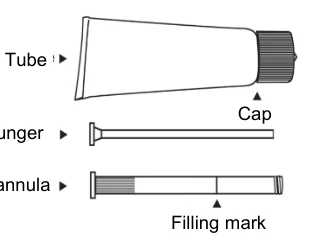
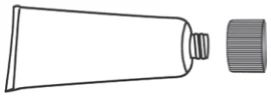
- 1. Remove the tube cap, turn it upside down and use the sharp point to pierce the seal on the neck of the tube. Do not use if seal is broken.
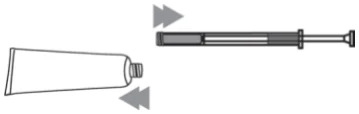
- 2. Take out a cannula and the plunger. Insert the white plunger all the way into the cannula. Screw the cannula on the neck of tube.

- 3. Squeeze the tube to fill the applicator with the gel up to the filling mark. The plunger will stop at the mark.

- 4. Unscrew the cannula from the tube and replace the cap on the tube.
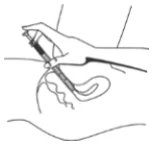
- 5. To apply the gel, lie down, insert the end of the applicator deep into the vagina and slowly push the plunger all the way down.
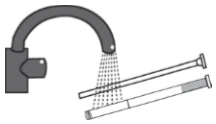
- 6. After use,
Pack size of 30g – Bag containing 1 reusable tube (cannula) and a reusable plunger.
Pull the plunger out of the cannula. Rinse both cannula and plunger well with warm and clean water so it can be reused for the next application.
If you use more Blissel than you should
If too much gel is applied at any time or someone has swallowed some gel accidentally, there is no need to worry. However, you should consult a doctor for advice. You might feel sick or be sick and some women may have some vaginal bleeding after a few days.
If you forget to use Blissel
Do not use a double dose to make up for a forgotten dose.
Apply the missed dose when you remember, unless you are more than 12 hours late. If you are more than 12 hours late just skip the missed dose.
If you have any further questions on the use of this medicine, ask your doctor or pharmacist.
4. Possible side effects
Like all medicines, this medicine can cause side effects, although not everybody gets them.
Tell your doctor immediately if any of the conditions that are listed in the section ‘what you need to know before you use Blissel’ occur, such as vaginal bleeding. Your doctor may need to stop treatment and give you an alternative.
At the beginning of treatment local irritation or itching may occur. In most patients these side effects go away with continued use. Tell your doctor if vaginal bleeding occurs, or if any of the following side effects become troublesome or continue.
Common side effects (may affect up to 1 in 10 people):
Itching, local irritation in or around the vagina
Uncommon side effects (may affect up to 1 in 100 people):
Low abdominal pain, skin irritation, genital rash, headache, Candidiasis (vaginal ‘thrush’)
The following diseases are reported more often in women using HRT medicines which circulate in the blood compared to women not using HRT. These risks apply less to vaginally administered treatments such as Blissel:
- blood clots in the veins of the legs or lungs (venous thromboembolism);
- ovarian cancer
- stroke;
- probable memory loss if HRT is started over the age of 65;
For more information about these side effects, see Section 2.
The following side effects have been reported with other HRTs:
- gall bladder disease
various skin disorders:
- discoloration of the skin especially of the face or neck known as ‘pregnancy patches’ (chloasma);
- painful reddish skin nodules (erythema nodosum);
- rash with target-shaped reddening or sores (erythema multiforme)
Reporting of side effects
If you get any side effects, talk to your doctor or pharmacist. This includes any possible side effects not listed in this leaflet. You can also report side effects directly via the Yellow Card Scheme at: www.mhra.gov.uk/yellowcard or search for MHRA Yellow Card in the Google Play or Apple App Store.
By reporting side effects you can help provide more information on the safety of this medicine.
5. How to store Blissel
Keep out of the sight and reach of children.
Store below 25°C.
Do not use this medicine after the expiry date which is stated on the carton and tube labels. The expiry date refers to the last day of that month.
Medicines should not be disposed of via wastewater or household waste. Ask your pharmacist how to dispose of medicines no longer required. These measures will help to protect the environment.
6. Contents of the pack and other information
What Blissel contains
The active ingredient in the Blissel is estriol.
One applicator filled to the mark delivers a dose of 1g vaginal gel that contains 50 micrograms estriol.
The other ingredients are glycerol (E422), sodium methyl parahydroxybenzoate (E219), sodium propyl parahydroxybenzoate
(E217), polycarbophil, carbopol, sodium hydroxide, hydrochloric acid and purified water.
What Blissel looks like and contents of the pack
Blissel is a colourless, clear to slightly translucent vaginal gel.
It is available in pack size of box containing 30g tube and a bag containing 1 reusable tube (cannula) with a filling mark and a reusable plunger.
Manufactured by:
ITALFARMACO S.A., San Rafael, 3 – 28108 Alcobendas, Madrid, Spain.
Procured from within the EU and repackaged by the Product Licence holder: B&S Healthcare, Unit 4, Bradfield Road, Ruislip, Middlesex, HA4 0NU, UK.
Blissel® 50 micrograms/g vaginal gel; PL 18799/4207
Leaflet date: 17.12.2025
Blissel is the registered trademark of ITALFARMACO, S.A.
Blind or partially sighted?
Is this leaflet hard to see or read?
Call 0208 515 3763 to obtain the leaflet in a format suitable for you.
POM
Tube
Plunger
Cannula
Filling mark
Cap