

Patient leaflet - Betamethasone 0.1% w/w cream
What Betamethasone is and what it is used for
Betamethasone contains a medicine called betamethasone valerate. It belongs to a group of medicines called steroids that reduce swelling and irritation.
Betamethasone is used to help reduce the redness and itchiness of certain skin problems, such as eczema, psoriasis and dermatitis.
What you need to know before you use Betamethasone
Do not use Betamethasone:
* if you are allergic (hypersensitive) to betamethasone valerate or any of the other ingredients of Betamethasone (listed in section 6) * on a child under 1 year
* to treat any of the following skin problems, it could make them worse:
- acne
- severe flushing of skin on and around your nose (rosacea)
- spotty red rash around your mouth (perioral dermatitis)
- itching around your back passage or private parts
- infected skin (unless the infection is being treated with an anti-infective medicine at the same time)
- itchy skin which is not inflamed
Do not use if any of the above apply to you. If you are not sure, talk to your doctor or pharmacist before using Betamethasone. 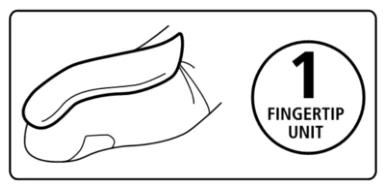
Warnings and precautions
Talk to your doctor or pharmacist before using Betamethasone if: * you have previously had an allergic reaction with another steroid * you are applying the cream under an airtight dressing, including a child’s nappy. These dressings make it easier for the active ingredient to pass through the skin. It is possible to accidentally end up using too much. * you have psoriasis, your doctor will want to see you more often. * using for a chronic leg ulcer as you may be at increased risk of local allergic reaction or infection.
* you are applying to a large surface area
* you are applying the cream on broken skin or within the skin folds. * you are applying near eyes or on eyelids, as cataracts or glaucoma may result if the cream repeatedly enters the eye. 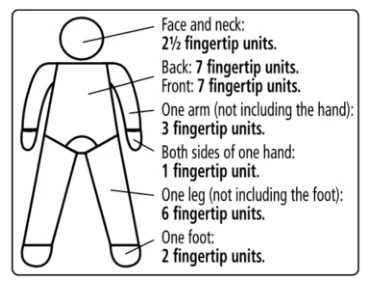 * you have an infection of the skin as this will need to be treated * you are applying to thin skin such as the face or on children as their skin is thinner than adults and as a result may absorb larger amounts. Dressing or bandages should not be used on children or on the face where the cream is applied.
Use on children or on the face should be limited to 5 days.
Contact your doctor if you experience blurred vision or other visual disturbances.
If there is a worsening of your condition during use consult your prescriber – you may be experiencing an allergic reaction, have an infection or your condition requires a different treatment.
Do not smoke or go near naked flames due to the risk of severe burns. Fabric (clothing, bedding, dressing etc) that has been in contact with this product burns more easily and is a serious fire hazard. Washing clothing and bedding may reduce product build-up but not totally remove it.
If you are not sure if any of the above apply to you, talk to your doctor or pharmacist before using this medicine.
If you experience a recurrence of your condition shortly after stopping treatment, within 2 weeks, do not restart using the cream/ointment without consulting your prescriber unless your prescriber has previously advised you to so. If your condition has resolved and on recurrence the redness extends beyond the initial treatment area and you experience a burning sensation, please seek medical advice before restarting treatment.
Other medicines and Betamethasone
Tell your doctor or pharmacist if you are taking, have recently taken or might take any other medicine, especially if you are taking ritonavir and itraconazole medications.
Pregnancy and breast-feeding and fertility
If you are pregnant or are breast-feeding, think you may be pregnant or are planning to have a baby, ask your doctor or pharmacist for advice before taking this medicine.
Betamethasone Cream contains chlorocresol and cetostearyl alcohol Betamethasone cream contains chlorocresol which may cause allergic reactions and cetostearyl alcohol which may cause local skin reactions (e.g. contact dermatitis).
How to use Betamethasone
Always use this medicine exactly as your doctor has told you. Check with your doctor or pharmacist if you are not sure.
Using this medicine
* You usually apply Betamethasone once or twice a day. This may be reduced as your skin begins to get better.
* This cream is for use on your skin only.
* Do not use more than the amount prescribed for you.
* Do not use on large areas of the body for a long time (such as every day for many weeks or months) - unless your doctor tells you to. * The germs that cause infections like warm, moist conditions under bandages or dressings so always clean the skin before a fresh dressing is put on.
* If you are applying the cream on someone else make sure you wash your hands after use or wear disposable plastic gloves.
* If your skin problem does not improve in 2 to 4 weeks, talk to your doctor.
Guidance on how to apply the cream
1 Wash your hands.
2 Apply a thin layer to the affected area(s) and gently rub into the skin until it has all disappeared. You can measure how much Betamethasone to use with your fingertip.
For children you will need to use less cream but still use an adult finger to measure out the fingertip unit. This picture shows one fingertip unit.
3 Unless you are meant to apply the cream to your hands as a part of the treatment, wash them again after using the cream.
For an adult
Do not worry if you find you need a little more or less than this. It is only a rough guide.
Ref: 1733/080725/1/F
1
1
6
4
5
2
2
3
3
(betamethasone valerate)
Patient Information Leaflet (continued)
For a child aged 1 – 10
* Do not use it on children under 1 year of age.
* It is especially important in children not to exceed the prescribed amount. * A course of treatment for a child should not normally last more than 5 days
- unless your doctor has told you to use it for longer.
If you have psoriasis
If you have thick patches of psoriasis on your elbows or knees, your doctor may suggest applying the cream under an airtight dressing. It will only be at night to help the cream to start working. After a short period of time you will then apply the cream as normal.
If you apply Betamethasone to your face
You should only apply the cream to your face if your doctor tells you to. It should not be used for more than 5 days, as the skin on your face thins easily. Do not let the cream get into your eyes.
If you use more Betamethasone than you should
If you apply too much or if accidentally swallowed, it could make you ill. Talk to your doctor or go to the hospital as soon as possible.
If you forget to use Betamethasone
If you forget to apply your cream, apply it as soon as you remember. If it is close to the time you are next meant to apply it, wait until this time.
If you stop using Betamethasone
If you use Betamethasone regularly make sure you talk to your doctor before you stop using it as your condition may get worse if stopped suddenly. If you have any further questions on the use of this medicine, ask your doctor or pharmacist.
Possible side effects
Like all medicines, this medicine can cause side effects, although not everybody gets them.
Stop using Betamethasone and tell your doctor immediately if:
* you find that your skin condition gets worse, you develop a generalised rash or your skin becomes swollen during treatment. You may be allergic to Betamethasone, have an infection or need other treatment. * you have psoriasis and get raised bumps with pus under the skin. This can happen very rarely during or after treatment and is known as pustular psoriasis.
Other side effects you may notice when using Betamethasone include:
Common: may affect up to 1 in 10 people
* a feeling of burning, pain, irritation or itching where the cream is applied.
Very rare: may affect up to 1 in 10,000 people
* an increased risk of infection
* an allergic skin reaction where the cream is applied
* rash, itchy bumpy skin or redness of the skin
* thinning and dryness of your skin and it may also damage or wrinkle more easily
* stretch marks may develop
* blood vessels under the surface of your skin may become more noticeable * an increase or reduction in hair growth or hair loss and changes in skin colour
* weight gain, rounding of the face.
* delayed weight gain or slowing of growth in children
* bones can become thin, weak and break easily
* cloudy lens in the eye (cataract) or increased pressure in eye (glaucoma) * a decrease in the level of the hormone cortisol in your blood * increased blood sugar levels or sugar in the urine
* high blood pressure
Not Known: frequency cannot be estimated from the available data * blurred vision
* Steroid withdrawal reaction: If used over prolonged periods a withdrawal reaction, which might appear to be different from the previous condition, may occur in some patients during treatment or within days to weeks after stopping treatment, with some or all of the following features: redness of the skin which can extend beyond the initial area treated, a burning or stinging sensation, intense itching, peeling of the skin, oozing open sores. Corticosteroid creams, ointments and other topical preparations come in four different potencies or strengths. These are known as mild, moderately potent, potent or very potent. Healthcare professionals will usually refer to topical corticosteroid potency rather than strength. A potent or strong corticosteroid has a much stronger effect than a mild corticosteroid when using the same amount. The percentage of active ingredient that is sometimes included on product packaging does not indicate potency. Betamethasone is classed as a strong corticosteroid. Your healthcare professional will prescribe or advise a steroid of the appropriate potency for your condition.
Reporting of side effects
If you get any side effects, talk to your doctor or pharmacist. This includes any possible side effects not listed in this leaflet. You can also report side effects directly via Yellow Card Scheme Website:
www.mhra.gov.uk/yellowcard or search for MHRA Yellow Card in the Google Play or Apple App Store.
By reporting side effects you can help provide more information on the safety of this medicine.
How to store Betamethasone
* Keep out of the sight and reach of children.
* Do not store above 25 °C.
* Use this medicine only on your skin.
* Apply to the skin as directed by your doctor.
* Do not use Betamethasone after the expiry date, which is stated on the tube or carton label.The expiry date refers to the last day of that month. * If your doctor tells you to stop using this medicine, return any unused medicine to your pharmacist for safe disposal. Only keep this medicine, if your doctor tells you to.
* If your medicine becomes discoloured or shows any other signs of deterioration, ask your pharmacist who will advise you what to do. * Medicines should not be disposed of via wastewater or household waste. Ask your pharmacist how to dispose of medicines that are no longer required. These measures will help to protect the environment.
Contents of the pack and other information
What Betamethasone contains:
Each 1 g of cream contains 1mg (0.1 %w/w) betamethasone (as valerate). Also contains chlorocresol, macrogol cetostearyl ether, cetostearyl alcohol, white soft paraffin, liquid paraffin, sodium dihydrogen phosphate dihydrate, phosphoric acid, sodium hydroxide and purified water.
What Betamethasone looks like and contents of the pack White cream with a uniform appearance.
Each pack contains one 30g or 100g Tube.
Manufacturer and Licence Holder
Manufactured by Glaxo Operations UK Ltd, Harmire Road, Barnard Castle, Co. Durham DL12 8DT, UK and is procured from within the EU and repackaged by the Product Licence Holder: Lexon (UK) Limited, Unit 18, Oxleasow Road, East Moons Moat, Redditch, Worcestershire, B98 0RE.
If you have any questions or are not sure about anything, ask your doctor or pharmacist. They will have additional information about this medicine and will be able to advise you.
PL: 15184/1733 Betamethasone 0.1% w/w Cream
Revision date: 08/07/2025
Blind or partially sighted?
Is this leaflet hard to see or read? Phone Lexon (UK) Limited,
Tel: 01527 505414 to obtain the leaflet in a format suitable for you
POM
Ref: 1733/080725/1/B
5
6
Betamethasone 0.1% w/w Cream
(betamethasone valerate)
4
| Number of fingertip units needed | ||||||
| Child’s age | Face and neck | Arm and hand | Leg and foot | Front | Back including buttocks | |
| 1-2 years | 1½ | 1½ | 2 | 2 | 3 | |
| 3-5 years | 1½ | 2 | 3 | 3 | 3½ | |
| 6-10 years | 2 | 2½ | 4½ | 3½ | 5 | |