

Patient leaflet - Amvuttra 25 mg solution for injection in Pre-filled syringe
1. What Amvuttra is and what it is used for
The active substance in Amvuttra is vutrisiran.
What Amvuttra is used for
Amvuttra is used for the treatment of an illness called ‘ATTR amyloidosis’. This illness can run in families and may also be caused by aging. ATTR amyloidosis is caused by problems with a protein in the body called ‘transthyretin’ (TTR).
This protein is made mostly in the liver and carries vitamin A and other substances around the body.
In people with this illness, small fibres of TTR protein clump together to make deposits called ‘amyloid’. Amyloid can build up around or within the nerves, heart, and other places in the body, stopping them from working normally. This causes the symptoms of the illness.
How Amvuttra works
Amvuttra works by lowering the amount of TTR protein made by the liver which means there is less TTR protein in the blood that can form amyloid. This can help to reduce the effects of this illness.
Amvuttra is used in adults only.
2. What you need to know before you use Amvuttra
Do not use Amvuttra
If you have ever had a severe allergic reaction to vutrisiran,
or any of the other ingredients of this medicine (listed in section 6).
If you are not sure, talk to your doctor, pharmacist or nurse before you use this medicine.
Warnings and precautions
Lowered vitamin A levels in the blood and vitamin supplements
Amvuttra lowers the amount of vitamin A in your blood.
Your doctor will ask you to take a daily vitamin A supplement. Please follow the vitamin A dose recommended by your doctor.
Signs of low vitamin A may include: sight problems especially at night, dry eyes, hazy, or cloudy vision.
If you notice a change in your vision or any other eye problems whilst
using Amvuttra, talk to your doctor. Your doctor may send you to an eye specialist for a check-up.
Both too high and too low levels of vitamin A can harm the development of your unborn child. Therefore, women of childbearing age should exclude any pregnancy before starting treatment with Amvuttra and practise effective contraception (see section “Pregnancy, breast-feeding and contraception” below).
Package leaflet: Information for the patient • Vitamin A levels may remain low for more than 12 months after the last
dose of Amvuttra.
Tell your doctor if you are planning to become pregnant. Your doctor
will tell you to stop taking Amvuttra and vitamin A supplementation. Your doctor will also ensure that your vitamin A levels have returned to normal before conception is attempted.
Tell your doctor if you have an unplanned pregnancy. Your doctor will tell
you to stop taking Amvuttra. In the first 3 months of your pregnancy, your doctor may tell you to stop taking vitamin A supplementation. During the last 6 months of your pregnancy, you doctor may tell you to resume the vitamin A supplementation if your vitamin A levels have not yet returned to normal, because of the increased risk of vitamin A deficiency during the last 3 months of your pregnancy.
Children and adolescents
Amvuttra is not recommended in children and adolescents under 18 years of age.
Other medicines and Amvuttra
Tell your doctor, pharmacist, or nurse if you are using, have recently used or might use any other medicines.
Pregnancy, breast-feeding and contraception
If you are pregnant or breast-feeding, think you may be pregnant, or are planning to have a baby, ask your doctor or pharmacist for advice before starting this medicine.
Pregnancy
You should not use Amvuttra if you are pregnant.
Women of childbearing age
Amvuttra will reduce the level of vitamin A in your blood and vitamin A is important for normal development of your unborn child (see “Warnings and precautions” above).
You should use effective contraception during treatment with Amvuttra -
if you are a woman who is able to become pregnant.
- Talk to your doctor or nurse about suitable methods of contraception.
- Pregnancy should be excluded before starting treatment with Amvuttra.
Tell your doctor if you are planning to become pregnant or if you have
an unplanned pregnancy. Your doctor will tell you to stop taking Amvuttra.
Breast-feeding
It is not known if vutrisiran passes into breast milk. Your doctor will consider the potential benefits of treatment for you - compared with the risks of breast-feeding for your baby.
Driving and using machines
Amvuttra is unlikely to affect your ability to drive or use machines. Your doctor will tell you whether your condition allows you to drive vehicles and use machines safely.
Amvuttra contains sodium
This medicine contains less than 1 mmol sodium (23 mg) per mL, that is to say essentially ‘sodium-free’.
3. How to use Amvuttra
Amvuttra may be self-administered or administered by a caregiver or a healthcare professional.
Your doctor or healthcare provider will show you and/or your caregiver how to prepare and inject a dose of Amvuttra before you do it yourself.
For instructions on how to use Amvuttra, please read “Instructions for use” at the end of this leaflet.
How much Amvuttra you should use
The recommended dose is 25 mg once every 3 months.
Where the injection is administered
Amvuttra is administered by injection under the skin (‘subcutaneous injection’) into your stomach area (abdomen), upper arm (if someone else is giving the injection) or thigh.
How long to use Amvuttra
Your doctor will tell you how long you need to use Amvuttra. Do not stop treatment with Amvuttra unless your doctor tells you to.
If you use more Amvuttra than you should
In the unlikely event that you use too much (an overdose), contact your doctor or pharmacist, even if you have no symptoms. Your doctor will check you for side effects.
If you forget to use Amvuttra
If a dose is missed, administer Amvuttra as soon as possible. Thereafter, resume dosing every 3 months, from the most recently administered dose. If you have any further questions on the use of this medicine, ask your doctor, pharmacist or nurse.
4. Possible side effects
Like all medicines, this medicine can cause side effects, although not everybody gets them.
Tell your doctor, pharmacist, or nurse if you notice any of the following side effects:
Common: may affect up to 1 in 10 people
- Redness, pain, itching, bruising, or warmth where the injection was administered
- Blood tests showing increases in liver enzymes called alkaline phosphatase and alanine transaminase
Reporting of side effects
If you get any side effects, talk to your doctor, pharmacist or nurse. This includes any possible side effects not listed in this leaflet. You can also report side effects directly via the national reporting system:
United Kingdom
Yellow Card Scheme Website: www.mhra.gov.uk/yellowcard or search for MHRA Yellow Card in the Google Play or Apple App Store
By reporting side effects you can help provide more information on the safety of this medicine.
5. How to store Amvuttra
Keep this medicine out of the sight and reach of children.
Do not use this medicine after the expiry date which is stated on the label, tray lid and carton after ‘EXP’. The expiry date refers to the last day of that month.
Do not store above 30 °C. Do not freeze.
Do not throw away any medicines via wastewater or household waste. Ask your pharmacist how to throw away medicines you no longer use. These measures will help protect the environment.
If the medicine becomes discolored or shows any other signs of deterioration, you should seek the advice of your pharmacist who will tell you what to do.
6. Contents of the pack and other information
What Amvuttra contains
The active substance is vutrisiran.
Each pre-filled syringe contains vutrisiran sodium equivalent to 25 mg vutrisiran in 0.5 mL solution.
- The other ingredients are: sodium dihydrogen phosphate dihydrate, disodium phosphate dihydrate, sodium chloride and water for injections. Sodium hydroxide and phosphoric acid may be used to adjust the pH (see “Amvuttra contains sodium” in section 2).
What Amvuttra looks like and contents of the pack
This medicine is a clear, colourless-to-yellow solution for injection (injection). Each pack contains one single-use pre-filled syringe.
Manufacturer
Alnylam Netherlands B.V.
Antonio Vivaldistraat 150
1083 HP Amsterdam
Netherlands
Procured from within the EU and repackaged for the PL Holder:
Abacus Medicine Ltd., Abbey House, 282 Farnborough Road, Farnborough, GU14 7NA, United Kingdom
Amvuttra 25 mg solution for injection in pre-filled syringe
PL 45763/1922
Amvuttra® is a registered trademark of Alnylam Pharmaceuticals, Inc.
For any information about this medicine, please contact the local representative of the Product Licence Holder:
Abacus Medicine Ltd.
tel: +44(0)2036301244
email: MedInfo@abacusmedicine.co.uk
or
drugsafetyuk@abacusmedicine.co.uk
This leaflet was last revised on 25.03.2026.
Blind or partially sighted? Is this leaflet hard to see or read? Call 02036301310 or write to info@abacusmedicine.com to obtain the leaflet in a format suitable for you.
INSTRUCTIONS FOR USE
Amvuttra 25 mg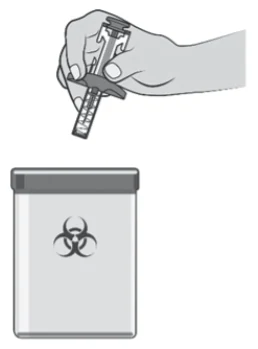
solution for injection in pre-filled syringe
(vutrisiran)
Single-Dose Pre-filled Syringe with Needle Shield
Read these instructions before using this pre-filled syringe.
Understanding the pre-filled syringe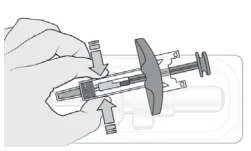
The pre-filled syringe (referred to as the “syringe”) is disposable and for single-use only.
Route and method of administration
Each carton contains one Amvuttra single use syringe. Each Amvuttra syringe contains 25 mg of vutrisiran for injection under the skin (subcutaneous injection) once every 3 months.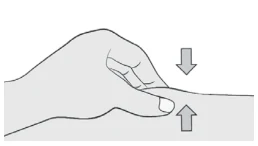
Your doctor or healthcare provider will show you and/or your caregiver how to prepare and inject a dose of Amvuttra before you do it yourself. Contact your healthcare professional or doctor for further guidance and support if needed.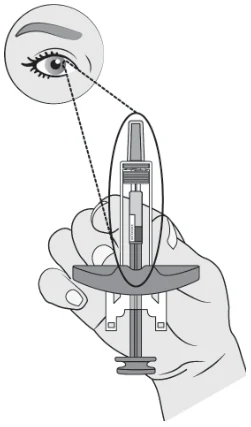
Keep these instructions until the syringe has been used.
How to Store Amvuttra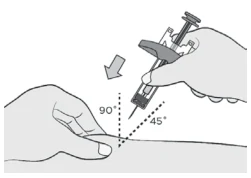
Do not store above 30°C.
Do not freeze.
Keep this medicine out of the sight and reach of children.
Important Warnings
Do not use if the carton is damaged or shows signs of tampering.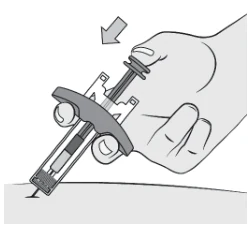
Do not use the syringe if it was dropped on a hard surface.
Do not touch the plunger rod until ready to inject.
Do not remove the needle cap until just before injection.
Do not recap the syringe at any time.
How the syringe looks before and after use: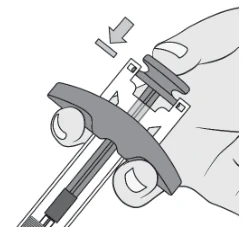
Needle
cap
Needle
Drug
solution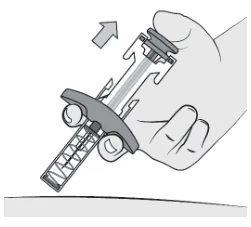
Finger
flange
Plunger
rod
Thumb pad
Syringe
label
Syringe
body Needle
shield (Locked) Before Use After Use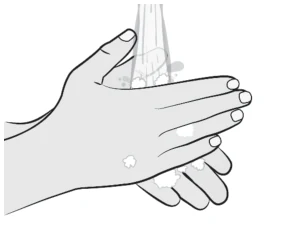
Step 1: Gather Supplies
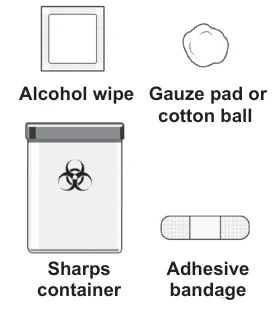
Gather and place the following
supplies (not supplied) on a clean flat
surface:
- Alcohol wipe
- Gauze pad or cotton ball
- Adhesive bandage
Sharps container
-
Alcohol wipe Gauze pad or
cotton ball
Adhesive bandage Sharps
container
Step 2: Prepare the Syringe
If stored cold, allow the syringe to warm to room temperature for at least 30 minutes before use.
Do not warm syringe in any other way, e.g., microwave, hot water, or near other heat sources.
Remove the syringe from the packaging by gripping the syringe body.
Do not touch plunger rod until ready to inject.
Do not use the syringe if it was dropped on a hard surface.
Do not remove the needle cap until just before injection.
Step 3: Inspect Syringe
Check:
9 Syringe is not damaged, such as cracked
or leaking.
9 Needle cap is intact and attached
to the syringe.
9 The drug solution in the syringe is clear,
and colourless-to-yellow.
9 “Amvuttra 25 mg” appears
on the syringe label.
9 Expiration date on syringe label.
It is normal to see air bubbles inside the syringe.
Do not use the syringe if any issues are found while checking the syringe and drug solution.
Do not use if the expiry date has passed.
Do not use if the drug solution contains particulate matter or if it is cloudy or discoloured.
Contact healthcare provider if any issues are found.
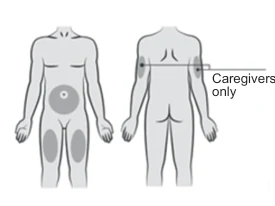
Step 4: Choose Site for Injection
Choose an injection site from
the following areas:
Abdomen, except for the 5 cm (2 inches)
area around the belly button (navel).
- Front of the thighs.
If someone else is giving the injection,
then the back of the upper arms can be used as well.
Do not inject into areas of skin that are tender, red, swollen, bruised or hard or within 5 cm (2 inches) of the belly button (navel).
Caregivers only
Step 5: Prepare for Injection
Wash hands with soap and water and dry thoroughly with a clean towel.
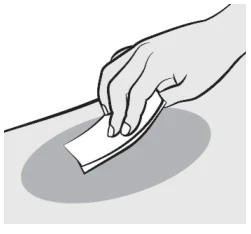
Clean the chosen injection site using an alcohol wipe.
Allow the skin to air dry before injecting. Avoid touching or blowing on the injection site after cleaning.
Step 6: Remove Needle Cap
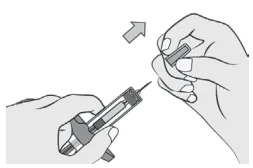
Hold the syringe body with one hand.
Pull the needle cap straight off with the other hand and dispose of needle cap immediately.
It is normal to see a drop of liquid at the tip of the needle.
Do not touch the needle or let it touch any surface.
Do not recap the syringe.
Do not pull on plunger rod.
Do not use the syringe if it was dropped on a hard surface.
Step 7: Insert Needle
Using the free hand, gently pinch the cleaned skin around the injection site to create a bump for the injection.
Fully insert the needle into the pinched skin at a 45-90° degree angle.
Step 8: Inject Medication
Using the thumb pad, push the plunger rod while grasping the finger flange.
Push the plunger rod all the way down, as far as it will go, to inject all of the drug solution.
The plunger rod must be pressed all the way down to administer the dose.
Step 9: Release Plunger Rod
Release the plunger rod to cover the needle.
Remove syringe from skin.
Do not block plunger rod movement.
Do not pull down on the needle shield.
The needle shield automatically covers the needle.
Step 10: Check Injection Site
There may be a small amount of blood or liquid at the injection site.
If so, apply pressure over the injection site with a gauze pad or cotton ball until any bleeding stops.
Avoid rubbing the injection site.
Step 11: Dispose of Syringe
Immediately dispose of the used syringe into a sharps container.
Only use a sharps container to dispose of syringes.