

Summary of Product Characteristics (SmPC) - Aminomix Peripheral 5.7 g/l Nitrogen, solution for infusion
1 NAME OF THE MEDICINAL PRODUCT
Aminomix Peripheral 5.7 g/l nitrogen, solution for infusion
2 QUALITATIVE AND QUANTITATIVE COMPOSITION
Aminomix Peripheral contains an amino acid and electrolyte solution and a glucose solution combined in a double chamber bag in a volume ratio of 1:1. Each bag contains the following partial volumes depending on the three pack sizes.
| 500 ml | 750 ml | 1000 ml |
| 500 ml | 750 ml | 1000 ml |
Total volume after mixture with the following compositions:
| Active Ingredients | 1000 ml | 1500 ml | 2000 ml |
| L-Alanine | 4.90 g | 7.35 g | 9.80 g |
| L-Arginine | 4.20 g | 6.30 g | 8.40 g |
| Glycine | 3.85 g | 5.78 g | 7.70 g |
| L-Histidine | 1.05 g | 1.58 g | 2.10 g |
| L-Isoleucine | 1.75 g | 2.63 g | 3.50 g |
| L-Leucine | 2.59 g | 3.89 g | 5.18 g |
L-Lysine acetate corresponding to L-Lysine | 3.26 g 2.31 g | 4.88 g 3.47 g | 6.51 g 4.62 g |
| L-Methionine | 1.51 g | 2.26 g | 3.01 g |
| L-Phenylalanine | 1.79 g | 2.68 g | 3.57 g |
| L-Proline | 3.92 g | 5.88 g | 7.84 g |
| L-Serine | 2.28 g | 3.41 g | 4.55 g |
| Taurine | 0.35 g | 0.53 g | 0.70 g |
| L-Threonine | 1.54 g | 2.31 g | 3.08 g |
| L-Tryptophan | 0.70 g | 1.05 g | 1.40 g |
| L-Tyrosine | 0.14 g | 0.21 g | 0.28 g |
| L-Valine | 2.17 g | 3.26 g | 4.34 g |
| Calcium chloride dihydrate corresponding to Calcium chloride | 0.24 g 0.18 g | 0.35 g 0.26 g | 0.47 g 0.35 g |
| Sodium glycerophosphate, (anhydrous) | 1.78 g | 2.66 g | 3.55 g |
Magnesium sulphate heptahydrate corresponding to Magnesium sulphate
0.78 g 0.38 g
1.16 g 0.57 g
1.55 g 0.76 g
| Potassium chloride | 1.41 g | 2.12 g | 2.82 g |
| Sodium acetate trihydrate corresponding to Sodium acetate | 1.16 g 0.70 g | 1.73 g 1.05 g | 2.31 g 1.40 g |
Glucose monohydrate corresponding to anhydrous glucose | 69.3 g 63.0 g | 104 g 94.5 g | 139 g 126 g |
Corresponding to
| 1000 ml | 1500 ml | 2000 ml | |
Carbohydrates
| 63 g | 95 g | 126 g |
| Amino acids 3,5 % (w/v) | 35 g | 53 g | 70 g |
| Nitrogen | 5.7 g | 8.5 g | 11.4 g |
Energy content
| 390 kcal 250 kcal | 585 kcal 375 kcal | 780 kcal 500 kcal |
Electrolytes
| 25 mmol 19 mmol 3.1 mmol 1.6 mmol 8.2 mmol 3.1 mmol 22 mmol | 37 mmol 28 mmol 4.7 mmol 2.4 mmol 12 mmol 4.7 mmol 33 mmol | 50 mmol 38 mmol 6.3 mmol 3.2 mmol 16.4 mmol 6.3 mmol 44 mmol |
For a full list of excipients, see section 6.1
3 PHARMACEUTICAL FORM
Solution for infusion
Clear and colourless to slightly yellowish solution free of particles
Osmolality: approx. 860 mOsm/kg water
Osmolarity (theoretical): approx. 770 mOsm/l
pH (after mixing): approx. 5.6
4 CLINICAL PARTICULARS
4.1 Therapeutic indications
Aminomix Peripheral is indicated in adult patients whenever parenteral nutrition with amino acids, together with electrolytes and glucose is needed, when oral or enteral nutrition is impossible, insufficient, or contraindicated.
4.2 Posology and method of administration
Posology
Adult population
The dose should be adjusted according to the required amino acids, glucose, electrolytes, and fluid as well as the clinical and nutritional status of the patient.
The general principles and recommendations for use and dose of amino acids, glucose, and electrolytes within parenteral nutrition as well as the guidelines for fluid replacement should be followed.
Additional energy requirements should be met by adequate intravenous administration of lipid emulsions.
Maximum daily dose:
40 ml Aminomix Peripheral/kg bw/day (equivalent to 1.4 g amino acids/kg bw/day and 2.5 g glucose/kg bw/day).
Duration of treatment:
The duration of intravenous administration of Aminomix Peripheral depends on the patient's condition and nutritional requirement. Intravenous infusion of lipids, vitamins, additional electrolytes, and trace elements should be considered depending on the patient’s clinical condition.
Paediatric population
Due to its amino acid composition Aminomix Peripheral is not suitable for the use in newborns or infants below 2 years of age.
Safety and efficacy of Aminomix Peripheral in children and adolescents aged 2 to 18 years have not been established. No study data are available.
Method of administration
For intravenous use by infusion via a peripheral or central vein.
Maximum infusion rate:
2.9 ml Aminomix Peripheral/kg bw/h (equivalent to 0.10 g amino acids/kg bw/h and 0.18 g glucose/kg bw/h). The recommended maximum infusion time for a bag in use is 24 hours.
4.3 Contraindications
- Hypersensitivity to the active substances or to any of the excipients listed in section 6.1
- Inborn error of amino acid metabolism
Other contraindications to infusion therapy as long as uncorrected:
hyperhydration, cardiac insufficiency, pulmonary oedema
Other contraindications to parenteral nutrition as long as uncorrected:
circulatory shock (e.g., hypovolemic/ hemorrhagic, obstructive, cardiogenic, distributive), cellular oxygen deficiency (hypoxia), severe organ dysfunction (e.g., severe hepatic insufficiency, severe renal insufficiency without renal replacement therapy), impaired metabolism (e.g., metabolic acidosis, hyperammonemia, uremia, insulin-refractory hyperglycemia, hyperglycemic hyperosmolar state, diabetic ketoacidosis), and pathologically elevated serum levels of any of the included electrolytes.
- Newborns or infants below 2 years of age.
4.4 Special warnings and precautions for use
Individual adjustment of dose as well as regular clinical and laboratory controls are required in patients with hepatic, renal, cardiac or pulmonary disease and in patients with altered amino acid and glucose metabolism as well as lactic acidosis and increased serum osmolarity.
Depending on the clinical condition, blood levels of glucose, urea, ammonia, and electrolytes should be controlled. Patients receiving intravenous nutrition should be monitored according to the current guidelines.
If the glucose clearance capacity is exceeded, hyperglycaemia can develop. Hyperglycaemia should then be treated according to the clinical situation either by appropriate insulin administration and/or adjustment of the infusion rate.
In underfed patients, initiation of intravenous nutrition can induce refeeding syndrome. This includes fluid shifts resulting in pulmonary oedema, congestive heart failure, dysrhythmia, and decrease in serum concentrations of potassium, phosphate, magnesium, and water-soluble vitamins. These changes can occur within 24 to 48 hours. Therefore, careful initiation of slow infusion and controls with appropriate adjustments are recommended.
Given the risk of infection associated with the use of any intravenous infusion, strict aseptic precautions should be taken to avoid any contamination during catheter insertion and manipulation. The catheter insertion site should be inspected daily for local signs of irritation and thrombophlebitis to evaluate changing the infusion site.
If the recommended infusion rate is exceeded, amino acid solutions may cause undesirable effects including e.g. nausea, vomiting, shivering, sweating, increased body temperature. With impaired renal or hepatic function urea or ammonia may be increased, respectively.
Any sign or symptom of anaphylactic reaction such as fever, shivering, rash, or dyspnoea should prompt immediate interruption of the infusion.
When making additions, the final osmolarity of the mixture must be considered before administration. The mixture obtained must be administered through a central or peripheral venous line depending on its final osmolarity. If the final mixture administered is hypertonic, it may cause irritation of the vein when administered into a peripheral vein.
Contains 63 g Glucose/l. This should be taken into account in patients with diabetes mellitus.
This medicinal product contains 19 mmol potassium/l. To be taken into consideration in patients with reduced kidney function or patients on a controlled potassium diet.
This medicinal product contains 25 mmol sodium/l. To be taken into consideration in patients on a controlled sodium diet
This medicinal product contains 1.79 mg phenylalanine/l and may be harmful for people with phenylketonuria.
Aminomix Peripheral is a preparation of complex composition. It is, therefore, strongly advisable not to add other solutions (as long as compatibility is not proven – see section 6.2).
4.5 Interaction with other medicinal products and other forms of interaction
No interaction studies have been performed. No interactions are known to date.
4.6 Fertility, pregnancy and lactation
Fertility
No studies have been performed on reproductive toxicity in animals.
However, as all components of Aminomix Peripheral are naturally occuring physiological compounds, there is no risk giving AA, glucose, or electrolytes to women of childbearing potential. Therefore no special precautions have to be considered regarding contraception in males and females and fertility.
Pregnancy and breastfeeding
No specific studies have been performed to assess the safety of Aminomix Peripheral during pregnancy and breastfeeding. Therefore, it is recommended not to use Aminomix Peripheral during pregnancy and breastfeeding.
If intravenous nutrition becomes necessary during pregnancy and breastfeeding, Aminomix Peripheral should only be given to pregnant and breastfeeding women after carefulconsideration.
4.7 Effects on ability to drive and use machines
Not relevant.
4.8 Undesirable effects
- a) Summary of the safety profile
The undesirable effects known for similar amino acid and glucose solutions might also apply to Aminomix Peripheral. Allergic reactions to any of the ingredients in Aminomix Peripheral may occur and as with all infusions in peripheral veins injection site irritation and thrombophlebitis may occur.
- b) Tabulated list of adverse events
| Immune system disorders | Frequency: not known (cannot be estimated from the available data): Allergic reaction |
| General disorders and administration site conditions | Frequency: not known (cannot be estimated from the available data): Injection site irritation |
Thrombophlebitis
- c) Description of selected undesirable effects
For measures to be taken to avoid specific adverse reaction and actions to be taken if specific reactions occur refer to section 4.4
Reporting of suspected adverse reactions
Reporting suspected adverse reactions after authorisation of the medicinal product is important. It allows continued monitoring of the benefit/risk balance of the medicinal product. Healthcare professionals are asked to report any suspected adverse reactions via Yellow Card Scheme Website: www.mhra.gov.uk/yellowcard or search for MHRA Yellow Card in the Google Play or Apple App Store.
4.9 Overdose
Incorrect dose and rate may induce signs of hyperaminoacidemia, hyperglycaemia, fluid overload, hyperosmolarity, disturbances of acid-base balance, and electrolytes. See section 4.4 for refeeding syndrome, excess of infusion rate of amino acid solution or excess of glucose clearance capacity.
If symptoms of overdose occur, the infusion should be reduced or discontinued. Stopped infusion might be resumed at a reduced infusion rate based on the clinical situation. Reactions occurring during overdose are usually reversible when therapy is discontinued.
There is no specific antidote for overdose. Emergency procedures could be general supportive measures, with particular attention to respiratory and cardiovascular function. Close biochemical monitoring would be essential and specific abnormalities should be treated appropriately.
5 PHARMACOLOGICAL PROPERTIES
5.1 Pharmacodynamic properties
Pharmacotherapeutic group: Solutions for parenteral nutrition, combinations, ATC code: B05BA10
Amino acids
The amino acids are utilised for tissue protein synthesis and to fuel a number of metabolic pathways.
Glucose
The energy carrier glucose is metabolised by all tissues.
Electrolytes
Electrolytes are indispensable for the maintenance and correction of fluid and electrolyte homeostasis.
5.2 Pharmacokinetic properties
Absorption
The bioavailability of intravenously infused Aminomix Peripheral is 100%.
Distribution and Biotransformation
Amino acids
The infused amino acids enter the plasma amino acid pool. They are distributed into the interstitial and intracellular space. Here, the amino acids are used for protein synthesis and metabolic pathways including synthesis of non-essential amino acids.
Admixtures of balanced amino acids as in Aminomix Peripheral do not significantly alter the amino acid profile when infused at a constant and slow rate.
Glucose
Blood glucose determines the cellular glucose uptake which is facilitated by insulin.
Electrolytes
The distribution of electrolytes is regulated by the ion-specific intra- and extracellular concentrations.
Elimination
Amino acids
For the majority of amino acids, plasma half-lives of 10 to 30 minutes have been reported. Nitrogen resulting from amino acid metabolism is eliminated as urea by the kidney.
Glucose
Glucose is eliminated by the kidney if the tubular reabsorption capacity is exceeded.
Electrolytes
The extent of reabsorption or loss of electrolytes by the kidney depends on the individual metabolic condition and renal function.
5.3 Preclinical safety data
Preclinical safety studies with Aminomix Peripheral have not been performed. However, preclinical data for amino acid and glucose solutions of various concentrations and sodium glycerophosphate reveal no special hazard for humans based on conventional studies of safety pharmacology, repeat dose toxicity, and genotoxicity. No teratogenic effects or other embryotoxic injuries could be observed in rabbits with amino acid solutions and are not to be expected from glucose solutions and sodium glycerophosphate when given in the recommended doses. Nutritional products as amino acid solutions, glucose solutions, and sodium glycerophosphate administered at physiological doses are not expected to be carcinogenic, embryotoxic, teratogenic, or to influence reproductive performance or fertility.
6 PHARMACEUTICAL PARTICULARS
6.1 List of excipients
Water for injections
Acetic acid, glacial (for pH-adjustment)
6.2 Incompatibilities
Aminomix Peripheral may only be mixed with other nutritional products for which compatibility has been documented.
6.3 Shelf life
Shelf-life of the medicinal product as packaged for sale
2 years.
Shelf life after mixing the chambers of the bag
Chemical and physical in-use stability of the mixed two chamber bag has been demonstrated for 24 hours at 25°C. From a microbiological point of view the product should be used immediately. If not used immediately, in-use storage times and conditions prior to use are the responsibility of the user and would normally not be longer than 24 hours at 2-8°C, unless mixing has taken place in controlled and validated aseptic conditions.
Shelf-life after mixing with additives
From a microbiological point of view, the product should be used immediately after mixing. If not used immediately, in-use storage times and conditions prior to use are within the responsibility of the user and should not exceed 24 hours at 2-8 °C, unless addition of supplements has taken place in controlled and validated aseptic conditions.
6.4 Special precautions for storage
Do not store above 30 °C.
Do not freeze.
Store in the overpouch.
Keep the bag in the outer carton to protect from light.
For storage conditions after mixing of the medicinal product, see section 6.3
6.5 Nature and contents of container
This product is available in double chambered bags of 1000, 1500 and 2000 ml, packed in cartons.
The container consists of a double chamber inner bag and an overpouch. The inner bag is separated into two chambers by a peelable seal. An oxygen absorber is placed between the inner bag and the overpouch. The inner bag film consists of polypropylene and thermoplastic elastomers. The overpouch consists of a multilayer polyolefin-based film.
Pack sizes:
1 x 1000 ml, 6 x 1000 ml
1 x 1500 ml, 4 x 1500 ml
1 x 2000 ml, 4 x 2000 ml
Not all pack sizes may be marketed.
6.6 Special precautions for disposal
No special requirements for disposal.
Instruction for handling
Do not use if package is damaged. Use only if the amino acid and glucose solutions are clear without particles and colourless to slightly yellow. The content of the two separate chambers has to be mixed before use, and before any additions are made via the additive port.
- 1. Removal of overpouch
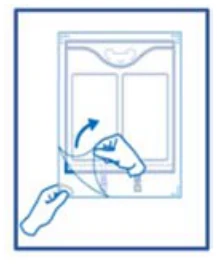
- Remove the overpouch.
- Mixing
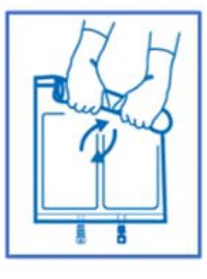
- Place the bag on a flat surface with the ports pointing away.
- Roll the bag straight from the top (handle) down to the ports until the peel seal has opened.
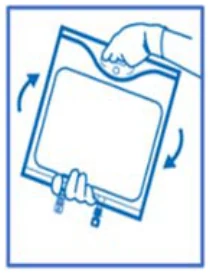
- After separation of the peelable seal, the bag should be inverted repeatedly to ensure a homogenous mixture.
Any unused solution should be discarded.
Additions of other products to the mixed solution should be made aseptically, using the additive port.
7 MARKETING AUTHORISATION HOLDER
Fresenius Kabi Ltd
Cestrian Court
Eastgate Way, Manor Park
Runcorn, Cheshire, WA7 1NT
United Kingdom
8 MARKETING AUTHORISATION NUMBER(S)
PL 08828/0348
9 DATE OF FIRST AUTHORISATION/RENEWAL OF THE
AUTHORISATION
29/01/2024
10 DATE OF REVISION OF THE TEXT
29/01/2024