

Patient leaflet - Alimemazine Tartrate 7.5 mg/5 ml oral solution
1. What alimemazine is and what it is used for
It contains the active ingredient alimemazine tartrate and belongs to a group of medicines called phenothiazines and works by blocking a natural substance (histamine) that your body makes during an allergic reaction. It also works directly on the brain to help you feel more relaxed.
What alimemazine is used for
- To treat itching (pruritus) or an itchy, lumpy rash (urticaria)
- As a sedative for children aged between 3 and 7 years. This is a medicine given to reduce awareness or make the child feel relaxed and at ease before an operation
2. What you need to know before you take alimemazine
Do not take alimemazine if
You are allergic (hypersensitive) to:
- Alimemazine tartrate or any of the other ingredients in this medicine (listed in section 6)
Any other similar medicines (phenothiazines) such as chlorpromazine
The signs of an allergic reaction include: a rash, swallowing or breathing problems, swelling of your lips, face, throat or tongue
- You have liver or kidney problems
- You have epilepsy
- You have Parkinson’s disease
- You have thyroid problems (hypothyroidism)
- You have a tumour on the adrenal gland (called phaeochromocytoma)
- You have myasthenia gravis (a form of muscle weakness)
- You have an enlarged prostate gland
- You have increased pressure in the eye (called narrow angle glaucoma)
- You have a history of a blood or bone marrow disorder called agranulocytosis
Do not take this medicine if any of the above applies to you. If you are not sure, talk to your doctor or pharmacist before taking alimemazine.
Warnings and precautions
Talk to your doctor or pharmacist before taking alimemazine if
- You have heart problems
- You have fits (epilepsy)
- You are elderly and are dehydrated or have been told you have a low blood volume
- You are elderly and have had constipation for some time
- You are an elderly male and have problems when passing water (urine)
- You are elderly, and it is very hot or cold. Your body may find it harder to control its temperature when taking this medicine
If you are not sure if any of the above apply to you, talk to your doctor or pharmacist before taking alimemazine.
Children
Alimemazine should not be used in children less than 3 years old.
Other medicines and alimemazine
Tell your doctor or pharmacist if you are taking, have recently taken or might take any other medicines. This includes medicines you can buy without prescription, including herbal medicines. This is because alimemazine can affect the way some medicines work.
 Also, some medicines can affect the way alimemazine works.
In particular, tell your doctor or pharmacist if you are taking any of the following:
- Medicines to help you sleep or lower your anxiety
- Lithium – used to treat some types of mental illness
- Amphetamine – used for Attention Deficit Hyperactivity Disorder (ADHD)
- Phenobarbital – used for epilepsy
- Adrenaline – used for life threatening allergic reactions
- Medicines for Parkinson’s disease such as levodopa
- Medicines for depression
- Medicines for severe pain (such as codeine or morphine)
- Medicines for diabetes. Your doctor may need to change the dose of your medicine
- Medicines for high blood pressure such as doxazosin, terazosin, guanethidine, clonidine
- Medicines for indigestion and heartburn (antacids)
- Anticholinergic medicines – includes some medicines used for irritable bowel syndrome, asthma or incontinence
Alimemazine with alcohol
Do not drink alcohol or take any medicines containing alcohol while you are taking alimemazine. This is because alcohol can increase the chances of you getting side effects. It can also cause serious breathing difficulties.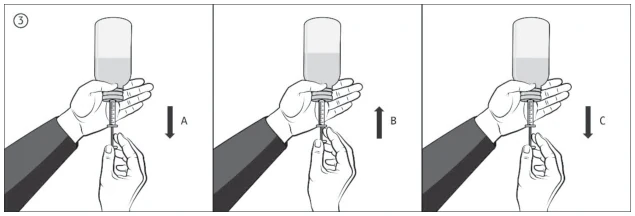
Pregnancy and breast-feeding
If you are pregnant, think you may be pregnant or are planning to have a baby, ask your doctor or pharmacist for advice before taking this medicine. You should not take alimemazine if you are breast-feeding. This is because small amounts may pass into mothers’ milk. This can be harmful to your baby.
If you are breast-feeding or planning to breastfeed, talk to your doctor or pharmacist before taking any medicine.
Driving and using machines
You may feel drowsy or sleepy while taking this medicine. If 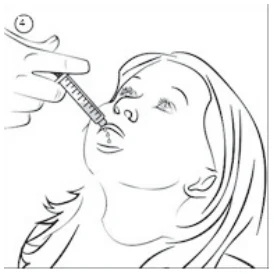 this happens, do not drive or use any tools or machines.
Alimemazine contains sodium benzoate (E211)
Each 5 ml contains 5.0 mg sodium benzoate (E 211).
Alimemazine contains sodium sulphite anhydrous (E 221) and sodium metabisulphite (E 223)
Each 5 ml contains 5.0 mg sodium sulphite anhydrous (E 221) and 0.5 mg sodium metabisulphite (E 223). These may rarely cause severe hypersensitivity reactions and bronchospasms.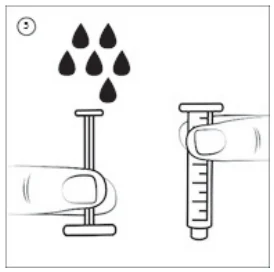
Alimemazine contains sodium
Alimemazine contains approximately 24.35 mg of sodium per 5 ml dose. This is equivalent to 1.2 % of the recommended maximum daily dietary intake of sodium for an adult.
3. How to take alimemazine
Always take this medicine exactly as your doctor has told you. Check with your doctor or pharmacist if you are not sure.
Taking this medicine
- Take this medicine by mouth
- Avoid the solution touching any part of your skin. This can cause skin redness, swelling and itching (contact skin sensitisation)
- If you feel the effect of your medicine is too weak or too strong, do not change the dose yourself, but ask your doctor
- Do not take more than the recommended dose
How much to take
For itching or an itchy lumpy rash
Adults
- 10 mg two or three times each day
- Your doctor may increase your dose depending on your illness
Elderly
- 10 mg once or twice each day
Children over 3 years of age: Alimemazine tartrate 7.5 mg/5 ml Oral Solution should be used:
- 2.5 to 5 mg three or four times each day
As a sedative before general anaesthesia Children aged between 3 and 7 years
Alimemazine tartrate 7.5 mg/5 ml Oral Solution should be used:
- Your child’s doctor will decide the amount to give
- The maximum dose is 2 mg per kg of bodyweight
- Alimemazine is given 1-2 hours before the operation
Instructions for use
- The pack contains a 5 ml oral dosing syringe graduated at every 0.1 ml and an adapter for the oral syringe.
- Opening of the bottle: Turn the screw cap anti-clockwise.
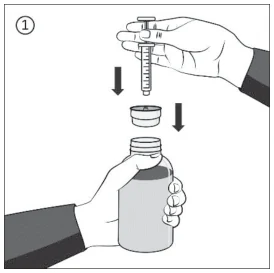
- Insert the adapter in the bottle neck (Fig. 1). Make sure that the adapter is tightly fitted.
Insert the oral syringe in the opening of the adapter (Fig. 1).
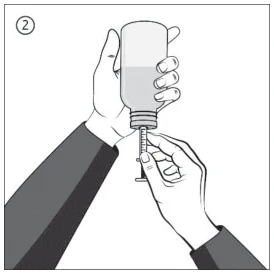
- Turn the bottle upside down (Fig. 2).
- Transfer a small amount of the solution into the syringe by pulling out the piston a short distance (Fig. 3A). Push the piston back to remove any air bubbles (Fig. 3B). Now pull the piston as far as to the millilitre (ml) level corresponding to the dose prescribed by your doctor (Fig. 3C).
- Place the bottle in upright position. Remove the syringe from the adapter.
- The patient should sit upright and the syringe piston should slowly be pressed into the syringe so that the patient can swallow well (Fig. 4). After having taken the medicine, the patient should drink half a glass of water.
- Rinse the syringe using water only (Fig. 5).
- Close the bottle with the screw cap.
Exposure to sunlight
Alimemazine can make your skin more sensitive to sunlight. Keep out of direct sunlight while taking this medicine.
If you take more alimemazine than you should
If you take more alimemazine than you should, tell a doctor or go to a hospital casualty department straight away. Take the medicine pack with you. This is so the doctor knows what you have taken. Also do this if a child under 3 years of age swallows some of this medicine.
The following effects may happen: feeling drowsy, loss of consciousness, increased or rapid heartbeat, changes in heartbeat, uneven heartbeats and feeling very cold. You may also feel dizzy, light-headed or faint (due to low blood pressure) and you may notice that you cannot control your movements (for example of the eyes, neck, arms and legs).
If you forget to take alimemazine
If you forget a dose, take it as soon as you remember it. However, if it is nearly time for the next dose, skip the missed dose. Do not take a double dose to make up for a forgotten dose.
If you have any further questions on the use of this product, ask your doctor or pharmacist.
4. Possible side effects
Like all medicines, this medicine can cause side effects, although not everybody gets them.
Stop taking alimemazine and see a doctor or go to a hospital straight away if you notice any of the following side effects:
- An allergic reaction. The signs may include: a rash, swallowing or breathing problems, swelling of your lips, face, throat or tongue
- Liver problems that may cause the eyes or skin to go yellow (jaundice)
- High temperature, sweating, stiff muscles, fast heartbeat, fast breathing and feel confused, drowsy or agitated. Formatting Criteria Alimemazine Tartrate
Single Page Dimensions
Number of Pages
Font Style
Margins
Line-spacing
Pictograms
190x410 mm
2 (Front/back)
Arial
12 pt
9 pt
9 pt
Top/Bottom/Left/Right: 7 mm
4.4 mm
NA
15.04.2024/ 17.04.2024/ 23.04.2024/ 17.06.2024
Black 1452/N
190x410
NEW 4 ALIMEMAZINE TARTRATE ORAL SOLUTION -PIL Die lines
These could be signs of a serious side effect called ‘neuroleptic malignant syndrome’
- Very fast, uneven or forceful heartbeat (palpitations). You may also have breathing problems such as wheezing, shortness of breath, tightness in the chest and chest pain
- Convulsions/fits and movements that you cannot control, mainly of the tongue, mouth, jaw, arms and legs
- You may get infections more easily than normal such as fever, severe chills, sore throat or mouth ulcers. These could be signs of a blood problem.
Tell a pharmacist or doctor as soon as possible if you have any of the following side effects:
- Breathing more slowly or less deeply than normal
- Feeling restless and not being able to keep still (akathisia)
- Changes in skin or eye colour
- Problems with your eyesight
- Rigid or stiff muscles, trembling or shaking or difficulty moving
- Feeling dizzy, light-headed or faint when you stand or sit up quickly (due to low blood pressure)
- Unexpected excitement or hyperactivity
- Problems passing urine
Tell your doctor or pharmacist if any of the following side effects gets serious or lasts longer than a few days or if you notice any side effects not listed in this leaflet:
- Constipation
- Dry mouth
- Stuffy nose
- Difficulty sleeping (insomnia)
- Feeling agitated
- Dizziness
- Headache
- Drowsiness
- Being more sensitive to the sun than usual
- Unusual production of breast milk in men and women
- Breast enlargement in men
- Loss of menstrual periods
- Difficulty in getting or maintaining an erection or in ejaculating (impotence)
- Skin redness, swelling and itching (contact skin sensitisation)
- Skin rashes
Reporting of side effects
If you get any side effects, talk to your doctor or pharmacist or nurse. This includes any possible side effects not listed in this leaflet. You can also report side effects directly via the Yellow Card Scheme at: www.mhra.gov.uk/yellowcard or search for MHRA Yellow Card in the Google Play or Apple App Store. By reporting side effects you can help provide more information on the safety of this medicine.
5. How to store alimemazine
- Keep this medicine out of the sight and reach of children
- Do not use this medicine after the expiry date, which is stated on the carton and bottle label after EXP. The expiry date refers to the last day of the month
- Do not use after the bottle has been opened for more than a month
- Do not used if the product appears to have deteriorated, such as if there are changes in colour of the solution or if the solution becomes cloudy or hazy
- Store in the original package in order to protect from light
- Do not throw away any medicines via wastewater or household waste. Ask your pharmacist how to dispose of medicines you no longer use. These measures will help protect the environment
6. Contents of the pack and other information
What alimemazine contains
- Alimemazine tartrate 7.5 mg/5 ml Oral Solution: Each 5 ml contains 7.5 mg alimemazine tartrate
- Alimemazine tartrate 30 mg/5 ml Oral Solution: Each 5 ml contains 30 mg alimemazine tartrate
The other ingredients are sucralose, saccharin sodium, citric acid monohydrate (E330), sodium benzoate (E211), sodium sulphite anhydrous (E221), sodium metabisulphite (E223), ascorbic acid (E300), sodium citrate (E331), apricot flavour (contains propylene glycol E1520) and purified water. Alimemazine tartrate 7.5 mg/5 ml Oral Solution also contains caramel flavour (contains propylene glycol E1520).
See section 2 ‘Alimemazine contains sodium benzoate (E211)’, ‘Alimemazine contains sodium sulphite anhydrous (E 221) and sodium metabisulphite (E 223)’ and ‘Alimemazine contains sodium’ for further excipient information.
What alimemazine looks like and contents of the pack
Alimemazine tartrate 7.5 mg/5 ml Oral Solution is a clear, colourless to bright straw-coloured solution with apricot flavour.
Alimemazine tartrate 30 mg/5 ml Oral Solution is a clear, colourless to very pale-yellow solution with apricot flavour. It is available in glass bottles of 100 ml packaged into a carton with 5 ml dosing syringe.
Marketing Authorisation Holder and Manufacturer
Key Pharmaceuticals Ltd.
Galen House, 83 High Street, Somersham,
Cambridgeshire PE28 3JB, UK