

Patient leaflet - Aethoxysklerol 10 mg/ml, solution for injection
1. What Aethoxysklerol is and what it is used for
Aethoxysklerol is a sclerosing agent for local injection whose active substance is lauromacrogol 400. It is available in five strengths. Aethoxysklerol is used to treat varicose veins of the lower extremities and may be injected either as a liquid or as a microfoam. Aethoxysklerol works by causing the lining of the blood vessel
to break up and also stops the flow of blood through that vein. The affected leg is then squeezed by application of compression which helps to complete closure of the varicose vein.
Aethoxysklerol is only for use in adults (including the elderly).
2. What you need to know before you use Aethoxysklerol
Do not use Aethoxysklerol:
- If you are allergic to lauromacrogol 400 or any of the other ingredients of this medicine (listed in section 6). • If you suffer from uncontrolled systemic diseases such as Type I diabetes, toxic hyperthyroidism, tuberculosis, asthma, neoplasm, systemic infections, blood dyscrasias, acute respiratory or skin diseases.
- If you are bedridden or unable to walk due to any cause. • If you suffer from a severe arterial circulatory disorder (arterial occlusive disease, Fontaine stages III and IV).
- If you suffer from vascular occlusion due to a blood clot (thromboembolic diseases).
- If you have a high risk of vascular occlusions (thrombosis), e.g. patients with congenital predisposition to blood clots or with multiple risk factors such as the use of hormonal contraceptives (e.g. the pill) or hormone replacement therapy, overweight, smoking and extended periods of immobility.
- If it is intended to perform microfoam sclerotherapy do not use Aethoxysklerol if you have symptoms caused by a known hole in the heart (known symptomatic right-to-left shunt e.g. patent foramen ovale (PFO)).
Warnings and precautions:
Talk to your doctor, pharmacist or nurse before using Aethoxysklerol:
- If you have a fever.
If you suffer from attacks of laboured breathing (bronchial asthma).
- If you suffer from a strong predisposition to allergies. • If it is intended to perform sclerotherapy of spider veins and you have an arterial circulatory disorder (arterial occlusive disease Fontaine stage II).
- If you have swollen legs with accumulation of fluid (oedema) and if the swelling does not improve after application of a compression bandage or stocking.
- If you suffer from inflammatory skin disease in the area of treatment.
- If you have symptoms of an occlusion of the smallest blood vessels e.g. due to diabetes (microangiopathy) and impaired sensations (neuropathy).
- If you have reduced mobility.
- If you are using anticoagulation medication (to help your blood not to clot).
- If you have moderate to severe liver or kidney function problems. Talk to your doctor, pharmacist or nurse before microfoam sclerotherapy:
- if you have a known hole in heart, even if this causes no signs of disease or is not accompanied by any symptoms (known asymptomatic right-to-left shunt e.g. patent foramen ovale (PFO)). • if you have a history of impaired eyesight or nerve dysfunction (visual or neurological symptoms - such as migraine) after previous microfoam sclerotherapy.
Aethoxysklerol will be administered by a healthcare professional experienced in sclerotherapy and familiar with the injection and preparation techniques required. Before treatment your doctor will perform a thorough evaluation of your suitability for the treatment, and will inform you of the benefits and risks of the treatment. Your doctor will follow up with you after treatment.
The safety and effectiveness of Aethoxysklerol in children and adolescents has not been established.
Other medicines and Aethoxysklerol
Tell your doctor or pharmacist if you are using, have recently used or might use any other medicines.
The use of Aethoxysklerol in combination with an anaesthetic may intensify the effect of the anaesthetic.
Pregnancy, breast-feeding and fertility
If you are pregnant or breast-feeding, think you may be pregnant or are planning to have a baby, ask your doctor or pharmacist for advice before taking this medicine.
If you are pregnant, your attending doctor must not apply Aethoxysklerol unless clearly necessary, since the safety for use in pregnancy has not been established. Studies in animals did not show any evidence of malformations (teratogenic effects). If treatment with Aethoxysklerol is necessary during breast-feeding, it is recommended to suspend breast-feeding for 2-3 days, since it is not known whether lauromacrogol 400 is excreted in human milk.
Driving and using machines
No negative effects on the ability to drive and use machines are known for Aethoxysklerol.
Aethoxysklerol contains ethanol, potassium and sodium
This medicinal product contains 5%v/v ethanol (alcohol), i.e. up to 84 mg per ampoule, equivalent to 2 ml beer, 0.83 ml wine per ampoule. Harmful for those suffering from alcoholism. To be taken into account in pregnant or breast-feeding women, children and high-risk groups such as patients with liver disease, or epilepsy.
- This medicine contains less than 39 mg (1 mmol) potassium per ampoule, i.e. essentially ‘potassium-free’.
- This medicine contains less than 23 mg (1 mmol) sodium per ampoule, i.e. essentially ‘sodium-free’.
3. How to use Aethoxysklerol
Aethoxysklerol is given by injection into the varicose vein. It should always be injected by a doctor, who will select the appropriate dose and method of administration.
Dosage
Aethoxysklerol may be used either as liquid or as microfoam. Your doctor has access to more detailed information in the Summary of Product Characteristics for healthcare professionals. Depending on the size of the varicose vein to be treated, your doctor will decide which treatment must be applied. In case of doubt the lower dose should be chosen.
Generally, the dose of 2 mg/kg/day of lauromacrogol 400 should not be exceeded (for a patient weighing 70 kg, this is corresponding to a dose of up to:
| Aethoxysklerol | 2.5 mg/ml | 5 mg/ml | 10 mg/ml | 20 mg/ml | 30 mg/ml | |||
| 1 l | 40 mg auromacrogol 400 | 56 ml | 28 ml | 14 ml | 7 ml | 4.6 ml |
When administering as a microfoam, it is recommended not to exceed the total dose of 10 ml microfoam (the sum of the liquid and air components) per session and day – irrespective of body weight and strength of Aethoxysklerol.
Not for use in children and adolescents.
Method of administration
The injections must be given strictly intravenously. Depending on the degree and extent of the varicose veins, several treatments may be required.
Strict aseptic technique must be maintained while handling Aethoxysklerol as it is a single-use sterile product.
Compression treatment after injection of Aethoxysklerol After sclerotherapy with liquid Aethoxysklerol, compression is applied immediately.
After sclerotherapy with microfoam the leg is initially immobilised for 2-5 minutes. Compression should not be applied immediately but 5 to 10 minutes after injection.
In both cases, once the injection site has been covered, a tight compression bandage or elastic stocking should be applied. After that, you should walk for 30 minutes, preferably within reach of the practice.
Compression should be applied for a few days up to several weeks, depending on the extent and severity of the varicose veins. To make sure the bandage does not slip, a foam bandage support under the actual compression bandage is recommended.
4. Possible side effects
Like all medicines, this medicine can cause side effects, although not everybody gets them.
Serious side effects are very rare. If you experience a serious side effect immediately stop treatment and contact your doctor. The most serious side effects that have been reported are:
- Anaphylactic shock (a sudden life-threatening allergic reaction, symptoms are sudden breathing difficulties, dizziness, blood pressure drop),
Blockage of lung artery (pulmonary embolism)
- Stroke or transient ischaemic attack (TIA) (cerebrovascular accident).
- Stress heart attack (cardiomyopathy - Tako Tsubo), heart attack (cardiac arrest)
The most commonly reported side effects are temporary in most cases and include short-term injection site pain, injection site intravaricose blood clots and temporary skin discolouration after treatment.
The following adverse reactions were observed, with the frequencies stated estimated from published data and world-wide reports: Common (may affect up to 1 in 10 people)
- Occurrence of blood vessels in the area of sclerosation which were not visible prior to treatment (neovascularisation), bruise (haematoma)
- Discolouration of the skin (hyperpigmentation), cutaneous haemorrhage (ecchymosis)
- Pain at the injection site (short-term), thrombosis at the injection site (local intravaricose blood clots)
Uncommon (may affect up to 1 in 100 people)
- Venous inflammation (superficial thrombophlebitis, phlebitis) • Allergic inflammation of the skin (dermatitis), hives (contact urticaria), skin reaction, redness of the skin (erythema) • Local skin and tissue death (necrosis), induration of tissue, swelling
- Nerve injury
Rare (may affect up to 1 in 1,000 people)
- Deep vein thrombosis, pain in extremity
- Migraine or visual disturbance (microfoam administration) Very rare (may affect up to 1 in 10,000 people)
Anaphylactic shock, angioedema (symptoms include sudden swellings, especially in the face, e.g. of the eyelids, lips or larynx),
hives (generalised urticaria), asthma (asthmatic attack)
- Stroke or transient ischaemic attack (TIA), weakness causing loss of movement in one side of the body (hemiparesis), headache, migraine or visual disturbance (liquid administration), local sensory disturbances (local paraesthesia), decreased feeling or sensitivity in the mouth (hypoaesthesia oral), loss of consciousness, confusion, central speech disorder (aphasia), difficulty in controlling movements (ataxia), dizziness • Heart attack (cardiac arrest), fast or irregular heart beats (palpitations), stress heart attack (cardiomyopathy - Tako Tsubo) • Blockage of lung artery, fainting (vasovagal syncope), circulatory collapse, inflammation of the blood vessel wall (vasculitis) • Difficulty in breathing (dyspnoea), sensation of pressure in the chest, cough
- Taste disorders, nausea, vomiting
- Excessive growth of hair (hypertrichosis) in the area of sclerotherapy
- Fever, hot flush, unusual weakness (asthenia), generally feeling unwell (malaise)
- Abnormal blood pressure, heart rate abnormal
If you get any side effects, talk to your doctor immediately. This includes any side effects not listed in this leaflet. You can also report side effects directly (see details below). By reporting side effects you can help provide more information on the safety of this medicine.
Yellow Card Scheme
Website: www.mhra.gov.uk/yellowcard
Search for MHRA Yellow Card in the Google Play or Apple App Store.
5. How to store Aethoxysklerol
This medicinal product does not require any special storage conditions.
Keep this medicine out of the sight and reach of children.
Do not use this medicine after the expiry date which is stated on the packaging after EXP. The expiry date refers to the last day of that month.
The ampoule is intended for single use. Once the container is opened, the contents should be used immediately. Any residual amount must be discarded.
6. Contents of the pack and other information
What Aethoxysklerol contains
The active substance is lauromacrogol 400.
Aethoxysklerol 2.5 mg/ml:
Each ml Aethoxysklerol 2.5 mg/ml contains 2.5 mg lauromacrogol 400 Each 2 ml ampoule contains 5 mg lauromacrogol 400
Aethoxysklerol 5 mg/ml:
Each ml Aethoxysklerol 5 mg/ml contains 5 mg lauromacrogol 400 Each 2 ml ampoule contains 10 mg lauromacrogol 400
Aethoxysklerol 10 mg/ml:
Each ml Aethoxysklerol 10 mg/ml contains 10 mg lauromacrogol 400 Each 2 ml ampoule contains 20 mg lauromacrogol 400
Aethoxysklerol 20 mg/ml:
Each ml Aethoxysklerol 20 mg/ml contains 20 mg lauromacrogol 400 Each 2 ml ampoule contains 40 mg lauromacrogol 400
Aethoxysklerol 30 mg/ml:
Each ml Aethoxysklerol 30 mg/ml contains 30 mg lauromacrogol 400 Each 2 ml ampoule contains 60 mg lauromacrogol 400
The other ingredients (excipients) are: ethanol 96%, potassium dihydrogen phosphate, disodium phosphate dihydrate, water for injections.
What Aethoxysklerol looks like and contents of the pack
Aethoxysklerol is a clear sterile solution with a very faintly greenish yellow colour. It is available in packs of five glass ampoules, each ampoule containing 2 ml solution for injection.
Marketing Authorisation Holder
Kora Corporation Ltd. t/a Kora Healthcare
20 Harcourt Street, Dublin 2, D02 H364, Ireland
Manufacturer
Chemische Fabrik Kreussler & Co. GmbH
Rheingaustrasse 87-93
65203 Wiesbaden, Germany
Tel.: +49 611 9271-0
Fax: +49 611 9271-111
E-mail: info@kreussler.com
This leaflet was last revised in March 2023
| Am St | poule identification & ripe colours & format | ||
| Aethoxysklerol 2.5 mg/ml | Tw | o red | |
| Aethoxysklerol 5 mg/ml | Tw | o white and one red | |
| Aethoxysklerol 10 mg/ml | On | e yellow and one red | |
| Aethoxysklerol 20 mg/ml | On | e green and one red | |
| Aethoxysklerol 30 mg/ml | On | e blue and one red and one whit | e |
| 271 | -01 |
xx CM 9046 23.01 The following information is intended for healthcare professionals only:
Please refer to the Summary of Product Characteristics (SmPC) for further details of this product.
Important instructions for use for sclerotherapy of varicose veins of lower extremities
Aethoxysklerol must be administered by a physician experienced in sclerotherapy techniques.
Before treatment, the healthcare professional should investigate patient’s risk factors and inform them about the risks of the technique.
A thorough pre-procedure evaluation for valvular competency should be carried out as appropriate. Sclerotherapy should not be undertaken if significant valvular incompetence is suspected following the evaluation.
Posology
All strengths of the product may be used as a liquid. The 10, 20 and 30 mg/ml strengths of the product may also be used as a standardised, homogeneous, fine-bubbled, viscous microfoam. Generally, the dose of 2 mg lauromacrogol 400 per kg body weight per day should not be exceeded. For a patient weighing 70 kg, a total of up to 140 mg lauromacrogol 400 can be injected. 140 mg lauromacrogol 400 are contained in:
| A | ethoxysklerol | 2.5 mg/ml | m | 5 g/ml | 10 mg/ml | 20 mg/ml | 30 mg/ml |
| 1 la | 40 mg uromacrogol 400 | 56 ml | 2 | 8 ml | 14 ml | 7 ml | 4.6 ml |
When applying as sclerosing microfoam, it is recommended not to exceed the total dose of 10 ml microfoam (the sum of the liquid and
air components) per session and day – irrespective of the patient’s body weight and concentration of lauromacrogol 400. Elderly population:No specific dose recommendations apply. Paediatric population:There is no relevant use of Aethoxysklerol in the paediatric population in children or adolescents for the indication of sclerotherapy of varicose veins of the lower extremities. Hepatic impairment / Renal impairment:No pharmacokinetic studies have been performed in patients with hepatic or renal impairment. The use of sclerotherapy should be cautious and assessed in patients with moderate hepatic or renal impairment, in whom the treatment benefit clearly outweighs the risk. Aethoxysklerol is not recommended for use in patients with severe hepatic or renal impairment.
| Sclerotherapy of | A | ethoxysklerol concentration | ||||||
| 2.5 mg/ml | 5 mg | /ml | 10 mg/ml | 20 mg/ml | 30 mg/ml | |||
| Telangiectasias (spider veins) | • | • | Liqui | d | ||||
| Micr | ofoam | |||||||
| Central veins of telangiectasias | • | • | • | Liqui | d | |||
| Micr | ofoam | |||||||
| Reticular veins | • | Liqui | d | |||||
| Micr | ofoam | |||||||
| Small varicose veins | • | Liqui | d | |||||
| • | Micr | ofoam | ||||||
| Medium-sized varicose veins | • | • | Liqui | d | ||||
| • | • | Micr | ofoam | |||||
| Large varicose veins | • | Liqui | d | |||||
| • | Micr | ofoam | ||||||
Sclerotherapy of telangiectasias
Depending on the size of the area to be treated, per puncture 0.1-0.2 ml Aethoxysklerol 2.5 or 5 mg/ml are injected intravenously. Sclerotherapy of central veins of telangiectasias
Depending on the size of the area to be treated, per puncture 0.1-0.2 ml Aethoxysklerol 2.5, 5 or 10 mg/ml are injected intravenously. Sclerotherapy of reticular veins
Depending on the size of the varicose vein to be treated, per puncture 0.1-0.3 ml Aethoxysklerol 10 mg/ml are injected intravenously.
Sclerotherapy of small varicose veins
Depending on the size of the varicose vein to be treated, per puncture 0.1-0.3 ml liquid Aethoxysklerol 10 mg/ml are injected intravenously.
When using Aethoxysklerol 10 mg/ml microfoam, e.g. for the treatment of tributary varicose veins (collateral varices), up to 4-6 ml are injected per puncture. When treating perforating veins with microfoam up to 2-4 ml are injected per puncture. Sclerotherapy of medium-sized varicose veins
Depending on the diameter of the varicose veins to be treated, Aethoxysklerol 20mg/ml or 30 mg/ml is used. Depending on the length of the segment to be treated, several injections with up to 2 ml of liquid Aethoxysklerol 20 or 30 mg/ml per injection may be administered, without exceeding the maximum daily dose. When using Aethoxysklerol 20 mg/ml microfoam, e.g. for the treatment of perforating or tributary varicose veins, up to 2 ml microfoam are injected per puncture. When using Aethoxysklerol 20 mg/ml or 30 mg/ml microfoam, e.g. for the treatment of the saphenous veins, up to 4 ml are injected per puncture for the small saphenous veins and up to 6 ml for the great saphenous veins.
Sclerotherapy of large varicose veins
Depending on the length of the segment to be treated, several injections with up to 2 ml of liquid Aethoxysklerol 30 mg/ml per injection may be administered, without exceeding the maximum daily dose.
When using Aethoxysklerol 30 mg/ml microfoam, e.g. for the treatment of the saphenous veins, up to 4 ml are injected per puncture for the small saphenous veins and up to 6 ml for the great saphenous veins.
Method of administration
All injections must be given intravenously; the position of the needle should be checked (e.g. by aspiration of blood).
Strict aseptic technique must be maintained while handling Aethoxysklerol. Aethoxysklerol is a single-use parenteral product. Once the container is opened, use immediately and discard any unused portion.
Visually inspect for particulate matter before use. Solutions that contain particulate matter should not be used.
Refer to the end of this leaflet for detailed instructions for foam preparation. The Tessari and Double Syringe System (DSS) methods of preparation are described. Other techniques may be used. The foam must be prepared just before use and administered by a physician appropriately trained in the correct generation and administration of the foam.
Sclerotherapy of telangiectasias
Sclerotherapy of central veins of telangiectasias
Sclerotherapy of reticular veins
Injections are usually carried out in a leg placed horizontally. Smooth-moving syringes are used.
For telangiectasias very fine needles (e.g. insulin needles) are used.
The puncture is carried out tangentially and the injection given slowly.
Sclerotherapy of small, medium-sized and large varicose veins Irrespective of the mode of venepuncture (in a standing patient with the cannula only or in a sitting patient with a syringe ready for injection), injections are usually carried out in a leg placed horizontally.
Smooth-moving disposable syringes are recommended for sclerotherapy as well as needles with different diameters, depending on the indication.
When using microfoam, the leg can be placed horizontally or elevated approx. 30 – 45° above the horizontal for injection. Direct puncture and injection into non-visible veins should be guided by duplex ultrasound. The needle should not be smaller than 25G. Thrombi, which occasionally develop, are removed by stab incision and thrombus expression.
Compression treatment after injection of Aethoxysklerol Once the injection site has been covered, a tight compression bandage or elastic stocking should be applied. After that, the patient should walk for 30 minutes, preferably within reach of the practice. After sclerotherapy with liquid Aethoxysklerol, compression is applied immediately.
After sclerotherapy with microfoam the patient’s leg is initially immobilised for 2-5 minutes. Valsalva’s manoevre and muscle activation should be avoided during this time. Compression should not be applied immediately but 5 to 10 minutes after injection. Compression should be applied for a few days up to several weeks, depending on the extent and severity of the varicose veins. To make sure the bandage does not slip, especially on the thigh and conical limbs, a foam bandage support under the actual compression bandage is recommended.
Improper administration when treating varicose veins
- Sclerosants must never be injected intra-arterially because this can cause severe necrosis which may necessitate amputation. A vascular surgeon must be called in immediately if any such incident occurs.
- In certain body regions such as in the foot or malleolar region, the risk of inadvertent intra-arterial injection may be increased. Therefore, in these regions only small amounts should be used in low concentrations with particular care.
Management of local toxicity after improper administration when treating varicose veins
- a)
Intra-arterial injection
- 1.
Leave cannula in place; if already removed, relocate the
puncture site and aspirate blood and the remaining sclerosing solution back into the syringe
- 2.
Inject 5-10 ml of a local anaesthetic, without the addition of
adrenaline
- 3.
Start with anticoagulation e.g. by injection of 5,000 IU heparin
or equivalents (if possible, into the affected artery; otherwise i.v.)
- 4. Pack the ischaemic leg in wadding and lower
- 5. Hospitalise the patient as a precaution (vascular surgery)
- 1.
- b)
Extravenous injection
Depending on the quantity and concentration of Aethoxysklerol injected extravenously, inject 5 to 10 ml of physiological saline, if possible combined with hyaluronidase, at the application site. If the patient is in severe pain, a local anaesthetic (without adrenaline) may be injected.
Emergency measures and antidotes
Anaphylactic reactions are very rare, but potentially life-threatening situations. The attending doctor should be prepared for emergency
measures and have a suitable emergency kit available. Therapy with beta blockers or ACE (angiotensin converting enzyme) inhibitors may influence emergency procedures for anaphylactic shock because of their cardiovascular effects.
Stress cardiomyopathy and cardiac arrest
Stress cardiomyopathy (Tako Tsubo) and cardiac arrest have been very rarely reported following Aethoxysklerol sclerotherapy. Patients complaining of chest pain or discomfort during or after the procedure should be promptly investigated and monitored. All patients should also be made aware of this possible adverse event and advised to immediately seek medical advice in case of any symptoms. Follow-up
The healthcare professional should see the patient again in the weeks after treatment to perform a clinical efficacy and safety evaluation. Patients should have post-treatment follow-up of sufficient duration to assess for the development of deep vein thrombosis. Adequate post-treatment compression may decrease the incidence of deep vein thrombosis.
Preparation of the Microfoam
The foam must be prepared just before use and administered by a physician appropriately trained in the correct generation and administration of foam.
Strict aseptic technique must be maintained while manufacturing the foam.
Tessari and Dual Syringe System (DSS) technique, respectively, may be used for example for foam preparation as described below.
The quality of microfoam depends on specific criteria:
- 1.
Concentration of lauromacrogol 400: In order to obtain a very
fine-bubbled and stable microfoam, a concentration of 10-30 mg/ml must be used.
- 2. Proportion of liquid to gas: In general, this proportion is 1 volume of liquid for 4 volumes of gas.
- 3. Macroscopic appearance: Observe the macroscopic appearance of the microfoam in the syringe: It must be homogenous and fine-bubbled. No unmixed liquid or gas should be visible.
- 4. Maximum time between preparation and injection: Inject the microfoam soon after preparation (within 60 seconds).
Filling of the syringes for both foam preparation methods
Note: Syringes containing siliconized components produce a less stable foam and their use should be minimised. As two sterile syringes are needed to create the foam, only the second syringe should have a rubber plunger as this will aid a smooth injection. To create the foam 2 ml of liquid sclerosant is drawn into the first syringe (without a rubber plunger). The second syringe (with a rubber plunger) is fixed to a 0.2 µm sterile filter and 8 ml of sterile air is drawn up.
Preparation of sclerosing microfoam with Tessari technique:
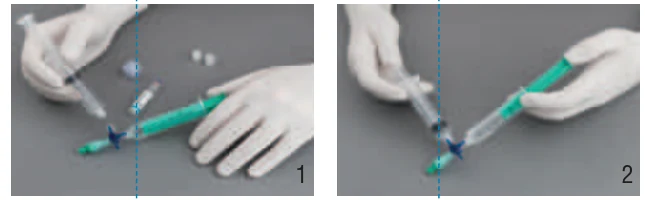
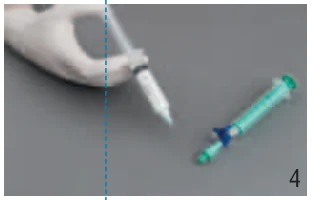
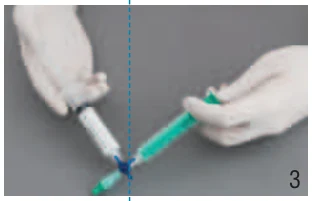
The syringes are firmly connected to a sterile three-way tap/valve (Fig. 1). Foam generation is performed by mixing sclerosant and the air by moving the plungers of both syringes completely forward and backward approximately 20 times under high pressure on both syringes (Fig. 2 and 3). A smooth, consistent foam is obtained. The syringe with the rubber plunger is filled with foam and is then removed from the three-way valve. The vein is injected immediately (Fig. 4).
Preparation of sclerosing microfoam with DSS (Double Syringe System):
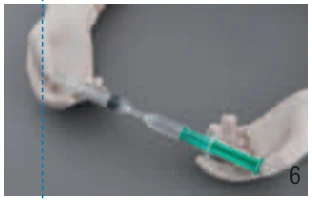
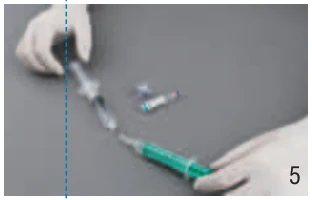
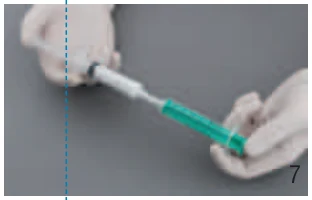
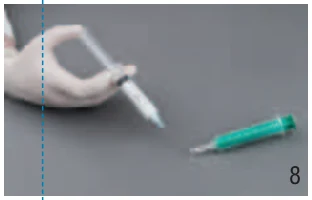
The syringes are firmly connected to a sterile Luer Lock female-female adapter (Fig. 5). Foam generation is performed by mixing sclerosant and the air by moving the plungers of both syringes completely forward and backward 5 times with a short, firm thumb pressure of both hands, so that the pumping must be done against a resistance (Fig. 6 and 7). This is followed by 7 quick forward and backward movements without additional pressure to get a homogenous foam. The syringe with the rubber plunger is filled with foam and is then removed from the adapter. The vein is injected immediately (Fig. 8).
1
3 4
5 6
7 8 2
CCL-Job-Nr.:
708546 customer:
Kreussler customer Nr.:
2018005 created:
10.01.2023
- Label ■ Leaflet ■ PatInfo
Product:
Aethoxysklerol 2,5mg/ml - 30mg/ml England Impressum: xx CM 9046 23.01 Article-Nr. / Mat.-Nr.:
9046
888 x 131 mm
Size (folded):
131 x 40 mm
9 pt
Paper Weight:
40 g/qm
Country:
Eng
Code-Type:
DataMatrix
Code-Nr.:
Code-Content:
9046
number of colours:
1
Colours-names:
3.Correction on 25.01.2023
new proof ■ ready to print
CCL Label Marburg GmbH
Im Rudert 1
D-35043 Marburg t: +49 (64 21) 954-0 f: +49 (64 21) 954-190 marinfo@cclind.com www.ccllabel.com