


Summary of Product Characteristics (SmPC) - Adzynma 500 IU powder and solvent for solution for injection
1 NAME OF THE MEDICINAL PRODUCT
ADZYNMA 500 IU powder and solvent for solution for injection
2 QUALITATIVE AND QUANTITATIVE COMPOSITION
ADZYNMA 500 IU powder and solvent for solution for injection
Each vial of powder contains nominally 500 international units (IU) of rADAMTS13* activity, as measured in terms of its potency.
After reconstitution with the 5 mL solvent provided, the solution has a potency of approximately 100 IU/mL.
*ADZYNMA is a purified bivariant human recombinant “A disintegrin and metalloproteinase with thrombospondin motifs 13” (rADAMTS13) expressed in Chinese Hamster Ovary (CHO) cells using recombinant DNA technology (a mixture of native rADAMTS13 Q23 and variant rADAMTS13 R23 with a controlled range of the two variants ratio), referred to as rADAMTS13.
For the full list of excipients, see section 6.1.
3 PHARMACEUTICAL FORM
Powder and solvent for solution for injection.
White lyophilised powder.
The solvent is a clear and colourless solution.
The reconstituted solution has a pH of 6.7 - 7.3 and an osmolality of no lower than 240 mOsmol/kg.
4 CLINICAL PARTICULARS
4.1 Therapeutic indications
ADZYNMA is an enzyme replacement therapy (ERT) indicated for the treatment of ADAMTS13 deficiency in children and adult patients with congenital thrombotic thrombocytopenic purpura (cTTP).
ADZYNMA can be used for all age groups.
4.2 Posology and method of administration
ADZYNMA treatment should be initiated under the supervision of a physician experienced in the management of patients with haematological disorders.
Posology
Prophylactic enzyme replacement therapy
- 40 IU/kg of body weight once every other week.
- The prophylaxis dosing frequency may be adjusted to 40 IU/kg of body weight once weekly based on clinical response (see sections 5.1 and 5.2).
On-demand enzyme replacement therapy for acute TTP episodes
In case of acute thrombotic thrombocytopenic purpura (TTP) episode, the recommended dose of ADZYNMA to treat acute TTP episodes is as follows:
- 40 IU/kg of body weight on day 1.
- 20 IU/kg of body weight on day 2.
- 15 IU/kg of body weight starting day 3 once daily until two days after the acute event is resolved (see section 5.1).
Special populations
Elderly
There are limited data on the use of ADZYNMA in patients over 65 years of age. Based on the results from population pharmacokinetics analysis, no dose adjustment is required for elderly patients (see section 5.2).
Renal impairment
As rADAMTS13 is a recombinant protein with a high molecular weight, it is not excreted renally and no dose adjustment is needed for patients with renal impairment (see section 5.2).
Hepatic impairment
As rADAMTS13 is a recombinant protein with high molecular weight, it is cleared via catabolism (rather than hepatic metabolism), and no dose adjustment is needed for patients with hepatic impairment (see section 5.2).
Paediatric population
The recommended body-weight based dosing regimen in paediatric patients is the same as in adults. Based on the results from population pharmacokinetics analysis, it might be more likely for infants < 10 kg body weight to require adjustment to dosing frequency from every other week to once weekly dosing (see section 5.2).
Method of administration
For intravenous use after reconstitution only.
ADZYNMA 500 IU powder and solvent for solution for injection is administered at a rate of 2 to 4 mL per minute.
Home or self-administration
Home or self-administration under the supervision of a healthcare professional may be considered for patients who are tolerating their injections well. The decision to have a patient move to home or self-administration should be made after evaluation and recommendation by the treating physician. Appropriate training should be given by the treating physician and/or nurse to the patient and/or caregiver prior to initiation of home or self-administration. Dose and administration rate should remain constant while at home, and not be changed without consulting the treating physician. If the patient experiences early signs of hypersensitivity during the home administration, the administration process should be stopped immediately, and appropriate treatment should be initiated (see section 4.4). Subsequent injections need to occur in a clinical setting. Treatment should be closely followed by the treating physician.
For instructions on reconstitution of the medicinal product before administration, see section 6.6.
4.3 Contraindications
Life-threatening hypersensitivity to the active substance or to any of the excipients listed in section 6.1.
4.4 Special warnings and precautions for use
Traceability
In order to improve the traceability of biological medicinal products, the name and the batch number of the administered product should be clearly recorded.
Hypersensitivity reactions
Allergic-type hypersensitivity including anaphylactic reactions may occur. Patients should be informed of the early signs of hypersensitivity reactions including but not limited to tachycardia, tightness of the chest, wheezing and/or acute respiratory distress, hypotension, generalised urticaria, pruritus, rhinoconjunctivitis, angioedema, lethargy, nausea, vomiting, paraesthesia, restlessness, and may progress to anaphylactic shock. If signs and symptoms of severe allergic reactions occur, the administration of this medicinal product should be discontinued immediately and appropriate supportive care should be provided.
Immunogenicity
As with all therapeutic proteins, there is a potential for immunogenicity. Patients may develop antibodies to rADAMTS13 following treatment with ADZYNMA which could potentially result in a decreased response to rADAMTS13 (see section 5.1). If such antibodies are suspected and there is a lack of efficacy, consider other therapeutic strategies.
Sodium content
This medicinal product contains less than 1 mmol sodium (23 mg) per mL, that is to say essentially ‘sodium free’.
4.5 Interaction with other medicinal products and other forms of interaction
No interaction studies have been performed.
4.6 Fertility, pregnancy and lactation
Pregnancy
There are no or limited amount of data from the use of ADZYNMA in pregnant women. Animal studies do not indicate direct or indirect harmful effects with respect to reproductive toxicity (see section 5.3). The use of ADZYNMA during pregnancy may only be considered after a thorough individual risk benefit analysis by the treating physician before and during treatment.
Breast-feeding
There is insufficient information on the excretion of rADAMTS13 in human or animal milk but it is unlikely that it is excreted in human milk due to its high molecular weight. The decision either to discontinue breast-feeding or discontinue ADZYNMA should take into account the importance of this medicinal product to the mother.
Fertility
No human data are available on the effects of rADAMTS13 on male and female fertility. Animal data do not indicate direct or indirect harmful effects with respect to male or female fertility (see section 5.3).
4.7 Effects on ability to drive and use machines
Recombinant ADAMTS13 may have a minor influence on the ability to drive and use machines. Dizziness and somnolence may occur following the administration of ADZYNMA (see section 4.8).
4.8 Undesirable effects
Summary of the safety profile
The most common adverse reactions reported in clinical studies were headache (31.5%), diarrhoea (17.8%), dizziness (16.4%), upper respiratory tract infection (15.1%), nausea (13.7%), and migraine (11%).
Tabulated list of adverse reactions
The adverse drug reactions (ADRs) are listed in Table 1.
Adverse reactions are listed below by MedDRA system organ class and by frequency. Frequencies are defined as follows: very common (≥ 1/10); common (≥ 1/100 to < 1/10); uncommon (≥ 1/1 000 to < 1/100); rare (≥ 1/10 000 to < 1/1 000); very rare (< 1/10 000); not known (cannot be estimated from the available data). Within each System Organ Class (SOC), ADRs are presented in order of decreasing frequency. Within each frequency grouping, ADRs are presented in order of decreasing seriousness.
Table 1: Adverse reactions reported in patients treated with ADZYNMA
| MedDRA system organ class | ||
| (SOC) | ||
Adverse reaction by
preferred term (PT) Frequency category by subject
| Infections and infestations | Upper respiratory tract | Very common | |||||||||||||||||
| infection | |||||||||||||||||||
| Blood and lymphatic system | Thrombocytosis | Common | |||||||||||||||||
| disorders | |||||||||||||||||||
| Nervous system disorders | Headache | Very common | |||||||||||||||||
| Dizziness | Very common | ||||||||||||||||||
| Migraine | Very common | ||||||||||||||||||
| Somnolence | Common | ||||||||||||||||||
| Gastrointestinal disorders | Diarrhoe | a | Very common | ||||||||||||||||
| Nausea | Very common | ||||||||||||||||||
| Constipation | Common | ||||||||||||||||||
| Abdominal distension | Common | ||||||||||||||||||
| General disorders and administration site conditions | Asthenia | Common | |||||||||||||||||
| Feeling hot | Common | ||||||||||||||||||
| Investigations | ADAMTS13 activity | Common | |||||||||||||||||
| abnormal | |||||||||||||||||||
Paediatric population
There is limited information from controlled studies of ADZYNMA in paediatric patients. The safety assessment in paediatric patients is based on the safety data from one phase 3 clinical study comparing ADZYNMA to plasma-based therapies (fresh frozen plasma [FFP], pooled solvent/detergent [S/D] treated plasma, or factor VIII:von Willebrand factor [FVIII-VWF] concentrates, as assigned by the investigator) and one phase 3b study. The studies included 20 and 1 paediatric patients aged 2 to 17 years of age in the prophylactic and on-demand cohorts, respectively. Overall, the safety profile in these paediatric patients was similar to that observed in the adult population.
One neonate aged 36 hours old was treated with ADZYNMA in a compassionate use program and had no reported safety or immunogenicity concerns after 2 years of prophylactic treatment.
Frequency, type and severity of adverse reactions in children are expected to be the same as in adults.
Reporting of suspected adverse reactions
Reporting suspected adverse reactions after authorisation of the medicinal product is important. It allows continued monitoring of the benefit/risk balance of the medicinal product. Healthcare professionals are asked to report any suspected adverse reactions via the Yellow Card Scheme at: www.mhra.gov.uk/yellowcard or search for MHRA Yellow Card in the Google Play or Apple App Store.
4.9 Overdose
In clinical studies, single doses up to 160 IU/kg were used and their safety profile was generally consistent with results from clinical study results in cTTP patients.
In case of overdose, based on the pharmacological action of rADAMTS13, there is the potential for increased risk of bleeding (see section 5.1).
5 PHARMACOLOGICAL PROPERTIES
5.1 Pharmacodynamic properties
Pharmacotherapeutic group: Antithrombotic agents, enzymes, ATC code: B01AD13
Mechanism of action
rADAMTS13 is a recombinant form of the endogenous ADAMTS13. ADAMTS13 is a plasma zinc metalloprotease that regulates the activity of von Willebrand factor (VWF) by cleaving large and ultra-large VWF multimers to smaller units and thereby reducing the platelet binding properties of VWF and its propensity to form microthrombi. rADAMTS13 is expected to reduce or eliminate the spontaneous formation of VWF-platelet microthrombi that leads to platelet consumption and thrombocytopenia in patients with cTTP.
Pharmacodynamic effects
Immunogenicity
Anti-drug antibodies (ADA) were very commonly detected. No evidence of ADA impact on pharmacokinetics, efficacy or safety was observed, however, data are still limited (see section 4.4).
Clinical efficacy and safety
The clinical efficacy and safety were assessed in two ongoing studies (Study 281102 and Study 3002).
Study 281102
ADZYNMA was studied in a global phase 3, prospective, randomized, controlled, open-label, multicentre, two-period crossover study followed by a single arm continuation period (Study 281102) evaluating the efficacy and safety of the prophylactic and on-demand ERT with ADZYNMA compared to plasma-based therapies in patients with severe cTTP (ADAMTS13 activity < 10%).
Prophylactic enzyme replacement therapy in patients with cTTP The efficacy of ADZYNMA in the prophylactic treatment of patients with cTTP was evaluated in 46 patients in the prophylaxis cohort who were randomized to receive 6 months of prophylactic treatment with either 40 IU/kg (± 4 IU/kg) of ADZYNMA or plasma-based therapies (period 1) once weekly (for patients who were previously treated with plasma-based therapies once weekly prior to joining the study) or every other week then crossed over to the other treatment for 6 months (period 2). After periods 1 and 2, all patients entered a 6 month single arm treatment period with ADZYNMA (period 3). The initial ADZYNMA prophylactic treatment frequency was every other week for 35 (76.1%) patients and once weekly for 9 (19.6%) patients.
The mean (SD) age was 30.5 (16.0) years (range: 3 to 58 years). Of the 46 patients, 4 (8.7%) were < 6 years of age, 4 (8.7%) were ≥ 6 to < 12 years of age, 4 (8.7%) were ≥ 12 to < 18 years of age, and 34 (73.9%) were ≥ 18 years of age. The mean (SD) weight was 65.9 kg (21.8) (range: 18.5 to 102.4 kg), and the majority of patients were white (65.2%), and were female (58.7%) of whom 74.1% were of child-bearing potential.
Prior to joining the study, the majority (69.6%) of patients received FFP treatment, 21.7% received solvent/detergent (S/D) plasma and 6.5% received FVIII-VWF concentrate.
The efficacy of prophylactic treatment with ADZYNMA in patients with cTTP was evaluated based on the incidence of acute TTP events (as defined by a drop in platelet count [≥ 50% of baseline or a platelet count < 100 x 109/L] and an elevation of lactate dehydrogenase [LDH] [> 2 × baseline or > 2 × upper limit normal (ULN)]), subacute TTP events (as defined by a thrombocytopenia event or a microangiopathic haemolytic anaemia event; and organ specific signs and symptoms including but not limited to renal dysfunction events, neurological symptoms events, fever, fatigue/lethargy, and/or abdominal pain), and TTP manifestations (such as thrombocytopenia, microangiopathic haemolytic anaemia, neurological symptoms, renal dysfunction, and abdominal pain); as well as the incidence of supplemental doses prompted by subacute TTP events (see Table 2).
Table 2: Prophylactic cohort efficacy results in cTTP patients (periods 1 and 2)
ADZYNMA N = 45 | Plasma-Based Therapies N = 46 | |
| Acute TTP events | ||
| Number of subjects with event (number of events) | 0 (0) | 1 (1) |
| Subacute TTP events | ||
| Number of subjects with event (number of events) | 1 (1) | 6 (7) |
| Number of subjects receiving a supplemental dose prompted by a subacute event | 0 | 4 |
| Number of supplemental doses prompted by a subacute event | 0 | 9 |
| TTP manifestations | ||
Thrombocytopenia eventsa Number of subjects with event (number of events) Model based annualized event rate,b LSM (SE) | 13 (49) 0.92 (0.262) | 23 (91) 1.72 (0.457) |
Microangiopathic haemolytic anaemia eventsc Number of subjects with event (number of events) Model based annualized event rate,b LSM (SE) | 8 (23) 0.37 (0.136) | 12 (32) 0.59 (0.194) |
Neurological symptoms eventsd Number of subjects with event (number of events) Model based annualized event rate,b LSM (SE) | 4 (18) 0.13 (0.068) | 7 (29) 0.23 (0.109) |
Renal dysfunction eventse Number of subjects with event (number of events) Model based annualized event rate,b LSM (SE) | 5 (11) 0.17 (0.090) | 2 (5) 0.08 (0.052) |
Abdominal pain events Number of subjects with event (number of events) Model based annualized event rate,b LSM (SE) | 2 (4) 0.09 (0.055) | 6 (8) 0.17 (0.086) |
LSM = least squares mean; SE = standard error; TTP = thrombotic thrombocytopenic purpura. a Drop in platelet count ≥ 25% of baseline or a platelet count < 150 x 109/L.
b From a negative binominal mixed-effects model.
c Elevation of LDH > 1.5 × baseline or > 1.5 x ULN.
d Nervous system disorders (e.g., headache, confusion, memory issues, irritability, paraesthesia, dysarthria, dysphonia, visual disturbances, focal or general motor symptoms including seizures). e An increase in serum creatinine > 1.5 × baseline.
Overall ADZYNMA efficacy results were consistent throughout the study, including period 3, and across age groups.
On-demand enzyme replacement therapy for acute TTP episodes The efficacy of the on-demand enzyme replacement therapy for acute TTP episodes was evaluated based on the proportion of acute TTP events responding to ADZYNMA in both the prophylactic and the on-demand cohorts throughout the duration of the study.
An acute TTP event responding to ADZYNMA was defined as a resolved TTP event when platelet count was ≥ 150 x 109/L or platelet count was within 25% of baseline, whichever occurs first, and LDH ≤ 1.5 x baseline or ≤ 1.5 x ULN, without requiring the use of another ADAMTS13-containing agent.
The on-demand cohort included 5 adult patients (≥ 18 years of age) and 1 paediatric patient (< 6 years of age). Patients enrolled in this cohort had a total of 7 acute TTP events. Of these 6 patients, 2 patients were randomized to receive on-demand treatment with ADZYNMA and 4 patients were randomized to receive plasma-based therapies. All 7 acute TTP events resolved after treatment with either ADZYNMA or plasma-based therapies within 5 days.
Most patients (66.7%) were male, white (50%) with a median (min, max) age of 20 (5, 36) years, a mean (SD) weight of 56.4 (18.6) kg and a median (min, max) weight of 64.3 (23.0, 74.0) kg.
Study 3002 (Continuation study)
Patients who completed the phase 3 study (Study 281102) were eligible to enrol in a long-term continuation study (Study 3002). The prophylaxis cohort included 65 patients among which 40 rolled over from Study 281102 and 25 were naïve patients. Of the 40 roll-over patients, 7 (17.5%) were ≥ 12 to < 18 years of age, and 33 (82.5%) were ≥ 18 years of age. Of the 25 naïve patients, 3 (12%) were < 6 years of age, 3 (12%) were ≥ 6 to < 12 years of age, 3 (12%) were ≥ 12 to < 18 years of age, and 16 (64%) were ≥ 18 years of age. The on-demand cohort included 1 patient aged ≥ 6 to < 12 years. All patients were treated with ADZYNMA. The mean and maximum prophylactic treatment durations were 0.98 years and 2.17 years, respectively. Incidence rates of acute and subacute TPP events and TPP manifestations were consistent with the results from Study 281102.
Paediatric population
Overall, the efficacy in paediatric patients was similar to that observed in the adult population.
Exceptional circumstances
This medicinal product has been authorised under ‘exceptional circumstances’. This means that due to the rarity of the disease it has not been possible to obtain complete information on this medicinal product.
The Medicines and Healthcare products Regulatory Agency (MHRA) will review any new information which may become available every year and this SmPC will be updated as necessary.
5.2 Pharmacokinetic properties
The pharmacokinetic (PK) profile of ADZYNMA was determined based on clinical study ADAMTS13 activity data analyses.
Following single-dose intravenous administration of ADZYNMA at 5 IU/kg, 20 IU/kg, and 40 IU/kg to adults and adolescents, dose-related increases in individual ADAMTS13 activity were observed and reached a maximum at approximately 1 hour post-administration or earlier. At clinical dose of 40 IU/kg the mean (SD) half-life and mean residence time (MRT) in adults and adolescents were 47.8 (13.7) hours and 63.8 (16.0) hours, respectively.
The population PK parameters of ADAMTS13 activity following intravenous administration of ADZYNMA at 40 IU/kg in adults, adolescents, and younger children are described in Table 3.
Table 3: Pharmacokinetic parameters of ADAMTS13 activity following intravenous administration of ADZYNMA in cTTP patients
Parameter (unit) | Mean (SD) Min; Max (N = 83) |
| Cmax (IU/mL) | 1.13 (0.29) 0.72; 2.29 |
AUC (IU*h/mL) | 72.8 (37.4) 38.7; 274 |
Duration ADAMTS13 activity above 10% (days) | 8.85 (2.45) 4.51; 14.0 |
AUC = area under ADAMTS13 activity-time curve; Cmax = maximum ADAMTS13 activity.
Note: 1 IU/mL ADAMTS13 activity corresponds to 100% average normal activity.
ADZYNMA intravenous administration at 40 IU/kg resulted in approximately greater than 5-fold higher ADAMTS13 activity exposures (Cmax, AUC, and duration above 10% ADAMTS13 activity) and lower variability when compared to plasma-based therapies.
Special populations
Age, gender, race, and other intrinsic factors
Besides body-weight dosing regimen, no intrinsic factors such as age, gender, race, baseline estimated glomerular filtration rate (eGFR), and baseline bilirubin were identified as covariates impacting ADAMTS13 PK.
ADAMTS13 activity PK characteristics (MRT, steady-state volume of distribution [Vss], and clearance [CL]) were similar across age groups in patients with cTTP. Body weight-based ADZYNMA dosing provides similar ADAMTS13 activity PK parameters (Cmax and average ADAMTS13 activity [Cave]) across the different age groups including paediatric patients < 12 years of age.
In infants < 10 kg body weight, median duration above 10% ADAMTS13 activity was estimated to be shorter (approximately 5-6 days) compared to adults (approximately 10 days).
5.3 Preclinical safety data
Non-clinical data reveal no special hazard for humans based on studies of safety pharmacology, single dose toxicity, toxicity to reproduction and development, local tolerance and immunogenicity. Studies to evaluate the mutagenic and carcinogenic potential of rADAMTS13 have not been performed.
6 PHARMACEUTICAL PARTICULARS
6.1 List of excipients
Powder
Sodium chloride
Calcium chloride dihydrate
L-Histidine
Mannitol
Sucrose
Polysorbate 80 (E433)
Solvent
Water for injections
6.2 Incompatibilities
In the absence of compatibility studies, this medicinal product must not be mixed with other medicinal products.
6.3 Shelf life
Unopened vial
3 years
After reconstitution
Chemical and physical in-use stability has been demonstrated for 6 hours at 25 °C.
From a microbiological point of view, unless the method of opening/reconstituting/dilution precludes the risks of microbial contamination, the product should be used immediately. If not used immediately, in-use storage times and conditions are the responsibility of the user.
6.4 Special precautions for storage
Powder
Store in a refrigerator (2 °C – 8 °C).
Do not freeze.
Store in the original package in order to protect from light.
ADZYNMA may be stored at room temperature up to 30 °C for a period of up to 6 months in lyophilized form, but not exceeding the expiry date.
Do not return ADZYNMA to refrigerated storage after storage at room temperature.
Record on the carton the date ADZYNMA is removed from refrigeration.
After reconstitution
For storage conditions after reconstitution of the medicinal product, see section 6.3.
6.5 Nature and contents of container
ADZYNMA 500 IU powder and solvent for solution for injection
Each pack contains:
- powder in a vial (type I glass), with a butyl rubber stopper
- 5 mL of solvent in a vial (type I glass), with a butyl rubber stopper
- one reconstitution device (BAXJECT II Hi-Flow)
- one disposable 10 mL syringe
- one 25-gauge infusion set
- two alcohol swabs
6.6 Special precautions for disposal
ADZYNMA is to be administered intravenously after reconstitution of the powder with the provided water for injections.
General instructions
- Calculate administration dose and volume based on the patient’s body weight.
- Use aseptic technique throughout the procedure.
- Check expiry date of the product prior to use.
- Do not use ADZYNMA if the expiry date has passed.
- If the patient needs more than one vial of ADZYNMA per injection, reconstitute each vial according to the instructions stated under ‘Reconstitution’. Please note that the BAXJECT II Hi-Flow device is intended for use with a single vial of ADZYNMA and water for injections only, therefore reconstituting and withdrawing a second vial into the syringe requires a second BAXJECT II Hi-Flow device.
- Parenteral medicinal products should be inspected visually for particulate matter and discoloration prior to administration, whenever solution and container permit. The reconstituted ADZYNMA solution should be clear and colourless in appearance.
- Do not administer if particulate matter or discoloration is observed.
- Administer ADZYNMA within 3 hours after reconstitution when stored at room temperature.
- Do not administer ADZYNMA in the same tubing or container at the same time with other medicinal products for infusion.
Reconstitution
- 1. Prepare a clean flat surface and gather all the materials you will need for the reconstitution and administration (Figure A).
Figure A 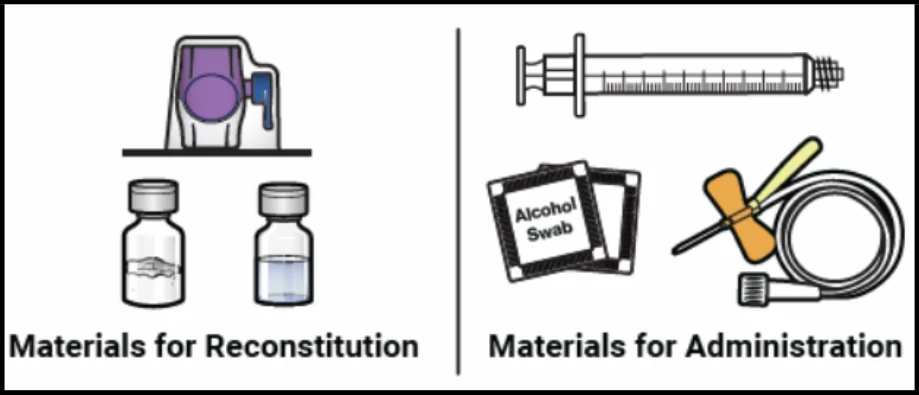
- 2. Allow the vials of ADZYNMA and diluent to reach room temperature before use.
- 3. Wash and dry your hands thoroughly.
- 4. Remove plastic caps from the ADZYNMA and diluent vials and place the vials on a flat surface (Figure B).
Figure B 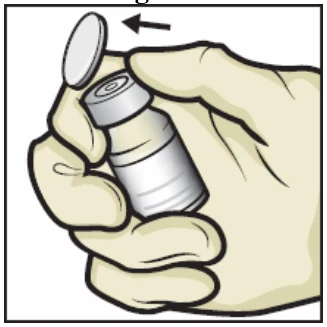
- 5. Wipe the rubber stoppers with an alcohol swab and allow them to dry prior to use (Figure C).
Figure C 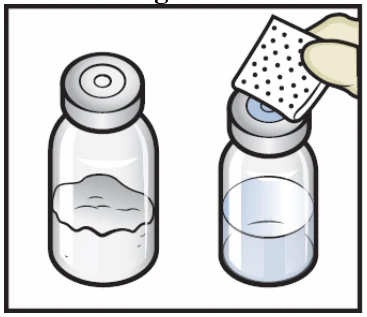
- 6.
Open the BAXJECT II Hi-Flow device package by peeling away the lid, without touching the inside (Figure D).
- Do not remove the BAXJECT II Hi-Flow device from the package.
- Do not touch the clear plastic spike.
Figure D 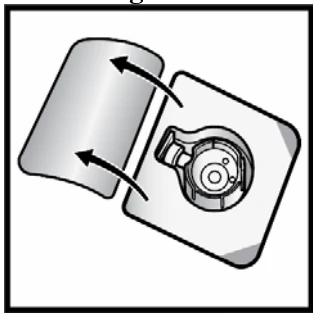
- 7. Turn the package with the BAXJECT II Hi-Flow device upside down and place it over the top of the diluent vial. Press straight down until the clear plastic spike pierces through the diluent vial stopper (Figure E).
Figure E 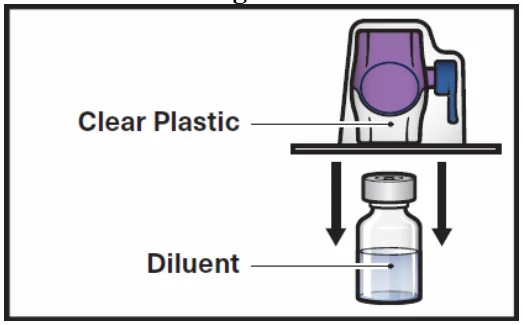
- 8.
Grip the BAXJECT II Hi-Flow device package at its edge and pull the package off the device (Figure F).
- Do not remove the blue cap from the BAXJECT II Hi-Flow device.
- Do not touch the exposed purple plastic spike.
Figure F 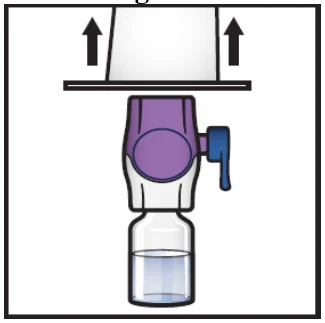
- 9.
Turn the system over so that the diluent vial is now on top. Press the
BAXJECT II Hi-Flow device straight down until the purple plastic spike pierces through the ADZYNMA powder vial stopper (Figure G). The vacuum will draw the diluent into the ADZYNMA powder vial.
- You may notice some bubbles or foam – this is normal and should soon disappear.
Figure G 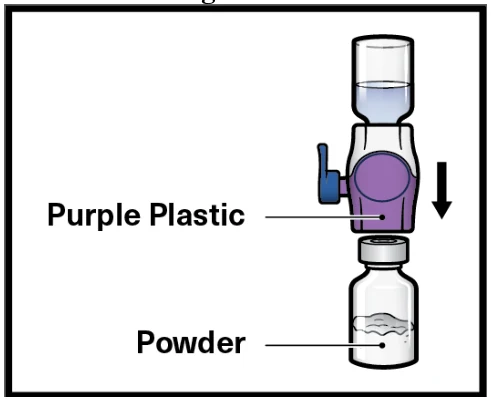
- 10.
Swirl the connected vials gently and continuously until the powder is completely dissolved (Figure H).
- Do not shake the vial.
Figure H 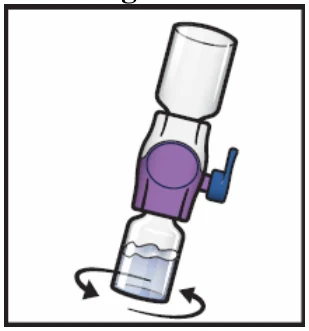
- 11.
Visually inspect the reconstituted solution for particulate matter before administration.
- Do not use the product if particulate matter or discoloration is observed.
- 12.
If the dose requires more than one vial of ADZYNMA, reconstitute each vial using the above steps.
- Use a different BAXJECT II Hi-Flow device to reconstitute each vial of ADZYNMA and diluent.
Administration instructions
- 13.
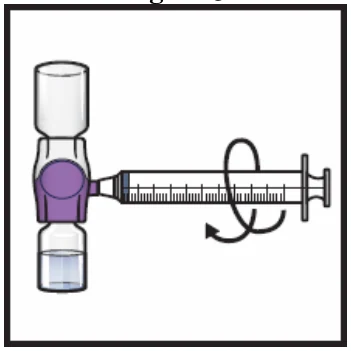
Take off the blue cap from the BAXJECT II Hi-Flow device (Figure I). Attach a
Luer-lock syringe (Figure J).
Do not inject air into the system.
Figure I
Figure J 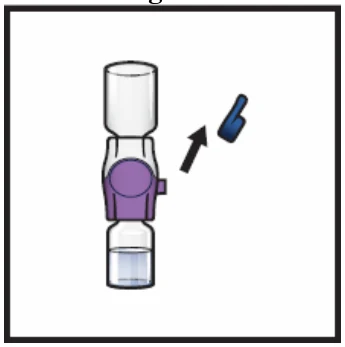
- 14. Turn the system upside down (ADZYNMA vial is now on top). Draw the reconstituted solution into the syringe by pulling the plunger back slowly (Figure K).
Figure K 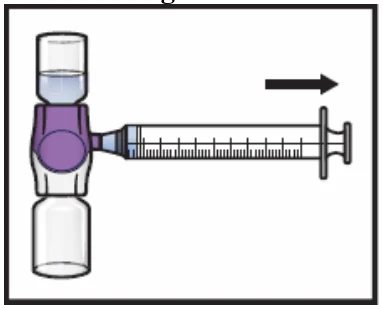
- 15. If a patient is to receive more than one vial of ADZYNMA, the contents of multiple vials can be drawn into the same syringe. Repeat this process for all reconstituted vials of ADZYNMA until the total volume to be administered is reached.
- 16. Disconnect the syringe and attach a suitable injection needle or an infusion set.
- 17. Point the needle up and remove any air bubbles by gently tapping the syringe with your finger and slowly and carefully pushing air out of the syringe and needle.
- 18.
Apply a tourniquet and clean the chosen injection site with an alcohol swab
(Figure L).
Figure L 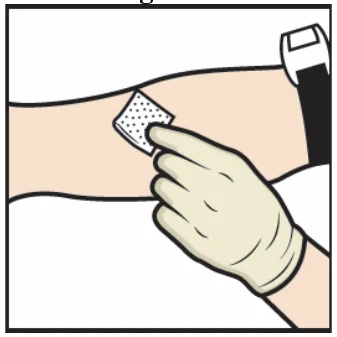
- 19. Insert the needle into the vein and remove the tourniquet.
- 20.
Infuse the reconstituted ADZYNMA slowly, at a rate of 2 to 4 mL per minute
(Figure M).
- A syringe pump may be used to control the rate of administration.
Figure M 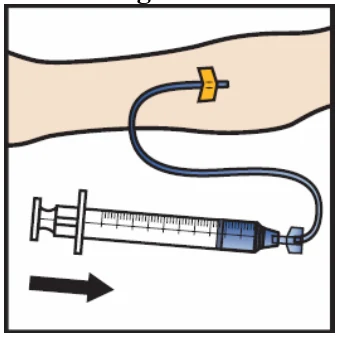
- 21.
Take the needle out of the vein and put pressure on the injection site for several minutes.
- Do not recap the needle.
- 22.
Place the needle, syringe, and empty vials in a puncture-resistant sharps container.
- Do not dispose of syringes and needles in the household waste.
Any unused medicinal product or waste material should be disposed of in accordance with local requirements.
7 MARKETING AUTHORISATION HOLDER
Takeda UK Ltd
1 Kingdom Street
London
W2 6BD
United Kingdom
medinfoEMEA@takeda.com
8 MARKETING AUTHORISATION NUMBER(S)
PL 16189/0148
9 DATE OF FIRST AUTHORISATION/RENEWAL OF THE
AUTHORISATION
12/05/2025
10 DATE OF REVISION OF THE TEXT
20/02/2026